

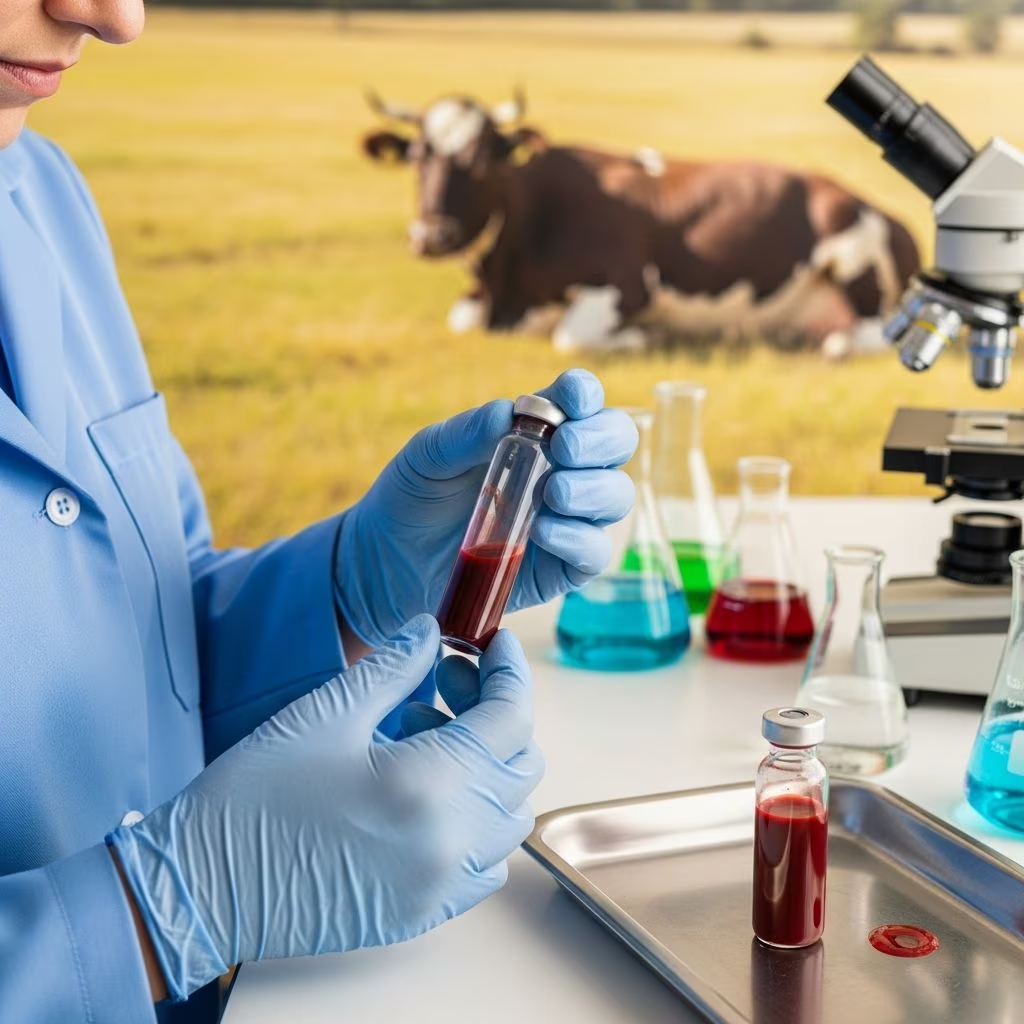
Nitrate and nitrite compounds pose significant risks to livestock health, particularly in ruminant species such as cattle and sheep. These toxins accumulate in plants under certain environmental stresses, leading to potentially fatal oxygen deprivation when ingested. This article delves into the mechanisms, clinical manifestations, vulnerable populations, diagnostic approaches, and practical management strategies to safeguard animal welfare and farm productivity.
The Biochemical Pathway of Toxicity
In ruminants, rumen microbes play a central role in converting dietary nitrates into nitrites. Under normal conditions, nitrates from soil or water are non-toxic, but rapid microbial reduction overwhelms the rumen’s ability to further process nitrites into harmless ammonia. The resulting nitrites enter the bloodstream, oxidizing hemoglobin’s iron from ferrous (Fe2+) to ferric (Fe3+) form, producing methemoglobin. Methemoglobin cannot bind oxygen effectively, causing tissue hypoxia despite normal oxygen levels in the air.
This process explains why acute poisoning manifests as internal suffocation. Peak methemoglobin levels often occur 4-6 hours post-ingestion, with clinical signs emerging at 20-30% methemoglobin and death at 75-80%.
Environmental Factors Driving Accumulation
Plants absorb nitrates from soil as a nitrogen source, but accumulation spikes under stress conditions including drought, frost, cloudy weather, or excessive fertilization. Young, rapidly growing forages like corn, sorghum, oats, and certain weeds are particularly prone. Hay or silage can retain high levels if harvested from affected plants, and moldy conditions may directly convert nitrates to nitrites.
- Drought or low light: Reduces carbohydrate production, slowing nitrate metabolism in plants.
- Herbicide use: Certain chemicals impair plant enzymes, leading to buildup.
- Soil imbalances: High nitrogen fertilizers without adequate moisture exacerbate risks.
Forage testing is crucial; levels exceeding 1% nitrate (as NO3) in dry matter signal danger for ruminants, while hay above 3% is highly toxic.
Species Susceptibility and Variations
Ruminants face the highest risk due to their rumen microbiology, with cattle most commonly affected, followed by sheep and goats. Non-ruminants like horses and pigs are less vulnerable to nitrates but highly sensitive to pre-formed nitrites, such as from contaminated water or spoiled feed. Pigs top the list for nitrite susceptibility.
| Species | Susceptibility to Nitrate | Susceptibility to Nitrite | Lethal Dose Estimate (mg/kg NO3) |
|---|---|---|---|
| Cattle | High | Moderate-High | 330-620 |
| Sheep | High | Moderate | 308 |
| Pigs | Low | Very High | N/A |
| Horses | Low | Moderate | N/A |
Chronic low-level exposure compounds issues like reduced growth, infertility, abortions (3-14 days post-exposure), lowered milk yield, and increased infection risk.
Recognizing Acute Clinical Signs
Symptoms arise suddenly, often after grazing suspect pastures or consuming tainted feed. Initial signs include exercise intolerance and rapid breathing, progressing to staggering, tremors, collapse, and convulsions. Mucous membranes turn blue or chocolate-brown, reflecting methemoglobinemia. Sudden death without prior warning is common, especially in stressed or unadapted animals.
- Early indicators: Weakness, salivation, diarrhea (from nitrate’s caustic effect).
- Advanced stages: Gasping respirations, weak pulse, recumbency.
- Post-survival complications: Fetal loss in pregnant animals.
At necropsy, blood appears dark brown (reverting post-mortem), with petechial hemorrhages in heart, trachea, and congested vessels.
Diagnostic Confirmation Methods
Field diagnosis relies on history (recent access to suspect forage), clinical signs, and rapid tests. Ocular fluid or blood analyzed via colorimetric strips detects nitrates/nitrites; ion-selective meters quantify forage levels. Lab confirmation measures methemoglobin percentage in blood samples.
Post-mortem, toxicology on rumen contents, ocular fluid, or serum confirms elevated nitrates. Differentiate from other anoxias like cyanide poisoning by blood color and nitrite presence.
Emergency Treatment Protocols
Act swiftly: Remove animals from source, minimize handling to reduce oxygen demand, and provide low-nitrate hay or grain to dilute rumen contents. Veterinary intervention involves 15 mg/kg IV methylene blue, which reduces methemoglobin back to hemoglobin. Note: Though effective, methylene blue lacks FDA approval for food animals; consult regulations.
Supportive care includes oxygen therapy if available and monitoring for abortion risks in survivors.
Prevention Through Management Practices
Proactive strategies mitigate risks effectively:
- Test forages: Sample before feeding; delay grazing new growth until nitrates drop (often 1-2 weeks post-stress).
- Adapt gradually: Introduce high-nitrate feeds over 2-3 days to build rumen microbe populations (reverses in 3 weeks).
- Blend feeds: Mix with low-nitrate silage or grains to stay below 0.5% total nitrate.
- Monitor weather: Avoid grazing after frost/drought; fertilize judiciously.
Conditioning enhances tolerance, as rumen bacteria adapt within hours.
Chronic Exposure Impacts on Herd Health
Beyond acute crises, persistent low nitrates impair thyroid function (goitrogenic effects), vitamin A metabolism, and immunity, leading to poor weight gains, suppressed lactation, and higher disease susceptibility. Abortions may occur 10-14 days after exposure, even in mildly affected cows.
Risk assessments suggest benchmark doses like 64 mg/kg body weight/day for cattle before hypoxia signs.
Regulatory Guidance and Safe Levels
Guidelines vary: EFSA sets exposure limits based on methemoglobin risks; US labs flag >1% in hay. Farmers should consult local extension services for region-specific thresholds.
Frequently Asked Questions (FAQs)
What causes sudden death from nitrate poisoning?
Rapid nitrite conversion leads to methemoglobinemia, starving tissues of oxygen. Death occurs at 75-80% methemoglobin.
Can horses get nitrate poisoning?
Rarely from nitrates alone, but direct nitrite exposure from moldy hay poses high risk.
How long after eating toxic forage do symptoms appear?
Typically 1-4 hours, peaking at 4-6 hours.
Is methylene blue safe for dairy cattle?
Effective but not FDA-approved for food animals; use under vet supervision.
How to test hay for nitrates at home?
Use colorimetric strips on extracts or send to labs for ion-selective analysis.
Key Takeaways for Farmers
- Scout pastures post-stress events.
- Test all forages, especially silage.
- Gradual diet transitions save lives.
- Urgent vet calls prevent losses.
References
- Nitrate Poisoning – Kansas Veterinary Diagnostic Laboratory — KSVDL. 2016-11. https://www.ksvdl.org/resources/news/diagnostic_insights/november2016/nitrate.html
- Nitrate toxicosis — University of Nebraska-Lincoln. Accessed 2026. https://vbms.unl.edu/nitrate-toxicosis/
- Nitrate and nitrite poisoning of livestock — Agriculture Victoria (vic.gov.au). Accessed 2026. https://agriculture.vic.gov.au/livestock-and-animals/livestock-health-and-welfare/nitrate-and-nitrite-poisoning-of-livestock
- Nitrate Poisoning in Ruminants Lecture — USDA ARS. Accessed 2026. https://www.ars.usda.gov/ARSUserFiles/20801500/NitratePoisoninginRuminantsLecture.pdf
- Risk assessment of nitrate and nitrite in feed — PMC/NIH (EFSA). 2020-11-10. https://pmc.ncbi.nlm.nih.gov/articles/PMC7610142/
- Nitrate poisoning in cattle — Texas A&M Veterinary Medical Diagnostic Lab. Accessed 2026. https://tvmdl.tamu.edu/case-studies/nitrate-poisoning-in-cattle/
- Forage-Related Disorders in Cattle: Nitrate Poisoning 2022 Update — University of Kentucky. 2022-07-25. https://forages.mgcafe.uky.edu/files/nitrate_poisoning_update_final_version_july_25_2022.pdf



