
Nighttime Dog Walks: Safety Essentials
Master the art of safe evening strolls with your pup using proven strategies for visibility, awareness, and hazard avoidance.
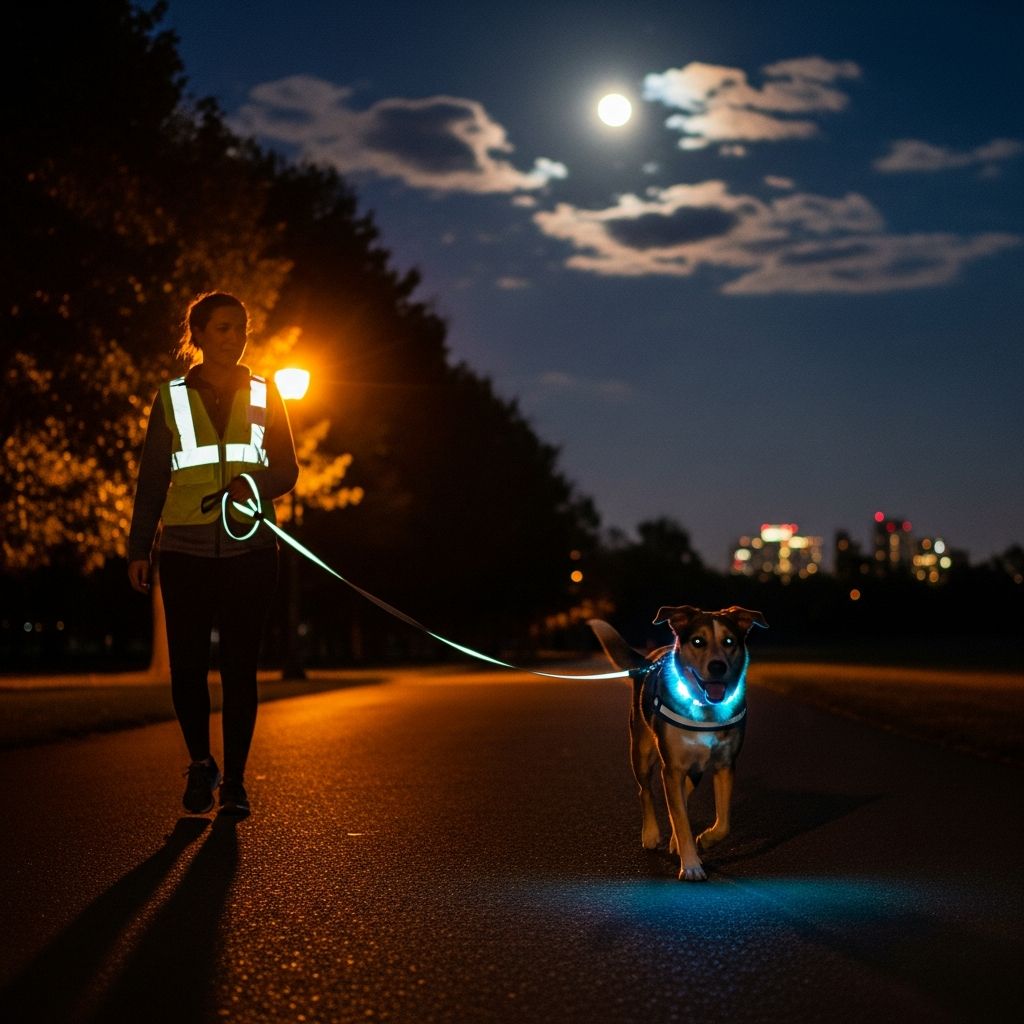
Evening outings with your dog offer a peaceful way to exercise and bond, especially during busy days or shorter daylight hours. However, darkness introduces unique challenges like reduced visibility and heightened risks from traffic and wildlife. This guide provides comprehensive strategies to keep both you and your furry companion secure during after-dark walks.
Understanding Nighttime Risks
Darkness amplifies dangers on walks. Pedestrians and pets are harder to spot, leading to potential collisions with vehicles or cyclists. According to data from the U.S. Department of Transportation, a significant portion of pedestrian incidents occur after sunset due to low light conditions. Wildlife activity peaks at dusk, increasing encounters with animals like skunks or deer. Uneven surfaces, debris, and sudden noises can startle dogs, risking pulls or trips for handlers.
- Low visibility heightens accident chances for drivers spotting you late.
- Scavenging dogs may ingest hazards unseen in shadows.
- Reactive pets face amplified stress from unfamiliar night sounds.
Women and older adults report elevated concerns during solo night walks, underscoring the need for proactive measures.
Essential Gear for Visibility and Control
Proper equipment forms the foundation of safe night walks. Start with items that enhance visibility and maintain control.
Reflective and Illuminated Accessories
Outfit both yourself and your dog in gear that reflects light or emits it. Reflective vests, collars, and leashes bounce back headlights, making you noticeable from afar. LED lights clip onto collars or harnesses, providing 360-degree glow. Red LED options stand out best against night skies.
| Gear Type | Benefits | Recommendations |
|---|---|---|
| Reflective Collar/Leash | Increases distance visibility | Choose adjustable, durable nylon |
| LED Harness | Full-body illumination | Rechargeable, waterproof models |
| Owner Vest/Bands | Personal safety enhancement | Wrist/ankle bands for movement |
Secure Leashing Systems
Always use a non-retractable leash of 4-6 feet for precise handling. Short leads prevent sudden lunges toward distractions. Harnesses distribute pressure evenly, ideal for stronger pullers. Avoid extendables at night due to control loss in low light.
Smart Route Planning
Select paths that prioritize safety over novelty. Opt for well-lit streets with steady traffic, where headlights aid visibility. Walk against oncoming vehicles, positioning your dog on the inner side away from roads.
- Familiar neighborhoods reduce surprises.
- Steer clear of unlit trails, parks, or high-crime zones.
- Avoid leaf piles or brush hiding wildlife or hazards.
Pre-walk reconnaissance via apps confirms lighting and traffic flow. In rural areas, stick to shoulders with reflective signage.
Maintaining Heightened Awareness
Distractions undermine safety. Ditch headphones to hear approaching bikes, cars, or animal rustles. Keep your phone accessible but pocketed—use it for emergencies only. Scan ahead for pavement cracks, ice, or reflective animal eyes signaling wildlife.
Your calm demeanor reassures your dog. If they tense, pause and redirect without tension. Train cues like “leave it” for ground temptations beforehand.
Lighting Tools for Better Sight
Carry reliable lights to illuminate your path and deter critters. Headlamps free hands while leashing, unlike handheld flashlights. Flashing modes grab attention from drivers. For dogs, blinking collar lights add security.
- Red filters on lights enhance detection range.
- Bright beams spot debris or droppings early.
- Noise-making lights scare off nocturnal visitors.
Wildlife and Environmental Precautions
Night activates nocturnal species. Leash firmly to prevent chases. Smaller dogs risk predator attention, even from birds. Carry pet-safe deterrents like ultrasonic devices. In colder months, watch for icy patches—paw booties prevent slips.
Scavengers need vigilant monitoring; night hides toxins or sharp trash. If encounters occur, back away slowly without running.
Weather and Seasonal Adjustments
Adapt to conditions. Rain slicks surfaces—add traction grips. Winter darkness shortens safe windows; check forecasts via apps. Summer nights bring bugs; repellents protect without harming pets.
Training for Confident Night Walks
Prepare your dog with daytime simulations using lights and sounds. Reward focus amid distractions. Obedient heelers navigate nights smoothly, reducing handler stress.
Tech Aids for Added Security
GPS trackers monitor escapes. Weather apps predict hazards. Flashlight apps serve as backups. Share live locations with family for solo walks.
Frequently Asked Questions
Is it safe to walk my dog alone at night?
Group walks enhance safety, but solo outings work with visibility gear, lit paths, and alertness. Inform someone of your route.
What if my dog pulls hard in the dark?
Use a front-clip harness to redirect. Short sessions build tolerance; professional training helps reactive cases.
Can retractable leashes be used at night?
No—opt for standard lengths for control.
How do I spot hazards like glass?
Headlamps and wide beams reveal ground details effectively.
What about hot climates forcing night walks?
Cooler evenings suit, but hydration and paw checks remain key.
Building a Night Walk Routine
Consistency breeds safety. Pre-walk checklists ensure gear readiness. Post-walk inspections catch injuries early. Rotate routes to maintain interest without risk.
These practices transform night walks into enjoyable rituals. Visibility, preparation, and awareness minimize dangers, letting you savor the quiet bond with your dog.
References
- 7 Practical Tips for Walking Your Dog at Night — Rover.com. Accessed 2026. https://www.rover.com/blog/how-to-safely-walk-dog-at-night/
- Dog Walking at Night: Dangers and Safety Tips — VEG ER for Pets. Accessed 2026. https://www.veg.com/post/dog-walking-at-night-dangers-and-safety-tips
- Walking Your Dog at Night: Essential Safety Tips — J-B Pet Supplies. 2020-10-07. https://www.jbpet.com/content/blog/2020107368384942048/
- Nighttime dog walking safety tips — Animal Wellness Magazine. Accessed 2026. https://animalwellnessmagazine.com/nighttime-dog-walking-safety-tips/
- Tips for Walking a Dog on a Leash at Night — Chewy. Accessed 2026. https://www.chewy.com/education/dog/health-and-wellness/dog-safety-tips-for-nighttime-walks
Similar Articles








Read full bio of medha deb




