

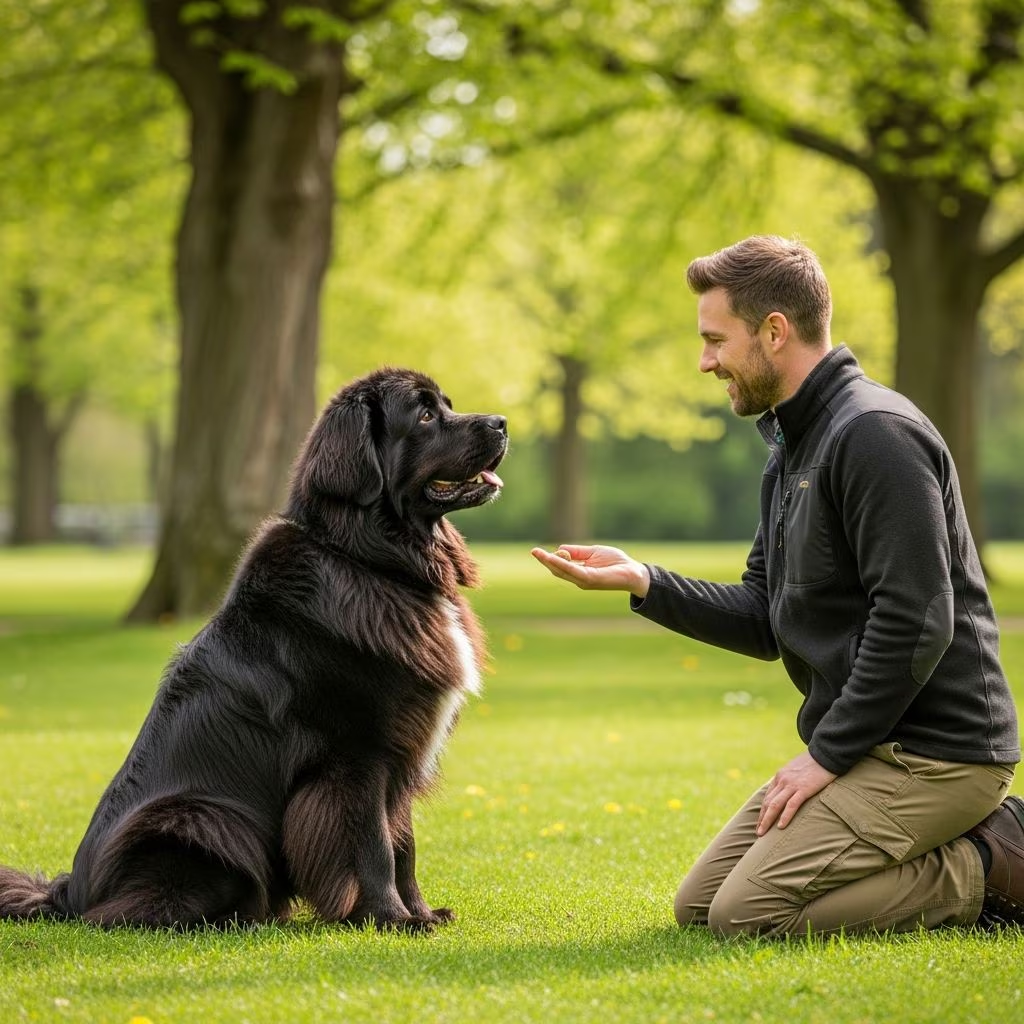
Newfoundland dogs are renowned for their intelligence, loyalty, and remarkable swimming abilities. These large, gentle giants have been bred for generations as water rescue dogs, and their inherent desire to work and please their owners makes them surprisingly trainable despite their impressive size. However, training a Newfoundland requires understanding their unique temperament, learning capacity, and physical development. This comprehensive guide explores proven strategies for developing well-behaved, obedient Newfoundlands from puppyhood through maturity.
Understanding Newfoundland Temperament and Learning Capacity
Newfoundlands possess exceptional intelligence and an eagerness to collaborate with their handlers. These dogs were originally developed to assist fishermen and perform water rescues, which means they have strong problem-solving abilities and respond well to purposeful training. Unlike some breeds that require constant motivation, Newfoundlands genuinely enjoy the learning process and appreciate having tasks to accomplish.
However, their intelligence comes with a particular challenge: boredom. Newfoundlands learn commands quickly and will become disengaged if asked to repeat the same exercise monotonously. Understanding this trait is fundamental to successful training. Each dog also exhibits individual personality quirks that may require customized approaches. Some Newfoundlands are naturally more focused and attentive, while others are more independent or playful. Recognizing your specific dog’s personality traits allows you to tailor your training methods accordingly.
The breed’s energy levels also vary significantly by individual and by time of day. Some Newfoundlands are naturally drowsy in the morning and more animated in the evening, while others maintain consistent energy throughout the day. Scheduling training sessions when your dog is naturally alert and receptive yields significantly better results than forcing training during low-energy periods.
Establishing Daily Training Routines and Consistency
Successful Newfoundland training depends fundamentally on consistency and daily practice. Training cannot be confined to weekends or sporadic sessions; instead, it must become an integrated part of your daily routine. Newfoundlands thrive with structure and predictability, and consistent daily reinforcement accelerates learning far more effectively than occasional intensive sessions.
Consistency extends beyond frequency to methodology. Every family member interacting with the dog must use identical commands, hand signals, and reward systems. If one person uses “sit” while another uses “sit down,” the dog receives conflicting signals and learning slows dramatically. Before beginning any training program, establish clear protocols with all household members:
- Select specific verbal commands and stick with them exclusively
- Choose consistent hand signals or gestures for each command
- Determine which high-value treats will be used for training rewards
- Establish consequences for unwanted behaviors that everyone will enforce uniformly
- Schedule regular training times that fit naturally into your daily schedule
Reserve specific high-value treats exclusively for training purposes. Identify which foods your Newfoundland particularly craves—perhaps freeze-dried liver, small cheese pieces, or premium training treats—and use only those during training sessions. This exclusivity makes training rewards genuinely special and maintains your dog’s motivation.
Optimizing Training Session Length and Structure
Newfoundlands, despite their intelligence, have limited attention spans during intensive training. Research on canine cognition indicates that most dogs benefit from shorter, more frequent training sessions rather than extended single sessions. For Newfoundlands specifically, keeping training sessions between five and ten minutes prevents boredom and frustration for both handler and dog.
Within these brief sessions, introduce variety. Rather than drilling the same command repeatedly, alternate between different exercises and skills. If your dog demonstrates competence with “sit,” immediately transition to “down” or “come” before returning to “sit” in a different context. This rotation maintains engagement and prevents the mental fatigue that comes from repetitive practice.
Structure each session with a logical progression: begin with a command your dog already knows reliably to build confidence, introduce one new skill or refinement, practice intermediate-level commands, and conclude with another known command so the session ends positively. This architecture keeps dogs motivated and willing to participate in future sessions.
Progressive Developmental Stages and Age-Appropriate Training
Newfoundland puppies progress through distinct developmental phases, each requiring different training approaches and expectations. Understanding these stages prevents frustration and ensures your training aligns with your puppy’s physical and emotional maturity.
Early Puppyhood (12-18 Weeks): During this foundational period, puppies are exploring their environment primarily through their mouths. Focus on establishing routines, initiating house training, introducing crate training, and teaching essential obedience basics like “sit” and “down.” This stage is also ideal for beginning leash training in safe, enclosed environments. Emphasize positive associations with grooming since Newfoundlands require regular coat maintenance throughout their lives.
Growing Phase (4-8 Months): Puppies during this stage experience rapid physical growth and improved coordination. They remain emotionally immature, however, and can become overwhelmed easily. Continue foundation training while gradually increasing exposure to diverse environments, sounds, surfaces, and people. This period is critical for preventing fear-based behaviors later in life. Keep training sessions playful and short, as puppies still tire quickly despite their growing size.
Adolescence (8+ Months): Adolescent Newfoundlands often test boundaries and assert independence. Maintain consistent rules and continue reinforcing obedience. Address jumping and mouthing behaviors promptly, as these behaviors become increasingly problematic as dogs approach full size. This period is ideal for introducing more advanced skills and exploring dog sports like Rally, Obedience competition, or Tricks training.
Expanding Training Beyond Your Home Environment
Many owners successfully train their Newfoundlands within the familiar comfort of their homes, but this limited approach creates serious limitations. Dogs trained exclusively indoors often fail to respond reliably when distractions are present—other people, animals, novel sounds, or environmental changes.
Effective training requires systematic exposure to diverse settings and conditions. Introduce obedience training in progressively more stimulating environments:
- Begin in quiet indoor spaces with minimal distractions
- Progress to the backyard or driveway during varied times of day
- Practice during neighborhood walks with typical pedestrian and traffic presence
- Train at parks where other dogs and people create realistic distractions
- Practice in retail environments like pet stores where sights and smells are novel
- Include training during veterinary visits to maintain composure in stressful settings
- Practice during outdoor activities like hiking where terrain and weather vary
Newfoundlands often attract attention due to their impressive size and friendly nature. Training your dog to maintain focus and obedience despite enthusiastic strangers petting and talking to them is essential for public outings. Gradual exposure to these interactions during training sessions ensures your Newfoundland can handle real-world scenarios confidently.
Reinforcing Learning Through Homework and Practice
Formal training classes provide invaluable instruction and socialization opportunities, but they represent only a fraction of your dog’s learning. Classes typically meet once or twice weekly for 30-60 minutes, while your dog spends the remaining 165+ hours each week in your care. The knowledge and skills taught in classes must be reinforced continuously through homework.
Treat your daily training practice as homework assignments from your trainer. If your dog is working on obedience skills during class, practice those exact exercises daily at home. If your class focuses on loose-leash walking, dedicate time each day to practicing leash manners during regular walks. This consistent reinforcement solidifies learning far more effectively than sporadic practice.
Document your training progress by noting which exercises your dog performs reliably and which need additional work. This tracking helps you identify patterns and adjust your training focus accordingly. Celebrate progress milestones, such as when your dog first performs a command with only verbal cues, without hand signals.
Leash Training and Walking Fundamentals
Leash training forms the foundation for safe public interactions with your Newfoundland. Because adult Newfoundlands can weigh 100-150 pounds, an untrained dog pulling on the leash becomes a genuine safety hazard for both handler and dog. Begin leash training in controlled environments like your yard, then progress to increasingly challenging settings.
Teach your Newfoundland that tension on the leash is uncomfortable and relaxation is rewarding. When your dog pulls forward, immediately stop walking. Wait calmly until your dog stops pulling and the leash goes slack, then resume walking. This teaches dogs that pulling extends the time required to reach their destination, while walking politely accelerates their progress. Consistency with this method typically produces results within 2-3 weeks.
Introduce heel work gradually. Begin by simply walking together, rewarding your dog frequently for staying near your leg. Progress to more formal heeling only after your dog demonstrates consistent loose-leash walking. Use animated verbal encouragement and high-value treats to keep your dog engaged during formal heeling practice.
Advanced Obedience and Specialized Skills
Once your Newfoundland demonstrates reliability with foundation commands, advanced training opens numerous possibilities. These intelligent dogs excel at specialized skills that leverage their natural abilities and problem-solving capacity.
Retrieving and Drop Commands: Newfoundlands have natural retrieving instincts. Develop a reliable “drop” or “give” command by trading objects for treats. This skill prevents resource-guarding issues and allows safe management of dangerous items your dog might find.
Distance Commands: Train your dog to obey commands from a distance, which proves essential in emergency situations. Practice “sit,” “down,” and “stay” commands while gradually increasing the distance between you and your dog.
Backing Up and Directional Movement: These skills, while seemingly unusual, prevent common leash handling issues. Teaching a dog to back up or move backward in specific patterns improves body awareness and precision during formal obedience competition.
Sport Training: Newfoundlands can participate in various dog sports. Obedience competition, Rally, Agility (though impact must be carefully managed due to their size), and water-based events capitalize on their natural abilities. Consult with trainers experienced in your chosen sport for breed-specific guidance.
Managing Common Behavioral Challenges
Despite their gentle nature, Newfoundlands can develop behavioral issues if not properly trained and managed. Understanding how to address common problems prevents them from escalating.
Jumping and Mouthing: Puppies naturally mouth and jump during play. Rather than punishing these behaviors, redirect them. When your puppy jumps, step aside so they lose balance, and reward them for sitting instead. Provide appropriate chew toys and frozen treats to satisfy mouthing impulses. As your dog grows, these behaviors become increasingly problematic if left unaddressed, so consistent early intervention is critical.
Excessive Energy and Rowdy Play: When your Newfoundland exhibits excessive energy or overly rough play, remove them from stimulating situations. A period of quiet kennel time with a frozen treat provides mental decompression. Allow puppies to play-fight with appropriately-matched playmates, as this teaches bite inhibition naturally. Distract exuberant dogs with engaging toys and activities that channel their energy productively.
Training-Specific Frustration: If you or your dog become frustrated during training sessions, end the session on a positive note with a command your dog knows well. Frustration signals to your dog that training is unpleasant, which undermines motivation. Training should always feel rewarding and fun.
Creating Positive Training Relationships
The most effective training approaches rely on positive reinforcement rather than punishment or coercion. Newfoundlands respond exceptionally well to reward-based training where desired behaviors result in treats, praise, play, or other valued rewards. This approach builds positive associations with training and strengthens your relationship with your dog.
Maintain an animated, enthusiastic tone during training sessions. Your energy and excitement are contagious and help keep your dog engaged. When your Newfoundland performs correctly, celebrate enthusiastically with treats, play, and verbal praise. This creates positive emotional associations with learning and encourages future participation.
Recognize that training is a partnership between you and your dog. You provide guidance, structure, and rewards; your dog provides their intelligence, effort, and willingness to cooperate. Respecting this partnership and appreciating your dog’s contributions creates a training experience both parties enjoy.
Socialization and Exposure Throughout Life
Continued socialization beyond puppyhood supports confidence and appropriate behavior throughout your Newfoundland’s life. Regular exposure to different people, especially children and individuals with distinct appearances or mobility aids, teaches your dog that the world contains many types of individuals, all deserving respectful interaction.
Maintain exposure to various environments and situations regularly. Dogs who are socialized as puppies but then live sheltered lives can develop fearfulness or reactivity if not continuously exposed to varied stimuli. Even adult dogs benefit from novel experiences and ongoing environmental exploration.
Professional training classes continue to provide value throughout your dog’s life. Advanced classes, sport training, or even fun skills classes keep your Newfoundland mentally engaged and provide ongoing structure and socialization opportunities.
References
- How to Train a Newfoundland Puppy: Timeline & Schedule — American Kennel Club. 2024. https://www.akc.org/expert-advice/dog-breeds/how-to-train-a-newfoundland-puppy/
- 10 Tips For Training Your Newfoundland Dog — My Brown Newfies. 2019. https://mybrownnewfies.com/2019/01/13/10-tips-for-training-your-newfoundland-dog/
- Successful Obedience: Getting Started — Newfoundland Club of America. https://www.ncadogs.org/obedience.html



