

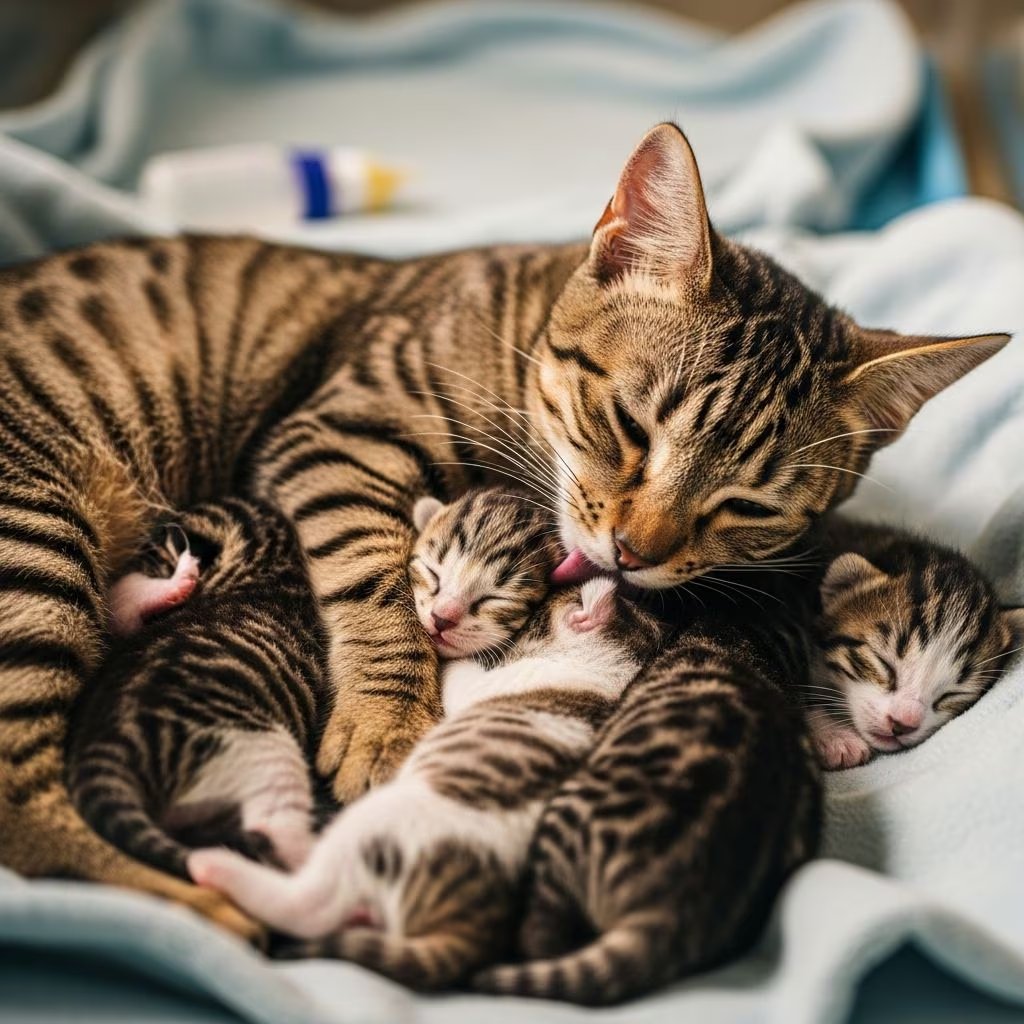
Newborn Kittens: A Reason to Celebrate Mother’s Day at the Kitten Nursery
When Mother’s Day arrives each year, most people think of celebrating the human mothers in their lives. However, at Best Friends Animal Society’s kitten nurseries across the nation, there’s another kind of motherhood being celebrated—the dedicated work of animal caregivers who serve as honorary moms to the most fragile and vulnerable creatures: newborn kittens. These compassionate professionals and volunteers embody the true spirit of motherhood through their tireless efforts to keep tiny, orphaned kittens alive and thriving when their biological mothers cannot be present.
The milk moustaches, the constant feeding schedules, the protective instincts—these are just a few of the many rewards and responsibilities that come with being an honorary kitten mama. When newborn kittens are separated from their mothers, whether due to illness, abandonment, or other circumstances, the survival of these precious creatures depends entirely on the dedication and expertise of the people working in kitten nurseries. This important work represents one of the most impactful ways that Best Friends and similar organizations save lives and prevent unnecessary deaths in animal shelters.
Understanding the Vulnerability of Newborn Kittens
Before caregivers like Danielle Slaughter began working in the kitten nursery at Best Friends in Salt Lake City, Utah, they had no idea just how fragile newborn kittens truly are. These tiny creatures arrive at the nursery from nearby animal control agencies and partner shelters as part of comprehensive, no-kill initiatives designed to save the youngest and most vulnerable animals. The experience of caring for these kittens quickly becomes an education in both the resilience and fragility of young animal life.
Newborn kittens are born dependent, blind, and completely reliant on their mothers for warmth, nutrition, and hygiene. When they arrive at the kitten nursery, they come in all kinds of conditions—some relatively healthy and simply in need of proper care, while others face serious medical challenges that require immediate intervention. This broad range of conditions means that caregivers must be prepared for anything, from routine nurturing to lifesaving medical procedures.
The Daily Responsibilities of Kitten Nursery Caregivers
The work of caring for newborn kittens is far more demanding than most people realize. It is a full-time job that requires patience, dedication, and an enormous amount of hands-on time. The following responsibilities highlight what a typical day looks like for honorary kitten moms:
- Bottle Feeding: Newborn kittens require bottle feeding every two to four hours. This schedule is relentless and requires caregivers to maintain consistent feeding times throughout the day and night to ensure the kittens receive adequate nutrition.
- Transitioning to Solid Food: Once kittens are weaned, they need to be fed every four to six hours. Teaching young kittens to eat solid food is a gradual process that demands patience and supervision to ensure they consume enough calories for proper growth.
- Bathroom Assistance: Young kittens cannot regulate their own bathroom functions, so caregivers must manually stimulate them to encourage proper elimination. This is a necessary and time-consuming task that mimics what a mother cat would do naturally.
- Medical Assessment: When kittens arrive at the nursery, caregivers must quickly determine whether they need immediate lifesaving intervention or if they simply require standard care and warmth. This assessment requires training and quick thinking.
- Health Monitoring: Caregivers must watch carefully for signs of illness, infection, or other health issues. Upper respiratory infections, ringworm, and other conditions are common among shelter kittens and require appropriate treatment.
- Socialization: While providing basic care, nursery workers also begin the important process of socializing kittens so they become friendly and adoptable.
A Caregiver’s Perspective: The Emotional Journey
Danielle Slaughter’s two years of experience at the Best Friends Kitten Nursery in Salt Lake City provide a powerful window into the emotional and physical dimensions of this work. Her reflections reveal the deep attachment that develops between caregivers and the kittens they nurture, as well as the bittersweet reality of saying goodbye to animals you’ve helped save.
According to Danielle’s account, every time a new kitten arrives at the nursery, caregivers are overwhelmed by the cuteness and charm of these tiny creatures. However, this emotional response is quickly tempered by the serious work that begins immediately after. The first priority is always determining the kitten’s health status and whether emergency intervention is needed. Some kittens arrive in relatively good condition and simply need food, warmth, and basic care. Others require intensive medical attention to survive.
The longer a kitten stays in the nursery or the more medical care it requires, the deeper the emotional bond becomes between the caregiver and the animal. Danielle recounts the story of Catherine Willows, a brown tabby kitten who arrived sick and required tube-feeding to survive. Catherine battled both a severe upper respiratory infection and ringworm, meaning she spent an extended period at the nursery receiving specialized care. During this time, Danielle found herself looking forward to seeing Catherine every single day, watching her recover and grow stronger.
The Heartbreak and the Reward
One of the most challenging aspects of being an honorary kitten mom is the inevitable goodbye. When Catherine Willows finally recovered and was transferred to the adoption center, Danielle experienced a complex mix of emotions. She felt tremendous pride in seeing the kitten off to the happy life she was meant to have, yet saying goodbye was profoundly difficult. The process of watching struggling, tiny creatures develop distinct personalities and grow into healthy cats creates an undeniable bond that makes separation painful.
Yet there is genuine consolation in knowing that everything possible was done to give each kitten a chance at life. Danielle’s reflection captures this beautifully: having touched thousands of kittens during her two years at the nursery, she understands that sometimes kittens don’t survive despite everyone’s best efforts. These losses are heartbreaking, but the knowledge that you did everything in your power to provide a chance at life offers meaningful comfort.
The adoption team at Best Friends works diligently to find each recovered kitten the perfect family and the perfect home. Catherine Willows, true to the kitten nursery’s mission, was quickly adopted into a loving family, exemplifying the ultimate goal of all the hard work and emotional investment that caregivers provide.
The Broader Impact of Kitten Nurseries
Best Friends Animal Society has been at the forefront of establishing kitten nurseries and operates them in several locations across the country. These lifesaving facilities take in kittens from shelters in their respective areas, providing an alternative to euthanasia for the youngest and most vulnerable animals. The scale of this impact is significant—in the Best Friends Kitten Nursery in Salt Lake City alone, more than 2,500 kittens were given a second chance at life during the 2016-2017 period.
The nurseries represent just one component of a comprehensive approach to saving kitten lives. Danielle emphasizes the importance of multiple lifesaving programs, including spay and neuter services, trap-neuter-return (TNR) initiatives, and other community-based efforts. These programs work together to address the root causes of shelter overcrowding and overpopulation while simultaneously saving animals already in crisis.
The No-Kill Utah (NKUT) initiative demonstrates how communities can work together to dramatically reduce shelter deaths. By establishing networks of kitten nurseries, foster families, and specialized programs, these initiatives prove that killing is not a necessary solution to the problem of young, vulnerable animals in shelters.
Why Kitten Nurseries Matter for Animal Welfare
Many animal shelters lack the resources, knowledge, or specialized staff to care for newborn kittens. This reality means that without dedicated kitten nurseries, countless perfectly healthy young animals are killed simply because they require more intensive care than traditional shelter environments can provide. The establishment of these nurseries represents a fundamental shift in how communities approach animal welfare and the value placed on young animal lives.
The work done by honorary kitten moms directly addresses one of the most pressing issues in animal rescue: the disproportionate number of young animals, particularly kittens under eight weeks old, that are killed in municipal shelters. By providing the specialized care these animals need, kitten nurseries save lives that would otherwise be lost.
The Role of Volunteers and Foster Families
While dedicated nursery staff members like Danielle Slaughter form the backbone of these operations, the work would be impossible without the support of volunteers and foster families. Best Friends and similar organizations actively recruit and train volunteers willing to bottle-feed and care for young kittens in home settings. These foster caregivers provide essential temporary care while the nurseries handle the most medically complex cases and provide training and resources.
Foster families receive comprehensive support, including bedding, bottles, formula, and training. This infrastructure ensures that even those without prior experience can successfully care for bottle babies. Programs like Kitten University facilitate the transition of kittens to independent feeding and socialization, allowing more animals to move through the system and reach adoption more quickly.
Celebrating Honorary Kitten Moms on Mother’s Day
Mother’s Day takes on special significance for the people who work in and volunteer with kitten nurseries. While they may not be biological mothers to the kittens in their care, they embody all the qualities we associate with motherhood: unconditional love, tireless dedication, protective instinct, and the willingness to put another’s needs above their own comfort. The sleepless nights, the constant worry about vulnerable charges, the tears shed when a kitten doesn’t survive, and the joy experienced when a recovered kitten finds a forever family—these experiences define motherhood in its truest sense.
The work of honorary kitten moms deserves recognition not only on Mother’s Day but throughout the year. Their contributions directly save lives and create ripple effects throughout entire communities. Each kitten that survives the nursery experience becomes an adult cat with the potential to live a long, healthy life in a loving home, potentially becoming a cherished pet for decades to come.
Gratitude and Ongoing Commitment
Those who have dedicated themselves to kitten nursery work express deep gratitude for the opportunity to be part of such meaningful mission. Danielle Slaughter’s reflection captures this sentiment perfectly: “I’ll always be grateful that I’ve been able to play a part in saving lives.” This gratitude extends not only to the personal fulfillment of the work but also to the recognition that organized, well-resourced kitten nurseries represent one of the most effective interventions available to reduce shelter deaths and save vulnerable animal lives.
As communities continue to build and expand kitten nursery programs, they demonstrate a commitment to valuing young animal lives and recognizing that every creature deserves a chance to live. The honorary kitten moms working in these facilities represent the best of human compassion and dedication to animal welfare, making Mother’s Day a perfect opportunity to celebrate their incredible contributions to the lives of thousands of kittens each year.
References
- Newborn kittens have cause to celebrate Mother’s Day — Best Friends Animal Society. Accessed November 28, 2025. https://bestfriends.org/stories/features/newborn-kittens-have-cause-celebrate-mothers-day
- How to care for orphaned kittens — Best Friends Animal Society. Accessed November 28, 2025. https://bestfriends.org/stories/features/how-care-orphaned-kittens
- What Is Kitten Season? — Best Friends Animal Society. Accessed November 28, 2025. https://bestfriends.org/stories/features/what-kitten-season
- 6 of the sweetest rescued mama dog and cat stories — Best Friends Animal Society. Accessed November 28, 2025. https://bestfriends.org/stories/features/6-sweetest-rescued-mama-dog-and-cat-stories
- Happy Mother’s Day photos of animal moms and their babies — Best Friends Animal Society. Accessed November 28, 2025. https://bestfriends.org/stories/features/happy-mothers-day-photos-animal-moms-and-their-babies



