

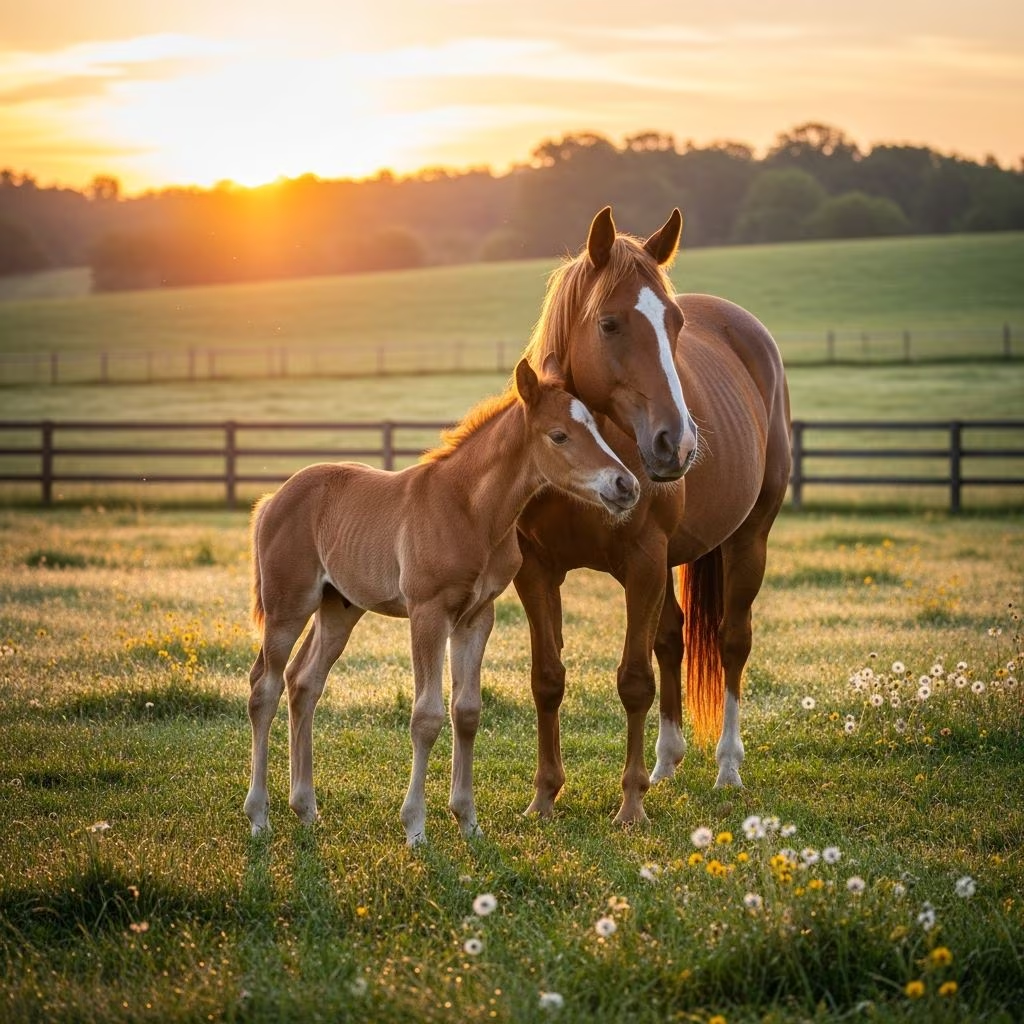
Successfully nurturing a mare through the final stages of pregnancy and caring for her newborn foal demands careful preparation, vigilant observation, and prompt action. This guide outlines key practices to support healthy outcomes for both mare and foal, drawing from established veterinary principles.
Optimizing Late Pregnancy Health
Maintaining the mare’s well-being in the last trimester sets the foundation for a smooth delivery and robust foal. Regular exercise in a safe paddock environment reduces stress and supports muscle tone, while compatible herd mates prevent conflicts that could trigger premature labor.
Nutritional balance is paramount; aim for a body condition score of 5-6 on a 9-point scale to avoid complications like embryonic loss or metabolic issues. High-quality forage supplemented with concentrates formulated for gestation ensures adequate energy, protein, and minerals without excess weight gain.
Vaccination and Parasite Protocols
- Administer core vaccines such as Eastern/Western equine encephalitis, West Nile virus, and tetanus 30 days prior to expected foaling to boost colostrum antibody levels.
- Avoid vaccinations in the first 90 days of pregnancy and limit to essentials thereafter, excluding rhinopneumonitis until late term unless risk factors exist.
- Deworm the mare 2-4 weeks before foaling to minimize parasite transmission to the foal.
These measures enhance passive immunity transfer, critical since foals are born with no inherent defenses.
Recognizing Foaling Progression
Equine labor unfolds in distinct phases, each with defined timelines for intervention. Stage one involves subtle behavioral changes like restlessness or sweating, lasting 1-4 hours as contractions build.
Stage two, the expulsion phase, begins with the water bag rupture and should complete in 20-30 minutes to 5-15 minutes for uncomplicated births. Delay signals dystocia, requiring immediate veterinary aid to prevent placental detachment and fetal hypoxia.
Stage three entails placental expulsion within 3 hours; retention risks severe infection or laminitis.
| Stage | Duration | Key Signs | Action if Delayed |
|---|---|---|---|
| 1 | 1-4 hours | Restlessness, tail swishing, pawing | Monitor closely |
| 2 | 5-30 minutes | Water bag rupture, foal presentation | Call vet immediately |
| 3 | <3 hours | Placenta passage | Veterinary treatment |
Post-Birth Mare Monitoring
After delivery, inspect the placenta for completeness—it should weigh about 10% of the foal’s birth weight and show no tears or missing parts. Retained fragments can lead to toxic metritis.
Encourage the mare to eat within hours; provide fresh water, hay, and a gradual return to grain. Low-dose pain relief may alleviate colic-like symptoms from uterine involution. Check for Caslick’s suture if applicable and release it pre-foaling.
Critical First Hours for the Foal
The “1-2-3” rule guides initial assessments: standing within 1 hour, nursing within 2 hours, and meconium passage plus placenta expulsion by 3 hours. Colts typically urinate by 6 hours, fillies by 10-12.
Immediate Interventions
- Dip the umbilical stump in 0.5% chlorhexidine or 1% povidone-iodine 2-3 times daily for 2-3 days to avert septicemia.
- Administer a warm soapy or commercial phosphate enema to aid meconium expulsion, improving nursing vigor.
- Bed the stall with straw to avoid inhalation risks from shavings.
Failure to meet these milestones warrants urgent veterinary consultation.
Immunity and Veterinary Exams
Colostrum ingestion within the first 24 hours provides essential antibodies via gut absorption. Test IgG levels around 12 hours; levels below 800 mg/dL necessitate plasma transfusion.
A thorough exam at 12-24 hours includes vital signs, heart/lung auscultation, oral inspection for cleft palate, and entropion screening. Vitamin E-selenium injections may support neonates in deficient areas.
Early Development Milestones
Monitor foals intensively for the first week, as healthy ones can decline rapidly. Turn out mare-foal pairs to small paddocks after 24-48 hours once the foal trots confidently.
Gentle handling fosters tractability; halter training begins in week one.
| Milestone | Timeline | Indicator of Health |
|---|---|---|
| Standing | 1 hour | Strong legs, coordination |
| Nursing | 2 hours | Vigorous suckling |
| Meconium | 3 hours | First dark stool |
| Urination | 6-12 hours | Normal stream |
Nutrition for Mare and Foal
Lactating mares require 30-50% more calories; provide free-choice hay, lactation feeds with 14-16% protein, and limit pasture to prevent obesity. Monitor foal weight gain at 2-3 lbs daily initially.
Supplemental milk replacers support orphans or poor nursers.
Common Challenges and Prevention
Prematurity (<320 days) or post-maturity (>360 days) heightens risks like weak limbs or septicemia. Dummy foal syndrome (hypoxic ischemic encephalopathy) demands ICU care: fluids, antibiotics, oxygen.
- Watch for fever, lethargy, diarrhea signaling infection.
- Umbilical abscesses from poor cord care.
- Mare rejection or inadequate milk.
Prevention emphasizes hygiene, monitoring, and 24-hour foaling watches via cameras.
When to Seek Professional Help
Contact a vet if:
- Foaling exceeds stage timelines.
- Placenta retained >3-6 hours.
- Foal fails 1-2-3 rule.
- Any abnormal behavior post-birth.
- Unassisted foaling or first 24-hour check.
FAQs
What if my foal isn’t standing within an hour?
Assist gently but call your vet; weakness may indicate hypoxia or prematurity.
How do I check colostrum quality?
Vets use a refractometer or test foal IgG levels at 12-18 hours.
Is exercise safe for late-term mares?
Yes, moderate paddock turnout daily promotes fitness without overexertion.
What bedding is best post-foaling?
Straw or short hay; avoid shavings due to ingestion risks.
Can I vaccinate during pregnancy?
Strategic timing only: pre-breeding, avoid early gestation, boost late term.
Long-Term Success Strategies
Beyond the neonatal phase, gradual weaning at 4-6 months, continued deworming, and socialization build resilient adults. Regular farrier work starts at 3-4 weeks.
Invest in biosecurity: quarantine new arrivals, clean equipment to curb respiratory and gastrointestinal threats.
References
- Foal speed ahead: Caring for the newborn horse — Cornell University College of Veterinary Medicine. 2023-02-03. https://www.vet.cornell.edu/about-us/news/20230203/foal-speed-ahead-caring-newborn-horse
- Neonatal Care: All About Your Pregnant Horse — Advanced Equine of the Hudson Valley. N/A. https://www.advancedequinehv.com/neonatal-care-all-about-your-pregnant-horse/
- Perinatal Mare and Foal Care — Merck Veterinary Manual. N/A. https://www.merckvetmanual.com/management-and-nutrition/preventative-health-care-and-husbandry-of-horses/perinatal-mare-and-foal-care
- Mare care for the equine breeding/foaling season — Colorado State University. 2024-09-06. https://vetmedbiosci.colostate.edu/erl/2024/09/06/mare-care-equine-breeding-foaling-season/
- Caring for pregnant mares and foals — Oklahoma State University. 2023. https://news.okstate.edu/articles/veterinary-medicine/2023/caring-for-pregnant-mares-and-foals.html
- Pregnancy in Horses — PetMD. N/A. https://www.petmd.com/horse/pregnancy-horses



