

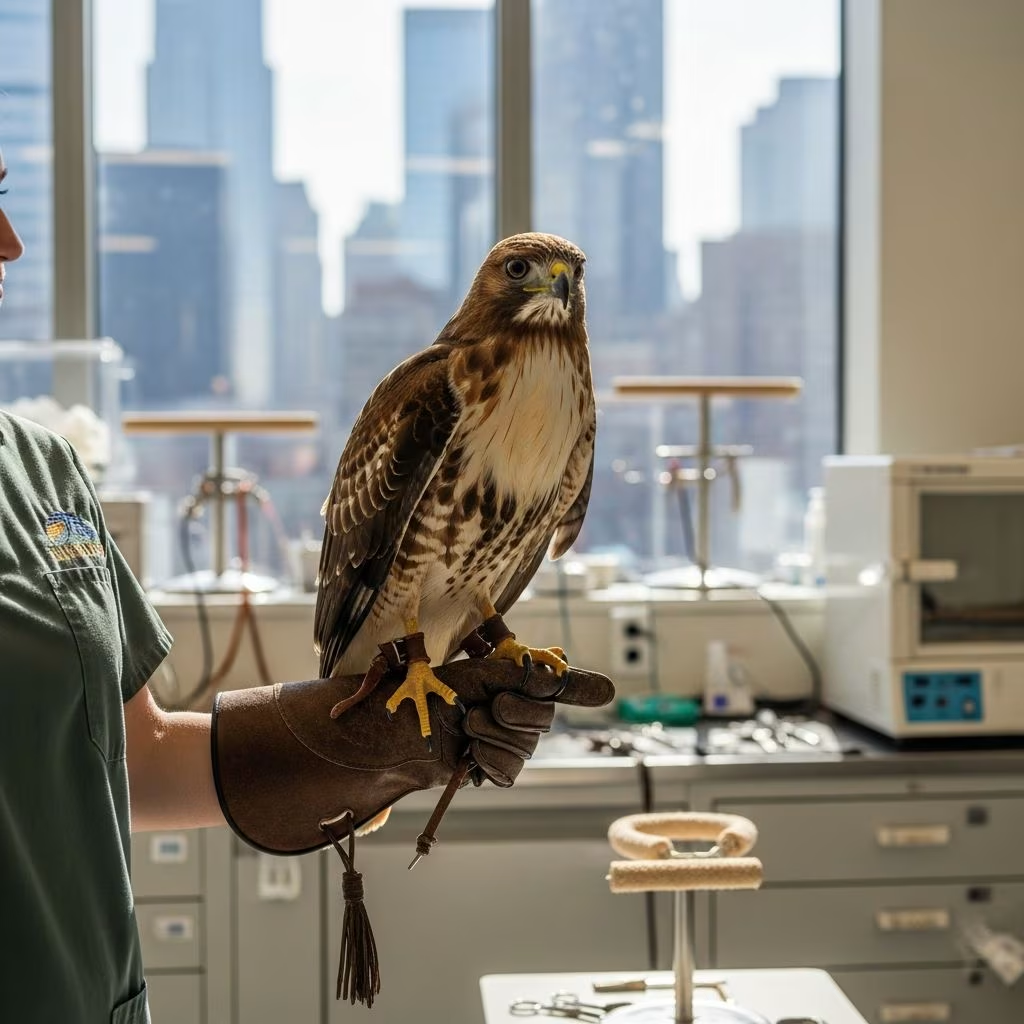
Nestled in the rolling landscape of upstate New York, a remarkable refuge dedicated to avian care has quietly transformed the lives of thousands of birds over the past five decades. This non-profit organization represents one of the most significant privately-operated bird rehabilitation facilities in the United States, combining medical expertise, conservation science, and genuine compassion for creatures in need.
Origins and Evolution of a Conservation Vision
The story of this sanctuary begins with a visionary approach to wildlife rehabilitation. Founded in the early 1970s, the facility started as a personal endeavor and has since evolved into a comprehensive rehabilitation and conservation center. What began as a modest operation has grown into a sprawling complex housing over one thousand individual birds representing nearly one hundred distinct species from across the globe.
The sanctuary’s growth reflects an expanding commitment to its core mission: providing refuge for avian species that cannot survive independently in the wild. Unlike traditional zoos or bird parks, this facility focuses specifically on rehabilitation and recovery, treating each resident as a patient requiring individualized medical and behavioral attention.
Comprehensive Care Protocols and Habitat Design
The sanctuary distinguishes itself through its sophisticated approach to individualized animal care. Rather than housing birds in generic enclosures, the facility’s staff conducts detailed assessments of each resident’s needs, limitations, and potential for recovery. Every habitat receives customized design considerations that reflect both the species’ natural environment and the specific disabilities or injuries each bird has sustained.
This personalized approach extends beyond simple shelter provision. The sanctuary maintains specialized facilities designed to facilitate rehabilitation through environmental enrichment, physical therapy-like conditioning, and behavioral programming tailored to each bird’s circumstances and recovery prospects.
Habitat Customization Strategies
- Environmental design reflecting natural ecosystem characteristics
- Accessibility modifications for birds with physical limitations
- Enrichment elements encouraging natural behaviors and physical conditioning
- Specialized facilities for species-specific rehabilitation needs
- Integration of safety features protecting vulnerable residents
Release and Long-Term Care: Balancing Outcomes
A significant aspect of the sanctuary’s operational philosophy centers on realistic assessment of recovery potential. Approximately forty percent of resident birds have sustained injuries or disabilities preventing successful reintroduction to wild populations. For these individuals, the sanctuary provides permanent refuge, ensuring dignified long-term care within thoughtfully designed environments.
The remaining birds receive intensive rehabilitation aimed at eventual release. The sanctuary maintains specialized facilities and protocols for birds ready to transition back to natural habitats, with dedicated release zones designed to maximize survival probabilities and reduce stress during the critical reintroduction period.
This nuanced approach recognizes that wildlife rehabilitation success cannot be measured solely by release statistics. The dignity and quality of life for permanently disabled birds represents an equally important conservation outcome, ensuring that every resident receives appropriate care regardless of eventual disposition.
Captive Breeding: Advancing Species Recovery
Among the sanctuary’s most significant contributions to avian conservation stands its captive breeding program. This specialized initiative focuses on endangered and threatened species, employing reproductive science to produce offspring for eventual wild release. The program has achieved remarkable success with species traditionally considered difficult or impossible to breed in captive conditions.
Notable Breeding Accomplishments
| Species | Achievement | Significance |
|---|---|---|
| Golden Eagles | Successfully bred disabled parent birds, producing viable offspring for release | Demonstrated reproductive capability in disabled raptors |
| American Bald Eagles | Captive breeding and successful wild release program | Contributed to national symbol species recovery efforts |
| Multiple Species | Ongoing breeding programs for endangered populations | Supports long-term species conservation and genetic diversity |
The sanctuary’s breeding achievements with American Bald Eagles warrant particular recognition. Considered near-impossible in captive conditions, successfully raising and releasing bald eagle chicks represents a remarkable technical and scientific accomplishment, contributing meaningfully to the recovery of this iconic species.
The Gateway to Sanctuary: Community Impact
The facility operates with an open-door policy regarding injured and disabled birds. Regardless of species, condition, or perceived value, the sanctuary accepts birds brought by concerned citizens, wildlife officials, and rescue personnel. This commitment has resulted in the organization caring for remarkably diverse patients—from urban pigeons injured in city neighborhoods to apex predators traumatized by wilderness encounters.
This inclusive approach reflects a philosophical position rejecting hierarchical valuation of avian life. While charismatic species like eagles capture public imagination, the sanctuary recognizes that every bird deserves appropriate care and consideration. This principle has established the organization as a trusted resource for communities seeking help for injured wildlife.
Financial Sustainability and Community Support
Operating without government funding requires the sanctuary to develop alternative revenue streams. The organization maintains financial sustainability through entrance fees, private donations, and public support. This independence from government subsidy has shaped operational philosophies emphasizing efficiency and community engagement.
The sanctuary’s educational initiatives serve dual purposes: generating awareness about avian conservation while building community support for ongoing operations. These programs communicate messages about environmental stewardship, the interconnectedness of species within ecosystems, and humanity’s role in protecting natural biodiversity.
Educational Programming and Conservation Messaging
Beyond direct animal care, the sanctuary functions as a conservation education center. Programming introduces visitors to the diversity of avian species, the ecological roles various birds play within natural systems, and the threats confronting wild populations. Educational experiences at the facility foster deeper appreciation for birds while inspiring conservation consciousness among guests.
Through these initiatives, the sanctuary communicates broader ecological principles about interconnectedness and shared responsibility for environmental preservation. Visitors encounter living examples of biodiversity, witness the complexity of avian behavior and adaptation, and learn about conservation challenges facing wild populations.
Special Recognition and Notable Residents
The sanctuary has gained recognition for caring for remarkable individual birds whose stories capture public attention. These residents become ambassadors for the facility’s mission, their personal narratives illustrating the human dimensions of animal rehabilitation work. Some birds have gained notoriety through media coverage and published accounts of their rescue and recovery journeys.
These prominent residents serve important functions within the sanctuary’s educational programming, allowing visitors to encounter individuals whose backgrounds exemplify the range of circumstances bringing birds to the facility. Whether victims of human cruelty, natural predation, or habitat destruction, these birds represent the diverse challenges confronting avian populations.
Operational Challenges and Continuous Improvement
Maintaining a large-scale bird sanctuary requires ongoing attention to facility infrastructure, medical capabilities, staffing, and financial sustainability. The organization continually faces challenges balancing the breadth of its mission with the practical constraints of resources and expertise.
Recent facility expansions and specialized aviary construction projects reflect the sanctuary’s commitment to improving care conditions and expanding rehabilitation capacity. These improvements demonstrate the organization’s responsiveness to evolving understanding of avian welfare and rehabilitation best practices.
Conservation Philosophy and Future Direction
The sanctuary’s operational approach reflects a philosophical position valuing individual welfare while advancing broader conservation objectives. Rather than viewing rehabilitation and breeding as separate functions, the organization integrates these activities within a comprehensive conservation framework recognizing that individual animal welfare and species-level conservation outcomes reinforce one another.
Looking forward, the sanctuary continues developing enhanced rehabilitation techniques, expanding breeding programs for endangered species, and strengthening community engagement around avian conservation themes. These efforts position the organization as a significant contributor to avian welfare and species recovery within North America.
Visiting and Supporting the Mission
The sanctuary welcomes visitors during its operating season, offering opportunities for direct engagement with avian residents and education about conservation topics. Visitor admission fees directly support operational costs and animal care activities, making visitation a meaningful form of conservation support.
Beyond visitation, individuals can contribute to the sanctuary’s mission through financial donations, volunteer service, and community advocacy. These various engagement pathways allow supporters to participate in the facility’s conservation and rehabilitation work at levels matching their capacity and commitment.
Frequently Asked Questions
What types of birds does the sanctuary accept?
The sanctuary accepts injured and disabled birds of virtually all species, from common urban pigeons to endangered raptors and exotic species. The organization’s inclusive policy means that regardless of a bird’s perceived value or species status, appropriate care is provided.
What percentage of birds are successfully released?
Approximately sixty percent of sanctuary residents eventually return to wild populations following rehabilitation. The remaining forty percent have sustained permanent disabilities requiring long-term sanctuary care.
How does the sanctuary fund its operations?
Without government funding, the sanctuary relies on visitor admission fees, private donations, and community support. Educational programs and special events also generate revenue supporting operational costs.
Does the sanctuary participate in breeding programs?
Yes, the sanctuary operates specialized captive breeding programs for endangered species, with particular success breeding raptors including bald eagles and golden eagles for reintroduction to wild populations.
Can the public visit the sanctuary?
The sanctuary welcomes public visitors during its operating season, offering opportunities to observe diverse bird species and learn about avian conservation and rehabilitation work.
Conclusion: A Model for Avian Conservation
The sanctuary represents a distinctive approach to wildlife rehabilitation combining individual animal welfare with broader conservation objectives. Through decades of dedicated work, the organization has demonstrated that comprehensive avian care, species breeding for reintroduction, and community education can operate synergistically within a single facility.
As challenges to global bird populations intensify through habitat loss, climate change, and human conflicts, facilities like this sanctuary provide both immediate refuge for injured individuals and models for developing effective rehabilitation and conservation strategies. The organization’s commitment to every bird—regardless of species or perceived value—embodies conservation principles recognizing the intrinsic worth and ecological importance of avian biodiversity.
References
- Berkshire Bird Paradise Sanctuary — Birds.com. Accessed 2026-01-30. https://www.birds.com/blog/berkshire-bird-paradise-sanctuary/
- Berkshire Bird Paradise Creating Pigeon Memorial — iBerkshires.com. 2024. https://www.iberkshires.com/story/46743/Berkshire-Bird-Paradise-Creating-Pigeon-Memorial.html
- The Berkshire Bird Paradise — All Over Albany. 2008-09-15. http://alloveralbany.com/archive/2008/09/15/the-berkshire-bird-paradise
- All for the Birds – A story of our bird rescue sanctuary — YouTube. https://www.youtube.com/watch?v=OAw5bi0ZPL8



