

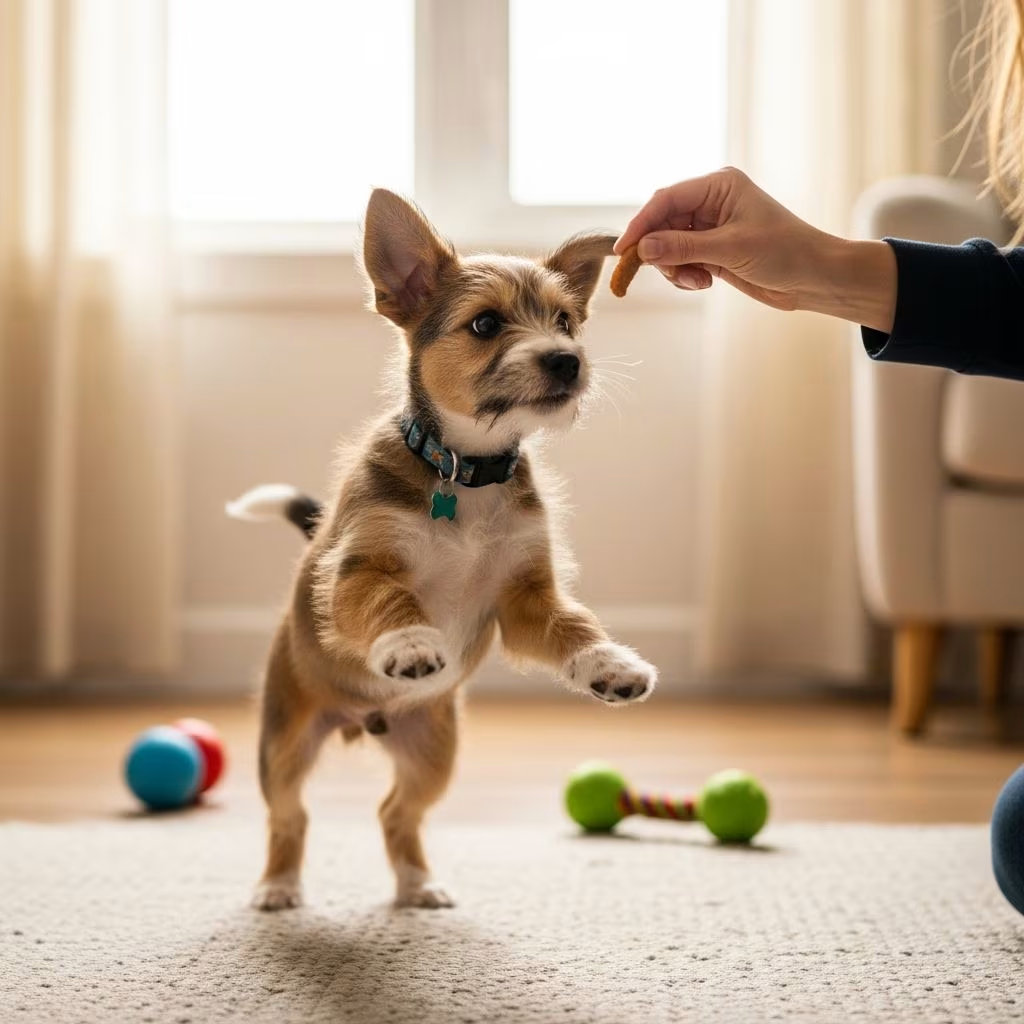
A little bit of sass in a puppy can be charming—until it turns into jumping, mouthing, pushy play, or ignoring you when it really matters. The goal is not to get rid of your pup’s spark, but to channel that confidence into polite, safe behavior using kind, science-based methods.
Modern canine behavior research shows that reward-based training is more effective and has fewer welfare risks than punishment-based methods, which are linked with fear and stress in dogs. That means you can absolutely help your sassy pup learn manners without intimidating them or becoming a “pack leader.”
This guide follows the same main topics often used by professional trainers to help feisty young dogs: puppy classes, reliable recall, clear rules and routines, and positive training strategies that build trust instead of conflict.
Understanding Your Sassy Pup
Before you can change behavior, it helps to understand what you are seeing. Many “sassy” behaviors are normal for puppies—but they still need direction.
Common Signs of a Sassy Puppy
- Jumping on people or furniture to demand attention
- Play-biting or mouthing hands, clothes, or leashes
- Ignoring cues like “come” or “sit” when something more exciting is happening
- Pushy play with other dogs: body-slamming, pinning, or not backing off when asked
- Guarding toys, chews, or favorite spots
These behaviors are rarely about “dominance.” Research and professional guidelines from major veterinary and behavior organizations emphasize that dogs use behavior to get things they want or avoid things they dislike, not to climb a mythical social ladder over you.
Why Punishment Backfires
Harsh methods—like leash jerks, alpha rolls, shouting, or shock collars—may suppress behavior briefly but often increase stress and aggression risk. The American Veterinary Society of Animal Behavior states that punishment-based approaches can cause fear and damage the dog–human bond. Positive reinforcement, by contrast, teaches dogs what to do and builds confidence.
| Approach | Goal | Likely Outcome |
|---|---|---|
| Punishment-based | Stop unwanted behavior through fear or discomfort | Short-term suppression, increased stress, possible fear and aggression |
| Reward-based | Reinforce desired behavior so it happens more often | Stronger learning, better welfare, improved bond with owner |
Start Training Classes Early
One of the most powerful ways to guide a sassy pup is to enroll in a puppy socialization and manners class. Carefully run classes help puppies learn to interact appropriately with people and other dogs while you learn how to read body language and respond to behavior.
Why Puppy Socialization Matters
Veterinary behavior experts emphasize that puppies have a critical socialization window that generally runs through about 12–16 weeks of age. During this time, positive exposure to new people, dogs, sounds, surfaces, and environments helps reduce fear and behavior problems later in life.
- Proper play skills: Learning to take breaks, respond to other dogs’ signals, and avoid rough or bullying behavior.
- Handling and grooming: Getting used to being touched, examined, and comfortably restrained.
- Confidence-building: Exploring new things in a safe, structured way.
What to Look For in a Good Class
- Positive reinforcement only: No choke, prong, or shock collars; no yelling, alpha rolls, or physical corrections.
- Vaccination and health policies: Requirements that balance disease prevention with the need for early socialization, as recommended by veterinary guidelines.
- Small class sizes: So the trainer can monitor interactions and give you individual help.
- Structured off-leash play: Dogs are matched by size and temperament, with breaks as needed.
Ask whether the instructor has certifications or memberships with reputable organizations (for example, those that endorse reward-based methods) and whether they keep up with current behavioral science.
Build a Reliable Recall
A solid recall—your dog coming to you quickly when called—is one of the best tools you have to manage a sassy pup. A good recall lets you interrupt rough play, prevent chasing behavior, and safely redirect your dog back to you.
Step-by-Step Foundations
You can start building recall in low-distraction environments using food, play, and praise as rewards.
- Choose a special cue: Use a word or phrase you do not use for anything else, like “here” or “puppy, come!”
- Start indoors: Say the cue once, then immediately encourage your pup toward you with happy body language and offer a high-value treat when they arrive.
- Make it a party: Deliver several small treats, gentle petting (if your dog enjoys it), or a quick game of tug so coming to you always feels worthwhile.
- Increase difficulty gradually: Practice in different rooms, then the yard, then on a long line outside before attempting off-leash recall around big distractions.
Using Recall to Redirect Sassy Behavior
Once your puppy understands recall, you can use it to manage pushy or overexcited behavior, especially during dog–dog play.
- Call your puppy out of play before they get too wound up.
- Reward generously when they come to you—food, praise, or a quick game with a toy.
- Release back to play as a bonus reward when they are calm. Returning to play is a powerful reinforcer for social, energetic dogs.
If your pup ignores you, calmly go get them (using a leash if needed) and guide them to a brief, boring time-out until they settle. Then try again, giving them another chance to choose correctly. Over time, they learn that responding to recall keeps the fun going, while ignoring you means a short break from the action.
Time-Outs and Boundaries for Pushy Pups
Time-outs can be a helpful tool for managing sassy behavior, especially when a puppy is too excited to respond to cues or is playing too roughly.
How to Use Time-Outs Fairly
- Keep them short: 30 seconds to 2 minutes in a boring, safe space is usually enough.
- Be calm and consistent: No scolding or anger—just quietly remove the puppy from the situation.
- Give another chance: Return your pup to play or interaction when they are calm and repeat the sequence if needed.
Because dogs tend to repeat behavior that is reinforced and drop behavior that is not, brief time-outs can help your puppy learn which choices keep the fun going.
Positive Training Techniques That Really Work
Positive reinforcement means adding something your dog loves (treats, toys, play, access to you or other dogs) right after they do a behavior you like, so that behavior becomes more likely in the future.
Core Principles of Positive Training
- Reward what you want more of: Calm sits, polite greetings, coming when called, relaxing on a mat.
- Manage what you don’t like: Use baby gates, leashes, and supervision to prevent your pup from practicing unwanted behavior.
- Set clear routines: Predictable feeding, walking, play, and rest times reduce frustration and overarousal.
- Train incompatible behaviors: Teach behaviors that make the unwanted behavior physically impossible (for example, “go to mat” instead of jumping on guests).
Examples of Incompatible Behaviors
| Unwanted Behavior | Incompatible Behavior to Teach |
|---|---|
| Jumping on people | Sit to say hello, or go to a mat when the door opens |
| Mouthing hands during play | Hold a toy during play; chew on an appropriate chew |
| Rough play that won’t stop | Come when called for a calm treat break or sniffing game |
Why This Approach Protects the Relationship
Because positive training changes behavior without force, your puppy’s trust in you stays intact. Research shows that reward-based training is associated with better obedience, less anxiety, and improved welfare compared with aversive methods. You become a safe, predictable source of guidance instead of something to fear.
Establishing Rituals and Predictability
Many sassy behaviors are fueled by confusion and frustration. Clear rituals and daily structure help your puppy understand what is expected, which can reduce overexcitement and pushiness.
Helpful Daily Rituals
- Pre-walk routine: Ask for a sit before clipping the leash, and only open the door when your puppy’s paws are on the floor.
- Greeting routine: Everyone ignores jumping and only greets when four paws are on the ground or your puppy is sitting.
- Mealtime routine: Ask for a simple cue like “sit” or “wait” before putting the bowl down, releasing with a word such as “okay” or “free”.
- Play routine: Short play bursts with frequent cue breaks for “sit,” “down,” or “come,” so your pup learns to turn excitement on and off.
Over time, these patterns become automatic, and your puppy learns that good things are predictable when they offer calm, polite behavior.
When to Seek Professional Help
There is a difference between normal puppy sass and behavior that may need more specialized support. If your puppy shows signs of fear, intense guarding, or aggression, contacting a qualified professional early is recommended.
- Growling or snapping when touched, moved, or approached near food or toys
- Freezing, hiding, or panicking in everyday situations
- Persistent, intense aggression toward people or other dogs
Look for a veterinary behaviorist or a positive-reinforcement trainer who follows evidence-based guidelines and is willing to work collaboratively with your veterinarian.
Frequently Asked Questions (FAQs)
Q: Is my puppy being dominant when they act sassy?
Most “sassy” behaviors are not about dominance. They are usually about excitement, curiosity, or having learned that certain actions get attention or access to fun things. Focusing on reinforcement, clear rules, and consistent routines is more effective than trying to establish “alpha” status.
Q: How long does it take to see improvement with positive training?
Many puppies show small changes—like sitting faster or jumping less—in a few sessions, but solid habits take weeks to months of consistent practice. Short, frequent sessions and good management (gates, leashes, supervision) speed progress.
Q: Can I spoil my puppy by using too many treats?
Used correctly, treats are a training tool, not a bribe. Over time you can gradually use smaller treats, vary rewards, and weave in toys, praise, and real-life rewards like going outside or greeting a friend. Monitor overall calories and adjust meals if needed to maintain a healthy weight.
Q: What if my puppy is too distracted to come when called?
Go back a step. Practice recall in easier environments or on a long leash, use higher-value rewards, and avoid repeating the cue over and over. Only use your special recall word when you are reasonably sure your puppy will succeed, then build up gradually.
Q: Are group classes or private lessons better for a sassy pup?
Many sassy puppies benefit from well-run group classes because they can practice manners around other dogs. However, if your puppy is very fearful, reactive, or easily overwhelmed, starting with private sessions using reward-based methods may be more appropriate.
References
- AVSAB Position Statement on Humane Dog Training — American Veterinary Society of Animal Behavior. 2021-10-15. https://avsab.org/wp-content/uploads/2021/10/Humane-Dog-Training-Position-Statement-2021-Update.pdf
- Companion Animal Welfare Education: The Effects of Using Aversive Training Methods in Dogs—A Review — Vieira de Castro, A.C. et al., Journal of Veterinary Behavior. 2020-05-01. https://doi.org/10.1016/j.jveb.2019.12.010
- AVSAB Position Statement on Puppy Socialization — American Veterinary Society of Animal Behavior. 2008-03-01. https://avsab.org/wp-content/uploads/2019/01/Puppy_Socialization_Position_Statement_Download_-_10-3-14.pdf
- Canine Enrichment and Training — American Kennel Club. 2023-02-10. https://www.akc.org/expert-advice/training/positive-reinforcement-training/
- Using Food Rewards in Dog Training — RSPCA (Royal Society for the Prevention of Cruelty to Animals). 2022-06-20. https://www.rspca.org.uk/adviceandwelfare/pets/dogs/training/positive



