

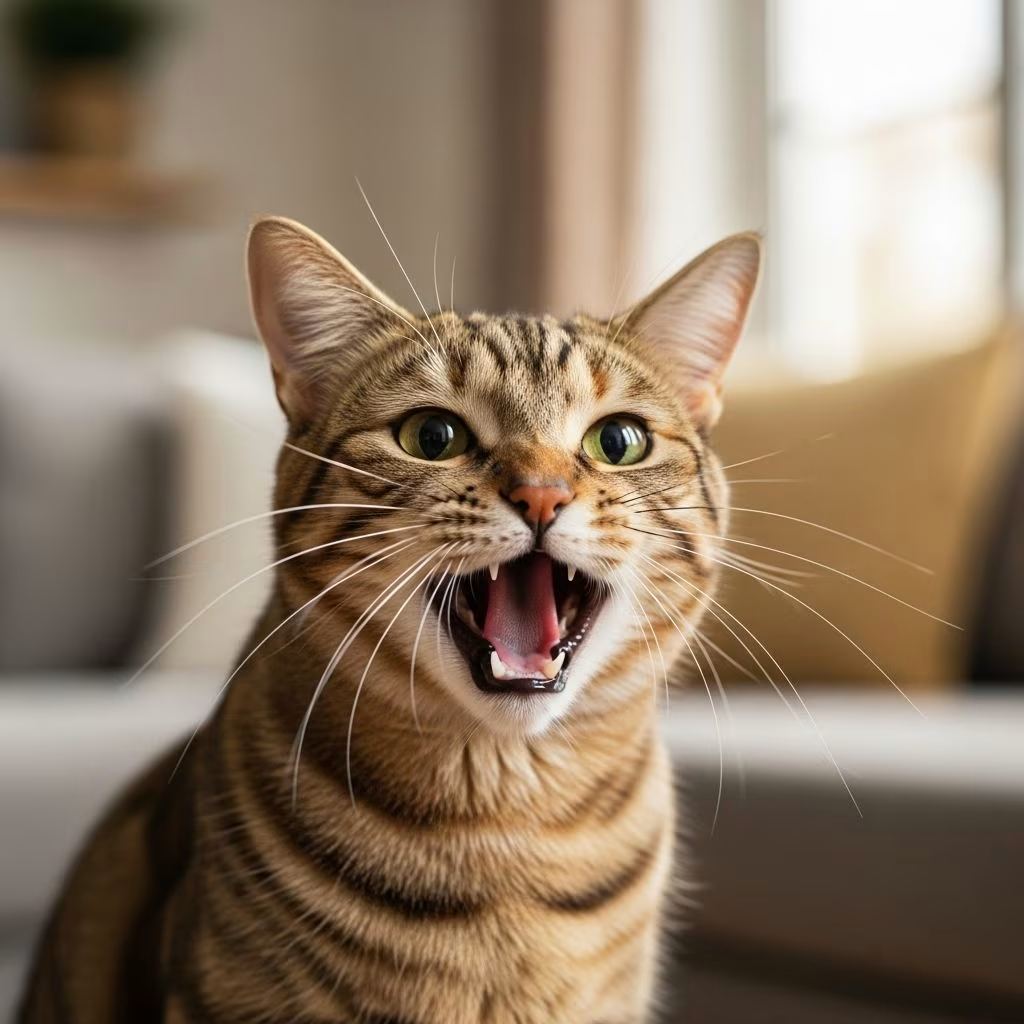
Your newly adopted cat’s persistent meowing can be both endearing and exhausting. This vocal behavior often signals unmet needs or adjustment challenges in their new environment. Understanding the underlying causes allows you to address them effectively, fostering a calmer household.
Why Adopted Cats Vocalize More Than Usual
Cats communicate through meows primarily with humans, unlike their silent interactions with other felines. A sudden increase in vocalization after adoption typically stems from transition stress, routine disruptions, or physical discomfort. Environmental shifts, such as a new home, trigger disorientation, leading to heightened calls for reassurance.
Statistics highlight the prevalence: Approximately 15% of cats display stress-induced meowing post-adoption, while up to 30% of indoor cats vocalize excessively due to insufficient stimulation. Identifying triggers early prevents escalation into chronic habits.
Primary Triggers for Non-Stop Meowing
Several factors contribute to this behavior. Here’s a breakdown of the most common ones:
- Hunger Signals: Irregular feeding prompts vocal demands. Cats on inconsistent schedules meow 40% more than those with routines.
- Attention Demands: Learned behavior where meowing yields responses reinforces the habit.
- Adjustment Anxiety: New surroundings cause uncertainty, amplified by changes like moves or new pets.
- Health Problems: Sudden onset often indicates pain or illness, affecting 20% of senior cats via cognitive issues.
- Hormonal Drives: Intact cats meow to seek mates, reduced by 90% post-spay/neuter.
- Boredom Effects: Lack of engagement leads to 35% more vocalization in understimulated cats.
Step-by-Step Diagnosis for Your Cat
Begin by observing patterns. Note timing (e.g., mealtime, night), duration, and accompaniments like pacing or appetite changes. Track these in a journal for your vet visit.
| Observation | Possible Cause | Action Step |
|---|---|---|
| Meows at fixed times daily | Hunger or routine disruption | Standardize feeding schedule |
| Incessant at night | Anxiety, age-related confusion, or heat | Provide nightlight, check for spay status |
| Sudden increase with lethargy | Medical issue | Immediate vet exam |
| Only when ignored | Attention-seeking | Ignore vocalization, reward silence |
| With restlessness or spraying | Hormonal | Consult vet for sterilization |
This table aids quick assessment, prioritizing urgent signs like weight loss or sudden changes.
Addressing Hunger-Related Vocalizations
Food-related meowing thrives on inconsistency. Establish 2-3 daily meals at precise times, aligning with your cat’s age and activity. High-quality diets meeting AAFCO standards prevent nutritional gaps that spur complaints.
Automatic feeders maintain reliability for busy owners, cutting vocalizations by 25% per surveys. Avoid free-feeding if weight management is needed; opt for high-fiber options to promote satiety without excess calories.
Transition tip: Gradually switch foods over 7-10 days to avert pickiness. If begging persists post-routine, rule out medical hunger via vet bloodwork.
Reducing Attention-Seeking Meows
Cats quickly learn meowing prompts interaction. Break this by ignoring calls entirely—turn away, avoid eye contact—then reward quiet moments with play or affection. Consistency yields results in 75% of cases within two weeks.
Daily 15-20 minute sessions with interactive toys like wand teasers burn energy and fulfill social needs. Puzzle feeders extend engagement, mimicking hunt instincts and slashing attention pleas by 35%.
Enrich vertically: Install shelves, perches, and rotating toys weekly to sustain interest, as 65% of cats thrive on novelty.
Easing Stress from New Environments
Adoption disrupts security. Create a sanctuary room with litter, food, bed, and toys for gradual house acclimation. Pheromone diffusers like synthetic feline calming agents ease anxiety in 80% of cats.
Safe hides and window views reduce overwhelm, cutting stress behaviors by 60%. For multi-pet homes, slow introductions via scent swapping prevent territorial yowls.
Health Checks: When to See a Vet
Persistent or altered meowing warrants professional evaluation. Conditions like hyperthyroidism, arthritis, or kidney disease manifest vocally, diagnosable via 95% accurate tests.
Seniors risk cognitive dysfunction (20% over age 12), prompting disoriented night calls—mitigate with low lights. Pain relief drops vocalization in 85% of cases. Schedule checkups annually, biannually for elders.
Managing Hormonal and Breeding Calls
Unspayed females yowl in heat cycles; unneutered males respond to scents. Sterilization eliminates 90% of such noise, plus slashing cancer risks.
Indoor cats cycle year-round; prevent via isolation from strays pre-procedure. Post-op, monitor for 1-2 weeks as hormones wane.
Combating Boredom in Indoor Cats
Enrichment curbs 45% of night meows and 30% overall. Daily 20-minute AVMA-recommended play, varied toys, and foraging devices keep minds sharp.
Window perches for bird-watching and climber gyms promote independence, ideal for apartment dwellers.
Nighttime Meowing Strategies
Evening vocalizations disrupt sleep. Tire cats via pre-bed play, then ignore pleas—use earplugs initially. Auto-feeders in distant rooms redirect focus.
- Dim nightlight for orientation, especially seniors.
- Consistent bedtime routine signals rest time.
- Herbal calming aids (vet-approved) for tough cases.
Training Techniques for Quieter Cats
Positive reinforcement trumps punishment. “Quiet” cue followed by treats builds association. Interactive sessions reinforce bonds without vocal rewards.
Consistency across household members prevents mixed signals. Track progress weekly; consult behaviorists if unchanged after 4 weeks.
Long-Term Prevention Tips
Proactive care minimizes relapses:
- Annual vet wellness exams catch issues early.
- Scheduled enrichment prevents boredom buildup.
- Family education ensures uniform responses.
- Health monitoring via apps or journals.
Patience pays: Most adopted cats settle in 2-4 weeks with interventions.
Frequently Asked Questions
Is constant meowing normal for adopted cats?
Yes, temporarily—it’s adjustment communication. Persistent cases need investigation.
How long until my cat stops meowing excessively?
1-4 weeks with consistent strategies; vet issues prolong it.
Should I punish a meowing cat?
No—ignore instead; punishment heightens stress.
Can diet changes stop meowing?
Yes, if hunger-related; consult vet for tailored plans.
What if vet finds no issues?
Focus on behavior mod and enrichment.
References
- Managing Excessive Meowing in Cats: Understanding and Solutions — RSHPets. 2023. https://rshpets.com/blogs/cat-training-behavior/managing-excessive-meowing-in-cats-understanding-and-solutions
- Why does my cat meow so much? 7 Causes and solutions — Riverwood Pet Food. 2023. https://www.riverwoodpetfood.com/en/blogs/why-does-my-cat-meow-so-much-7-causes-and-solutions
- Meowing and Yowling — ASPCA. 2023. https://www.aspca.org/pet-care/cat-care/common-cat-behavior-issues/meowing-and-yowling
- When Meowing Goes from Cute to Excessive — Cat Town Oakland. 2023. https://www.cattownoakland.org/cat-town-blog/excessive-meowing
- The Cat’s Meow! Caterwauling in Cats — VCA Animal Hospitals. 2023. https://vcahospitals.com/know-your-pet/the-cats-meow-caterwauling-in-cats



