

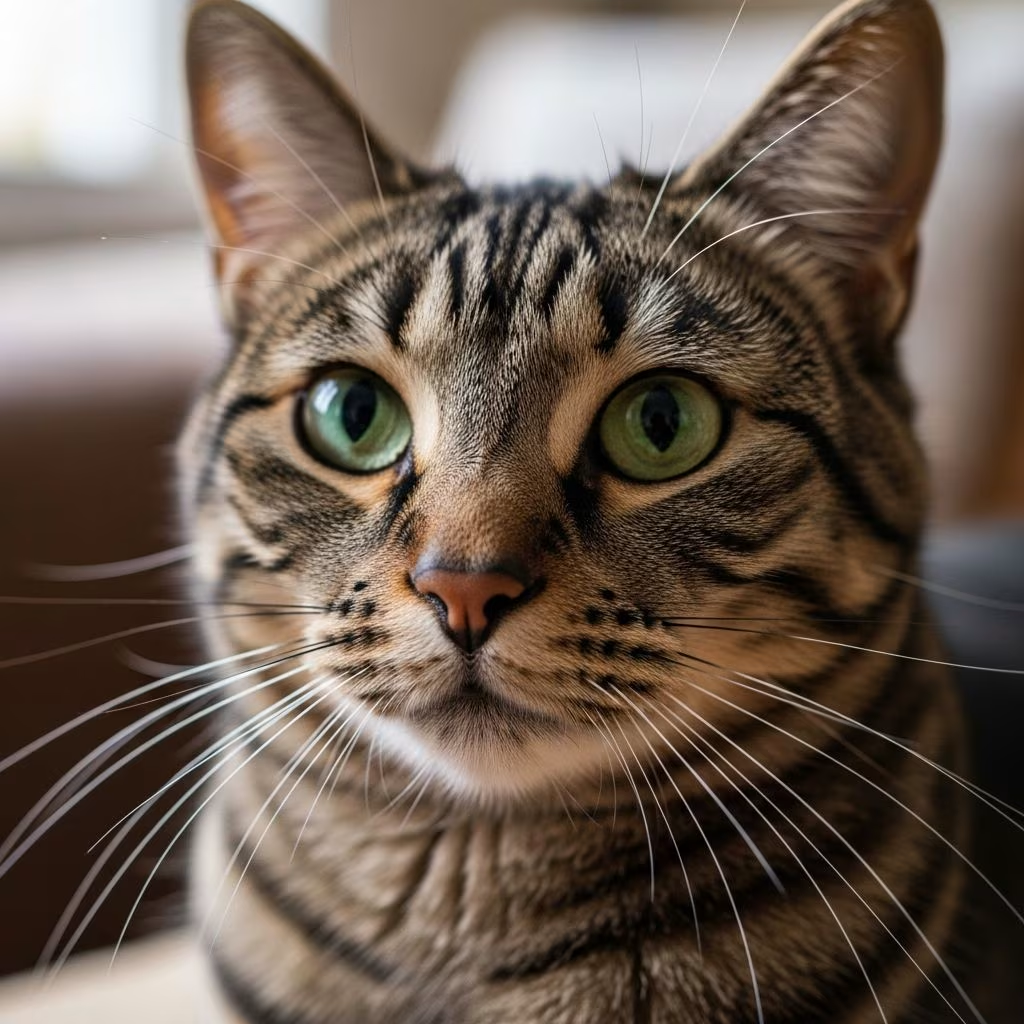
Cat whiskers, those distinctive facial features, play a crucial role far beyond aesthetics. Composed of keratin, the same protein as human hair, they serve as sophisticated sensory organs that help cats interact with their world. Trimming them might seem harmless since they lack nerve endings in the shaft, but this practice disrupts essential functions like navigation and balance, leading to potential hazards for your pet.
The Remarkable Biology of Feline Whiskers
Whiskers, scientifically known as vibrissae, are specialized hairs embedded deeply in hair follicles rich with nerves and blood vessels. Cats typically have 24 whiskers arranged in four rows on each side of their muzzle, plus additional ones above the eyes, on the chin, and even on the backs of their front legs. These structures are thicker and stiffer than regular fur, tapering to a fine point, and they naturally shed and regrow every few months as part of a normal cycle.
Unlike ordinary hairs, whiskers connect to proprioceptors—sensory receptors that detect movement and position. This setup allows cats to sense air currents, vibrations, and subtle environmental changes. Longhaired breeds tend to have longer whiskers proportional to their body size, while shorthaired or hairless cats have shorter ones, but all share this critical sensory capability.
- Rich innervation: Follicles contain thousands of nerve endings, making whiskers highly sensitive to touch and movement.
- No pain in trimming: The shaft itself has no nerves or blood vessels, so cutting does not hurt.
- Natural regeneration: Lost whiskers regrow fully within 2-3 months without intervention.
Essential Functions: How Whiskers Keep Cats Safe and Agile
Whiskers act as a cat’s radar system, providing constant feedback about their surroundings. When a cat spreads its whiskers sideways, they span the width of its body, enabling precise judgments about whether it can squeeze through tight spaces like gaps under furniture or narrow doorways. Without this, cats risk getting stuck, which can cause panic or injury.
Balance is another key role. Proprioceptors at the whisker base help cats maintain orientation in space, crucial for landing on their feet during jumps or navigating in low light. Trimming reduces this feedback, mimicking the disorientation humans feel when balancing blindfolded.
| Whisker Function | Description | Impact of Trimming |
|---|---|---|
| Spatial Measurement | Whiskers match body width for fitting through spaces | Misjudges gaps, risk of entrapment |
| Balance and Proprioception | Detects body position and air flow | Leads to falls, poor landings |
| Environmental Sensing | Picks up vibrations and air currents | Reduced awareness of nearby objects |
| Low-Light Navigation | Acts as radar in darkness | Bumps into furniture or walls |
Additionally, whiskers communicate emotions: forward-pointing for curiosity, flattened for aggression or fear. They enhance hunting by detecting prey movements and aid in grooming by sensing facial contours.
The Hidden Dangers of Trimming Cat Whiskers
Although painless, trimming whiskers immediately impairs sensory input. Cats may bump into walls, miscalculate jumps, or hesitate before entering familiar spaces. This disorientation peaks in the first weeks post-trim, increasing accident risks, especially outdoors where falls from heights or encounters with traffic become more likely.
Pulling whiskers is far worse—known as ‘blood hairs’ due to vascular follicles, extraction causes bleeding, pain, and infection risk. Never attempt this, even for mats.
In multi-cat homes or with kittens, altered whiskers can disrupt social dynamics, as cats read each other’s whisker positions for mood cues. Mother cats sometimes chew kitten whiskers to encourage independence, but this is a natural, non-harmful behavior limited to early development.
Curly Whiskers in Cats: Beauty Without the Trim
Some cats, particularly breeds like the Selkirk Rex or American Wirehair, sport naturally curly whiskers due to genetic mutations affecting hair texture. These unique features add charm but function identically to straight ones. Owners might be tempted to straighten or trim for neatness, but this compromises sensory ability without benefit. Embrace the curls—they’re a sign of healthy vibrissae.
Curly whiskers shed and regrow with the same cycle, often appearing wavier during regrowth. If asymmetry occurs naturally, it’s usually harmless unless accompanied by hair loss elsewhere, signaling nutrition or health issues.
What to Do If Your Cat’s Whiskers Are Accidentally Trimmed
Accidents happen—perhaps during grooming or a playful mishap. Here’s a step-by-step recovery plan:
- Confine indoors: Eliminate outdoor risks like jumping fences or crossing roads.
- Stabilize the environment: Avoid moving furniture; keep pathways clear.
- Limit activity: No high climbs, rough play, or new obstacles for 4-6 weeks.
- Monitor behavior: Watch for excessive clumsiness, head tilting, or anxiety. Consult a vet if persistent.
- Support nutrition: High-protein diet aids regrowth; avoid supplements unless vet-recommended.
Regrowth starts at the follicle within days, reaching full length in 2-3 months. Patience is key—do not pluck stubs.
Recognizing Whisker Loss: Normal vs. Concerning
Finding shed whiskers around the house is normal; each has a lifespan of months. Concern arises if:
- Multiple whiskers fall simultaneously.
- Follicles appear inflamed or bald patches form.
- Loss coincides with weight loss, lethargy, or skin issues.
Potential causes include stress, poor diet, allergies, or parasites. Veterinary checkups rule out thyroid problems or dermatitis. Blood tests may be needed for chronic cases.
Grooming Alternatives: Keeping Your Cat Looking Sharp Safely
Focus on regular brushing to prevent mats near whiskers without touching them. Use wide-toothed combs for long fur and enzymatic wipes for facial cleaning. Professional grooming sessions can maintain coat health while preserving whisker integrity.
Enrich the environment with scratching posts, tunnels, and toys to satisfy natural behaviors, reducing stress-related shedding.
FAQs About Cat Whiskers
Is it okay to trim a cat’s whiskers for a photoshoot?
No. Even short trims hinder sensory functions, causing stress that outweighs aesthetic gains.
How long do cat whiskers take to grow back?
Typically 2-3 months for full regrowth, varying by cat age, health, and nutrition.
Do all cats have the same number of whiskers?
Most have 24 on the muzzle (12 per side), but totals vary slightly by individual.
Can kittens be born without whiskers?
Rarely; they’re present at birth and vital for early nursing and mobility.
Are curly whiskers a sign of a health problem?
Often genetic in certain breeds, but sudden changes warrant a vet visit.
Preserving Your Cat’s Natural Superpowers
Whiskers embody feline evolution—tools honed for survival. Respecting them ensures your cat remains confident and capable. Next time you admire those twitching vibrissae, remember their luck-bringing lore and indispensable role.
References
- Can You Trim Cat Whiskers? — Tractor Supply Co. (Jodi Helmer). N/A. https://www.tractorsupply.com/tsc/cms/life-out-here/pet/cats/can-you-trim-cat-whiskers
- WARNING: What Happens When You Cut a Cat’s Whiskers — YouTube. N/A. https://www.youtube.com/watch?v=Q9JqkzRDWS4
- Is It Bad If My Dog Or Cat’s Whiskers Get Trimmed? A Veterinarian Explains — The Mermaid Vet. N/A. https://themermaidvet.com/is-it-bad-if-my-dog-or-cats-whiskers-get-trimmed-a-veterinarian-explains/



