

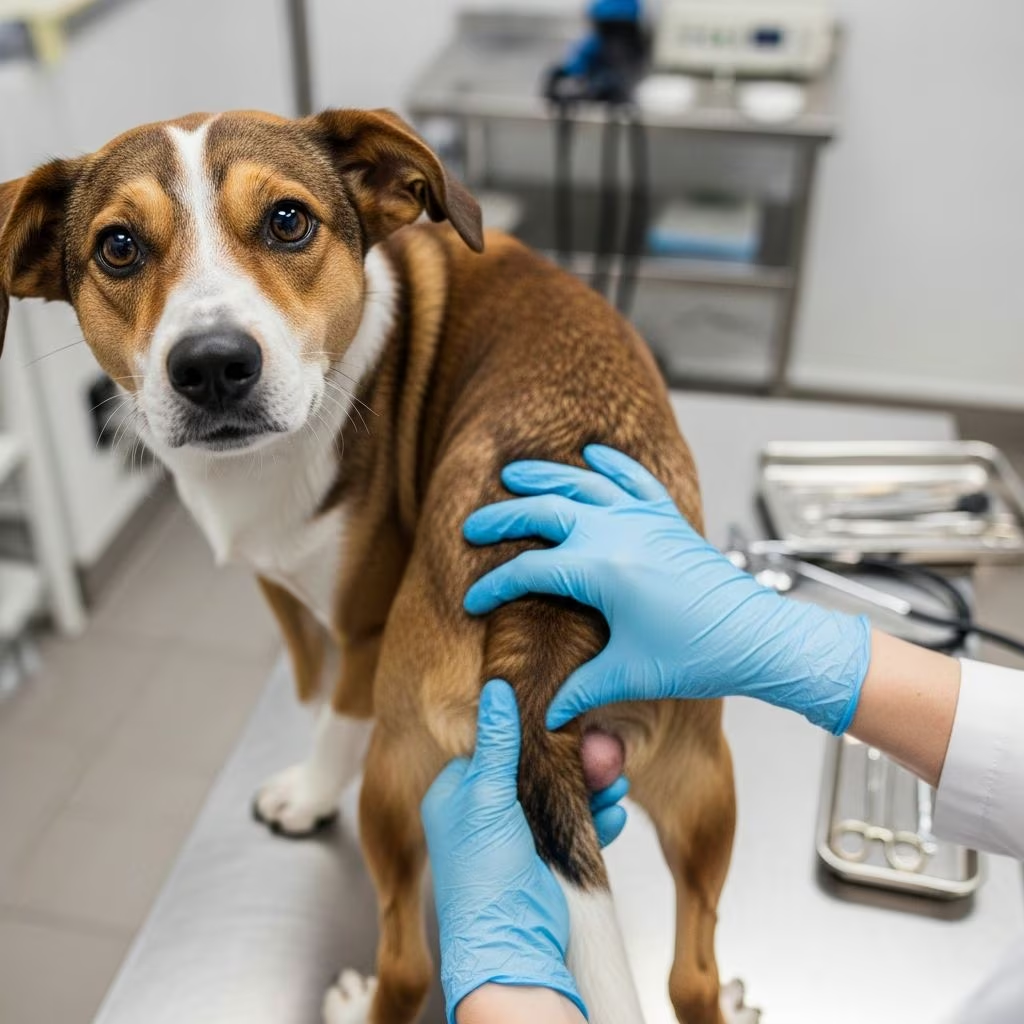
Male dogs undergo neutering, a common surgical procedure that removes both testicles, eliminating their ability to reproduce and produce testosterone. This operation, also called castration, fundamentally alters the reproductive anatomy while leaving the scrotum intact initially.
The Male Dog’s Reproductive Anatomy Basics
The testicles, or testes, are paired oval structures housed in the scrotum, a skin sac positioned between the hind legs. These organs produce spermatozoa for reproduction and secrete testosterone, which drives male secondary characteristics, sexual behavior, and gland functions like the prostate.
Each testis connects to an epididymis, a coiled tube where sperm matures. From there, the vas deferens transports sperm to the urethra near the prostate, which adds fluid to semen. The scrotum’s tunica dartos muscle regulates temperature by wrinkling or relaxing, keeping testes cooler than core body temperature for optimal sperm production.
Testes descend from the abdomen into the scrotum shortly after birth—typically by 10 days, fully by 6-8 weeks. The process involves abdominal and inguinoscrotal phases, guided by hormones like Anti-Müllerian hormone, with the inguinal canal closing around 6 months.
What Occurs During Neutering Surgery
In a standard neuter for dogs, veterinarians make a single incision just cranial to the scrotum. Both testicles are isolated, their spermatic cords (containing vas deferens, blood vessels, nerves, and lymphatics) are ligated with dissolvable sutures to prevent bleeding, and the testes are excised. The scrotal skin remains, closed with subcutaneous stitches that dissolve naturally.
The spermatic cord includes the pampiniform plexus—a coiled artery and veins for thermoregulation—and the ductus deferens with its muscular coat. Removal targets these fully, ensuring no testicular tissue persists.
For puppies or small dogs, prescrotal incisions are common; larger adults might use scrotal approaches. Anesthesia, pain management, and monitoring ensure safety. The procedure lasts 20-60 minutes, often outpatient.
Do Neutered Dogs Retain Testicles?
No, neutered dogs have no testicles post-surgery; both are completely removed. The scrotum may appear empty or shrunken but persists as loose skin. Over weeks to months, it contracts due to lack of testosterone, becoming smaller and less prominent, sometimes resembling a smooth flap.
Visual checks reveal no palpable testes in a neutered dog. Intact males have firm, oval testes easily felt in the scrotum. Post-neuter, the area feels flat. Fur regrows, further disguising the site.
Scrotum Changes After Neutering
- Immediate Post-Op: Scrotum looks empty, mildly swollen from surgery.
- 1-2 Weeks: Swelling subsides; bruising fades.
- 1-3 Months: Skin atrophies, shrinks significantly.
- Long-Term: Minimal, flattened scrotum blends with body contours.
Factors like age, breed, and hormones influence shrinkage speed. Older dogs or those with prolonged testosterone exposure may retain slightly more scrotal tissue.
Health Benefits of Neutering Male Dogs
Neutering prevents reproduction, curbing overpopulation. It slashes risks of testicular cancer, prostate issues (e.g., hyperplasia, infections), and perianal tumors. Testosterone reduction curbs roaming, marking, aggression, and mounting.
| Condition | Intact Risk | Neutered Risk Reduction |
|---|---|---|
| Testicular Cancer | High | Eliminated |
| Prostate Disease | Common with age | 80-90% lower |
| Roaming/Escaping | Frequent | Markedly decreased |
| Humping/Marking | Behavioral norm | Greatly reduced |
Early neutering (before 6 months) maximizes benefits, though timing debates exist for large breeds regarding joint health.
Potential Risks and Complications
While safe, risks include anesthesia reactions, infection, bleeding, or scrotal swelling. Rare issues: stump granulomas (inflamed cord remnants) or incomplete ligation causing hemorrhage. Cryptorchid dogs (undescended testes) face higher cancer risks, necessitating neuter.
Post-op care: E-collar to prevent licking, limited activity 7-14 days, monitor incisions. Most recover fully without issues.
Cryptorchidism and Special Neutering Cases
Cryptorchidism affects 1-3% of males; one/both testes fail to descend by 40 days. Abdominal testes produce testosterone but poor sperm, raising cancer odds. Surgery removes them via laparotomy or larger incisions; breeding is prohibited.
Monorchidism (one testis) or tumors also prompt neutering. Prostate size correlates with testosterone; post-neuter, it shrinks.
Behavioral and Physical Changes Post-Neuter
Testosterone drop reduces libido, aggression toward dogs, urine marking. Changes appear in days to months. Metabolism slows, risking weight gain—adjust diet/exercise.
Physical shifts: Less oily coat, reduced muscle mass. Scrotum isn’t removed, avoiding cosmetic surgery needs.
How to Confirm If a Dog Is Neutered
- Examine scrotum: Smooth, flat, no firm lumps.
- Palpate gently: No testes felt.
- Check behavior: Lacks mounting, strong marking urges.
- Vet records or tattoo/scan for proof.
- Age/scar: Faint prescrotal scar in adults.
Avoid assumptions; ultrasound or exam confirms.
Common Myths About Dog Neutering Debunked
- Myth: Fake testicles are implanted. No—pure urban legend; surgery removes real ones.
- Myth: Scrotum is removed. Left intact to heal naturally.
- Myth: Neutering causes laziness. Weight gain from calorie needs, not procedure.
- Myth: All behaviors stop instantly. Learned habits may linger.
Frequently Asked Questions (FAQs)
Will my dog’s scrotum disappear after neutering?
It shrinks substantially but doesn’t vanish completely, becoming a small skin fold.
At what age should I neuter my male dog?
Typically 6-9 months; consult vet for breed-specific advice.
Does neutering hurt my dog long-term?
No, benefits outweigh risks; pain is managed perioperatively.
Can neutered dogs still mate?
No sperm production; mounting may occur from habit.
What if my dog was cryptorchid?
Neutering removes retained testes to prevent cancer.
Choosing Neutering for Your Dog
Weigh lifestyle, health, breed. Discuss with vets for personalized timing. Neutering enhances life quality, prevents issues, supports responsible ownership.
References
- Normal genitalia of male dog – Veterinary Reproductive Pathology — Vet Repath. Accessed 2026. http://vetrepropath.com/male/Male_canine/maledog_normal.html
- Dog Neutering: Everything You Need To Know — PetMD. Accessed 2026. https://www.petmd.com/dog/procedure/dog-neutering-everything-you-need-know
- Dog Neutering Explained: Benefits, Process & Recovery — Paolo Vet. Accessed 2026. https://www.paolivet.com/health/dog-neutering/
- Anatomy of the male, female, and everything in between — DVM360. Accessed 2026. https://www.dvm360.com/view/anatomy-male-female-and-everything-between-proceedings-0
- Neuter surgery — Meadows Veterinary Clinic. Accessed 2026. http://www.meadowsvetclinic.com/neuter-surgery.html
- Testes and Scrotum — Veterian Key. Accessed 2026. https://veteriankey.com/testes-and-scrotum/



