

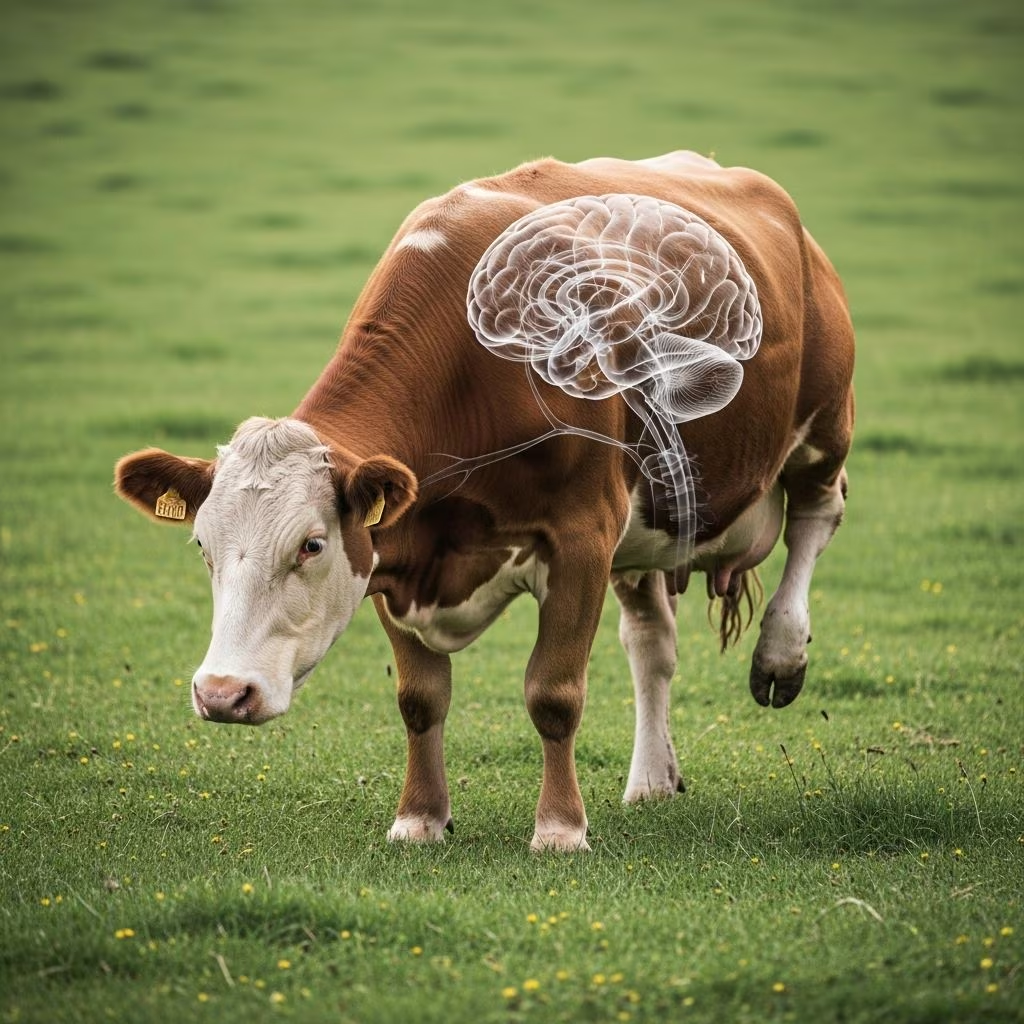
Cattle lameness often stems from hoof or joint problems, but neurological disorders can mimic these issues, leading to abnormal gaits, weakness, or paralysis. These conditions arise from damage to the brain, spinal cord, or peripheral nerves, frequently triggered by trauma, infections, toxins, or congenital factors. Understanding these helps farmers and veterinarians distinguish them from orthopedic causes for timely intervention.
Understanding Lameness in a Neurological Context
Lameness refers to any deviation from normal gait, causing pain or reduced mobility. While 70-90% of cases involve hoof lesions like digital dermatitis or sole ulcers, non-hoof origins include neurologic diseases. These affect the nervous system, disrupting coordination, strength, or sensation in limbs. Early recognition is crucial, as untreated cases reduce productivity, welfare, and can lead to herd-wide losses.
Neurologic lameness presents as ataxia (uncoordinated movement), paresis (weakness), or paralysis. Unlike joint pain, which worsens with weight-bearing, neurologic signs persist at rest and often affect multiple limbs symmetrically. Differentiation requires history, clinical exams, and sometimes advanced diagnostics like CSF analysis.
Common Types of Neurological Gait Abnormalities
Cattle exhibit various gait issues based on lesion location:
- Ataxia: Exaggerated limb movements, stumbling, or wide-based stance due to cerebellar or sensory pathway damage.
- Paresis/Paralysis: Hindlimb weakness progressing to recumbency, often from spinal cord lesions.
- Spasticity/Rigidity: Stiff gait from upper motor neuron issues or toxins like tetanus.
- Dysmetria: Hypermetria (high-stepping) or hypometria (short-stepping), linked to cerebellar dysfunction.
These signs help localize problems: brainstem lesions cause circling or head tilt; spinal issues lead to dragging toes; peripheral nerve damage results in knuckling or splaying.
Traumatic Nerve Injuries and Their Impact
Trauma is a leading cause of peripheral nerve damage in cattle. During calving, excessive traction injures the obturator or sciatic nerves, causing adductor paresis—cows cross hind legs or fail to rise. Hip-lock in anterior presentations exacerbates this.
Non-parturient trauma includes fractures, blows from handling, or transport injuries. Nerve paralysis mimics tendon ruptures but lacks swelling. Diagnosis involves ruling out fractures via palpation and history. Prognosis improves with early support like slings and anti-inflammatories, though severe cases may require euthanasia.
In beef cattle, foot rot often coincides with musculoskeletal trauma from rough handling.
Infectious Neurological Disorders Causing Lameness
Bacterial infections frequently invade the central nervous system (CNS), producing gait deficits.
Listeriosis
This acute meningoencephalitis from Listeria monocytogenes affects ruminants via contaminated feed. Signs include fever, depression, salivation, and circling due to caudal cranial nerve deficits (V-XII). Cattle lean against walls, face away from light, and show unilateral facial paralysis. Outbreaks trace to silage; sporadic cases from trigeminal nerve ascension.
Treatment with high-dose penicillin offers fair success if started early, but mortality reaches 80% in advanced stages.
Tetanus
Caused by Clostridium tetani toxin from wounds, tetanus induces progressive rigidity. Initial gait stiffness evolves to sawhorse stance, lockjaw, and erect ears within 24 hours. Hypertonia affects limbs, causing stiff-legged walking before recumbency.
Prevention via vaccination and wound care is key; treatment is supportive with antitoxin and muscle relaxants, but prognosis is guarded.
Other Infections
Rabies presents with straining, aggression, paresis, and bellowing, progressing to paralysis. Vaccination is rare in cattle due to low incidence. Rabies mandates reporting and euthanasia.
| Disorder | Main Signs | Source | Treatment Outlook |
|---|---|---|---|
| Listeriosis | Circling, salivation, facial droop | Silage, feed | Fair with antibiotics |
| Tetanus | Rigidity, lockjaw, stiff gait | Wounds | Guarded |
| Rabies | Straining, paresis, aggression | Bites | Euthanasia |
Toxic and Metabolic Contributors to Gait Issues
Poisons and metabolic imbalances disrupt nerve function profoundly.
Lead toxicity causes cerebral ischemia, leading to hysteria, blindness, and ataxia. Inspect premises for batteries or paints. Chelation therapy aids recovery if prompt.
Plant toxins (bracken fern, horsetail) induce thiamine deficiency, causing opisthotonos and incoordination. Botulism produces flaccid paralysis from feed contamination.
Metabolic causes include hypocalcemia (milk fever), with early fasciculations and weakness; hyperkalemic periodic paralysis in susceptible breeds; and hepatic encephalopathy from liver failure.
Congenital and Developmental Neurological Problems
Inherited defects manifest as tremors, ataxia, or weaver syndromes. Bovine virus diarrhea (BVD) from maternal infection causes cerebellar hypoplasia, leading to dysmetria.
Degenerative conditions like equine degenerative myeloencephalopathy analogs in cattle involve neuraxonal dystrophy, causing high-stepping hindlimbs. Nutritional thiamine shortages in bracken-fed animals mimic these.
Diagnosing Neurologic vs. Musculoskeletal Lameness
Differentiation is challenging without parturition history.
- History: Onset, progression, exposures.
- Exam: Check for hyperreflexia (upper motor neuron), hyporeflexia (lower), pain on manipulation.
- Tests: CSF tap for infection, bloodwork for toxins/metabolites, imaging if available.
Joint trauma causes focal swelling; neurologic lacks it but shows symmetric deficits.
Treatment and Management Strategies
Supportive care is cornerstone: clean housing, physiotherapy, fluids. Specifics include:
- Antibiotics for infections (e.g., penicillin for listeria).
- Antitoxins for tetanus/botulism.
- Vitamins (thiamine) for deficiencies.
- Surgical decompression for compressions.
Recumbent cows need hobbling to prevent pressure sores; cull chronic cases.
Prevention: Best Practices for Herd Health
- Vaccinate against tetanus, BVD.
- Ensure clean calving, proper traction.
- Avoid silage contamination; scout for toxins.
- Nutritionally balance diets, especially periparturient.
- Regular lameness scoring and early vet calls.
Frequently Asked Questions (FAQs)
What is the most common neurologic cause of lameness in cattle?
Traumatic nerve injuries during calving, like obturator paresis.
How do I tell if lameness is neurologic?
Look for ataxia, symmetry, no focal pain/swelling, persistent deficits.
Can tetanus be treated successfully?
Guarded prognosis; prevention via vaccination is preferred.
Is listeriosis contagious between cattle?
No, but from contaminated feed; isolate cases.
What role does nutrition play?
Deficiencies like thiamine cause ataxia; balance minerals to prevent hypocalcemia.
References
- Diseases of the Nervous System — PMC (NCBI). 2020-06-15. https://pmc.ncbi.nlm.nih.gov/articles/PMC7322266/
- Overview of Lameness in Cattle — Merck Veterinary Manual. 2025. https://www.merckvetmanual.com/musculoskeletal-system/lameness-in-cattle/overview-of-lameness-in-cattle
- Common neurological diseases in food animal (Proceedings) — dvm360. 2023. https://www.dvm360.com/view/common-neurological-diseases-food-animal-proceedings
- Calving Part 3 – Nerve Damage — NADIS. 2022. https://www.nadis.org.uk/disease-a-z/cattle/calving-module/calving-part-3-nerve-damage/
- Lameness in Cattle: Causes Associated With Injury — SDSU Extension. 2024. https://extension.sdstate.edu/lameness-cattle-causes-associated-injury
- Neurologic Disorders Associated with Lameness or Gait Abnormalities in Cattle — Merck Veterinary Manual. 2025. https://www.merckvetmanual.com/musculoskeletal-system/lameness-in-cattle/neurologic-disorders-associated-with-lameness-or-gait-abnormalities-in-cattle
- Lameness — BeefResearch.ca. 2023. https://www.beefresearch.ca/topics/lameness/



