

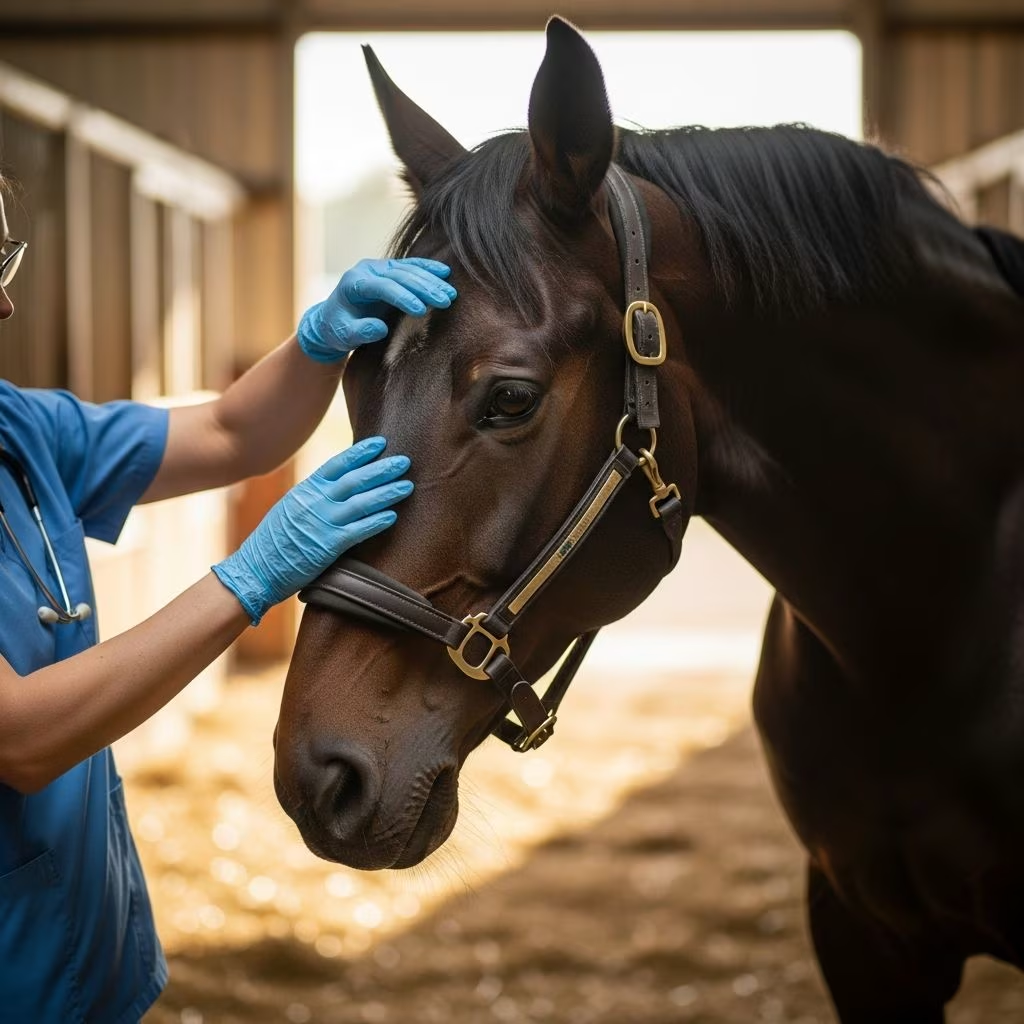
Horses displaying subtle gait changes or behavioral shifts often require a detailed neurologic assessment to pinpoint issues in the brain, spinal cord, or peripheral nerves. This systematic evaluation distinguishes true neurologic deficits from lameness or other conditions, enabling targeted diagnostics and management.
Recognizing When a Neurologic Check is Essential
Owners should watch for indicators like intermittent tripping, uneven stances with legs too close or wide, toe dragging evident in worn hooves, or spastic movements during turns. Sudden knuckling in hind fetlocks or exaggerated gaits with head elevation also signal potential problems. These signs mimic lameness but stem from nervous system dysfunction, necessitating expert evaluation.
- Intermittent stumbling at walk, trot, or under saddle
- Abnormal base-wide or base-narrow postures
- Rounded toe wear from dragging
- Spastic or uneven limb action
- Hindlimb knuckling on sudden stops
Early detection through observation prevents progression, as conditions like equine protozoal myeloencephalitis (EPM) present variably and demand confirmation via exam before treatment.
Initial Observation and General Inspection
The assessment begins with unobtrusive watching of the horse at rest. Veterinarians note mental state—alertness versus lethargy or obtundation—and posture for symmetry. Muscle wasting, especially asymmetric, hints at nerve compromise. Behavioral anomalies like aggression or dullness further inform the process.
Proprioceptive deficits appear as poor spatial awareness, with horses bumping walls or adopting odd stances. Symmetry checks reveal atrophy, while overall demeanor gauges brain involvement.
Comprehensive Cranial Nerve Testing
Twelve cranial nerves control facial expressions, eye movement, hearing, smell, and swallowing. Tests include:
- Menace response: Hand gesture mimicking threat to elicit blink, assessing optic and facial nerves.
- Blindfolding: Evaluates balance, smell, and hearing without visual aid.
- Tongue tone and gag reflex: Checks swallowing and oral sensation.
- Eye position and nystagmus: Detects vestibular issues.
Blindfolding prevents visual compensation, revealing true deficits. Cranial nerve issues localize problems to the brain or brainstem.
| Cranial Nerve | Function Tested | Abnormality Indicates |
|---|---|---|
| II (Optic) | Menace reflex | Blindness or forebrain lesion |
| V (Trigeminal) | Facial sensation | Sensory loss on face |
| VII (Facial) | Eyelid tone | Drooping ear or lip |
| VIII (Vestibulocochlear) | Balance test | Head tilt, circling |
| XII (Hypoglossal) | Tongue strength | Deviated tongue |
This table summarizes key tests; deficits here point to central nervous system origins.
Gait and Posture Analysis Under Motion
Moving the horse reveals dynamic issues. Straight-line walking checks tracking, while circles, backing, and tail pulls expose ataxia or weakness. Tail pull tests resistance; normal horses brace against it.
Challenges like hills, poles, or tight serpentines amplify deficits:
- Ataxia: Uncoordinated steps, wide-based stance.
- Hypermetria: Overreaching, high-stepping.
- Spasticity: Stiff, reduced flexion.
- Weakness: Toe dragging, stumbling.
Veterinarians grade severity on a 0-5 scale: 0 normal, 1 subtle on challenge, up to 5 recumbent.
Advanced Maneuver Protocols
Specific protocols include:
- Walk straight, observing limb placement.
- Tight circles both directions for asymmetry.
- Backing to check hindlimb planting.
- Tail pull during walk for propulsion assessment.
- Pole weaving or hill traversal for proprioception.
Horses with spinal issues step wide when backing or swing hindquarters excessively.
Reflex and Muscle Tone Evaluation
Reflex arcs test spinal segments. Key reflexes:
- Cervicofacial: Ear twitch to neck slap.
- Cutaneous trunci: Skin twitch along flank.
- Thoracolaryngeal: Throat latch response.
- Anal: Tail and anus tone.
- Flexor: Limb withdrawal.
Hyperactive or absent reflexes indicate upper or lower motor neuron lesions. Muscle tone palpation detects flaccidity or rigidity.
Interpreting Findings for Lesion Localization
Results guide neuroanatomic diagnosis. Cranial nerve deficits suggest brain/brainstem; gait issues without them imply spinal cord. Forebrain signs include behavior changes; cerebellar involve intention tremors and hypermetria; spinal show progressive ataxia.
| Localization | Key Signs |
|---|---|
| Forebrain | Seizures, circling, dull mentation |
| Brainstem | Cranial deficits, coma |
| Cerebellum | Head tremor, limb hypermetria |
| Spinal Cord | Gait ataxia, UMN signs |
Symmetric forelimb-head signs versus hindlimb focus narrows differentials.
Follow-Up Diagnostics After Assessment
Positive findings prompt bloodwork for antibodies (e.g., Sarcocystis neurona in EPM) and cerebrospinal fluid (CSF) analysis via spinal tap for specificity. Imaging like cervical radiographs or myelograms under anesthesia follows if compression is suspected.
These confirm exposure versus active infection, localizing lesions precisely.
Common Pitfalls in Neurologic Assessments
Misdiagnosing musculoskeletal pain as neurology occurs without thorough exams. Subtle grade 1 deficits vanish without challenges like blindfolding or hills. Specialist input differentiates, as EPM requires neurologic proof.
FAQs
What does a normal neurologic exam look like?
All tests yield symmetric responses: brisk menace, balanced gait on challenges, intact reflexes, no ataxia.
How long does the exam take?
Typically 20-45 minutes, depending on horse cooperation and facility.
Can owners perform basic checks?
Observe gait and stance, but full assessment needs veterinary expertise.
What if my horse has mild tripping?
Seek prompt evaluation to rule out early neurology versus farrier issues.
Is EPM the only concern?
No, trauma, infections, Wobbler syndrome, and toxins also cause deficits.
Preventive Monitoring for Horse Owners
Regular farrier checks, parasite control, and turnout reduce risks. Prompt reporting of changes ensures timely intervention, preserving performance and welfare.
References
- Neurologic Examination First Step in Accurate EPM Diagnosis — EquiManagement. 2023. https://equimanagement.com/research-medical/diagnostics/neurologic-examination-first-step-in-accurate-epm-diagnosis/
- Neurologic Exams for Horses: A Veterinarian’s Guide — Mad Barn. 2024. https://madbarn.com/neurologic-exams-for-horses/
- Neurologic Examination — Mid-Atlantic Equine. 2023. https://www.midatlanticequine.com/neurologic-examination.html
- EPM in Horses: Early Signs, Diagnosis & Management — Horse Education Online. 2024. https://www.horseeducationonline.com/post/epm-in-horses-early-signs-diagnosis-management
- Basics of Equine Neurological Examinations — SmartPak Equine. 2023. https://www.smartpakequine.com/learn-health/equine-neurological-examinations
- Neurological Examination in the Horse — UC Davis Comparative Neurology. N/A. https://compneuro.vetmed.ucdavis.edu/sites/g/files/dgvnsk5376/files/inline-files/equine_neuro_exam_0.pdf



