

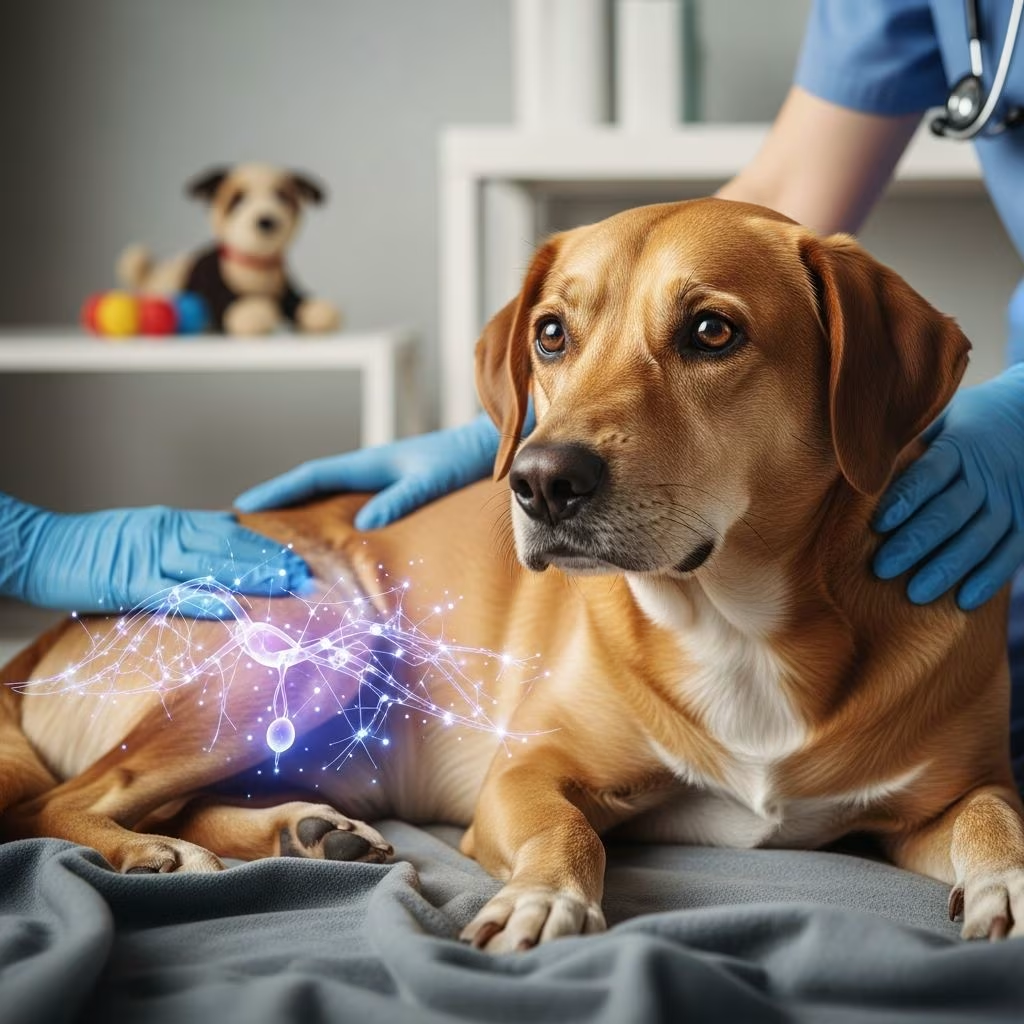
Neurogenic bladder refers to urinary dysfunction in dogs resulting from neurological impairments that disrupt normal bladder control mechanisms. This condition arises when damage to the central or peripheral nervous systems interferes with the coordinated processes of urine storage and voiding, leading to incontinence or retention.
The Physiology of Normal Bladder Function in Canines
In healthy dogs, bladder function relies on a complex interplay of neural pathways. During the storage phase, the detrusor muscle relaxes while the urethral sphincter contracts, preventing urine leakage. Voiding occurs when the pontine micturition center activates, relaxing the sphincter and contracting the detrusor via parasympathetic nerves from the sacral spinal cord.
Sympathetic innervation from L1-L4 segments via the hypogastric nerve promotes storage by relaxing the detrusor and contracting the bladder neck. Pudendal nerves control the external urethral sphincter. Disruption at any level—brain, spinal cord, or peripheral nerves—can lead to neurogenic issues.
Primary Causes of Neurogenic Bladder Disorders
Spinal cord injuries, such as those from intervertebral disc disease, trauma, or tumors, are leading causes. Lesions in the sacral segments or pelvic nerves cause lower motor neuron (LMN) dysfunction, while those cranial to sacral areas result in upper motor neuron (UMN) problems.
- Traumatic injuries: Acute spinal cord damage from accidents often triggers immediate bladder dysfunction.
- Degenerative diseases: Intervertebral disc herniation compresses the cord, impairing nerve signals.
- Tumors and infections: Neoplasms or inflammatory processes impinge on neural pathways.
- Congenital anomalies: Rare malformations in the CNS or PNS can predispose dogs to early-onset issues.
Other contributors include detrusor atony from prolonged overdistension or peripheral nerve damage.
Distinguishing Upper Motor Neuron and Lower Motor Neuron Bladders
Neurogenic bladders are classified by lesion location, each with distinct clinical profiles.
| Feature | Upper Motor Neuron (UMN) | Lower Motor Neuron (LMN) |
|---|---|---|
| Lesion Location | Cranial to sacral spinal segments | Sacral spinal cord or pelvic nerve |
| Bladder Characteristics | Distended, firm, hard to express | Flaccid, easily expressed |
| Incontinence Type | Overflow from retention | Continuous leakage |
| Associated Signs | Hindlimb paresis/paralysis, normal anal tone | Decreased anal tone, perineal reflex loss |
UMN bladders fail to relax the sphincter, causing retention; LMN bladders lose detrusor tone, leading to dribbling.
Recognizing Clinical Symptoms
Dogs with neurogenic bladder often present with involuntary urine leakage, especially during rest, alongside neurological deficits like hindlimb weakness, ataxia, or fecal incontinence.
- Dribbling or puddling of urine while sleeping or relaxed.
- Difficulty urinating or straining without success.
- Recurrent urinary tract infections from stagnant urine.
- Bowel control loss, with soiling around the hindquarters.
- Palpably large or soft bladder on veterinary exam.
Symptoms vary by lesion severity; acute cases follow trauma, while chronic ones develop gradually.
Diagnostic Approaches for Accurate Identification
Veterinarians start with a thorough history and physical exam, noting neurological signs and bladder palpation. Key diagnostics include:
- Neurological assessment: Tests for reflexes, anal tone, and perineal sensation differentiate UMN from LMN.
- Imaging: Radiographs, myelography, CT, or MRI visualize spinal lesions.
- Urinalysis and culture: Rule out infections mimicking symptoms.
- Cystometry: Measures bladder pressure and capacity for detrusor instability.
These confirm neurogenic etiology and guide treatment.
Management and Treatment Strategies
Treatment targets underlying causes and symptom relief. Surgical intervention for disc herniation or tumors restores function if feasible.
Medical Management:
- Pharmacotherapy: Bethanechol for LMN detrusor stimulation; alpha-agonists like phenylpropanolamine for sphincter tone in UMN cases.
- Anticholinergics (e.g., oxybutynin) for overactive bladders.
Manual Techniques: Scheduled bladder expression prevents overdistension, crucial for paralyzed dogs.
Supportive Care: Cleanliness prevents skin irritation and infections; indwelling catheters used cautiously.
Long-Term Prognosis and Complications
Prognosis depends on lesion site and timeliness of intervention. Complete spinal injuries yield guarded outcomes, but partial lesions often improve with rehab.
Complications include recurrent UTIs, hydronephrosis from reflux, and detrusor damage from chronic retention. Neuroplasticity post-injury may reorganize reflexes, aiding recovery.
Bladder and Bowel Interconnections in Neurological Cases
Neurogenic bladder often accompanies bowel dysfunction due to shared innervation. UMN lesions cause fecal retention with overflow; LMN leads to incontinence.
Pelvic nerves promote rectal motility; pudendal nerves control sphincters. Management involves manual evacuation and dietary fiber.
Home Care Tips for Dog Owners
- Monitor urine output and cleanliness daily.
- Follow vet-prescribed expression schedules.
- Use absorbent bedding and frequent baths.
- Watch for infection signs like straining or blood.
- Participate in physical therapy for spinal recovery.
Recent Advances in Veterinary Neurology
Research highlights neurotrophic factors and C-fiber plasticity in reflex reorganization post-SCI. Stem cell therapies show promise for neural repair, though clinical application is emerging.
Frequently Asked Questions (FAQs)
What breeds are prone to neurogenic bladder?
Large breeds like Dachshunds and German Shepherds face higher risks from disc disease.
Can neurogenic incontinence resolve spontaneously?
Partial lesions may improve with time and neuroplasticity, but full recovery varies.
How often should I express my dog’s bladder?
Every 6-8 hours initially, adjusted per vet advice.
Is surgery always necessary?
No, conservative management suffices for many UMN cases.
What role do medications play?
They enhance sphincter tone or detrusor contractility, improving continence.
References
- Urinary Incontinence in Dogs — Gladesville Veterinary Hospital. 2023. https://www.gladesvillevet.com.au/urinary-incontinence-in-dogs/
- Disorders of Micturition in Dogs and Cats — Merck Veterinary Manual. 2024-02-28. https://www.merckvetmanual.com/urinary-system/noninfectious-diseases-of-the-urinary-system-in-small-animals/disorders-of-micturition-in-dogs-and-cats
- Neurogenic Bladder in Dogs, Cats and Humans — PubMed (Frontiers in Veterinary Science). 2022-12-19. https://pubmed.ncbi.nlm.nih.gov/36496754/
- Bladder and Bowel Management in Dogs With Spinal Cord Injury — Frontiers in Veterinary Science. 2020-11-27. https://www.frontiersin.org/journals/veterinary-science/articles/10.3389/fvets.2020.583342/full
- Diagnosing and Managing Urinary Incontinence in Canine Patients — Today’s Veterinary Practice. 2023. https://todaysveterinarypractice.com/urology-renal-medicine/urinary-incontinence-in-canine-patients/
- Urinary Incontinence (Urethral Incontinence) in Dogs — VCA Animal Hospitals. 2024. https://vcahospitals.com/know-your-pet/urethral-incontinence-in-dogs



