
Neonatal Foal Emergencies: Critical Care Guide
Expert strategies for managing life-threatening conditions in newborn foals, from initial resuscitation to advanced supportive therapies.
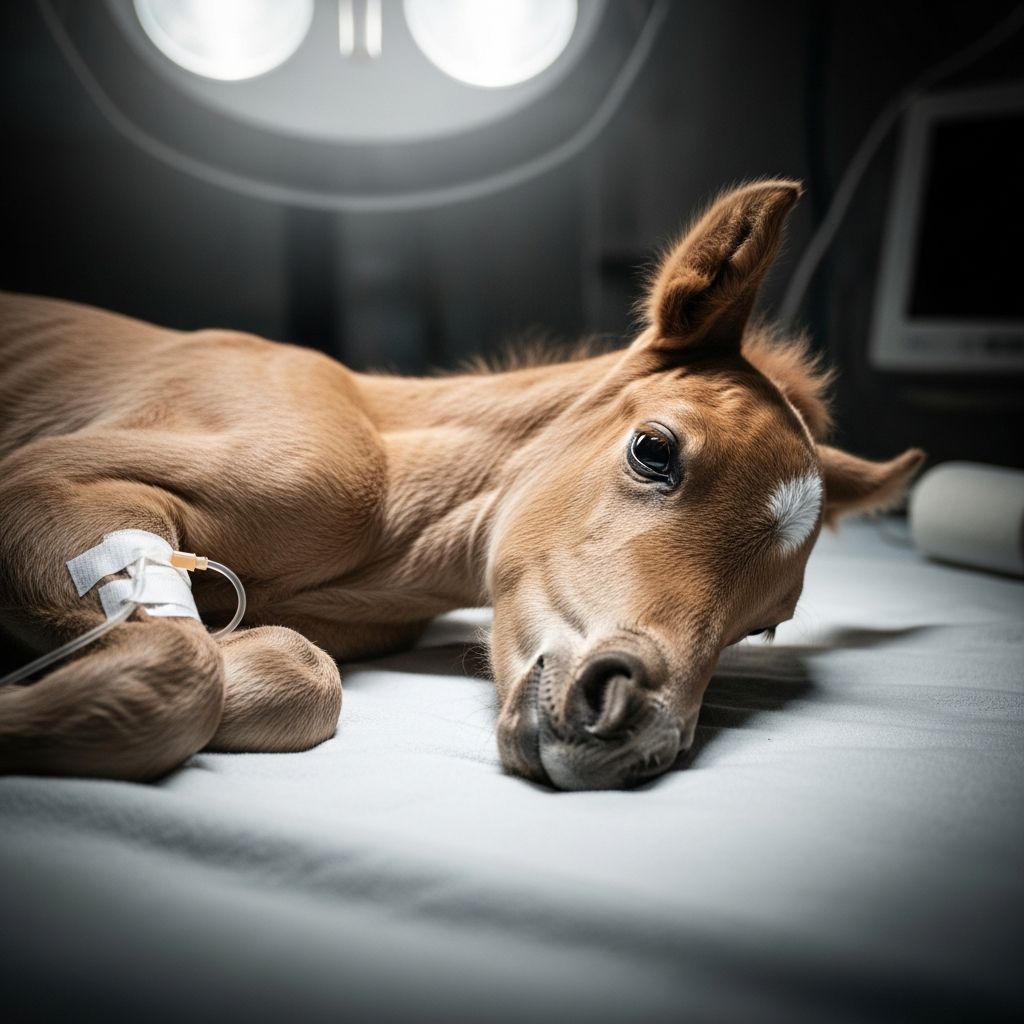
Newborn foals face unique vulnerabilities in their first hours and days of life, requiring swift veterinary intervention to address conditions like prematurity, infections, and oxygen deprivation. This guide outlines essential protocols for stabilizing and treating these fragile patients, drawing on established veterinary practices to enhance survival and long-term health.
Recognizing and Prioritizing Urgent Signs in Newborn Foals
The first moments after birth are pivotal for foals transitioning to independent breathing and circulation. Delays in identifying distress can lead to irreversible damage from hypoxia or shock. Key indicators include weak or absent respiratory effort, cyanosis (bluish mucous membranes), lethargy, or failure to stand within 30-60 minutes.
- Respiratory distress: Rapid shallow breathing, nasal flaring, or grunting suggests lung immaturity or aspiration.
- Cardiovascular instability: Weak pulses, prolonged capillary refill time (>2 seconds), or cold extremities signal poor perfusion.
- Neurological deficits: Seizures, coma-like states, or disorientation point to hypoxic-ischemic encephalopathy.
- Infectious cues: Fever, diarrhea, or joint swelling may indicate sepsis, especially in foals with failure of passive transfer of antibodies.
Immediate triage involves the ABCs: Airway patency, Breathing support, and Circulation enhancement. Veterinary teams must act within minutes to prevent multi-organ failure.
Immediate Resuscitation Techniques for Compromised Foals
For foals not breathing spontaneously, basic life support starts with vigorous drying and rubbing to stimulate reflexes. If ineffective, proceed to airway management.
- Tactile stimulation: Use clean towels to dry and rub the foal, focusing on the face and body.
- Airway clearance: Clear mucus from nostrils and mouth; elevate hindquarters if meconium is present.
- Intubation and ventilation: Insert a nasotracheal or endotracheal tube (size 10-14 mm for average foals) and provide positive pressure ventilation at 10-20 breaths per minute using a bag-valve-mask or Ambu bag.
- Pharmacological aids: Administer intratracheal epinephrine (0.01-0.02 mg/kg) if heart rate remains below 60 bpm.
Once spontaneous respiration resumes, transition to nasal oxygen insufflation at 5-15 L/min to maintain PaO2 above 80 mmHg. Continuous monitoring via pulse oximetry and arterial blood gases guides adjustments.
Managing Respiratory Challenges in Immature Foals
Premature or dysmature foals often exhibit “floppy” presentation due to compliant chest walls, weak diaphragms, and underdeveloped lungs. These lead to hypoventilation and ventilation-perfusion mismatches.
Supportive Measures:
- Position in sternal recumbency with slings or foam supports to optimize lung expansion.
- Provide humidified oxygen via nasal prongs, escalating to high-flow systems (40+ L/min) if SpO2 drops below 92%.
- Consider continuous positive airway pressure (CPAP) or mechanical ventilation for refractory cases, targeting tidal volumes of 6-8 mL/kg.
| Respiratory Parameter | Normal Range | Intervention Threshold |
|---|---|---|
| PaO2 | 80-100 mmHg | <60 mmHg: Increase O2 flow |
| PaCO2 | 35-45 mmHg | >60 mmHg: Ventilation support |
| Respiratory Rate | 20-40 bpm | >60 bpm: Sedation or intubation |
Unlike human neonates, equine surfactant deficiency is rare; focus instead on positional therapy and oxygenation.
Fluid and Cardiovascular Stabilization Protocols
Hypovolemia from poor placental transfer or sepsis demands aggressive volume replacement. Start with crystalloid boluses (20 mL/kg of lactated Ringer’s over 20-30 minutes), reassessing perfusion via lactate levels (<2 mmol/L goal) and central venous pressure (8-12 cmH2O).
For refractory hypotension:
- Inotropes: Dobutamine (5-15 mcg/kg/min IV CRI) to boost cardiac output.
- Vasopressors: Dopamine (3-10 mcg/kg/min) if mean arterial pressure <60 mmHg.
- Plasma transfusions: 20-40 mL/kg hyperimmune plasma to combat failure of passive transfer and provide oncotic support.
Maintenance fluids post-stabilization: 4-6 mL/kg/hr of hypotonic solutions with potassium supplementation, adjusted for ongoing losses.
Combating Sepsis and Infectious Threats
Neonatal septicemia arises from hematogenous spread or omphalophlebitis, often involving Enterobacteriaceae or Streptococcus spp. Empiric therapy includes amikacin (25 mg/kg IV q24h) plus ampicillin (20-30 mg/kg IV q6-8h), with gentamicin as an alternative. Monitor trough levels to avoid nephrotoxicity.
Adjuncts:
- Hyperimmune plasma (1-2 L/50 kg foal) for immunoglobulin G <400 mg/dL.
- NSAIDs like flunixin meglumine (1 mg/kg IV q12h) for endotoxemia.
- Strict hygiene to prevent nosocomial infections.
Culture blood, urine, and joints; tailor antibiotics based on sensitivities within 48 hours.
Neurological Emergency Management: Seizures and Encephalopathy
Hypoxic-ischemic injury manifests as tremors, paddling, or convulsions, exacerbating brain damage via increased metabolic demand.
Seizure Control Ladder:
- Diazepam (0.2-0.5 mg/kg IV) for acute cessation.
- Phenobarbital loading (20 mg/kg IV, then 2-5 mg/kg q12h).
- Midazolam CRI (0.1-0.2 mg/kg/hr) for refractory status epilepticus.
Support cerebral perfusion with mannitol (0.25-1 g/kg IV for edema) and maintain normoglycemia (80-120 mg/dL). Prognosis improves with early control.
Nutritional Support and Musculoskeletal Care
Enteral nutrition via mare’s milk or plasma-derived colostrum substitute begins small (25% of needs day 1, increasing gradually). Parenteral nutrition (PN) with amino acids (2-4%), glucose (10-15%), and lipids (20-30% of calories) sustains anabolism in anorexic foals.
Angular limb deformities in premies require splints or physical therapy post-stabilization to prevent contractures.
Advanced Monitoring and Facility Requirements
Neonatal ICUs feature 24/7 staffing, arterial/venous catheterization, ECG, ultrasound, and blood gas analyzers. Divided stalls preserve mare-foal bonding during IV oxygen therapy.
Frequently Asked Questions (FAQs)
What is the survival rate for septic foals with intensive care?
With prompt treatment, rates exceed 70%, depending on sepsis stage and comorbidities.
How soon should a weak foal receive colostrum?
Within 2-4 hours post-birth to maximize IgG absorption.
Is mechanical ventilation common in foal ICUs?
Reserved for severe respiratory failure, used in ~10-20% of critical cases.
What role do inotropes play in foal shock?
They enhance myocardial contractility when fluids alone fail.
Can premature foals fully recover?
Yes, many thrive with supportive care addressing respiratory and limb issues.
References
- Intensive Care and Emergencies in Neonatal Foals — Merck Veterinary Manual. 2023. https://www.merckvetmanual.com/emergency-medicine-and-critical-care/emergency-medicine-in-horses/intensive-care-and-emergencies-in-neonatal-foals
- Supportive care for the critically ill neonatal foal — Pferdeheilkunde. 2008-04-06. https://pferdeheilkunde.de/files/20080406.pdf
- Neonatal Intensive Care — Mid-Atlantic Equine. Accessed 2026. https://www.midatlanticequine.com/neonatal-intensive-care.html
- Intensive care of the neonatal foal — PubMed (UC Davis). 1985. https://pubmed.ncbi.nlm.nih.gov/3878189/
- Neonatal Critical Care Issue — UC Davis Center for Equine Health. 2015-05. https://ceh.vetmed.ucdavis.edu/sites/g/files/dgvnsk4536/files/inline-files/HorseReport-May2015.pdf
- Foal speed ahead: Caring for the newborn horse — Cornell University College of Veterinary Medicine. 2023-02-03. https://cvm.cornell.edu/about-us/news/20230203/foal-speed-ahead-caring-newborn-horse
Similar Articles








Read full bio of medha deb


