

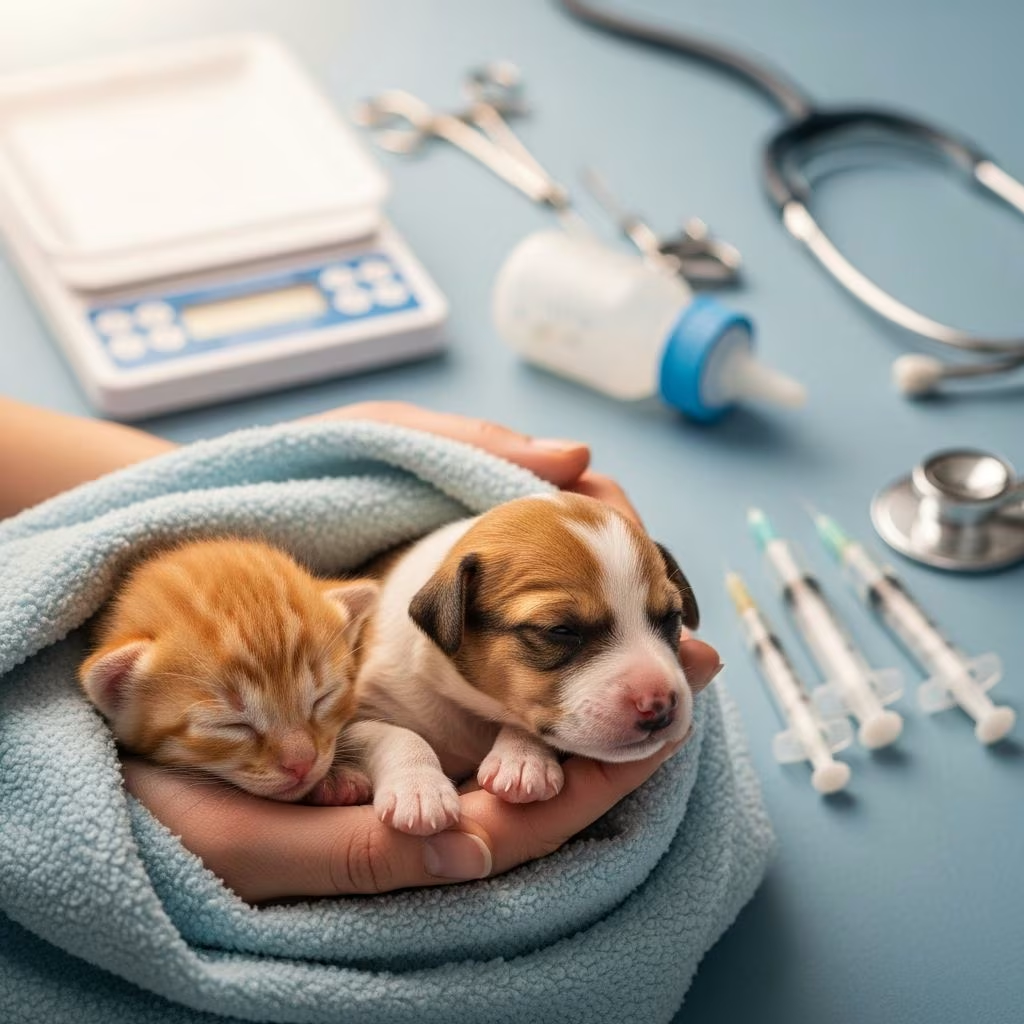
Newborn puppies and kittens face significant challenges in their first weeks of life, with mortality rates ranging from 5.7% to 35% in dogs and 14% to 16% in cats due to physiological immaturity and environmental factors. Proper management from birth dramatically improves outcomes, requiring collaboration between breeders, owners, and veterinarians.
Preparing for Birth: Creating an Optimal Environment
Success begins with a well-planned whelping area tailored to the mother’s needs and the safety of her offspring. The enclosure should measure approximately 1.5 to 2 times the dam’s length, allowing her to lie comfortably while giving newborns space to move and nurse without risk.
- Install **pig rails**—low raised barriers along the edges, taller than the neonates until around three weeks—to prevent accidental crushing if the mother shifts position.
- Maintain ambient temperatures at **85–90°F (29–32°C)**, as newborns cannot regulate their body heat effectively and are poikilothermic, relying entirely on external warmth.
- Use clean, absorbent bedding like towels or puppy pads, changed frequently to avoid moisture buildup that could lead to chilling or infections.
Veterinary oversight during delivery is crucial, especially for high-risk pregnancies involving dystocia, prematurity, or low birth weights, which contribute to up to 42% of kennel losses.
Immediate Post-Birth Interventions: Ensuring Viability
At birth, the dam often initiates care by clearing membranes and stimulating breathing, but human or veterinary assistance may be needed. Remove placental sacs from faces promptly and use a bulb syringe to suction mucus from mouths and nostrils. Gently rub the neonate with a warm towel to encourage respiration and circulation—avoid swinging, which risks brain injury.
Assess vitality using tools like the Apgar score, evaluating heart rate, respiration, color, muscle tone, and reflexes. Scores guide intervention urgency, with low scores signaling need for advanced resuscitation.
| Apgar Parameter | 0 Points | 1 Point | 2 Points |
|---|---|---|---|
| Heart Rate | Absent | <60 bpm | >100 bpm |
| Respiration | Absent | Slow/Irregular | Strong Cry |
| Mucosal Color | Pale/Blue | Pink | Pink |
| Reflexes | No Response | Grimace | Cough/Sneeze |
| Muscle Tone | Limp | Some Flexion | Active |
Within the first six hours, ensure nursing for colostrum intake, vital for immunity since placentas transfer minimal antibodies. Feed every two hours initially; failure manifests as constant crying or restlessness.
Understanding Neonatal Physiology: Key Differences from Adults
Neonates differ profoundly from adults. They lack a functional shiver reflex until one week old, making hypothermia a primary threat—rectal temperatures start lower and drop rapidly in cool environments, impairing heart function, digestion, and immunity.
- **Thermoregulation:** Brown fat depletes quickly without nursing; hypothermia slows gastrointestinal motility, leading to ileus and poor nutrient absorption.
- **Cardiovascular:** Hypoxemia causes bradycardia, not tachycardia, due to immature autonomic systems. Normal heart rates exceed 200 bpm in kittens and are higher than adult dogs in puppies.
- **Immunity:** Colostrum provides essential antibodies; without it, sepsis risk soars.
Daily weight gain of about 10% of birth weight indicates health; use a gram scale for twice-daily checks in at-risk litters.
Daily Care Protocols for Healthy Litters
Routine monitoring prevents issues. Weigh neonates daily, track nursing frequency, and observe for normal behaviors like clustering for warmth and active suckling.
- Clean navels daily with mild antiseptics to prevent infections.
- Stimulate elimination by gently rubbing genital and anal areas post-feeding until three weeks old, mimicking maternal licking.
- Introduce deworming at two weeks, alongside fecal checks for parasites like coccidia not covered by standard treatments.
Environmental hygiene is paramount—daily bedding changes and dam grooming reduce pathogen loads.
Recognizing and Managing High-Risk Neonates
Signs of trouble include lethargy, separation from litter, weight loss, dehydration (tacky gums), dark urine, or excessive vocalization. High-risk cases often stem from poor husbandry, infection, or immunity failure.
Initiate support immediately:
- Warmth first: Use incubators or heat pads until rectal temperature normalizes (avoid overheating).
- Nutrition: Tube-feed milk replacers or provide IV/IO dextrose for hypoglycemia.
- Fluids and antibiotics: Address dehydration and suspected sepsis empirically.
For deceased littermates, submit for necropsy and testing to protect survivors.
Resuscitation Techniques: Evidence-Based Guidelines
Newborn resuscitation prioritizes airway clearance, lung aeration over chest compressions—unlike adult CPR. Follow RECOVER guidelines: position head to open airways, provide positive pressure ventilation if apneic, and support circulation only if needed.
Common causes include hypoxia from dystocia; prompt action can salvage many.
Common Neonatal Disorders and Treatments
Hypothermia and Hypoglycemia
Interlinked issues; correct heat before feeding to restore metabolism. Monitor blood glucose frequently in weak neonates.
Parasitic Infections
Puppies and kittens harbor heavy burdens; start broad-spectrum dewormers at two weeks, with environmental sanitation.
Fading Puppy/Kitten Syndrome
Nonspecific decline demands holistic support: warmth, calories, fluids, and broad antibiotics while diagnostics run.
Nutritional Support and Weaning
Commercial milk replacers mimic bitch/queen milk; avoid cow’s milk. Gradually introduce gruels around three weeks, fully weaning by six to eight weeks.
| Age | Feeding Frequency | Weight Gain Goal |
|---|---|---|
| 0-1 week | Every 2 hours | 10% daily |
| 2-3 weeks | Every 3-4 hours | 8-10% daily |
| 4+ weeks | 4-6 meals/day | Steady growth |
Role of the Veterinary Team and Breeders
Teamwork is essential—veterinarians provide diagnostics and treatments, while breeders handle daily nursing. Education reduces mortality through vigilant monitoring and quick intervention.
Frequently Asked Questions (FAQs)
What temperature should a whelping box maintain?
Aim for 85–90°F, gradually reducing to room temperature by three weeks as thermoregulation improves.
How soon after birth should puppies nurse?
Within six hours to access colostrum and prevent hypoglycemia.
When to start deworming?
At two weeks of age, repeating every two weeks until eight weeks.
What are signs of a sick neonate?
Crying excessively, not gaining weight, cold to touch, or isolating from litter—seek vet care immediately.
Can I use human baby formula?
No; it lacks proper nutrients and can cause diarrhea. Use veterinary milk replacers.
References
- Management and care of neonatal dogs and cats — VetBloom, Jenna Dockweiler, MS, DVM, DACT. 2018-10-23. https://vetbloom.com/management-care-neonatal-dogs-cats/
- Neonatology: Topics on Puppies and Kittens Neonatal — PMC – NIH. 2022. https://pmc.ncbi.nlm.nih.gov/articles/PMC9739440/
- Neonatal nursing care for high-risk puppies and kittens — dvm360, Lauren Simermeyer, DVM. 2020-07. https://www.dvm360.com/view/neonatal-nursing-care-for-high-risk-puppies-and-kittens
- RECOVER Initiative guidelines debut for newborn resuscitation — AVMA. Recent (post-2020). https://www.avma.org/news/recover-initiative-guidelines-debut-newborn-resuscitation-emphasize-lung-aeration
- RECOVER Guidelines: Newborn Resuscitation in Dogs and Cats — Wiley Online Library. Recent. https://onlinelibrary.wiley.com/doi/10.1111/vec.70013



