

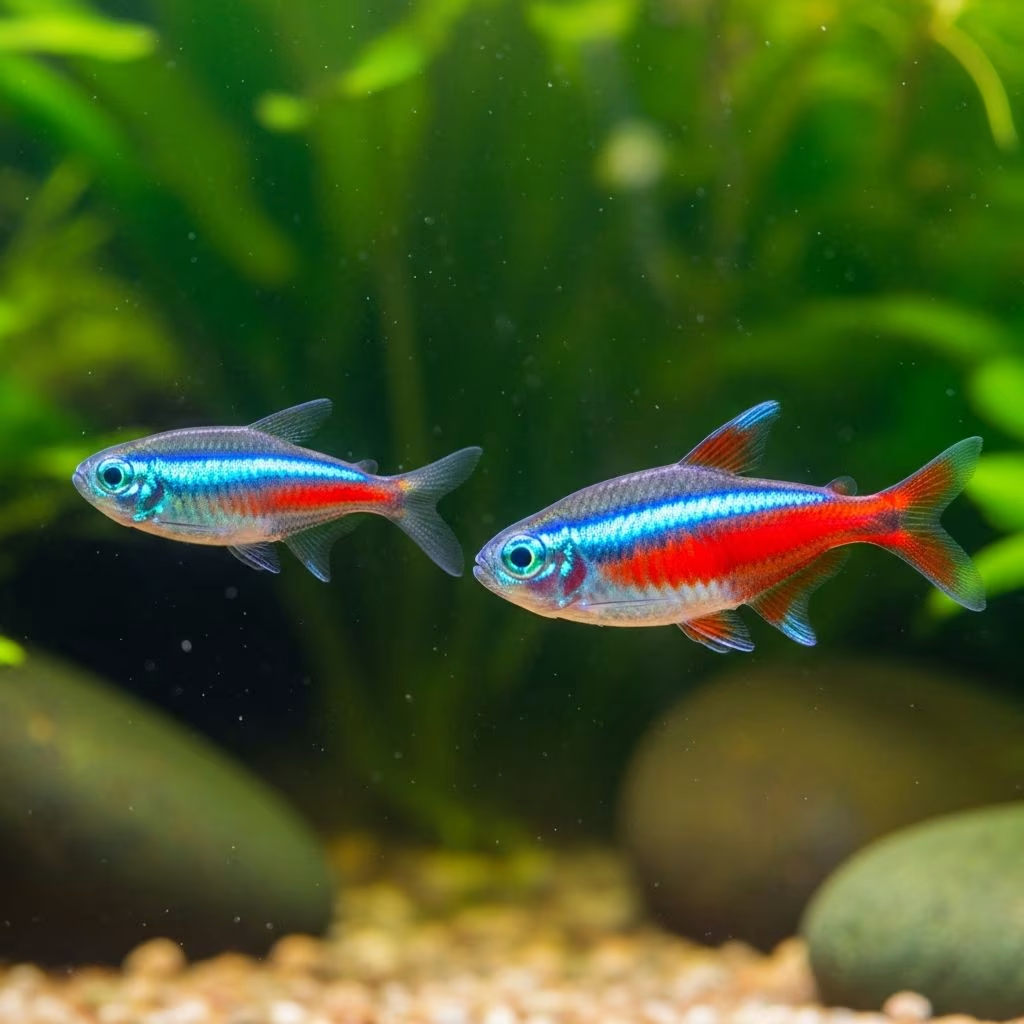
Neon and cardinal tetras rank among the most beloved freshwater fish for aquarium enthusiasts, prized for their vivid colors and peaceful schooling nature. Both species hail from South American rivers, yet subtle distinctions in appearance, size, and care demands set them apart. This comprehensive guide explores these differences to help you select and maintain the perfect tetra school for your setup.
Visual Identification: Spotting the Stripes
The most straightforward way to differentiate neon tetras (Paracheirodon innesi) from cardinal tetras (Paracheirodon axelrodi) lies in their iconic color patterns. Both feature a brilliant **blue** stripe along their upper body and a bold **red** stripe below, creating a neon glow under aquarium lighting. However, the red stripe’s length reveals the species.
- Cardinal Tetras: The red pigmentation extends fully from the eye to the tail fin, covering the entire lower half of the body. This full-length crimson creates a more intense, uniform appearance.
- Neon Tetras: The red stripe starts midway along the body and runs only to the tail, leaving the front half silvery or translucent. This shorter red zone is the hallmark feature.
Observe fish against a dark background for clarity, as the contrast enhances stripe visibility. Immature specimens may show muted colors, but adults display these traits distinctly after 20-30 minutes of light exposure.
| Feature | Neon Tetra | Cardinal Tetra |
|---|---|---|
| Red Stripe Length | Mid-body to tail (50% of body) | Eye to tail (100% of body) |
| Blue Stripe | Thin, iridescent along back | Thicker, more vibrant along back |
| Overall Glow | Brighter in low light | Intense under full spectrum lights |
Size and Growth: Planning Your Tank Space
Cardinal tetras grow larger than their neon counterparts, influencing tank size and stocking decisions. Adult cardinal tetras reach about **2 inches (5 cm)** in length, while neon tetras top out at **1-1.5 inches (2.5-4 cm)**.
This size gap means cardinals require more swimming room. A minimum **15-gallon tank** suits small schools, but experts recommend **45 gallons or larger** for optimal health and display. Neons thrive in smaller setups, making them ideal for nano aquariums starting at 10 gallons.
- Neons: Compact size allows groups of 12+ in mid-sized tanks without overcrowding.
- Cardinals: Larger bodies demand spacious tanks; pair with similarly sized peaceful fish like rummy-nose tetras.
Natural Habitats and Wild Origins
Both tetras originate from the acidic, soft waters of South America, but their specific ranges differ. Neon tetras populate tributaries of the Amazon River in Brazil, Colombia, and Peru, adapting to blackwater environments rich in tannins.
Cardinal tetras favor the upper Orinoco and Negro Rivers, where slower currents and heavy vegetation provide cover. Wild-caught specimens reflect these origins with sensitivity to water changes, but captive-bred fish—now dominant in the trade—are hardier.
Captive breeding has improved tolerance, yet mimicking their native **soft, acidic conditions (pH 6.0-6.5, low GH/KH)** promotes longevity. Use peat moss or driftwood to replicate tannin-stained waters.
Aquarium Care Essentials: Water and Setup
Success with tetras hinges on stable parameters. Both prefer temperatures of **72-82°F (22-28°C)**, but cardinals prove more finicky with pH shifts above 7.0, while neons tolerate up to **7.8**.
- Filtration: Gentle sponge or hang-on-back filters to avoid strong currents.
- Substrate: Fine sand or smooth gravel; dark colors make stripes pop.
- Plants: Dense setups with Amazon swords, Java fern, and floating plants for security.
- Lighting: Moderate with timers to trigger color displays.
Avoid mixing neon and cardinal tetras in the same tank, as competition and stress can arise. Keep each species in schools of **5-12 or more** to encourage natural schooling and reduce aggression.
Health and Hardiness: Which is Tougher?
Neons entered the aquarium trade in 1934, building a reputation for adaptability despite delicacy to neon tetra disease (a pleco-related parasite). Cardinals, discovered later, appear hardier in captivity, surviving temperature spikes and water changes better.
Common issues include ich, fin rot, and velvet. Treat with medications like Seachem ParaGuard for itching. Quarantine new fish and perform 20-30% weekly water changes to maintain pristine conditions.
| Aspect | Neon Tetra | Cardinal Tetra |
|---|---|---|
| Hardiness | Moderate; sensitive to pH swings | Higher; tolerates minor changes |
| Disease Risk | Prone to neon disease | Less susceptible overall |
| Lifespan | 2-3 years | 3-5 years |
Feeding Strategies for Vibrant Colors
These omnivores thrive on varied diets. Flake foods form the base, supplemented with micro pellets, frozen brine shrimp, daphnia, and crushed spirulina for enhanced pigmentation.
Feed small amounts 2-3 times daily, targeting mid-water levels where they hunt. Overfeeding leads to water quality issues, so remove uneaten food promptly. Cardinals’ larger size allows slightly bigger portions, but moderation applies to both.
Compatible Tank Mates and Community Building
Peaceful by nature, tetras pair well with other small schooling fish. Ideal companions include:
- Rummy-nose tetras
- Corydoras catfish
- Kuhli loaches
- Dwarf shrimp (with caution for cardinals)
- Discus (for cardinals in larger tanks)
Avoid fin-nippers like tiger barbs or large predators. Provide hiding spots to minimize stress.
Breeding Challenges and Tips
Breeding tetras demands precise conditions: soft, acidic water (pH 5.5-6.5), temperatures around 82°F, and dim lighting. Use separate breeding tanks with Java moss for fry attachment. Parents may eat eggs, so remove adults post-spawning.
Captive breeding success is low for hobbyists, but commercial farms excel, supplying hardy stock.
Choosing Between Neon and Cardinal: Pros and Cons
| Species | Pros | Cons |
|---|---|---|
| Neon Tetra | Smaller, cheaper, wider parameter tolerance, nano-tank friendly | Shorter lifespan, more disease-prone |
| Cardinal Tetra | Bolder colors, larger size, hardier in captivity, longer life | Needs bigger tank, stricter pH needs |
Opt for neons in compact or beginner setups; choose cardinals for showpiece tanks with stable parameters.
Frequently Asked Questions (FAQs)
Can neon and cardinal tetras live together?
It’s not recommended due to potential stress and competition. Keep species separate for best results.
What’s the minimum school size?
At least 5-6, ideally 10+ for confident schooling behavior.
Do they need a heater?
Yes, maintain 72-82°F to mimic tropical origins.
How do I enhance their colors?
Use dark substrates, full-spectrum lights, and high-quality foods rich in carotenoids.
Are they suitable for beginners?
Absolutely, with basic care knowledge on water quality.
References
- The difference between Neon & Cardinal Tetras — Fishly. N/A. https://www.fishly.co.nz/blogs/aquarium-blog/the-difference-between-neon-cardinal-tetras
- Cardinal Tetra v/s Neon Tetra – Care sheet — Aquafishcare. N/A. https://www.aquafishcare.com/post/cardinal-tetra-v-s-neon-tetra-care-sheet
- Green Neon Tetra vs Cardinal Tetra: Species Comparison — Light Fish. N/A. https://light.fish/blog/green-neon-tetra-vs-cardinal-tetra
- Cardinal Tetra vs Neon Tetra: Which is Better? — YouTube (Transcript). N/A. https://www.youtube.com/watch?v=wMRjkkytklU



