Neo-Poly-Dex Ophthalmic Suspension for Pet Eye Infections
Comprehensive guide to Neo-Poly-Dex ophthalmic suspension for treating bacterial eye infections in pets.
Neo-Poly-Dex Ophthalmic Suspension: A Complete Guide for Pet Eye Health
Neo-Poly-Dex ophthalmic suspension is a widely prescribed veterinary medication designed to address eye infections and ocular inflammation in companion animals. This combination medication brings together the power of multiple therapeutic agents to provide comprehensive relief from bacterial eye infections while simultaneously reducing discomfort and inflammation. Pet owners and veterinary professionals alike rely on this medication to restore eye health and comfort to animals suffering from various ocular conditions.
Understanding Neo-Poly-Dex: What It Is and How It Works
Neo-Poly-Dex ophthalmic suspension represents a sophisticated approach to treating ocular infections by combining three active pharmaceutical ingredients into a single, easy-to-administer formulation. This triple-action medication works synergistically to address both the infectious and inflammatory components of eye diseases, making it an effective choice for veterinary practitioners managing bacterial eye infections in their patients.
Active Ingredients and Their Functions
The formulation contains three key active ingredients, each contributing specific therapeutic benefits. Neomycin sulfate functions as a broad-spectrum antibiotic that works by inhibiting bacterial protein synthesis, effectively preventing bacterial growth and reproduction. Polymyxin B sulfate serves as an additional antibiotic that damages bacterial cell membranes, creating a dual antibiotic approach that targets bacteria through different mechanisms. Dexamethasone, a corticosteroid, provides anti-inflammatory action that reduces swelling, redness, and discomfort in the eye tissues.
Primary Uses and Clinical Applications
Neo-Poly-Dex ophthalmic suspension is primarily indicated for treating various bacterial eye infections in pets. The medication is particularly effective against common ocular pathogens including Staphylococcus aureus, Escherichia coli, Haemophilus influenzae, and Pseudomonas aeruginosa. Beyond infection treatment, this medication excels at managing inflammatory ocular conditions where corticosteroid use is warranted and where bacterial infection risk exists or is already present.
Specific Conditions Treated
Veterinarians prescribe Neo-Poly-Dex for several specific eye conditions:
- Bacterial conjunctivitis (pink eye)
- Corneal abrasions with bacterial infection risk
- Anterior uveitis with bacterial component
- Post-operative eye inflammation following surgical procedures
- Traumatic eye injuries with infection risk
- Infected corneal ulcers
- General inflammatory ocular conditions requiring antimicrobial coverage
How Neo-Poly-Dex Works: Mechanism of Action
The medication operates through a dual mechanism that simultaneously fights infection and reduces inflammation. The antibiotic components—neomycin and polymyxin B—work by disrupting bacterial cell wall integrity and inhibiting protein synthesis necessary for bacterial survival and reproduction. This dual antibiotic approach provides broad-spectrum coverage against multiple bacterial species commonly found in eye infections.
The dexamethasone component suppresses the immune system’s inflammatory response, effectively calming the ocular tissues and reducing associated symptoms like redness, swelling, and discomfort. This steroid-mediated anti-inflammatory action often provides rapid symptom relief, making the eye more comfortable for the affected animal while the antibiotics work to eliminate the underlying infection.
Composition and Formulation Details
Neo-Poly-Dex is manufactured as a sterile ophthalmic suspension designed for topical application directly to the eye. Each milliliter of the suspension contains specific concentrations of the active ingredients carefully balanced for optimal efficacy and safety. The formulation includes additional components that enhance stability, preserve the medication, and ensure proper pH balance for safe ocular use.
| Component | Function | Notes |
|---|---|---|
| Neomycin Sulfate | Antibiotic (broad-spectrum) | Inhibits bacterial protein synthesis |
| Polymyxin B Sulfate | Antibiotic (cell membrane) | Damages bacterial cell walls |
| Dexamethasone | Anti-inflammatory steroid | Reduces swelling and discomfort |
| Benzalkonium Chloride | Preservative | Maintains sterility during storage |
| Hypromellose | Thickening agent | Improves contact time with eye |
Administration and Dosage Guidelines
Proper administration of Neo-Poly-Dex is crucial for achieving therapeutic success. Pet owners must follow their veterinarian’s instructions precisely, as dosage and frequency requirements vary based on the specific condition being treated, the severity of infection, and the individual patient’s response to therapy.
General Administration Instructions
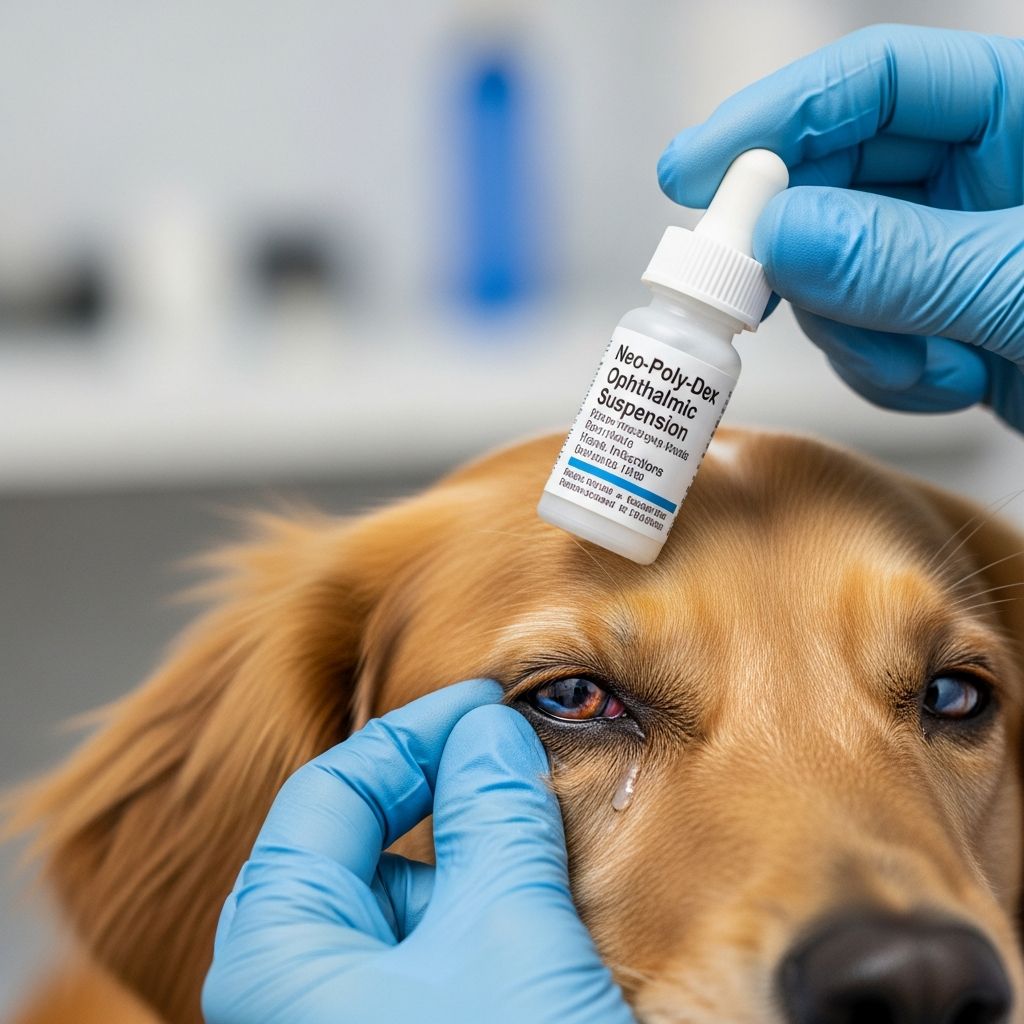
The medication is administered as eye drops directly into the affected eye or eyes. Before application, pet owners should gently shake the bottle to ensure the suspension is uniformly mixed. Clean the eye area with a soft, damp cloth if discharge is present. Tilt the head back slightly and gently pull down the lower eyelid to create a small pocket. Instill the prescribed number of drops into this pocket, allowing the medication to contact the eye tissues. Avoid touching the dropper tip to the eye surface to prevent contamination.
Most veterinarians recommend applying the medication multiple times daily during the acute phase of infection, with frequency gradually reduced as improvement occurs. Typical treatment duration ranges from seven to fourteen days, though this varies based on clinical response and the specific condition being treated.
Safety Considerations and Precautions
While Neo-Poly-Dex is generally well-tolerated, several important safety considerations must be observed to maximize therapeutic benefit and minimize potential complications.
Important Contraindications
This medication should not be used in certain conditions where application could be harmful or ineffective. Neo-Poly-Dex is contraindicated in viral eye infections, including those caused by herpes simplex virus, as the steroid component may worsen viral infections. Fungal eye infections and mycobacterial infections also represent contraindications due to the potential for disease progression under steroid therapy. Additionally, animals with known hypersensitivity to any component of the formulation should not receive this medication.
Precautions for Specific Patient Populations
Patients with pre-existing glaucoma require careful monitoring, as corticosteroids may increase intraocular pressure and worsen the condition. Animals with a history of corneal or scleral thinning need close supervision, as prolonged steroid use may lead to corneal perforation. Recent cataract surgery patients may experience delayed healing with steroid therapy. Safety in pediatric animals below two years of age has not been firmly established, so use in very young animals should be approached cautiously and only under direct veterinary supervision.
Potential Side Effects and Adverse Reactions
Most animals tolerate Neo-Poly-Dex well without experiencing significant adverse effects. However, pet owners should be aware of potential side effects and know when to contact their veterinarian.
Common Side Effects
Temporary blurred vision immediately following medication instillation is common and typically resolves quickly. Mild eye irritation, tearing, or slight redness may occur initially as the eye adjusts to the medication. Some animals may experience mild itching or sensitivity to light during treatment.
Serious Side Effects Requiring Veterinary Attention
Allergic reactions, though rare, can manifest as swelling around the eyes or face, difficulty breathing, or pronounced redness and swelling of the eye tissues. Persistent or worsening pain, significant vision changes, or signs of eye tissue damage should prompt immediate veterinary evaluation. Prolonged use may lead to elevated intraocular pressure, potentially resulting in glaucoma, vision loss, or posterior subcapsular cataract formation if not monitored appropriately.
Duration of Treatment and Monitoring
Treatment duration typically ranges from one to two weeks for uncomplicated bacterial eye infections, though more severe or complicated cases may require extended therapy. Veterinarians generally recommend monitoring intraocular pressure if treatment continues beyond ten days, particularly in patients with risk factors for glaucoma.
Pet owners should maintain regular follow-up appointments to allow their veterinarian to assess treatment response and make adjustments as needed. Vision should be checked regularly, and any changes should be reported immediately. Continuing the medication precisely as prescribed, even as symptoms improve, helps prevent infection recurrence and ensures complete resolution.
Drug Interactions and Compatibility
While Neo-Poly-Dex is generally compatible with most other medications, pet owners should inform their veterinarian about all medications and supplements their pet is receiving. Certain systemic medications may interact with components of this ophthalmic formulation, potentially affecting efficacy or increasing the risk of adverse effects. The veterinarian can identify potential interactions and adjust the treatment plan accordingly.
Storage and Handling
Proper storage ensures medication efficacy and safety. Neo-Poly-Dex should be stored at room temperature away from direct sunlight and excessive heat. The bottle should be kept tightly closed when not in use to maintain sterility and prevent contamination. Most formulations remain stable for approximately two years from the manufacturing date when stored properly. Pet owners should check the expiration date before use and discard expired medication appropriately.
Frequently Asked Questions
Q: Can Neo-Poly-Dex be used in cats?
A: Yes, Neo-Poly-Dex can be used in cats for bacterial eye infections and inflammatory conditions. However, dosage and frequency may differ from dog protocols, so veterinary guidance is essential for feline patients.
Q: How quickly does Neo-Poly-Dex work?
A: Many animals show improvement in symptoms within 24-48 hours of starting treatment, though complete resolution of infection may require 7-14 days of consistent therapy. The dexamethasone component often provides rapid anti-inflammatory relief.
Q: What should I do if I miss a dose?
A: If a dose is missed, administer it as soon as remembered unless the next scheduled dose is approaching. Never double-dose to make up for a missed application. Continue with the regular dosing schedule.
Q: Can Neo-Poly-Dex prevent eye infections?
A: Yes, Neo-Poly-Dex can be used prophylactically to prevent bacterial eye infections in high-risk situations, such as following eye surgery or after traumatic injuries. Use for prevention should be directed by a veterinarian.
Q: Is Neo-Poly-Dex available without a prescription?
A: Neo-Poly-Dex is a prescription medication that requires veterinary authorization for purchase. A veterinarian must examine the pet and determine that this specific medication is appropriate before dispensing.
Q: How do I know if my pet is allergic to Neo-Poly-Dex?
A: Signs of allergic reaction include severe swelling around the eye, facial swelling, difficulty breathing, or hives. If any of these signs develop after administration, discontinue use and contact your veterinarian immediately.
Conclusion
Neo-Poly-Dex ophthalmic suspension represents a valuable therapeutic tool in veterinary ophthalmology, effectively combining antibiotic and anti-inflammatory properties to treat bacterial eye infections and associated inflammation. When prescribed appropriately and used according to veterinary instructions, this medication provides reliable relief for pets suffering from various ocular conditions. Pet owners should maintain open communication with their veterinarian throughout treatment, report any concerning symptoms promptly, and ensure consistent medication administration for optimal outcomes. By following professional guidance and monitoring their pets carefully, owners can help restore eye comfort and health to their beloved companions.
References
- Neomycin/Polymyxin B/Dexamethasone Ophthalmic (Eye) — WebMD. 2024. https://www.webmd.com/drugs/2/drug-60611/neo-poly-dex-ophthalmic-eye/details
- Poly-Dex Drops, Suspension – Uses, Side Effects, and More — WebMD. 2024. https://www.webmd.com/drugs/2/drug-14981-5072/poly-dex-ophthalmic-eye/neomycin-polymyxin-dexamethasone-ophthalmic-drops/details
- Neomycin; Polymyxin B; Dexamethasone Eye Suspension — Cleveland Clinic. 2024. https://my.clevelandclinic.org/health/drugs/18466-neomycin-polymyxin-b-dexamethasone-eye-suspension
- Neomycin, polymyxin b, and dexamethasone (ophthalmic route) — Mayo Clinic. 2024. https://www.mayoclinic.org/drugs-supplements/neomycin-polymyxin-b-and-dexamethasone-ophthalmic-route/description/drg-20406312
- Neomycin and Polymyxin B Sulfates and Dexamethasone Ophthalmic Suspension, USP — National Library of Medicine DailyMed. 2024. https://dailymed.nlm.nih.gov/dailymed/fda/fdaDrugXsl.cfm?setid=d5e00bad-abb4-63ad-e053-2a95a90a5abb
Similar Articles







Read full bio of medha deb