

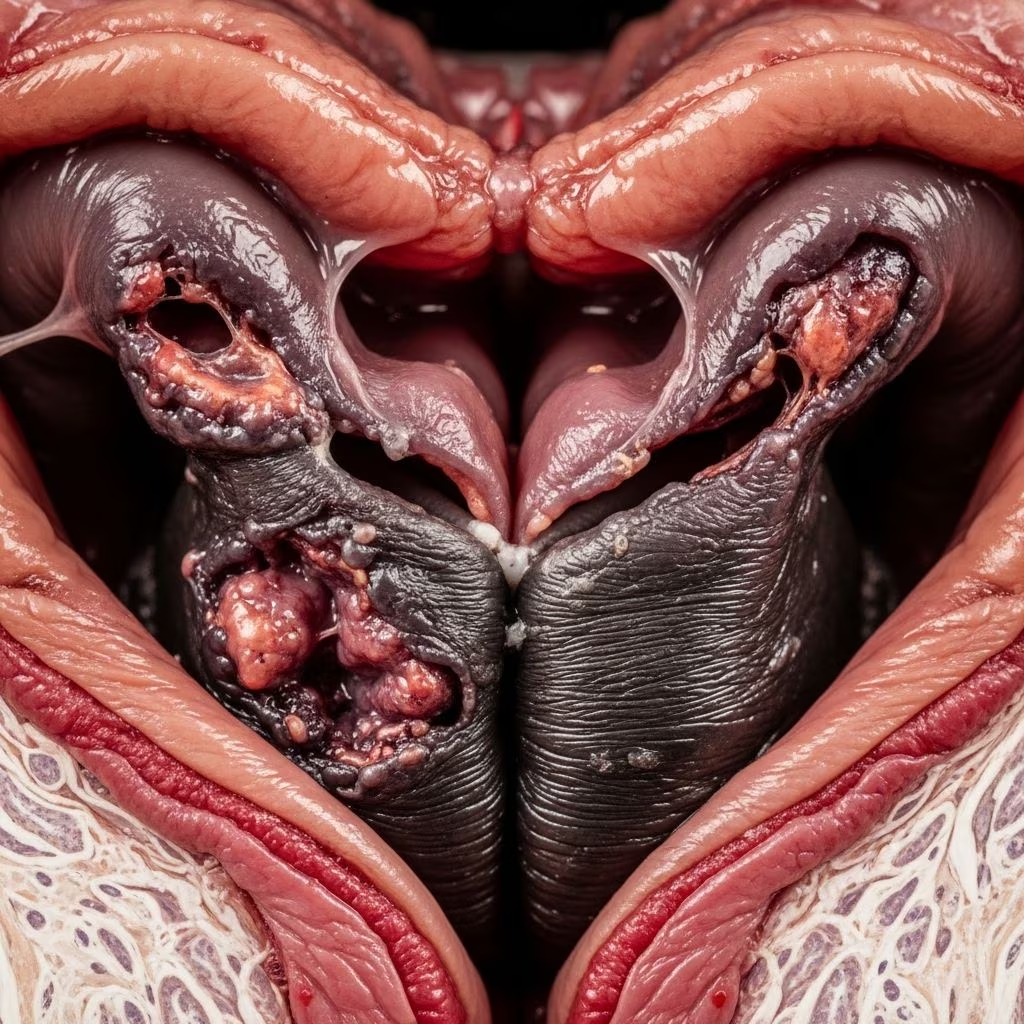
Necrotic laryngitis represents a significant health challenge in bovine populations, particularly affecting young cattle in intensive production systems. This condition, driven by bacterial invasion of the laryngeal tissues, leads to painful inflammation, tissue death, and potentially life-threatening respiratory compromise. Understanding its dynamics is crucial for livestock managers aiming to safeguard animal welfare and economic viability.
Understanding the Disease Basics
At its core, necrotic laryngitis involves the destruction of mucosal and cartilaginous structures in the larynx, the organ responsible for voice production and airway protection. Young animals, especially those between 3 and 18 months in feedlots, are prime targets due to their developing immune systems and exposure to stressors like crowding and rough feeds. Globally reported, the disease peaks in cooler seasons, aligning with heightened respiratory challenges in confined settings.
- Prevalence Insights: Occurs at rates of 1-2% in U.S. feedlots and lower in dairy operations.
- Age Range: Primarily 3-18 months, but documented from 5 weeks to 24 months.
The Culprit Bacterium: Fusobacterium necrophorum
Fusobacterium necrophorum stands as the primary pathogen, a gram-negative anaerobe ubiquitous in animal gastrointestinal, respiratory, and urogenital tracts. As an opportunist, it thrives where mucosal barriers falter, producing toxins that exacerbate tissue damage and systemic illness. This bacterium’s leukotoxin targets white blood cells, impairing immune responses and promoting abscess formation.
| Key Bacterial Traits | Description |
|---|---|
| Gram Stain | Negative, non-spore-forming rod |
| Oxygen Requirement | Strict anaerobe |
| Habitat | Normal flora in bovine GI and respiratory tracts |
| Virulence Factors | Leukotoxin, hemolysins, proteases |
How the Infection Takes Hold
The journey begins with mechanical trauma to the laryngeal mucosa. Feedlot environments, characterized by dusty air, coarse rations, and viral respiratory outbreaks, abrade the delicate tissues over the arytenoid cartilages. Coughing from concurrent infections—such as those from IBR virus, PI-3, Mycoplasma, Pasteurella, or Haemophilus—worsens this, creating ulcers that serve as entry points for F. necrophorum.
Breeds with narrower larynges, like Belgian Blues, face elevated risk due to higher airflow velocities causing repeated trauma. Once invaded, the bacterium incites vasculitis, edema, necrosis, and granulation, potentially eroding cartilage and muscles like the cricoarytenoideus dorsalis.
Recognizing Clinical Manifestations
Early detection hinges on observant monitoring. Affected cattle display profound lethargy, fever spiking to 40.5°C (105°F), and complete loss of appetite. Respiratory distress escalates from subtle stertor to marked inspiratory stridor—a harsh, roaring sound intensifying with exercise. Open-mouth breathing, moist coughs, halitosis, and dysphagia signal advancing severity.
- Mild Cases: Subtle dyspnea, reduced feed intake.
- Severe Cases: Respiratory fatigue, cyanosis, aspiration pneumonia risk.
In oral extensions (necrotic stomatitis), calves salivate excessively, avoid solids, and develop cheek abscesses with fetid breath.
Pathological Changes Revealed
Post-mortem exams expose hallmark lesions: yellow-gray, fibrinonecrotic crusts over hyperemic mucosa, delving into submucosal layers. Arytenoid cartilages swell, deform in chronic stages, with caseous abscesses bilaterally between vocal processes, obstructing airflow. Deeper invasions yield soft tissue swelling masking internal pus. Bronchopneumonia may complicate advanced cases.
Diagnostic Approaches
Veterinary intervention starts with history and physicals emphasizing throat auscultation and endoscopy. Laryngoscopy visualizes ulcers, exudate, and swelling. Oral exams rule out stomatitis or foreign bodies. Confirmation demands anaerobic culture or PCR from biopsies, isolating F. necrophorum. Necropsy provides definitive pathology.
| Differential Diagnosis | Key Distinguishers |
|---|---|
| Foreign Body | Visible obstruction, unilateral signs |
| Papular Stomatitis | Viral vesicles, no deep necrosis |
| Mucosal Disease | Systemic BVD signs, oral erosions |
| Traumatic Laryngitis | Acute onset post-injury, resolves faster |
Treatment Strategies for Success
Prompt, aggressive therapy improves outcomes. High-dose, long-acting antibiotics penetrating anaerobic niches are foundational: penicillin (20,000-40,000 IU/kg IM q12-24h), ceftiofur, or oxytetracycline. Anti-inflammatories like flunixin meglumine (1.1-2.2 mg/kg IV SID) curb swelling. Supportive care includes soft feeds, hydration, and isolation.
For dire obstructions, temporary tracheostomy relieves dyspnea, allowing healing. Oral lesions may need debridement. Monitor for 7-14 days; chronic carriers risk recurrence.
- Prognosis: Favorable if treated early; guarded in severe edema or pneumonia.
Prevention: Proactive Management
Minimize trauma through smooth rations, dust control, and ventilation. Vaccinate against predisposing viruses (IBR, PI-3). Avoid overcrowding; maintain hygiene. Breeds prone to narrow airways benefit from monitoring. Early intervention in respiratory outbreaks curtails ulcer formation.
Economic and Welfare Implications
While sporadic (0.1-2% incidence), cases disrupt growth, elevate mortality, and inflate treatment costs. Feedlot losses compound with condemned carcasses. Welfare suffers from pain and distress, underscoring ethical imperatives for prevention.
FAQs
What causes necrotic laryngitis in cattle?
Primarily Fusobacterium necrophorum invading mucosal ulcers from trauma or respiratory infections.
How do I know if my calf has calf diphtheria?
Look for fever, stridor, painful cough, halitosis, and breathing distress.
Is necrotic laryngitis contagious?
No, it’s non-contagious; spread requires individual trauma portals.
Can I treat it at home?
Consult a vet for antibiotics and supportive care; self-treatment risks failure.
How can I prevent outbreaks in my herd?
Improve feed quality, ventilation, vaccination, and hygiene practices.
References
- Technical information – NECROTIC LARYNGITIS IN CATTLE — Vemedim. 2023. https://vemedim.com/en/1/specialized-in-livestock-and-poultry/technical/1378/necrotic-laryngitis-in-cattle
- Betsy’s Bout with Bad Breath — Mississippi State University College of Veterinary Medicine. 2019-06-21. https://www.vetmed.msstate.edu/sites/www.vetmed.msstate.edu/files/presentations/6.21.19%20Betsy%E2%80%99s%20Bout%20with%20Bad%20Breath%20(Gianna%20Covelli).pdf
- Use of a national identification database to determine the lifetime… — PubMed Central (PMC). 2018. https://pmc.ncbi.nlm.nih.gov/articles/PMC6060316/
- Necrotic laryngitis or calf diphtheria (barker calves) — Canadian Cattlemen. N/A. https://www.canadiancattlemen.ca/features/necrotic-laryngitis-or-calf-diphtheria-barker-calves/



