

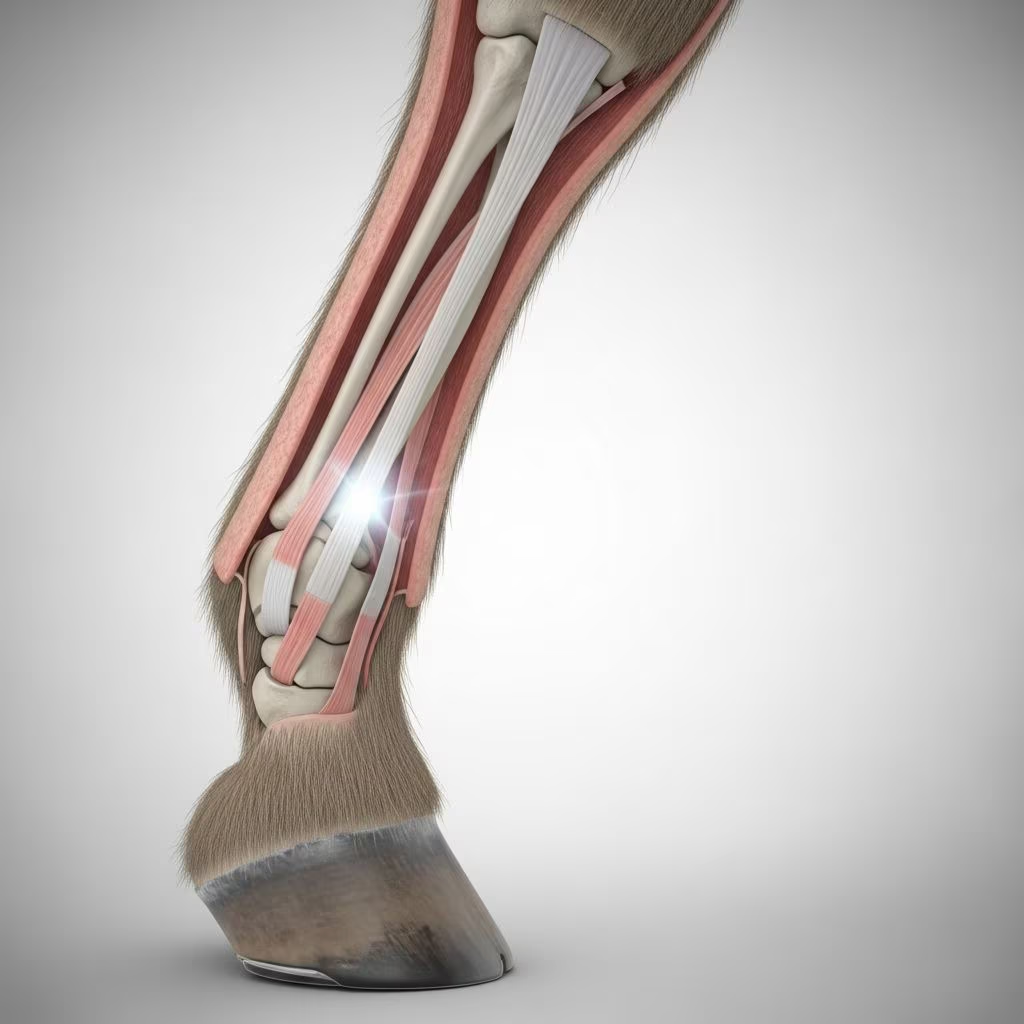
Navicular syndrome represents one of the most prevalent chronic lameness conditions affecting the forelimbs of horses, particularly mature performance and pleasure horses. This multifaceted disorder involves inflammation, degeneration, or injury to the navicular bone, surrounding soft tissues, and related structures within the hoof, leading to persistent heel pain that compromises mobility and quality of life.
Understanding the Anatomy Involved
To grasp navicular syndrome, it is essential to review the intricate anatomy of the equine foot. The navicular bone, a small sesamoid bone positioned at the back of the coffin joint, acts as a fulcrum for the deep digital flexor tendon (DDFT). This tendon originates higher in the leg and inserts on the back of the coffin bone, creating significant tension across the navicular bone during weight-bearing and propulsion phases of movement. Surrounding this are the navicular bursa—a synovial sac lubricating the tendon-bone interface—and collateral ligaments providing stability. Poor blood supply to the navicular bone, combined with repetitive mechanical stress, predisposes these structures to pathology.
Disruptions in this delicate balance, such as flexor tendon strain or bursal inflammation, manifest as the clinical signs associated with the syndrome. Horses with conformational flaws like long toes or underrun heels experience amplified stress, accelerating degenerative changes.
Primary Causes and Risk Factors
Navicular syndrome arises from a combination of biomechanical, vascular, and genetic influences rather than a single etiology. Chronic trauma from uneven weight distribution, exacerbated by improper trimming or shoeing, leads to bone remodeling abnormalities, including erosions and cystic lesions on the navicular bone. Vascular compromise, evidenced by thrombosis or hypoperfusion, further contributes to ischemic damage and poor healing.
Key risk factors include:
- Age: Most common in horses 7-14 years old.
- Breed predisposition: Quarter Horses, Thoroughbreds, and Warmbloods show higher incidence.
- Conformation: Upright or contracted heels, sheared heels, or mismatched foot pairs.
- Workload: High-impact activities on hard surfaces without adequate footing.
- Body condition: Excess weight increases compressive forces on the heel.
Environmental factors like consistently firm arena surfaces compound these risks, underscoring the importance of proactive management in at-risk populations.
Recognizing Clinical Signs
Horses with navicular syndrome typically exhibit subtle, bilateral forelimb lameness that worsens with exercise, especially on circles or hard ground. Affected animals often adopt a characteristic gait: short, choppy strides with toe-first landing to avoid heel impact, accompanied by intermittent stumbling. Pain localizes to the heel region, confirmed by positive response to hoof testers over the frog or quarters.
Other observable signs include:
- Reluctance to turn or back up.
- Shifting weight between forelegs when standing.
- Heat or digital pulses in the heels post-exercise.
- Gradual onset without acute injury history.
Early detection hinges on vigilant owners noting these behavioral shifts, as advanced cases lead to profound atrophy of the deep flexor muscles and secondary joint degeneration.
Diagnostic Approaches
Accurate diagnosis requires a systematic process to rule out differentials like deep digital flexor tendonitis or pedal osteitis. Initial evaluation involves a thorough lameness exam, with palmar digital nerve blocks providing pathognomonic relief in over 90% of cases, localizing pain to the caudal foot.
Standard radiography reveals classic findings such as increased bone density, flexor cortical defects, or synovial fossa enlargement, though early lesions may be absent. Advanced imaging elevates precision:
| Modality | Advantages | Limitations |
|---|---|---|
| MRI | Visualizes soft tissues, bursa, and early bone changes | High cost, requires general anesthesia |
| Ultrasound | Assesses DDFT integrity | Limited to superficial structures |
| Nuclear Scintigraphy | Detects active bone remodeling | Poor specificity |
Navicular bursoscopy offers direct visualization and biopsy capabilities for definitive pathology confirmation.
Conservative Management Strategies
Treatment prioritizes multimodal conservative approaches to alleviate pain, enhance circulation, and optimize biomechanics. Corrective farriery forms the cornerstone, employing rolled toes, extended heels, or eggbar shoes to promote early breakover, reduce DDFT tension, and support the frog. Regular farrier adjustments every 4-6 weeks are crucial for sustained efficacy.
Pharmacologic interventions include:
- NSAIDs: Phenylbutazone or firocoxib for chronic inflammation control.
- Vasodilators: Isoxsuprine to improve navicular perfusion, with 80% response rates.
- Bisphosphonates: Clodronate (Osphos) or tiludronate (Tildren) inhibit bone resorption, providing 4-month relief; monitor for colic.
Lifestyle modifications—weight reduction, softer footing, and reduced turnout on slopes—complement these efforts, often yielding functional soundness in 60-70% of cases.
Advanced and Interventional Therapies
For refractory cases, targeted interventions address specific lesions. Intra-articular or intrabursal corticosteroids into the coffin joint or navicular bursa yield soundness in one-third of horses, though repeated use risks tendon weakening.
Extracorporeal shockwave therapy (ESWT) delivers acoustic waves to stimulate angiogenesis and neovascularization, breaking chronic pain cycles. Protocols involve 3-4 sessions under sedation, most beneficial for unilateral cases or impar ligament injuries.
Biologics like platelet-rich plasma (PRP), stem cells, or interleukin receptor antagonist serum (IRAP) promote regeneration in soft tissue defects, showing promise in MRI-identified pathologies.
Surgical Options as Last Resort
When medical management fails, surgical neurectomy of the palmar digital nerves desensitizes the heel, restoring gait in 80-90% of candidates. However, complications loom: deep digital flexor tendon rupture (10-20%), neuroma formation, or unnoticed foot injuries due to analgesia loss. Pre-surgical MRI and a 3-month shoeing trial are prerequisites. Navicular bone suspensory desmotomy offers an alternative but carries higher recurrence.
Post-neurectomy, rigorous foot care and annual radiographs mitigate risks, extending career longevity.
Prognosis and Long-Term Outlook
Navicular syndrome demands lifelong management, yet with early intervention, many horses maintain light work for years. Success rates vary: 50-70% achieve comfort via shoeing and NSAIDs alone, while advanced imaging-guided therapies boost outcomes to 80%. Bilateral involvement or delayed diagnosis portends poorer prognosis.
Owners should set realistic goals, prioritizing welfare over competition. Regular veterinary monitoring tracks progression, adjusting protocols dynamically.
Preventive Measures for At-Risk Horses
Proactive strategies curb incidence:
- Bi-annual radiographic screening for performance prospects.
- Balanced diet minimizing obesity.
- Farrier expertise in heel support and toe length.
- Varied footing and rest periods.
- Conformational corrections via glue-on orthotics.
Frequently Asked Questions (FAQs)
Is navicular syndrome hereditary?
Genetic predisposition exists in certain breeds, but environmental and management factors predominate.
Can horses with navicular syndrome jump or barrel race?
With tailored management, low-impact disciplines are feasible; high-speed events often exacerbate symptoms.
How long do treatments like Osphos last?
Effects persist 3-6 months, necessitating repeat dosing under veterinary guidance.
Does shoeing alone cure navicular?
No, it manages symptoms; integrated therapy is essential for best results.
What if my horse relapses after treatment?
Re-evaluate with MRI and adjust regimen; neurectomy may be considered.
References
- Navicular Syndrome in Horses – Veterinary Medicine at Illinois — University of Illinois College of Veterinary Medicine. 2020-09-11. https://vetmed.illinois.edu/2020/09/11/navicular-syndrome/
- Navicular Syndrome in Horses: Symptoms, Treatment & … — Mad Barn. N/A. https://madbarn.com/navicular-syndrome-in-horses/
- Navicular Syndrome in Horses – Musculoskeletal System — MSD Veterinary Manual. N/A. https://www.msdvetmanual.com/musculoskeletal-system/disorders-of-the-foot-in-horses/navicular-syndrome-in-horses
- Treating navicular syndrome in equine patients — PubMed (Veterinary Clinics of North America: Equine Practice). 2011-08-31. https://pubmed.ncbi.nlm.nih.gov/21882161/
- Understanding and Treating Navicular Disease — Novick DVM. N/A. https://www.novickdvm.com/articles-all/understanding-and-treating-navicular-disease
- Navicular in Horses — PetMD. N/A. https://www.petmd.com/horse/conditions/musculoskeletal/navicular-horses



