

Navicular in Horses: Causes, Symptoms & Treatment
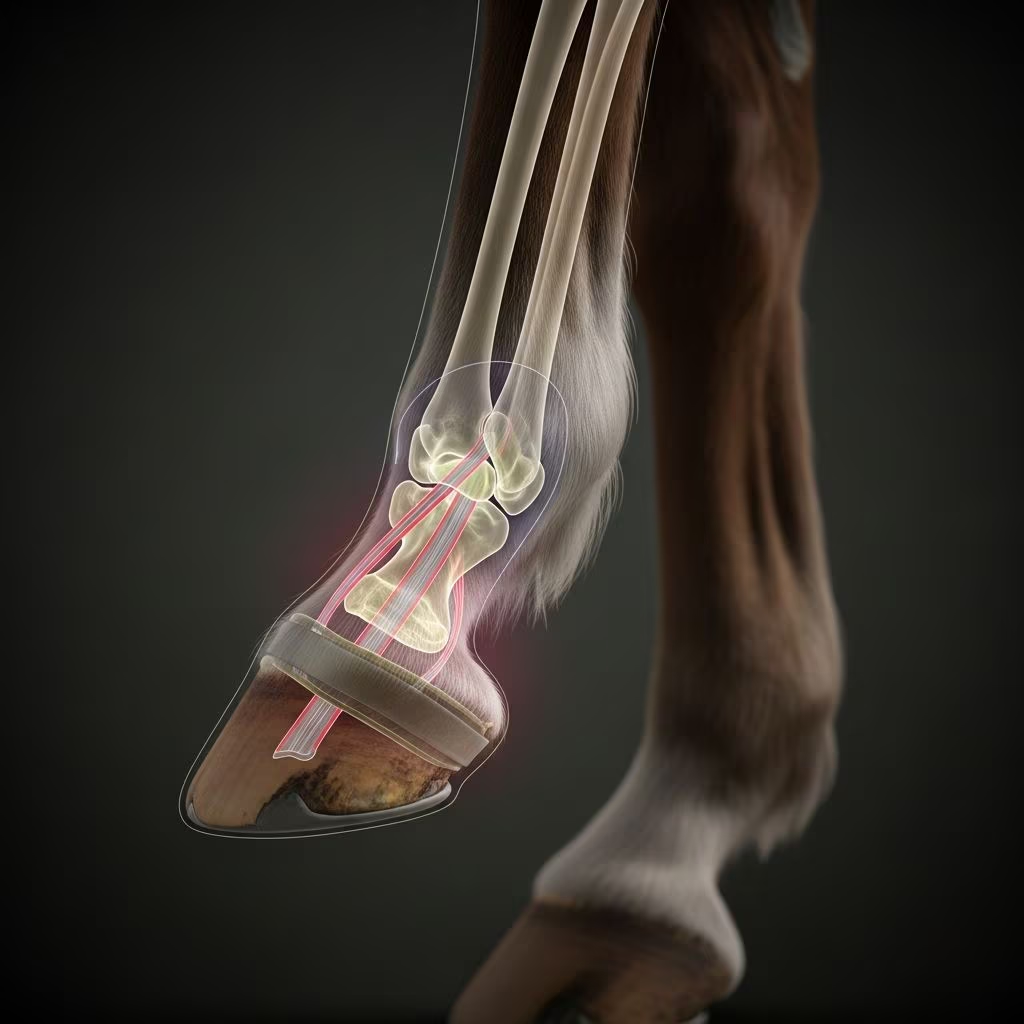
Navicular syndrome is one of the most common causes of lameness in horses, particularly affecting middle-aged equines. This progressive condition involves the navicular bone, a small bone located in the heel region of the hoof, along with the surrounding soft tissues including the deep digital flexor tendon and the navicular bursa. Understanding this condition is essential for horse owners, as early diagnosis and appropriate management can significantly improve a horse’s quality of life and athletic performance.
What is Navicular Syndrome?
Navicular syndrome is a degenerative condition that affects the structures within the hoof capsule, particularly impacting the navicular bone and associated soft tissue structures. The condition is characterized by chronic pain and lameness, typically beginning in the forelimbs and potentially progressing to bilateral involvement. While the exact cause remains multifactorial, veterinarians believe the condition results from a combination of trauma and decreased blood supply to the navicular bone, leading to inflammation, bone remodeling, and degenerative changes.
The navicular bone plays a crucial role in absorbing shock and supporting the deep digital flexor tendon as it passes over the bone. When this structure becomes compromised, the horse experiences pain in the heel region, which can severely impact movement and performance.
Recognizing Symptoms of Navicular Syndrome
Identifying navicular syndrome early is critical for implementing effective treatment strategies. The symptoms of this condition are distinctive and progressive, affecting how horses move and bear weight.
Common Clinical Signs
Horses with navicular syndrome typically exhibit a characteristic low-grade bilateral forelimb lameness that usually progresses slowly over time. The lameness may initially appear intermittent, becoming more pronounced during specific activities or conditions. Common symptoms include:
- Reluctance to work on hard ground or in small circles
- Shortened stride length, particularly in the forelimbs
- Tendency to place affected feet forward when standing, a behavior known as “pointing”
- Sensitivity or pain in the heel region when examined with hoof testers
- A shuffling or stumbling gait, especially during transitions
- Difficulty backing up or turning sharply
- Increased pain after periods of rest followed by exercise
In some cases, one foot may be more affected than the other, creating an obvious lameness pattern that progresses over time if left untreated.
Diagnosing Navicular Syndrome
Proper diagnosis of navicular syndrome requires both clinical evaluation and radiographic imaging. A veterinarian cannot diagnose this condition based on radiographic findings alone; clinical signs must correlate with imaging results.
Clinical Examination
During a physical examination, your veterinarian will perform several diagnostic tests. The palmar digital nerve block is particularly valuable in identifying navicular syndrome. When anesthetic is placed approximately one inch below the fetlock on the inside and outside of the back third of the pastern, it blocks sensitivity to the back one-half to two-thirds of the hoof. A horse with navicular disease will show marked improvement in lameness or move without limping following this block, confirming pain originating from the heel region.
Additionally, hoof testers are used to identify pain in the heel area, which is characteristic of navicular syndrome.
Radiographic Imaging
X-rays are essential for confirming the diagnosis and assessing the extent of bone changes. Radiographic findings may include bone remodeling of the navicular bone, changes to bone density, and alterations in the bone’s shape or size. However, radiographic changes alone do not constitute a diagnosis without corresponding clinical symptoms.
Treatment Options for Navicular Syndrome
Navicular syndrome can be managed but is rarely completely cured. The good news is that the vast majority of cases respond positively to a combination of appropriate management strategies, therapeutic shoeing, medications, and physical therapy. Treatment approaches are typically individualized based on the severity of the condition and the horse’s response to initial interventions.
Conservative Management Approaches
Corrective Shoeing and Trimming
Proper shoeing is fundamental to managing navicular syndrome successfully. Without correct foot balance and appropriate shoeing modifications, inflammation and pain will continue despite other treatments. Corrective trimming and shoeing ensure level footfall and proper weight distribution throughout the hoof. A rolled toe egg bar shoe is commonly used to encourage early break over at the toe while providing excellent heel support. Rolling or rockering the toe of the shoe reduces breakover effort and decreases stress on the deep digital flexor tendon, thereby reducing pain.
Rest and Confinement
Stall rest or confinement to a small paddock is often recommended as affected structures within the foot recover. The duration of confinement varies depending on individual cases, but expect at least one month of confinement as corrective shoeing is initiated. If the diagnosis involves injured ligaments or tendons, rest may be necessary for several months.
Weight Management
Maintaining correct body weight is important in managing navicular syndrome, as obesity increases the load on the horse’s hooves and tendons, exacerbating the condition.
Medication and Injection Therapies
Non-Steroidal Anti-Inflammatory Drugs (NSAIDs)
Oral NSAIDs are administered for pain control and represent a mainstay of navicular syndrome therapy. Common medications include phenylbutazone and flunixin meglumine, which show good efficacy in reducing inflammation and pain. Some horses may only need NSAIDs during initial treatment, while others require lifelong medication management. Equioxx is another popular long-term NSAID option used to minimize inflammation.
Corticosteroid Injections
Injecting the coffin joint and/or navicular bursa with corticosteroids is one of the most common treatment options for reducing inflammation. This targeted approach delivers medication directly to the affected area. Injection of corticosteroids into the coffin bone improves soundness in roughly one-third of horses. In one study, 80% of horses that were no longer responding to traditional therapy were sound two weeks post-navicular bursa injection with a sodium hyaluronate and steroid combination.
Bisphosphonates
Bisphosphonates such as Osphos are systemic medications used to manage navicular syndrome. These medications work by modifying bone metabolism and can help stabilize degenerative bone changes associated with the condition.
Blood Supply Enhancement Medications
Isoxsuprine is one of the most successful drugs for treating navicular disease, with reports showing that 80% of horses treated with Isoxsuprine respond positively to it. This medication dilates blood vessels and helps increase circulation to the navicular bone, improving oxygen delivery to affected tissues. Long-term treatment with substances such as isoxsuprine and aspirin may improve blood supply to the navicular bone and improve bone condition.
Advanced Therapeutic Options
Extracorporeal Shockwave Therapy
Extracorporeal shockwave therapy may prove therapeutic in some horses with navicular syndrome by releasing a sudden amount of energy resulting in a pressure wave. This wave changes cell membranes and increases cell metabolism. The anti-inflammatory effects of shockwave therapy boost blood supply to the affected area. Horses require sedation during treatment, as the procedure produces discomfort.
Biologic Injections
The injection of biologics such as mesenchymal stem cells, autologous conditioned serum, and platelet-rich plasma has been used in some cases with soft tissue lesions in the navicular region.
Surgical Management
For horses that do not respond to conservative management, surgical options are available. Surgery should be considered only after non-surgical treatments have been exhausted, as these procedures carry significant risks and complications.
Navicular Bursoscopy
Navicular bursoscopy can be used to debride dorsal tears of the deep digital flexor tendon or flexor cortex erosions on the navicular bone, and to break down adhesions within the proximal aspect of the navicular bursa.
Neurectomy
Neurectomy, or cutting the palmar digital nerves, is a surgical option for horses with severe, intractable pain. This procedure desensitizes the back of the foot, allowing the horse to work without discomfort. However, this comes with significant consequences: the horse will not feel sole bruises, abscesses, laminitis, and other conditions that would normally be signaled by lameness. Postoperative complications are common and include rupture of the deep flexor tendon, painful inflammation of the cut nerve endings (neuromas), and damage to the foot that goes unnoticed by the horse and owner. Neurectomy should only be considered as a last resort with full recognition of its implications.
Desmotomy
A desmotomy of the suspensory ligament of the navicular bone is another surgical option that may provide relief in cases that do not respond to physical therapy and medication.
Developing a Treatment Plan
It is important to understand that navicular syndrome differs widely from horse to horse in the type and extent of injury. Some horses respond remarkably well to one particular treatment, while other horses do not. This variability can be frustrating for owners, but working closely with your veterinarian to develop an individualized treatment plan tailored to your horse’s specific needs is essential.
Most horses with navicular syndrome respond well to a comprehensive approach combining proper and therapeutic shoeing, appropriate medications, and physical therapy. This multimodal approach addresses the condition from multiple angles, providing the best opportunity for pain management and restored function.
Important Considerations
Navicular syndrome is not a terminal condition. With appropriate diagnosis and management, most horses can continue to work and maintain reasonable quality of life. However, treatment is typically lifelong, requiring ongoing medication, management, and monitoring. Regular communication with your veterinarian and adjustments to the treatment plan based on your horse’s response are crucial for long-term success.
Frequently Asked Questions
Q: Is navicular syndrome curable?
A: Navicular syndrome can be managed effectively but is rarely completely cured. However, most horses respond well to a combination of corrective shoeing, medication, and physical therapy, allowing them to maintain quality of life and continue working.
Q: How long does recovery take from navicular syndrome?
A: Recovery timelines vary depending on the severity of the condition and the horse’s response to treatment. Expect at least one month of stall rest and confinement when beginning corrective shoeing, with some cases requiring several months of rest if ligaments or tendons are involved.
Q: Can horses with navicular syndrome continue to be ridden?
A: Yes, many horses with navicular syndrome can continue to work with appropriate management. However, their activities may need to be modified, and ongoing treatment is typically necessary to maintain soundness.
Q: What is the palmar digital nerve block?
A: The palmar digital nerve block is a diagnostic test where anesthetic is placed approximately one inch below the fetlock to block sensitivity to the back portion of the hoof. A positive response (improvement in lameness) confirms that pain originates from the heel region, supporting a navicular syndrome diagnosis.
Q: Are there any long-term complications associated with navicular syndrome treatment?
A: While most conservative treatments are well-tolerated, surgical options like neurectomy carry significant risks including nerve regrowth (neuromas), undetected foot injuries, and tendon rupture. These should only be considered after other treatments have failed.
Q: How effective is isoxsuprine for navicular syndrome?
A: Research shows that approximately 80% of horses treated with isoxsuprine respond positively to the medication. However, the response duration is variable, and repeated courses of treatment may be necessary.
References
- Navicular Syndrome in Horses — College of Veterinary Medicine, University of Illinois. 2020. https://vetmed.illinois.edu/2020/09/11/navicular-syndrome/
- Navicular Syndrome in Horses – Musculoskeletal System — Merck Veterinary Manual. https://www.merckvetmanual.com/musculoskeletal-system/disorders-of-the-foot-in-horses/navicular-syndrome-in-horses
- Understanding and Treating Navicular Disease — Douglas Novick DVM. https://www.novickdvm.com/articles-all/understanding-and-treating-navicular-disease
- Navicular Syndrome in Horses: Symptoms, Treatment & Prevention — Mad Barn Equine Nutrition. https://madbarn.com/navicular-syndrome-in-horses/
- Navicular Syndrome in Horses: Causes, Symptoms & Treatment — Northwest Veterinary Mount Vernon. 2022. https://www.nwvetmountvernon.com/site/blog/2022/08/15/navicular-syndrome-horses-causes-symptoms-treatment
- Equine Navicular Syndrome — College of Veterinary Medicine, Mississippi State University. 2017. https://www.vetmed.msstate.edu/sites/www.vetmed.msstate.edu/files/presentations/10.20.17%20Equine%20Navicular%20Syndrome%20(Hannah%20Plaugher).pdf
- Managing Navicular Syndrome in Horses — Kentucky Equine Research. https://ker.com/equinews/managing-navicular-syndrome-horses/



