

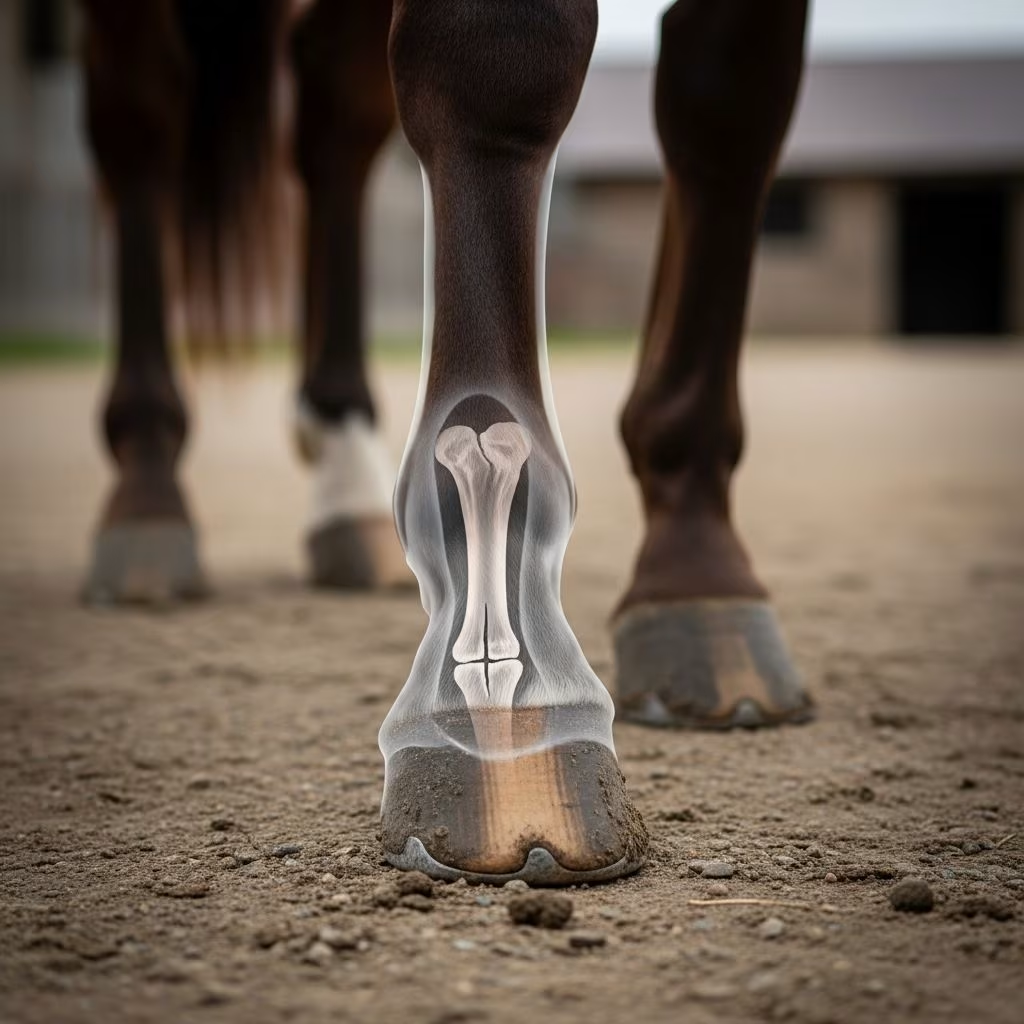
The navicular bone, a small sesamoid structure in the equine foot, plays a pivotal role in supporting the deep digital flexor tendon (DDFT) and facilitating smooth movement. Fractures here disrupt this function, leading to significant lameness, particularly in performance horses. These injuries often stem from repetitive stress or acute trauma, resulting in pain localized to the heel region.
Understanding the Navicular Apparatus
The navicular bone resides deep within the hoof, positioned at the back of the coffin joint. It serves as a fulcrum for the DDFT, which glides over its fibrocartilage-covered surface during locomotion. Surrounding structures include the navicular bursa—a fluid-filled sac cushioning the tendon—and suspensory ligaments anchoring the bone. This complex, known as the navicular apparatus, bears substantial compressive forces, especially during propulsion.
Disruptions like fractures alter biomechanics, compressing the bone and straining adjacent tissues. Low-heel, long-toe conformations exacerbate these forces, increasing fracture risk.
Mechanisms Leading to Fractures
Navicular fractures typically arise from chronic degeneration or sudden overload. Repetitive microtrauma from high-impact activities erodes the bone’s flexor surface, starting with fibrocartilage erosions on the sagittal ridge. Over time, this progresses to medullary bone changes, distal border chips, or complete fractures.
Contributing factors include:
- Conformational issues: Long toes and low heels amplify DDFT tension.
- Excess body weight on small hooves.
- Poor footing or stall confinement limiting natural movement.
- Trauma from slips or overexertion.
Unlike isolated fractures, many cases involve syndrome-like degeneration, blending bony and soft-tissue damage.
Recognizing Clinical Signs
Horses with navicular fractures exhibit chronic forelimb lameness, often bilateral but asymmetric. Early signs are subtle, worsening with exercise on hard or uneven surfaces.
| Symptom | Description | Common Triggers |
|---|---|---|
| Shortened stride | Choppy gait with toe-first landing | Trotting, circles |
| Head nodding | Slight bob on affected limb | Straight-line trot |
| Heel pain | Reluctance on flexion | Turning, downhill |
| Pointing | Toe extended at rest | Standing in stall |
| Stumbling | Increased frequency | Uneven terrain |
Lameness intensifies in tight circles and improves with rest, distinguishing it from sole bruises or laminitis. Hoof testers reveal heel sensitivity, and underrun heels worsen symptoms.
Diagnostic Approaches
Diagnosis begins with a thorough lameness exam. Straight-line trotting may mask bilateral issues, but lunging reveals grade 2-3/5 lameness with toe landing. Palmar digital nerve blocks confirm localization: numbing one heel often shifts lameness to the contralateral limb.
Imaging is crucial:
- Radiographs: Detect distal border chips, erosions, or cysts; views include lateromedial and flexed dorsopalmar.
- MRI: Gold standard for soft-tissue assessment, revealing DDFT adhesions, bursitis, or medullary changes.
- Ultrasonography: Evaluates DDFT integrity.
Differential diagnoses include coffin joint arthritis, impar ligament strain, or P3 fractures, ruled out via blocks and imaging.
Conservative Management Strategies
Most fractures respond to multimodal therapy aiming to reduce pain, improve biomechanics, and promote healing. Corrective farriery is foundational: rolling toes, raising heels, and wide web shoes alleviate DDFT strain.
Pharmacologic options:
- NSAIDs (e.g., phenylbutazone) for inflammation.
- Intra-articular corticosteroids into navicular bursa or coffin joint.
- Bisphosphonates to inhibit bone resorption.
Alternative therapies like shockwave, acupuncture, or regenerative injections (PRP, stem cells) show promise in early cases. Controlled exercise on soft surfaces prevents adhesions.
Surgical Interventions
For refractory cases, surgery targets pain sources. Navicular bursoscopy removes fragments or debrides erosions, often combined with deep digital neurectomy for long-term desensitization.
Neurectomy caveats:
- Initial relief, but nerves may regrow in 2-4 years, forming neuromas.
- Requires daily foot checks for undetected injuries like abscesses.
Success rates vary; bursoscopy yields 70-80% improvement, but recurrence is possible.
Prevention and Long-Term Care
Proactive measures mitigate risk:
- Regular farrier visits for balanced hooves.
- Weight management and turnout.
- Gradual conditioning on varied footing.
- Early intervention for conformational flaws.
Monitoring includes routine lameness checks and imaging for at-risk breeds like Quarter Horses.
Prognosis Insights
With prompt care, 50-70% of horses return to work, though full athletic potential may not resume. Chronic cases benefit from retirement to pasture. Owners should weigh quality of life against aggressive treatments.
Frequently Asked Questions (FAQs)
What breeds are prone to navicular fractures?
Quarter Horses, Thoroughbreds, and Warmbloods in disciplines like jumping or reining face higher incidence due to conformation and workload.
How long does recovery take?
Conservative management: 3-6 months; surgical: 6-12 months with rest and rehab.
Can navicular fractures heal completely?
Bony union is rare in small fragments; management focuses on pain control and function.
Is neurectomy safe long-term?
It provides relief but risks undetected foot damage; daily inspections are essential.
How to differentiate from laminitis?
Navicular causes heel pain and toe landing; laminitis shifts weight off toes with bounding pulses.
Navicular bone fractures demand vigilant care to preserve equine welfare. Collaborate with veterinarians and farriers for tailored plans.
References
- Navicular in Horses – PetMD — PetMD. 2023. https://www.petmd.com/horse/conditions/musculoskeletal/navicular-horses
- Navicular syndrome – Large Animal Surgery — University of Minnesota. 2023. https://open.lib.umn.edu/largeanimalsurgery/chapter/navicular-syndrome/
- Navicular Syndrome in Horses: Causes, Symptoms & Treatment — Northwest Veterinary Clinic. 2022-08-15. https://www.nwvetmountvernon.com/site/blog/2022/08/15/navicular-syndrome-horses-causes-symptoms-treatment
- Navicular Syndrome in Horses: Symptoms, Treatment & Prevention — Mad Barn. 2024. https://madbarn.com/navicular-syndrome-in-horses/
- Navicular Inflammation — South Shore Equine Clinic. 2023. https://www.ssequineclinic.com/equine-health-topics/navicular-inflammation/
- Navicular Syndrome — Atlantic Equine Services. 2023. https://www.sporthorsevets.com/navicular-syndrome/
- Navicular Syndrome in Equine Patients: Anatomy, Causes, and… — Auburn University College of Veterinary Medicine. 2015. https://www.vetmed.auburn.edu/wp-content/uploads/2015/01/PV1110_waguespack_Surgical-1.pdf



