

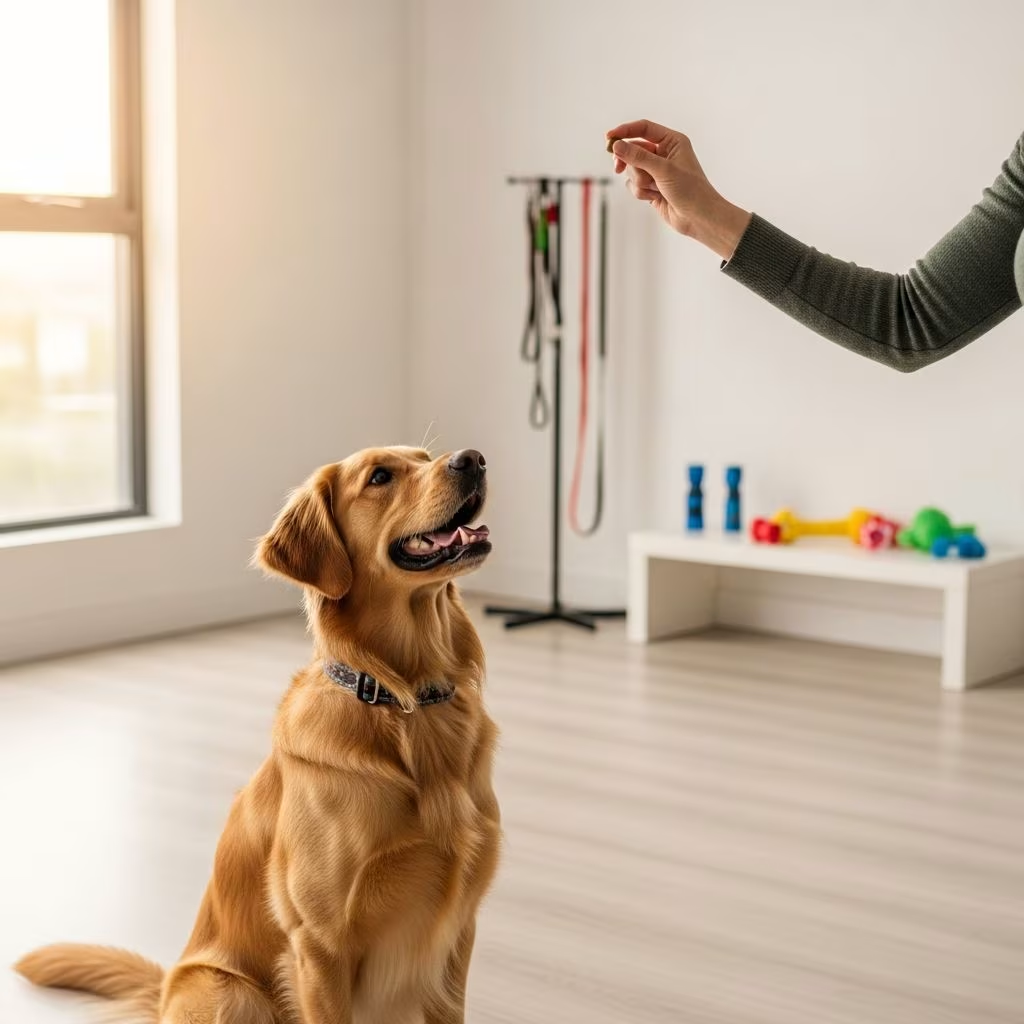
Every January marks a special time dedicated to enhancing the lives of dogs and their owners through structured learning and positive interactions. This annual observance highlights the transformative power of consistent training, fostering safer homes, stronger relationships, and well-adjusted pets. Whether you share your life with a playful puppy or a mature companion, committing to skill-building activities yields lasting rewards for everyone involved.
The Origins and Purpose of This Canine Celebration
Established over a decade ago by leading professionals in the field, this monthly focus emerged to address common challenges faced by dog guardians. It serves as a nationwide reminder that behavioral education is not confined to early puppy stages but remains vital throughout a dog’s lifespan. The initiative underscores how proactive guidance prevents misunderstandings, reduces shelter relinquishments due to manageable issues, and promotes harmonious living environments.
At its core, the event encourages participation from all community members, including shelters, veterinarians, and everyday families. By prioritizing science-backed approaches, it shifts focus from correction to collaboration, ensuring dogs thrive as confident, responsive partners. Participation opportunities abound, from home-based sessions to group classes, making it accessible for diverse lifestyles.
Key Advantages of Investing in Canine Education
Dedicated training sessions deliver multifaceted improvements that extend beyond obedience. Owners report noticeable shifts in daily dynamics, with pets displaying greater reliability in varied settings. Here’s a breakdown of primary gains:
- Enhanced Safety: Well-trained dogs navigate public spaces, vehicles, and homes with reduced risk, minimizing accidents involving strangers, vehicles, or hazards.
- Behavioral Harmony: Early intervention curbs unwanted actions like excessive vocalization, jumping, or resource guarding, creating peaceful households.
- Mental Enrichment: Structured challenges stimulate cognitive development, warding off boredom-induced mischief and promoting emotional resilience.
- Social Proficiency: Exposure to diverse scenarios builds poise around humans, fellow animals, and novel stimuli, easing transitions like travel or gatherings.
These outcomes not only elevate the dog’s welfare but also alleviate owner stress, fostering mutual enjoyment in shared activities.
Understanding Positive Reinforcement: The Gold Standard Method
Modern practices emphasize rewarding desired actions over punishing errors, a technique validated by behavioral studies for superior retention and enthusiasm. This approach leverages natural motivations—such as treats, play, or verbal affirmation—to associate cues with positive outcomes, building eagerness without fear.
Why does it outperform alternatives? It nurtures intrinsic motivation, where dogs actively seek repetition of successful behaviors. Trainers note that fearful methods erode trust, whereas affirmation accelerates learning curves. For instance, pairing a verbal marker like \”yes\” with immediate rewards creates clear communication channels, applicable from basic recalls to advanced tasks.
| Method | Impact on Dog | Long-Term Effect |
|---|---|---|
| Positive Reinforcement | Increases confidence and willingness | Stronger bond, faster skill acquisition |
| Punishment-Based | Induces stress and avoidance | Potential aggression, compliance issues |
Incorporate high-value motivators like small food pieces or favorite toys, timing them precisely post-behavior for maximum association.
Essential Commands Every Dog Should Master
Foundational instructions form the bedrock of reliable partnership. Prioritize these high-impact skills, practicing in short, frequent bursts to maintain focus.
- Sit: Directs hindquarters downward on cue, useful for greetings, waiting, and impulse control. Lure with a treat above the nose, rewarding the natural fold.
- Stay: Promotes patience amid distractions, vital for doorways, vet exams, or emergency halts. Begin stationary, gradually adding distance and duration.
- Come (Recall): Ensures safe returns from afar, potentially life-saving in open areas. Use joyful tones and jackpots (extra rewards) to embed positivity.
- Leave It: Discourages interest in unsafe items, from trash to aggressive peers. Offer trades: withhold target, present superior alternative upon compliance.
- Down: Encourages calm surrender, aiding relaxation training and counter-conditioning fears.
Progress from distraction-free zones to real-world applications, celebrating milestones to sustain momentum.
Overcoming Common Training Hurdles
Plateaus and regressions are normal; persistence with empathy unlocks progress. Address jumping by withholding attention until all paws touch ground, then rewarding. For leash reactivity, counter-condition with distance-based treats, gradually closing gaps.
Adult rescues may carry histories influencing responses—patience and professional input bridge gaps. Track sessions in a journal to identify patterns, adjusting paces accordingly. Consistency across household members prevents mixed signals, amplifying efficacy.
Integrating Training into Everyday Routines
Seamless incorporation maximizes retention without dedicated hours. Mealtimes become \”sit-stay\” drills; walks enforce heel positions. Games like fetch embed retrieves, blending fun with function. Community events, parks, or volunteer fostering expose dogs to variety, reinforcing adaptability.
For busy schedules, apps and online resources offer guided modules. Pair with physical outlets like agility or scent work to holistically engage body and mind.
Advanced Techniques for Seasoned Pairs
Beyond basics, explore agility, nosework, or therapy preparation. These pursuits channel energy, sharpen focus, and open doors to certifications. Group classes provide controlled socialization, monitored by certified experts adhering to humane standards.
Special needs dogs—those with sensory impairments or anxieties—benefit from tailored protocols, often yielding profound transformations under guidance.
Frequently Asked Questions
Is training only for puppies?
No, adults and seniors respond well, often quicker due to maturity. Lifelong learning keeps minds sharp.
How often should sessions last?
5-15 minutes, multiple times daily, trumps lengthy marathons for optimal absorption.
What if my dog ignores cues?
Revisit foundations, minimize distractions, and up rewards. Consult pros for underlying issues.
Are treats always necessary?
Initially yes, then fade to verbal/praise for maintenance.
Can training fix aggression?
It manages via prevention and redirection; severe cases require veterinary behaviorists.
Community and Professional Resources
Local humane societies host workshops; platforms like APDT connect to certified trainers emphasizing evidence-based methods. Shelters often provide low-cost intros. Volunteer programs blend service with hands-on practice, benefiting rescues awaiting homes.
Embrace this month as a launchpad for enduring commitment. The ripple effects—safer streets, joyful outings, deeper connections—enrich lives profoundly.
References
- January is National Train your Dog Month! — Camp Companion. 2023-01-02. https://www.campcompanion.org/2023/01/02/january-is-national-train-your-dog-month/
- January is National Train Your Dog Month — Arizona Animal Welfare League. N/A. https://aawl.org/national-train-your-dog-month
- National Train Your Dog Month: Tips, Benefits & Building Trust — Farmland Traditions. N/A. https://farmlandtraditions.com/national-train-your-dog-month-tips-benefits-building-trust/
- Celebrating National Train Your Dog Month at HSSV — Humane Society Silicon Valley. N/A. https://www.hssv.org/blog/national-train-your-dog-month-at-hssv/
- National Train Your Dog Month — Camp Bow Wow. 2021-01. https://www.campbowwow.com/blogs/2021/january/national-train-your-dog-month/



