Nasopharyngeal Polyps in Cats: Causes, Symptoms & Treatment
Understand nasopharyngeal polyps in cats: symptoms, diagnosis, and surgical treatment options.
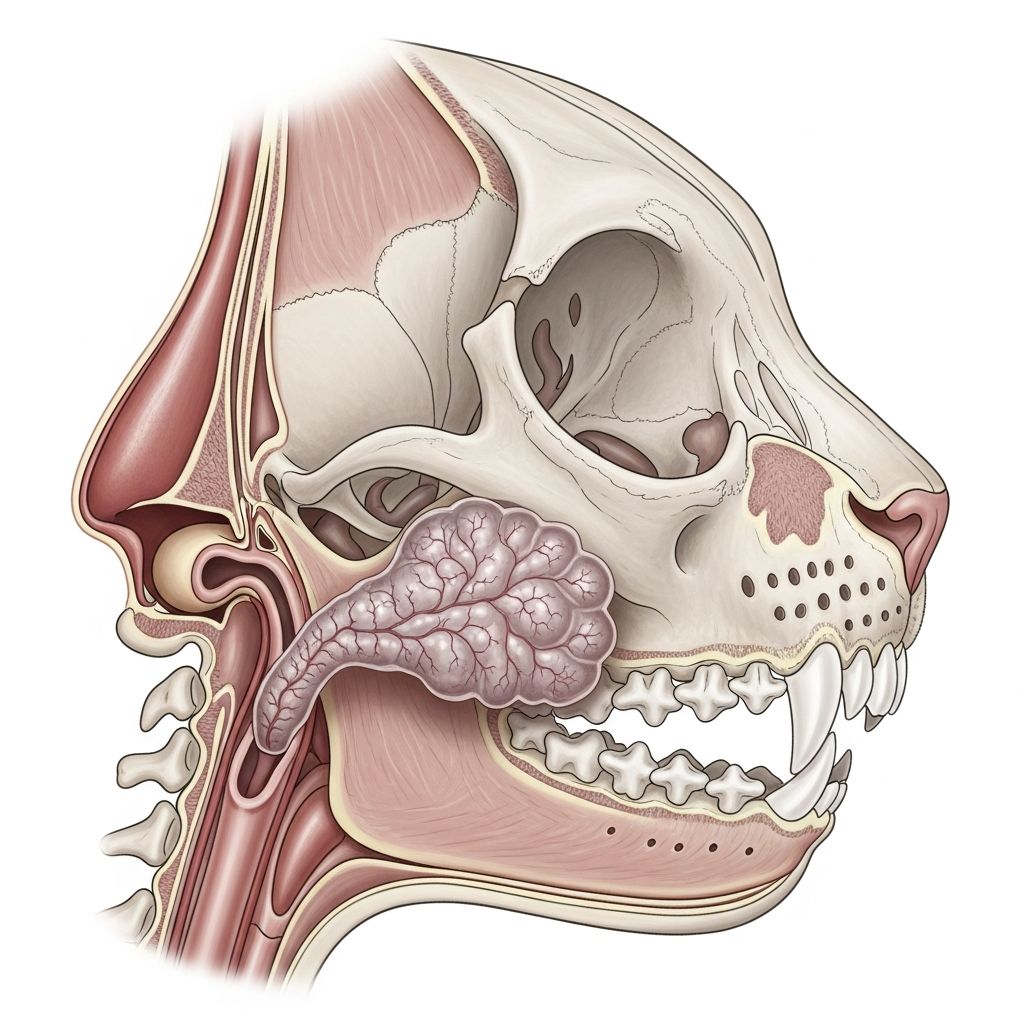
Understanding Nasopharyngeal Polyps in Cats
Nasopharyngeal polyps represent benign idiopathic masses that originate from the middle ear and extend either down the Eustachian tube or into the external ear canal. These non-cancerous growths are among the most common nonneoplastic lesions affecting the ear and nasopharynx in cats. While they can develop in cats of any age, nasopharyngeal polyps tend to occur more frequently in younger felines, often affecting cats under one year of age, though they can also be seen in middle-aged cats. Understanding these growths is essential for cat owners to recognize symptoms early and seek appropriate veterinary care.
The condition was first documented extensively in veterinary literature through research conducted at Cornell University’s College of Veterinary Medicine. According to Dr. James Flanders, associate professor of surgery, these polyps are believed to develop as a response to inflammatory changes secondary to infection with various respiratory viruses, including calicivirus or herpesvirus. The inflammatory process leads to tissue proliferation, creating benign, superficial growths anchored to inflamed tissue by a slender stalk.
What Are the Signs of Nasopharyngeal Polyps?
Nasopharyngeal polyps impact your cat’s breathing significantly. These growths obstruct the passage of air, causing affected cats to develop distinctive clinical signs that alert owners to a potential problem.
Respiratory and Breathing Signs
The most characteristic sign of nasopharyngeal polyps is a distinctive snorting or stertor sound during breathing. Affected cats often display upper airway obstruction symptoms, including:
– Noisy or increased sounds associated with breathing- Sneezing and gagging- Difficulty swallowing (dysphagia)- Shortness of breath (dyspnea)
Secondary Infection Complications
Secondary bacterial infections can develop due to the blockage and accumulation of secretions behind the polyp. When this occurs, cats develop nasal discharge that may be clear or contain blood. The blockage impairs normal respiratory function and drainage, creating an environment conducive to bacterial overgrowth.
Ear-Related Symptoms
When polyps extend into the ear canal, they produce ear-specific signs including:
– Pawing at the affected ear- Head shaking- Head tilt- Discharge from the ear- Otitis media (middle ear infection) or otitis externa (external ear infection)
In rare cases, cats may experience more severe neurological signs such as loss of balance and different pupil sizes (anisocoria). These symptoms suggest involvement of the vestibular system within the inner ear and warrant immediate veterinary attention.
What Causes Nasopharyngeal Polyps?
The precise cause of nasopharyngeal polyps remains unknown, which is why they are classified as idiopathic masses. However, veterinary research has identified several theories about their development.
Inflammatory Response Theory
Some researchers believe that nasopharyngeal polyps result as a response to chronic inflammation in the middle ear and upper respiratory tract. This chronic inflammatory state may trigger abnormal tissue proliferation, leading to polyp formation. The inflammatory changes can persist long after the initial infection resolves, potentially explaining why some cats develop polyps months after respiratory illness.
Viral Infection Connection
Many veterinarians believe a link exists between viral infections and polyp development. According to Cornell’s research, these polyps likely arise following infection with respiratory viruses such as calicivirus or herpesvirus. An affected kitten will initially show classic signs of upper respiratory distress, but these signs typically resolve within days or weeks. However, some months later, the cat may develop a sneezing sound and other polyp-related signs. This delayed presentation suggests the initial viral infection triggers inflammatory changes that ultimately lead to polyp growth.
Why Young Cats Are Affected
Young cats are particularly susceptible to nasopharyngeal polyps, possibly because their immune systems are still developing and may be more prone to severe inflammatory responses following viral infection. Additionally, younger cats may be exposed to more respiratory viruses in multi-cat environments or shelters, increasing their risk of triggering the inflammatory cascade that leads to polyp formation.
How Are Nasopharyngeal Polyps Diagnosed?
Diagnosing nasopharyngeal polyps requires a systematic approach, as these masses are often located deep within the head where they are difficult to visualize without special examination techniques.
Physical Examination
During a routine oral examination, your veterinarian may observe some visible signs of polyps at the back of the mouth. The polyp may be hidden behind the soft palate, but in some cases, there is obvious displacement where something behind the soft palate is pushing it forward. However, many polyps remain completely hidden during a standard examination.
Specialized Diagnostic Techniques
Because your cat’s Eustachian tubes are located deep inside their head, nasopharyngeal polyps can be difficult to see when cats are awake, unless they are very large. If your cat has symptoms suggestive of nasopharyngeal polyps, your veterinarian may recommend sedation or anesthesia to conduct a thorough examination.
During sedation, your veterinarian may use several diagnostic methods:
– Otoscopic examination of the ear canal and eardrum- Oropharyngeal examination using a blunt hook probe to detect polyps beneath the soft palate- A small flexible scope to examine the throat, ears, and nasal passages- Gentle retraction of the soft palate to visualize hidden masses
Advanced Imaging
Occasionally, advanced imaging studies may be recommended to better visualize the inner and middle ear structures. These may include:
– Computed tomography (CT) scanning- Magnetic resonance imaging (MRI)- Radiographs (X-rays) to rule out other conditions
A complete workup, including blood work and radiographs, may be recommended to rule out other common causes of your cat’s symptoms, such as respiratory infections or other airway obstructions.
How Are Nasopharyngeal Polyps Treated?
Surgery to remove as much of the polyp as possible is the most common treatment approach for nasopharyngeal polyps. This minimally invasive procedure provides relief from clinical signs and improves breathing in most cases.
Standard Surgical Removal
The most frequently performed procedure involves surgical extraction of the polyp while the cat is anesthetized. The veterinarian will gently grasp the polyp with tiny forceps or curved hemostats and apply steady traction with gentle twisting to remove the polyp at its base. The polyp’s stalk, which anchors it to the inflamed middle ear tissue, usually comes out along with the main mass. Simply pulling out the polyp will quite frequently be sufficient to remedy the respiratory and breathing problems.
Minimally invasive techniques for polyp removal, such as traction avulsion combined with curettage of the tympanic cavity, have been successful for long-term resolution in many cases. The procedure typically takes less than an hour, and most cats recover well within days.
Limitations of Standard Removal
Unfortunately, removal of as much of the polyp as possible will generally improve breathing and other clinical signs, but in most cases, it is anatomically impossible to remove the entire polyp. This limitation means that recurrence is common, with approximately half of polyps that are removed regrowing. This high recurrence rate occurs because the underlying inflammatory tissue in the middle ear from which the polyp originated remains, allowing regrowth over time.
Advanced Surgical Procedure: Bulla Osteotomy
For cats with recurrent polyps or severe cases, a more extensive surgical approach may be necessary. A procedure known as bulla osteotomy (TECA-BO) involves creating an opening into the middle ear cavity through an incision of the tympanic bulla, the rounded part of the skull just behind the ear. This approach allows removal of the source of the polyp, making recurrence unlikely. Bulla osteotomy is the most effective treatment for preventing nasopharyngeal polyp recurrence, but it is a major surgical procedure and surgical complications can occur.
Post-Surgical Medication
Following standard polyp removal surgery, post-surgical treatment relies primarily on short-term administration of antibiotics and possibly oral steroids or ear drops to reduce the chance of recurrence. Common post-surgical medications include:
– Antibiotics such as Clavamox to prevent secondary bacterial infections- Ear drops like Tresaderm to reduce inflammation- Anti-nausea medications such as meclizine or Cerenia if inner ear inflammation causes vestibular signs
What Is the Prognosis for Nasopharyngeal Polyps?
Most cats enjoy a relatively normal quality of life following standard polyp removal surgery. Although benign, these growths can cause significant difficulty breathing or chronic ear canal infections depending on their location. The good news is that feline inflammatory polyps have a good prognosis after surgical removal.
While recurrence rates are high, many cats experience few complications after surgery. Approximately half of removed polyps may regrow over time, potentially requiring repeat procedures. In recurrent or severe cases, referral to a board-certified veterinary surgeon may be advisable. Your veterinarian will develop a treatment strategy based on your pet’s individual needs, considering factors such as the polyp’s location, size, and your cat’s overall health status.
Frequently Asked Questions About Nasopharyngeal Polyps
Q: At what age do cats typically develop nasopharyngeal polyps?
A: Nasopharyngeal polyps tend to occur most frequently in younger cats, often affecting cats under one year of age, though they can also develop in middle-aged cats. Young cats appear to be at higher risk, possibly due to their developing immune systems and exposure to respiratory viruses.
Q: Are nasopharyngeal polyps cancerous?
A: No, nasopharyngeal polyps are benign, non-cancerous growths. While they are not life-threatening in themselves, they can cause significant breathing difficulties and ear infections if left untreated.
Q: How long does recovery take after polyp removal surgery?
A: Most cats recover well within a few days following standard polyp removal surgery. However, the recovery timeline may be longer if a more extensive procedure like bulla osteotomy is performed.
Q: Will my cat’s polyp grow back after surgical removal?
A: Unfortunately, yes. Approximately half of removed polyps regrow over time because the underlying inflammatory tissue in the middle ear persists. If recurrence occurs, your veterinarian may recommend repeat surgery or a more extensive procedure like bulla osteotomy.
Q: What should I do if I notice my cat making snorting sounds?
A: Schedule an appointment with your veterinarian promptly. While snorting sounds could have various causes, they may indicate a nasopharyngeal polyp or other upper respiratory condition requiring evaluation and treatment.
Q: Is there any way to prevent nasopharyngeal polyps?
A: Since the exact cause remains unknown, prevention is challenging. However, maintaining good respiratory health, avoiding exposure to upper respiratory viruses when possible, and providing appropriate veterinary care for any respiratory infections may help reduce risk.
Q: Can both ears be affected by polyps?
A: Yes, polyps can form bilaterally (in both ears), though unilateral (single-sided) presentation is more common. Bilateral polyps can be especially concerning as they may severely impact hearing and balance.
Q: What type of anesthesia is used for polyp diagnosis and removal?
A: General anesthesia is typically required to safely examine the nasopharynx and remove polyps. Your veterinarian will take special care when anesthetizing cats with possible upper airway obstruction due to the potential for respiratory complications.
When to Seek Veterinary Care
Contact your veterinarian if your cat displays any of the following signs that may indicate nasopharyngeal polyps:
– Chronic sneezing or noisy breathing patterns- Persistent snorting or stertor sounds during breathing- Nasal discharge with or without blood- Excessive pawing at the ears- Frequent head shaking or head tilting- Ear discharge or foul odor from the ears- Gagging or difficulty swallowing- Loss of balance or coordination
While nasopharyngeal polyps are not considered medical emergencies, early diagnosis and treatment can prevent complications and improve your cat’s quality of life significantly.
References
- Nasopharyngeal Polyps — Cornell Feline Health Center, College of Veterinary Medicine, Cornell University. 2024. https://www.vet.cornell.edu/departments-centers-and-institutes/cornell-feline-health-center/health-information/feline-health-topics/nasopharyngeal-polyps
- Nasopharyngeal Polyps in Cats — Merck Veterinary Manual, Merck & Co., Inc. 2024. https://www.merckvetmanual.com/cat-owners/lung-and-airway-disorders-of-cats/nasopharyngeal-polyps-in-cats
- Nasopharyngeal Polyps in Cats — VCA Animal Hospitals. 2024. https://vcahospitals.com/know-your-pet/nasopharyngeal-polyps-in-cats
- Management of Otic and Nasopharyngeal and Nasal Polyps in Cats — PubMed Central, National Center for Biotechnology Information. 2015. https://pubmed.ncbi.nlm.nih.gov/26947114/
- Nasopharyngeal Polyps — American College of Veterinary Surgeons. 2024. https://www.acvs.org/small-animal/nasopharyngeal-polyps/
- Cat Nasal Polyps: Common Causes and How To Treat Them — PetMD. 2024. https://www.petmd.com/cat/conditions/respiratory/cat-nasal-polyps-common-causes-and-how-treat-them
- Nasopharyngeal Polyps in Kittens and Cats — National Kitten Coalition. 2024. https://kittencoalition.org/nasopharyngeal-polyps-in-kittens-and-cats/
Similar Articles



Read full bio of Sneha Tete