

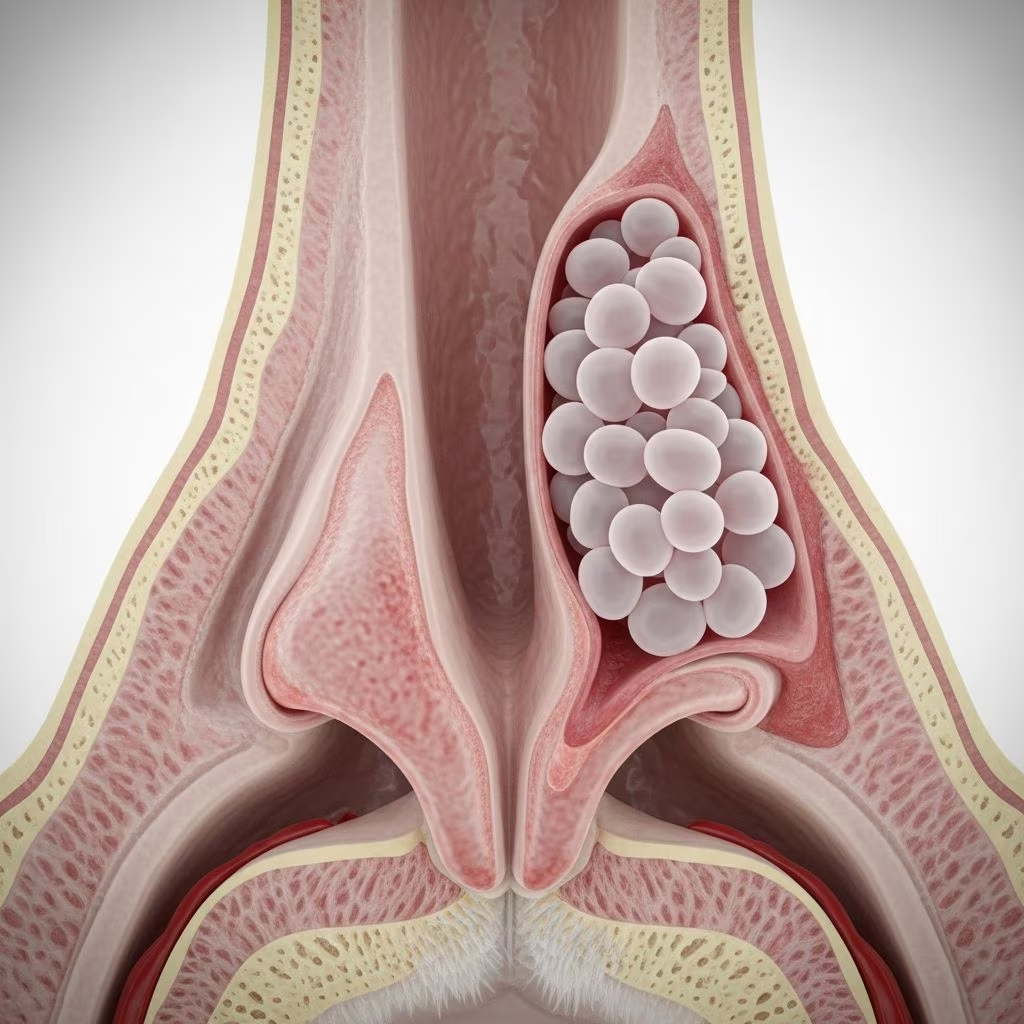
Understanding Nasal Polyps in Cats
Nasal polyps are benign fleshy growths that develop in the nasal passages of cats. These non-cancerous masses represent one of the most common diseases involving the nose and throat in felines. Nasal polyps are most frequently observed in young cats, particularly kittens and very young felines, though they can develop in cats of any age. While veterinarians do not consider nasal polyps a medical emergency, they do require prompt veterinary attention and treatment to prevent complications and ensure your cat’s comfort.
Nasopharyngeal polyps, a related condition, develop in the upper respiratory tract above the soft palate and can cause more severe clinical signs than simple nasal polyps. Understanding the characteristics, causes, and treatment options for nasal polyps is essential for cat owners to recognize symptoms early and seek appropriate veterinary care.
Common Causes and Risk Factors
While the exact cause of nasal polyps in cats remains not completely understood, veterinary researchers believe that these growths are caused by inflammatory changes secondary to infection with a respiratory virus. The most likely culprits include feline calicivirus, feline herpesvirus, and other upper respiratory viruses that cause the common feline “sniffles.”
The typical progression involves an initial viral infection where the cat displays classic signs of upper respiratory distress. The acute symptoms usually resolve within a reasonable timeframe, but months later, the affected cat may begin showing signs that a polyp has developed. This delayed manifestation makes it difficult for owners to connect the original infection to the subsequent polyp formation.
Minimizing your cat’s exposure to viruses may help reduce their risk of chronic inflammation and secondary nasal polyp formation. Additionally, quickly treating any underlying respiratory or ear infections may help reduce the overall risk of polyp development. However, since the exact causative factors are not completely understood, prevention remains challenging.
Recognizing the Symptoms
The clinical signs of nasal polyps vary depending on the location and size of the growth. Commonly observed symptoms include:
- Chronic sneezing or frequent sneezing episodes
- Increased respiratory sounds or noisy breathing
- Nasal congestion and difficulty breathing through the nose
- Discharge from the eyes and/or nose
- Decreased airflow through the nostrils
- Trouble swallowing, especially with larger polyps
You may notice decreased airflow through your cat’s nostrils by placing your hand in front of their nose or watching as they breathe onto a piece of glass. In a cat with healthy nasal passages, you should see two small clouds of condensation when they breathe on glass—one at each nostril. If a nostril is obstructed by a polyp, you may only see one area of condensation.
When nasal polyps extend from the nasal passages into the throat as nasopharyngeal polyps, cats can develop more severe clinical signs, including increased difficulty breathing and swallowing. These cats may also develop clinical signs related to their ears, frequently tilting the head to one side, pawing at the ears, or developing frequent or recurrent ear infections. Some affected cats may even experience non-cardiogenic pulmonary edema as a complication of severe airway obstruction.
Diagnostic Methods and Procedures
Diagnosing nasal polyps presents unique challenges for veterinarians because the Eustachian tubes are located deep inside your cat’s head, making polyps difficult to visualize when your cat is awake unless they are very large. Your veterinarian will likely need to sedate or anesthetize your cat to properly search for and confirm the presence of a polyp.
Physical Examination Under Sedation: While your cat is under sedation or general anesthesia, your veterinarian will examine the back of their throat. During this examination, your vet may use an instrument to sweep the back of your cat’s soft palate and pull the polyp forward for visual confirmation.
Specialized Visualization Tools: If a simple examination is not successful, your veterinarian may use specialized tools such as:
- Rhinoscopy—a small, flexible camera passed down the nasal passages
- Endoscopy—a camera passed into the throat to visualize the nasopharynx
- Otoscopy—examination of the ear canal for polyps
Advanced Imaging: In some cases, further imaging is required to fully diagnose and evaluate nasal polyps. Your veterinarian may recommend:
- Radiographs (X-rays) of your cat’s skull, typically performed under sedation or general anesthesia
- Computed tomography (CT) scanning to better visualize the inner and middle ear structures
- Magnetic resonance imaging (MRI) for detailed soft tissue visualization
Complete Workup: A comprehensive diagnostic workup, including blood work and X-rays, may be recommended to rule out other common causes of your cat’s respiratory symptoms, such as infections, tumors, or other obstructive conditions.
Treatment Options for Nasal Polyps
Surgical removal is the primary and most effective treatment option for nasal polyps in cats. Unlike some other conditions, medical management alone cannot cure polyps, though medications can support recovery after surgery.
Standard Surgical Removal
The most common surgical technique involves traction or avulsion (pulling or tearing). With your cat under general anesthesia, your veterinarian will use forceps to grip the polyp, gently twist it, and pull it free from its attachment. Because cat polyps have a long, thin stalk, this gentle pulling and twisting effectively removes the polyp at its base. The procedure is relatively straightforward and typically results in minimal bleeding.
Important Consideration: The entire stalk of the polyp must be removed during surgery. If any portion of the stalk remains, regrowth is likely to occur. This is why your veterinarian’s technique and attention to complete removal are critical to successful treatment.
Advanced Surgical Techniques
For cases where polyps are in difficult-to-access locations, such as deep in the ear or nasal passages, more advanced techniques may be employed:
- Laser Ablation: Specialized surgical lasers can be used to remove the polyp tissue and cauterize the point of attachment, which helps discourage regrowth. This technique is less commonly used than standard removal but may be beneficial in specific cases.
- Ventral Bulla Osteotomy: This more extensive surgical procedure involves surgically opening the hollow chamber of the skull below the ear (the tympanic bulla) to access the middle ear. The surgeon can then remove the polyp directly from its base with improved visualization and precision. This technique significantly reduces the recurrence rate compared to standard removal methods.
- Total Ear Canal Ablation: In cases where the ear canal is extensively involved, this procedure may be necessary to completely remove affected tissue.
Post-Surgical Medications
Following removal of the polyps, your veterinarian will prescribe several medications to support recovery and reduce the likelihood of recurrence:
- Antibiotics: Medications such as Clavamox are prescribed to prevent infection of the surgical site and treat any secondary bacterial infections.
- Oral Steroids: A gradual tapering dose of steroids (such as prednisone or prednisolone) dramatically reduces the risk of polyp regrowth by decreasing inflammation. This post-surgical steroid therapy is an important component of preventing recurrence.
- Ear Drops: Medications like Tresaderm may be prescribed to address any ear inflammation or secondary infections.
- Motion Sickness Medications: If your cat is struggling with nausea and motion sickness related to inner ear inflammation from the polyp, medications such as meclizine or Cerenia may be prescribed.
Prognosis and Recurrence Risk
The prognosis for cats with nasal polyps is generally favorable, as these are benign growths that respond well to surgical treatment. However, polyp recurrence remains a significant concern. Polyps removed with standard traction or avulsion techniques have a 15-50% likelihood of recurrence, with some sources reporting that approximately half of removed polyps will regrow.
The risk of recurrence depends on several factors, including the completeness of the initial removal, the surgical technique employed, and the use of post-operative steroids. Cats treated with a tapered course of oral steroids after removal show dramatically reduced recurrence rates compared to those without steroid therapy.
Unfortunately, aside from ensuring complete removal of the stalk and giving a tapering course of steroids after removal, there is no definitive way to prevent future regrowth. Because the underlying inflammatory factors that contribute to nasal polyps are unknown, preventing recurrence entirely remains challenging. If your cat’s nasal polyps do recur after treatment, these polyps will also need to be surgically removed again.
Prevention and Long-Term Care
While preventing nasal polyps completely may be difficult due to the unknown underlying causes, several strategies may help reduce your cat’s risk:
- Minimize exposure to viruses through good sanitation practices and avoiding stressed environments that increase viral transmission
- Promptly treat any upper respiratory infections or ear infections with appropriate veterinary care
- Maintain good nutrition and immune support through a balanced diet
- Reduce stress in your cat’s environment, as stress can compromise immune function
- Keep your cat’s vaccinations current to provide protection against common respiratory viruses
After surgical treatment, follow your veterinarian’s post-operative care instructions carefully, including medication administration and follow-up appointments. Monitor your cat for any signs of recurring symptoms, such as increased sneezing or noisy breathing, and report these to your veterinarian promptly.
Frequently Asked Questions
Q: Are nasal polyps in cats life-threatening?
A: Nasal polyps are benign growths and are not considered a medical emergency. However, they do require treatment as they can cause respiratory distress and discomfort. In severe cases with significant airway obstruction, complications can arise that require urgent attention.
Q: Can nasal polyps be prevented?
A: Since the exact cause of nasal polyps is not completely understood, prevention is challenging. However, minimizing exposure to viruses and promptly treating respiratory infections may help reduce risk. Unfortunately, there is no guaranteed way to prevent their formation.
Q: What is the success rate of surgery for nasal polyps?
A: Initial surgery is usually successful in removing the polyp. However, polyps have a 15-50% recurrence rate. Using post-operative steroids significantly reduces the likelihood of regrowth. More advanced surgical techniques like ventral bulla osteotomy may have lower recurrence rates.
Q: How long is the recovery period after nasal polyp removal?
A: Most cats recover relatively quickly from polyp removal surgery, typically within one to two weeks. However, post-operative medications must be given as prescribed, and follow-up appointments should be maintained to monitor healing and ensure no complications develop.
Q: Can a CT scan or MRI diagnose nasal polyps?
A: Yes, advanced imaging such as CT scans or MRI can be very helpful in diagnosing nasal polyps, particularly when they are located in difficult-to-access areas. These imaging techniques provide detailed visualization of the nasal passages, nasopharynx, and ear structures, helping your veterinarian plan the best surgical approach.
Q: Will my cat need multiple surgeries if the polyp returns?
A: If nasal polyps recur after initial treatment, they will need to be surgically removed again. Your veterinarian may recommend a different surgical approach, such as ventral bulla osteotomy, which has a lower recurrence rate than standard removal.
References
- Cat Nasal Polyps: Common Causes and How To Treat Them — PetMD. 2024. https://www.petmd.com/cat/conditions/respiratory/cat-nasal-polyps-common-causes-and-how-treat-them
- Nasopharyngeal Polyps — Cornell Feline Health Center, Cornell University College of Veterinary Medicine. 2024. https://www.vet.cornell.edu/departments-centers-and-institutes/cornell-feline-health-center/health-information/feline-health-topics/nasopharyngeal-polyps
- Nasal Polyps in Cats — VCA Animal Hospitals. 2024. https://vcahospitals.com/know-your-pet/nasal-polyps-in-cats
- Nasopharyngeal Polyps — American College of Veterinary Surgeons. 2024. https://www.acvs.org/small-animal/nasopharyngeal-polyps/
- Nasopharyngeal Polyps in Cats & Dogs — Maryland Veterinary Surgical Services. 2023. https://www.mdvss.com/blog/nasopharyngeal-polyps-in-cats-dogs/



