

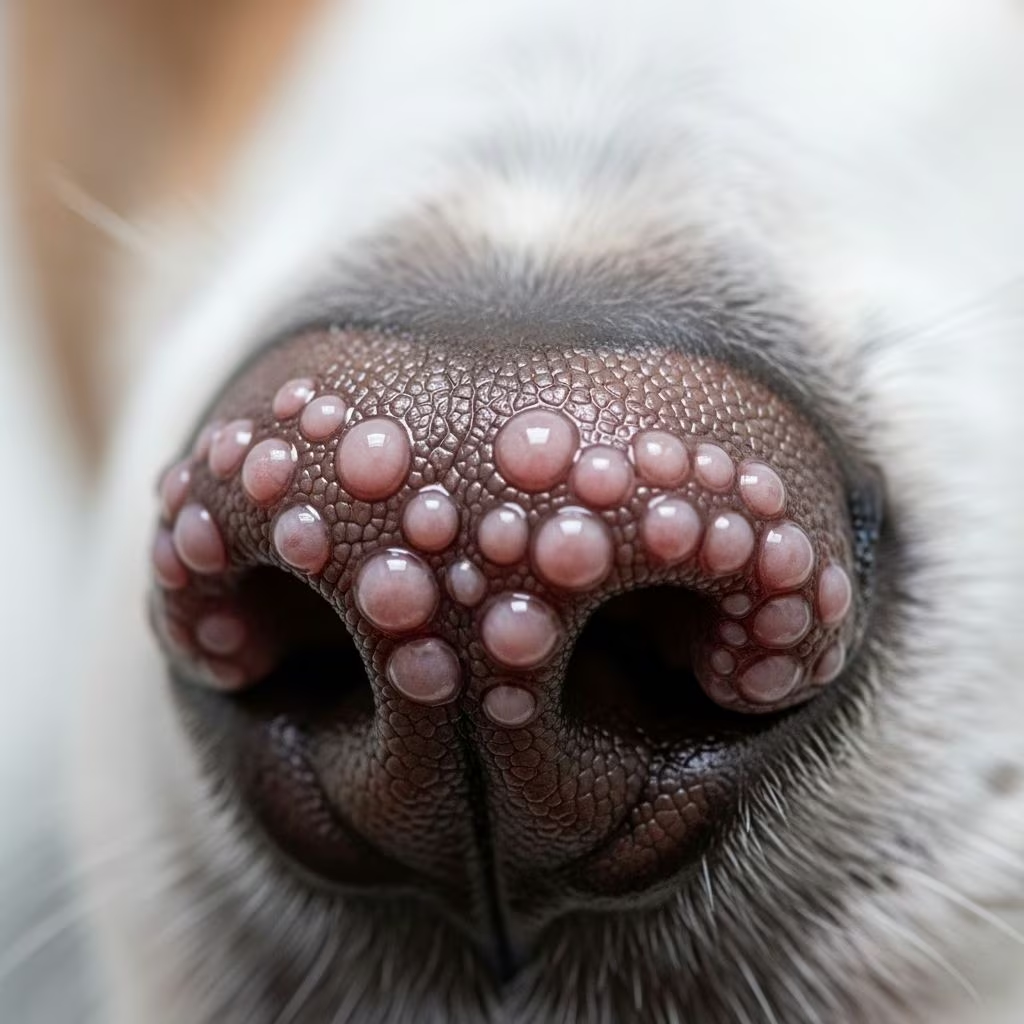
Benign growths known as nasal polyps can appear in a dog’s nose, often stemming from prolonged inflammation of the nasal passages, leading to symptoms like persistent sneezing and nasal discharge.
Understanding Canine Nasal Polyps
Nasal polyps are non-cancerous, fleshy protrusions that develop within the moist lining of a dog’s nasal cavity or sinuses. These growths arise primarily due to chronic rhinitis, a condition where the nasal tissues remain irritated and inflamed over time. Unlike more common in cats, these polyps are relatively rare in dogs, making them a surprising find for many pet owners who notice a pinkish bump near the nostrils or subtle signs of discomfort.
These structures typically form as the body’s response to ongoing irritation, creating stalk-like or bulbous masses that can obstruct airflow. While usually solitary in dogs, multiple polyps may occasionally occur, complicating breathing and olfaction. Early recognition is crucial, as untreated polyps can lead to secondary infections or mimic more severe conditions like tumors.
Common Triggers Behind Nasal Polyps
The development of nasal polyps in dogs often links to persistent nasal inflammation from various sources. Chronic rhinitis serves as the primary catalyst, where repeated exposure to irritants swells the mucosal lining, eventually forming polypoid tissue.
- Environmental irritants: Airborne pollutants, including cigarette smoke and urban smog, exacerbate nasal sensitivity, increasing polyp risk.
- Inhaled foreign objects: Small particles like grass seeds or plant matter lodge in elongated nasal passages, sparking inflammation.
- Infections: Bacterial, viral, or fungal invasions contribute to ongoing tissue changes, particularly in breeds with narrow airways.
- Genetic factors: Certain anatomical predispositions make some dogs more vulnerable, though exact mechanisms remain under study.
In breeds with long snouts, such as Greyhounds or Collies, the extended nasal structure heightens susceptibility to trapped debris and subsequent polyp formation.
Recognizing the Signs in Your Dog
Symptoms of nasal polyps vary based on the growth’s size and position but commonly disrupt daily comfort. Owners might first observe subtle changes that escalate without intervention.
| Symptom | Description | Frequency |
|---|---|---|
| Sneezing | Frequent, forceful bursts, often with mucus expulsion | Very Common |
| Nasal Discharge | Mucoid, pus-like, or bloody from one or both nostrils | Common |
| Stertor | Noisy, congested breathing resembling snoring | Common |
| Visible Growth | Pink tissue protruding near nostril (rarely seen) | Rare |
| Reduced Smell | Diminished interest in food scents or tracking | Occasional |
Additional indicators include pawing at the face, appetite loss from swallowing difficulties, or unilateral signs if the polyp affects one side. In advanced cases, breathing obstruction leads to open-mouth respiration or fatigue during play.
Breeds Most at Risk
While polyps affect dogs across breeds, certain types show higher incidence due to nasal anatomy. Dolichocephalic (long-nosed) breeds like Dachshunds, Setters, and Labrador Retrievers face elevated risks from their prolonged passages, which trap irritants more readily.
- Dachshunds: Prone to sinus entrapment.
- Greyhounds and Collies: Elongated snouts amplify inflammation.
- Labrador Retrievers: Possible genetic link noted in studies.
Brachycephalic (short-nosed) breeds experience different nasal issues, but polyps remain less prevalent there compared to ear canal extensions.
Diagnostic Approaches for Accuracy
Veterinarians employ a multi-step process to confirm nasal polyps and exclude malignancies. Initial exams include physical inspection and history review for chronic symptoms.
- Rhinoscopy: Endoscopic visualization of nasal passages to spot polyps directly.
- Radiographs: X-rays reveal soft tissue masses or turbinate changes.
- CT Scans: Gold standard for detailed imaging, showing polyp extent, bone involvement, or concurrent tumors.
- Biopsy: Tissue sampling if cancer suspicion arises, as polyps can coexist with carcinomas.
CT findings often include soft tissue opacity, septal extension, or bone lysis, guiding precise intervention.
Treatment Options and Recovery
Management focuses on polyp removal and addressing underlying inflammation. Surgical excision via rhinotomy or endoscopy offers high success rates for accessible growths.
- Medical Therapy: Anti-inflammatories, antibiotics for infections, and nasal flushes reduce swelling pre-surgery.
- Surgical Removal: Endoscopic polypectomy for nasopharyngeal types; bulla osteotomy for ear-involved cases.
- Post-Op Care: Monitoring for recurrence (10-20% risk), pain management, and environmental controls.
Prognosis is excellent for benign polyps, with most dogs regaining normal breathing within weeks. Recurrence prompts re-evaluation for inflammatory triggers.
Differentiating Polyps from Tumors
A key concern: nasal polyps are benign, but studies link them to carcinomas in some cases. A University of Pennsylvania analysis found frequent co-occurrence, urging biopsies. Malignant signs include rapid growth, facial swelling, or systemic illness—absent in pure polyps.
Comparison Table:
| Feature | Polyp | Tumor |
|---|---|---|
| Growth Speed | Slow, inflammatory | Rapid, destructive |
| Age of Onset | Any, often middle-aged | Senior dogs |
| Bone Changes | Mild lysis possible | Extensive destruction |
| Response to Meds | Good initially | Poor |
Preventive Strategies for Owners
Minimize risks by reducing exposure to irritants: ban indoor smoking, use air purifiers, and inspect yards for seed hazards. Routine vet check-ups catch early inflammation in at-risk breeds.
- Monitor for sneezing episodes.
- Maintain allergy management.
- Avoid dusty environments during walks.
FAQs on Dog Nasal Polyps
Q: Are nasal polyps painful for dogs?
A: Mild discomfort from obstruction, but not acutely painful unless infected.
Q: Can polyps resolve without surgery?
A: Rarely; medical management shrinks them temporarily, but excision prevents recurrence.
Q: How much does treatment cost?
A: Varies; diagnostics $500-1500, surgery $2000-5000 depending on complexity.
Q: Is there a link to allergies?
A: Yes, chronic allergic rhinitis heightens polyp formation risk.
Q: What if my dog has a growth in the ear too?
A: Consider nasopharyngeal extension; seek CT for full assessment.
When to Seek Immediate Vet Care
Rush to the vet if your dog shows bloody discharge, facial deformity, neurological signs like head tilt, or severe dyspnea. These signal potential complications or differentials like tumors or infections.
References
- The Complete Guide to Inflammatory Polyps in Pets: Diagnosis and… — yourvetwantsyoutoknow.com. 2023. https://yourvetwantsyoutoknow.com/polyps/
- Is That Growth on the Dog’s Nose a Polyp? — Whole Dog Journal. 2023. https://www.whole-dog-journal.com/health/is-that-growth-on-the-dogs-nose-a-polyp/
- Nasal Polyps In Dogs — PetMD. 2024. https://www.petmd.com/dog/conditions/respiratory/nasal-polyps-dogs
- Ear, Nose, and Throat (Aural and Nasopharyngeal) Polyps in Dogs — Vetster. 2024. https://vetster.com/en/conditions/dog/ear-nose-and-throat-aural-and-nasopharyngeal-polyps-in-dogs
- Nasal Polyps in Dogs – Symptoms, Causes, Diagnosis, Treatment — WagWalking. 2023. https://wagwalking.com/condition/nasal-polyps
- Nasopharyngeal Polyps in Cats & Dogs — Maryland Veterinary Surgical Services. 2023. https://www.mdvss.com/blog/nasopharyngeal-polyps-in-cats-dogs/
- Nasopharyngeal Polyps — American College of Veterinary Surgeons (ACVS). 2024. https://www.acvs.org/small-animal/nasopharyngeal-polyps/



