

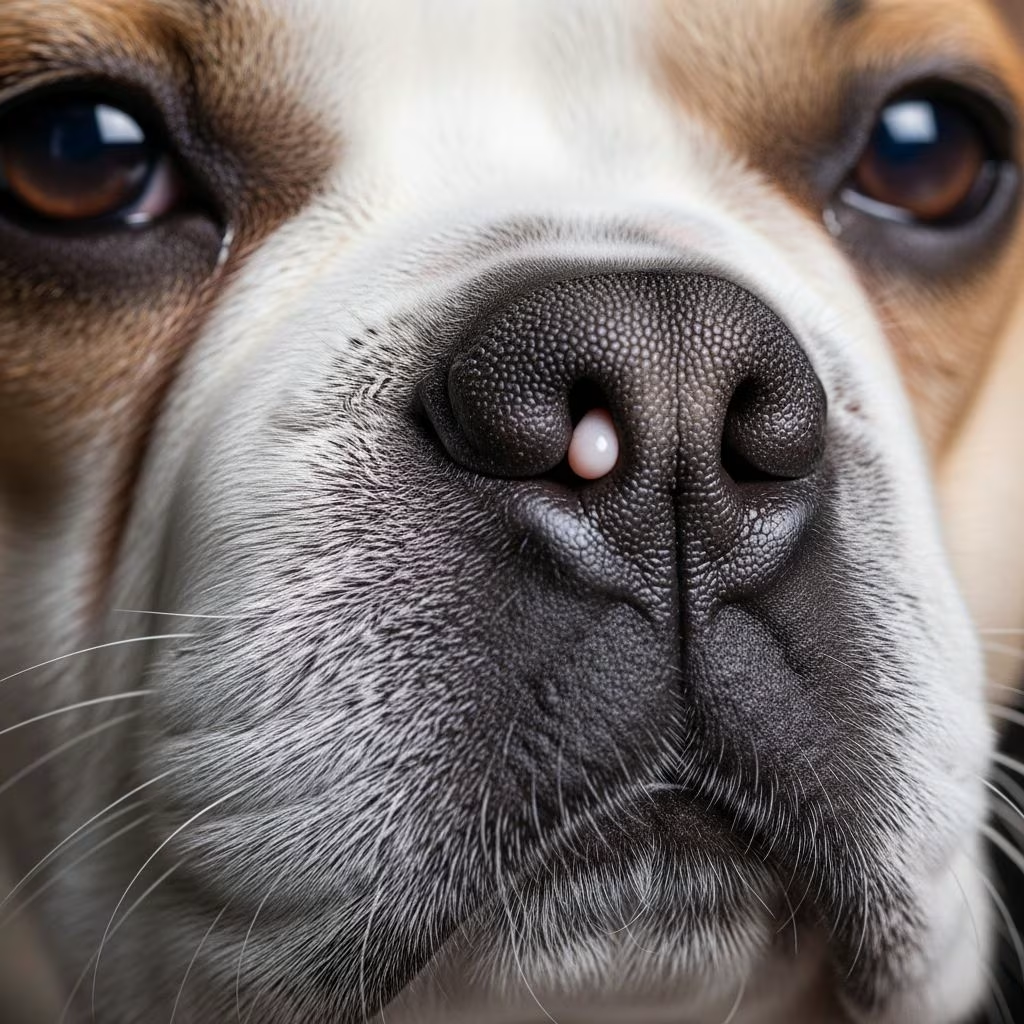
Pet owners may notice unusual pinkish protrusions or persistent nasal symptoms in their dogs, prompting concerns about potential health issues. These manifestations often point to nasal polyps, benign tissue growths arising from prolonged nasal inflammation known as rhinitis. Though uncommon in canines compared to felines, understanding these growths is crucial for timely intervention and improved quality of life.
Understanding Canine Nasal Polyps
Nasal polyps form as soft, fluid-filled masses of connective tissue within the nasal passages or sinuses. They typically emerge due to ongoing irritation and swelling of the nasal lining, leading to excessive tissue proliferation. In dogs, these growths are generally solitary but can occasionally appear on both sides. Unlike malignant tumors, polyps lack invasive tendencies, yet they can obstruct airways and foster secondary infections.
Breeds with elongated snouts, such as Greyhounds, Collies, Setters, Dachshunds, and Labrador Retrievers, show higher susceptibility. This predisposition stems from their extended nasal structures, which trap irritants like seeds, bacteria, or fungi more readily, exacerbating inflammation.
Common Symptoms to Watch For
Early detection hinges on recognizing subtle signs that disrupt normal canine behavior. Owners frequently report the following indicators:
- Frequent sneezing, sometimes accompanied by reverse sneezing episodes
- Nasal discharge, ranging from clear mucus to pus-tinged or bloody fluid from one or both nostrils
- Stertor, a congested snoring-like breathing sound due to partial obstruction
- Diminished sense of smell, leading to reduced interest in food or toys
- Visible pink tissue protruding from the nostril in rare visible cases
- Noisy or labored breathing, especially during exertion
These symptoms can mimic allergies or infections, but persistence despite treatment warrants further investigation. In advanced stages, polyps may cause facial swelling or difficulty eating if they extend into adjacent areas.
Root Causes Behind Polyp Development
The precise etiology remains elusive, but chronic rhinitis serves as the primary driver. This inflammation arises from multiple triggers:
- Inhaled foreign objects, such as grass seeds or plant matter, lodging in nasal passages
- Environmental pollutants, including cigarette smoke and urban air particulates
- Recurrent bacterial, viral, or fungal infections irritating the mucosa
- Genetic factors predisposing certain breeds to elongated nasal anatomy
Unlike in cats, where viral triggers are prominent, canine polyps correlate more with anatomical vulnerabilities and irritant exposure. Some research suggests a link to fibrous tissue overgrowth or vascular anomalies, though definitive causation requires more study.
Differentiating Polyps from Serious Conditions
A key concern is distinguishing polyps from nasal carcinomas, which can coexist or mimic them. Studies indicate that while polyps are benign, they occasionally accompany cancerous growths, necessitating thorough evaluation. Other differentials include fungal rhinitis, dental root abscesses, or benign tumors like angiofibromas.
| Condition | Key Features | Common in Dogs? |
|---|---|---|
| Nasal Polyp | Pink, soft mass; chronic discharge; benign | Rare |
| Nasal Carcinoma | Bloody discharge; bone destruction; progressive | More common in seniors |
| Fungal Infection | Ulcerative lesions; systemic signs | Moderate |
| Foreign Body | Sudden onset; unilateral discharge | Common |
Ruling out malignancy involves imaging and biopsy, as superficial appearance alone is unreliable.
Diagnostic Approaches for Accuracy
Veterinarians employ a multi-step process to confirm polyps. Initial physical exams check for visible growths and nasal patency. Advanced tools include:
- Rhinoscopy: Endoscopic visualization of nasal cavities to directly observe and biopsy tissue
- Radiographs: X-rays revealing soft tissue masses or turbinate changes
- CT Scans: Gold standard for detailing polyp extent, bone involvement, and septal erosion
- Bloodwork: To exclude systemic infections or clotting issues
CT findings often show soft tissue opacities, turbinate lysis, and occasional bony septum penetration, as noted in case series of affected dogs. Biopsy provides histopathological confirmation, distinguishing inflammatory polyps from neoplastic processes.
Treatment Strategies: From Medical to Surgical
Management prioritizes symptom relief and polyp removal. Conservative approaches include anti-inflammatories, antibiotics for secondary infections, and environmental allergen reduction. However, recurrence is high without excision.
Surgical intervention via rhinotomy or endoscopic removal offers definitive resolution. For nasopharyngeal extensions, traction avulsion through the ear canal or throat may suffice in select cases. Post-operative care involves pain management, antibiotics, and monitoring for regrowth, which occurs in up to 20% of instances.
Prognosis is excellent for uncomplicated polyps, with most dogs resuming normal activity within weeks. Early treatment prevents complications like chronic otitis or Horner’s syndrome if ear involvement exists.
Prevention Tips for Proactive Owners
Minimize risks by maintaining a smoke-free, low-pollutant home. Regular grooming prevents seed inhalation during outdoor play. Promptly address rhinitis episodes with veterinary guidance. Breeds at risk benefit from annual nasal exams during routine check-ups.
- Avoid high-grass areas during walks
- Use air purifiers indoors
- Monitor for early sneezing or discharge
When to Seek Immediate Veterinary Care
Escalate to emergency if breathing becomes severely labored, discharge turns profuse and bloody, or neurological signs like head tilting emerge. These signal obstruction or extension into middle ear/brain areas.
Frequently Asked Questions (FAQs)
Are nasal polyps cancerous in dogs?
No, they are benign, but co-occurrence with carcinoma requires biopsy confirmation.
Can nasal polyps resolve without surgery?
Rarely; medical therapy controls symptoms but doesn’t eliminate the growth.
Which dog breeds are most prone?
Dolichocephalic types like Collies, Greyhounds, and Labs.
How much does treatment cost?
Varies; diagnostics $500–$1500, surgery $2000–$5000 depending on complexity.
Do polyps affect both nostrils?
Typically unilateral, but bilateral cases occur.
Is recovery painful for dogs?
Manageable with analgesics; most recover fully in 7–14 days.
Armed with this knowledge, owners can better safeguard their pets’ respiratory health. Persistent nasal issues merit professional evaluation to ensure benign outcomes.
References
- The Complete Guide to Inflammatory Polyps in Pets: Diagnosis and … — yourvetwantsyoutoknow.com. Accessed 2026. https://yourvetwantsyoutoknow.com/polyps/
- Is That Growth on the Dog’s Nose a Polyp? — Whole Dog Journal. Accessed 2026. https://www.whole-dog-journal.com/health/is-that-growth-on-the-dogs-nose-a-polyp/
- Nasal Polyps In Dogs — PetMD. Accessed 2026. https://www.petmd.com/dog/conditions/respiratory/nasal-polyps-dogs
- Ear, Nose, and Throat (Aural and Nasopharyngeal) Polyps in Dogs — Vetster. Accessed 2026. https://vetster.com/en/conditions/dog/ear-nose-and-throat-aural-and-nasopharyngeal-polyps-in-dogs
- Nasal Polyps in Dogs – Symptoms, Causes, Diagnosis, Treatment — WagWalking. Accessed 2026. https://wagwalking.com/condition/nasal-polyps
- Nasopharyngeal Polyps — American College of Veterinary Surgeons (ACVS). Accessed 2026. https://www.acvs.org/small-animal/nasopharyngeal-polyps/
- Nasal polyps in dogs: five cases (2005 to 2011) — Wiley Online Library. 2011. https://onlinelibrary.wiley.com/doi/abs/10.1111/j.1748-5827.2011.01152.x



