

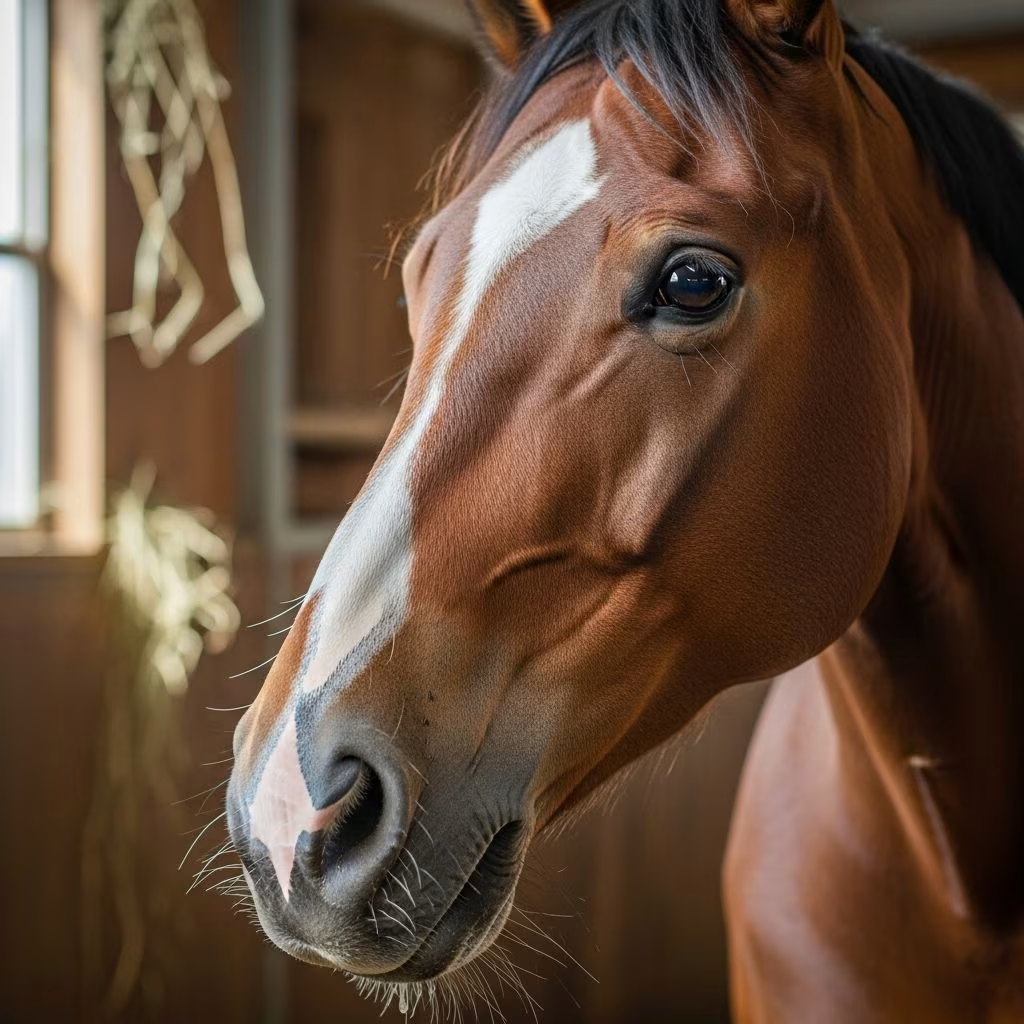
Horses rely on clear nasal passages for proper breathing, eating, and overall vitality. Disruptions in these airways can lead to serious health complications if not addressed promptly. This article delves into the various conditions affecting equine nasal structures, offering horse owners and veterinarians practical knowledge on recognition, diagnostics, and interventions.
Understanding Equine Nasal Anatomy
The nasal passages in horses form a complex network connected to larger paranasal sinuses, including the frontal, maxillary, and sphenopalatine sinuses. These air-filled cavities lighten the skull, warm inhaled air, and filter particles. Any blockage, infection, or inflammation here impairs airflow, leading to visible distress.
- Key components: Nasal cavities, conchae (scroll-like bones), and interconnected sinuses.
- Common vulnerabilities: Exposure to dust, bacteria, and trauma during exercise or housing.
Healthy nasal function supports efficient respiration, essential for performance horses. Deviations often manifest as discharge or breathing difficulties, signaling underlying pathology.
Primary Symptoms to Watch For
Early detection hinges on observing subtle changes. Owners should monitor daily for these indicators:
- Unilateral or bilateral nasal discharge, ranging from clear to thick, foul-smelling pus.
- Facial swelling or deformity, especially around the sinuses.
- Noisy breathing, snoring, or reduced airflow from one nostril.
- Additional signs like fever, appetite loss, or head tilting.
Such symptoms warrant immediate veterinary consultation to prevent progression to chronic states.
Common Infections: Sinusitis Explained
Sinusitis tops the list of nasal afflictions in horses, classified as primary (direct sinus infection) or secondary (from dental issues or other sources). Primary cases stem from bacterial invasion, often Streptococcus or gram-negative organisms, triggered by poor ventilation or viral predispositions.
Secondary sinusitis frequently links to tooth root abscesses in the upper cheek teeth (fourth premolar or first molar most common). These abscesses erode into sinuses, causing foul discharge and swelling.
| Type | Causes | Key Signs |
|---|---|---|
| Primary | Bacterial entry via respiratory tract | Mucopurulent discharge, mild fever |
| Secondary | Dental abscess, cysts | Foul odor, facial distortion |
Untreated, primary sinusitis can evolve into chronic osteitis, bone infection demanding aggressive surgery.
Structural Abnormalities and Growths
Beyond infections, congenital or acquired growths disrupt nasal flow. Nasal polyps, rare benign tumors, arise from mucosal lining, causing one-sided obstruction, malodorous discharge, and occasional bleeding.
Progressive ethmoid hematoma, a vascular mass in the ethmoidal labyrinth, leads to epistaxis (nosebleeds) and dyspnea. These require endoscopic confirmation and specialized removal.
- Diagnosis: Endoscopy reveals protruding masses; radiographs show soft tissue shadows.
- Impact: Reduced exercise tolerance due to airflow restriction.
Trauma and Bleeding Disorders
Horses face nasal trauma from kicks, falls, or collisions, resulting in fractures, lacerations, or hemorrhage. Exercise-induced pulmonary hemorrhage (EIPH) may extend to nasal bleeding, though primarily lung-related.
Guttural pouch mycosis, a fungal infection eroding arteries, poses life-threatening bleed risks. Embolization blocks affected vessels, starving the plaque.
Choke, esophageal obstruction, indirectly causes nasal reflux of feed and saliva, mimicking infection.
Diagnostic Approaches
Veterinarians employ a multi-modal strategy:
- Physical exam: Palpation for swelling, percussion for fluid sounds.
- Endoscopy: Visualizes passages, polyps, or masses.
- Imaging: Radiographs detect sinus opacities; CT/MRI for complex cases.
- Centisis: Needle aspiration of sinus fluid for cytology and culture.
- Dental evaluation: Oral exam or radiography for root issues.
Culture-guided therapy ensures targeted antimicrobials, avoiding resistance.
Treatment Strategies
Medical Management
Acute infections respond to systemic antibiotics (penicillin, trimethoprim-sulfamethoxazole, metronidazole) paired with NSAIDs like flunixin meglumine for inflammation. Supportive care includes soaked hay to reduce dust inhalation.
Sinus lavage via trephination (small bone hole) flushes debris with saline, sometimes antibiotic-infused. Chronic cases may use gelatin-penicillin implants for sustained release.
Surgical Interventions
Persistent infections necessitate sinusotomy: bone flap exposure for debridement and drainage. Tooth-related issues require extraction, often standing under sedation.
Polyps demand excision via trephine or flap; septal deviations need resection. Foal choanal atresia, a birth defect blocking nasal-pharyngeal connection, requires specialized repair post-stabilization.
| Condition | Surgical Option | Recovery Notes |
|---|---|---|
| Sinusitis | Trephination or flap | Lavage for weeks, antibiotics |
| Polyps | Endoscopic excision | Monitor for regrowth |
| Dental abscess | Tooth removal | Follow-up imaging |
Prevention and Long-Term Care
Minimize risks through stable hygiene, dust-free bedding, and routine dental checks. Performance horses benefit from rest post-infection and environmental allergen control.
Regular endoscopy screens high-risk breeds like Arabians for early polyps. Vaccine protocols against respiratory viruses curb secondary bacterial invasions.
Frequently Asked Questions (FAQs)
What causes foul-smelling nasal discharge in horses?
Typically secondary sinusitis from tooth root abscesses, producing purulent, malodorous exudate.
Can sinusitis resolve without surgery?
Acute primary cases often do with antibiotics and lavage; chronic or secondary usually require intervention.
How do I know if it’s allergies or infection?
Allergies cause clear discharge; infections yield pus, fever, and swelling. Vet diagnostics confirm.
Is nasal bleeding always serious?
Trauma-related is manageable; guttural pouch mycosis demands urgent embolization.
What’s the prognosis for treated sinusitis?
Excellent with prompt care; delays risk bone involvement and poorer outcomes.
Emerging Therapies and Research
Recent advances include intra-sinus antimicrobials via biomaterials, enhancing efficacy in refractory cases. Imaging like standing CT improves precision, reducing surgical risks. Ongoing studies explore antifungal protocols for mycosis.
Horse owners should partner with equine specialists for tailored plans, ensuring swift recovery and performance return.
References
- What To Do If Your Horse Has a Runny Nose — PetMD. 2023. https://www.petmd.com/horse/symptom/respiratory/what-to-do-if-your-horse-has-a-runny-nose
- Treatment of chronic sinusitis in a horse with systemic and intra-sinus penicillin-gelatin — PMC (PubMed Central). 2017-02-01. https://pmc.ncbi.nlm.nih.gov/articles/PMC5302207/
- Sinusitis in Horses: Symptoms, Diagnosis, & Treatment — Mad Barn. 2024. https://madbarn.com/sinusitis-in-horses/
- Head First: Equine Head and Sinus Issues — The Horse. 2020-11-01. https://thehorse.com/189338/head-first-equine-head-and-sinus-issues/
- Primary Sinusitis – Texas A&M Veterinary Medical Teaching Hospital — Texas A&M University (.edu). 2023. https://vethospital.tamu.edu/large-animal/equine-soft-tissue-surgery/658-2/
- Diseases of the Nasal Passages in Horses — Merck Veterinary Manual. 2023. https://www.merckvetmanual.com/respiratory-system/respiratory-diseases-of-horses/diseases-of-the-nasal-passages-in-horses
- Disorders of the Paranasal Sinuses in Horses — Merck Veterinary Manual. 2023. https://www.merckvetmanual.com/horse-owners/lung-and-airway-disorders-of-horses/disorders-of-the-paranasal-sinuses-in-horses



