

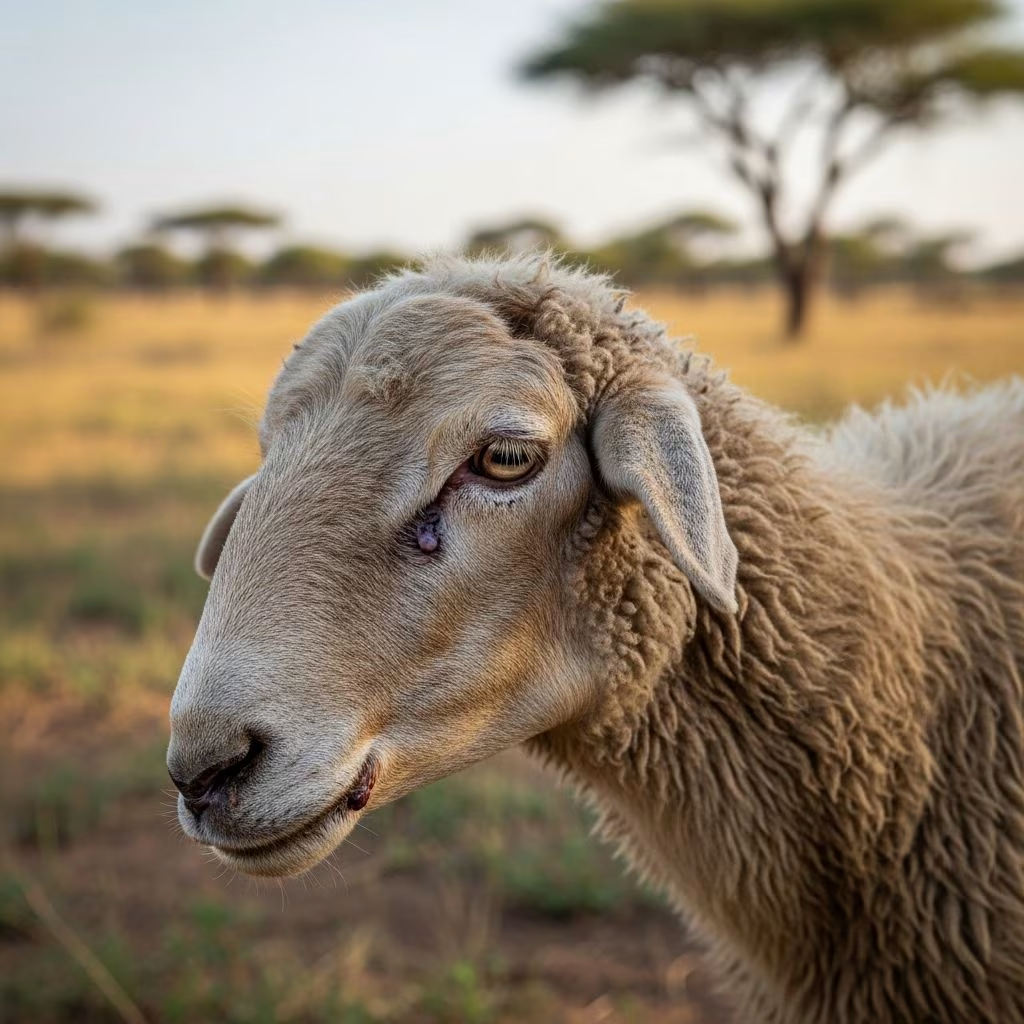
Nairobi sheep disease (NSD) stands out as one of the most dangerous viral infections targeting sheep and goats, primarily in regions of East and Central Africa and parts of southern Asia. Transmitted through bites from infected ixodid ticks, this disease leads to rapid onset of severe symptoms and often results in mortality rates exceeding 90% in susceptible populations.
Origins and Global Distribution
The virus responsible, known as Nairobi sheep disease virus (NSDV), belongs to the Nairovirus genus within the Bunyaviridae family. First identified in Kenya during the mid-20th century, NSDV has since been documented across a wide geographic range. In Africa, it thrives in endemic zones where tick vectors are abundant, particularly during periods of favorable climate that boost tick populations. Movements of naive animals into these areas frequently spark devastating outbreaks.
In Asia, a strain called Ganjam virus circulates and is now recognized as a variant of NSDV, extending the disease’s reach to countries like India. Climate events, such as heavy rains, can expand tick habitats, increasing transmission risks to new herds.
How the Virus Spreads: Transmission Dynamics
NSDV relies exclusively on ticks for transmission between hosts. Key vectors include species from the Rhipicephalus and Amblyomma genera, which acquire the virus by feeding on infected sheep or goats. Once infected, ticks can carry the virus for life and pass it transstadially—meaning from one life stage to the next—ensuring persistent environmental reservoirs.
Naive animals introduced to endemic pastures face immediate danger, as ticks rapidly transfer the virus during feeding. The incubation period typically spans 2 to 7 days post-bite, aligning with the tick’s attachment duration. No evidence supports direct animal-to-animal spread without vectors, underscoring the critical role of arthropod control.
- Primary vectors: Rhipicephalus appendiculatus and related species in Africa.
- Tick lifecycle role: Virus persists through larval, nymphal, and adult stages.
- Outbreak triggers: Animal transport to tick-infested areas or vector population surges.
Recognizing the Signs: Clinical Presentation
Infection begins abruptly with a sharp fever spike, often reaching 41–42°C (105.8–107.6°F), lasting 1 to 7 days. Affected animals exhibit profound depression, complete loss of appetite, and rapid breathing. Leukopenia—a drastic drop in white blood cells—occurs alongside viremia during this febrile phase.
Diarrhea emerges 1–3 days post-fever onset, progressing from watery and foul-smelling to mucoid and hemorrhagic, accompanied by painful straining and abdominal discomfort. Nasal discharge ranges from mucopurulent to bloody, with occasional eye inflammation. Pregnant females commonly abort, and death can strike within 12 hours of symptom start in peracute cases.
Goats generally experience milder symptoms than sheep, and young animals in endemic regions gain partial protection from maternal antibodies, reducing severity.
| Stage | Symptoms | Duration |
|---|---|---|
| Initial Febrile | Fever, leukopenia, depression, anorexia | 1–7 days |
| Gastrointestinal | Fetid dysentery, straining, nasal discharge | Follows fever by 1–3 days |
| Terminal | Respiratory distress, hypothermia, death | Up to 12 days total |
Inside the Disease: Pathological Changes
Postmortem exams reveal widespread hemorrhages, especially in the gastrointestinal tract. The abomasum, cecum, and colon show petechial and ecchymotic bleeding, often as distinctive longitudinal striations. Lymph nodes appear enlarged and edematous, with mild spleen enlargement.
Other findings include subserosal hemorrhages in the gallbladder, kidneys, and heart, plus respiratory and genital tract involvement in females. Early deaths yield minimal lesions beyond serosal petechiae and lymphadenitis. Microscopically, lymphoid hyperplasia, myocardial degeneration, kidney damage (nephrosis), and gallbladder necrosis dominate.
Kidneys exhibit glomerular-tubular nephritis with congested glomeruli, perivascular cuffing, and swollen endothelial cells—a hallmark lesion.
Confirming the Diagnosis
Suspect NSD when high-mortality outbreaks coincide with tick infestations, especially after animal movements. Differential diagnoses encompass peste des petits ruminants, Rift Valley fever, heartwater, and bacterial enteritis like salmonellosis.
Laboratory confirmation involves detecting viral antigens, nucleic acids, or antibodies. Optimal samples: plasma from febrile animals for viremia, or spleen/mesenteric lymph nodes postmortem. Techniques include virus isolation, real-time RT-PCR, fluorescent antibody tests, ELISA, and virus neutralization.
Serology detects antibodies in survivors, though cross-reactions with related nairoviruses (e.g., Dugbe virus) may complicate results. WOAH endorses specific protocols for agent detection.
- Acute phase samples: Plasma, EDTA blood.
- Tissue samples: Spleen, lymph nodes.
- Serologic tests: Indirect fluorescent antibody, agar-gel diffusion.
Management Challenges: Treatment Options
No antiviral drugs exist for NSD, leaving supportive care as the mainstay. Provide shelter, high-quality nutrition, and fluids to bolster survival odds. Isolate affected animals to curb tick exposure.
Acaricide treatments (e.g., pyrethroids, cypermethrin pour-ons) on unaffected herd members reduce tick burdens. Experimental vaccines show promise in research settings but lack commercial availability.
Prevention Strategies for Farmers
Proactive tick control forms the cornerstone of prevention. Regular dipping, pour-ons, or environmental management limits vector populations. Avoid introducing naive sheep or goats to endemic zones without quarantine.
In high-risk areas, monitor weather patterns for tick booms. Endemic herds develop natural immunity, but exotic breeds suffer higher losses. Research into attenuated vaccines continues, offering future hope.
Epidemiology and Risk Factors
Outbreaks surge with naive animal imports or tick range expansions. Mortality hits 30–95%, peaking in indigenous breeds over exotics or crosses. All ages succumb in susceptible flocks, unlike endemic youth protected maternally.
Zoonotic potential appears low; no confirmed human cases despite livestock proximity. NSDV is reportable to WOAH due to its severity.
Future Outlook and Research Directions
Ongoing studies elucidate NSDV genetics, vector competence, and vaccine candidates. Climate change may widen tick distributions, heightening global concerns. Enhanced surveillance and farmer education are vital.
Frequently Asked Questions (FAQs)
What causes Nairobi sheep disease?
NSDV, a tick-borne nairovirus, is the causative agent.
Which animals are most affected?
Sheep suffer more severely than goats; naive adults face highest mortality.
How can I protect my flock?
Implement tick control, avoid endemic area movements, and provide supportive care.
Is there a vaccine available?
Commercial vaccines are unavailable; experimental ones exist in some regions.
Can humans catch NSD?
No zoonotic transmission has been documented.
References
- Nairobi sheep disease virus — The Pirbright Institute. Accessed 2026. https://www.pirbright.ac.uk/our-science/viruses/nairobi-sheep-disease-virus
- Nairobi Sheep Disease — Merck Veterinary Manual. Accessed 2026. https://www.merckvetmanual.com/generalized-conditions/nairobi-sheep-disease/nairobi-sheep-disease
- Nairobi sheep disease — CABI Compendium. 2023. https://www.cabidigitallibrary.org/doi/full/10.1079/cabicompendium.73949
- NAIROBI SHEEP DISEASE STANDARD OPERATING PROCEDURES — USDA APHIS. Accessed 2026. https://www.aphis.usda.gov/sites/default/files/sop_nsd_e-e.pdf
- Nairobi sheep disease — EFSA Animal Diseases. Accessed 2026. https://animal-diseases.efsa.europa.eu/NSDV
- Nairobi Sheep Disease Virus: A Historical and Epidemiological… — PMC/NCBI. 2020-07-28. https://pmc.ncbi.nlm.nih.gov/articles/PMC7387652/
- Epidemiological, virological, and pathogenic insights into Nairobi… — Journal of Virology, ASM. 2025. https://journals.asm.org/doi/10.1128/jvi.00006-25



