

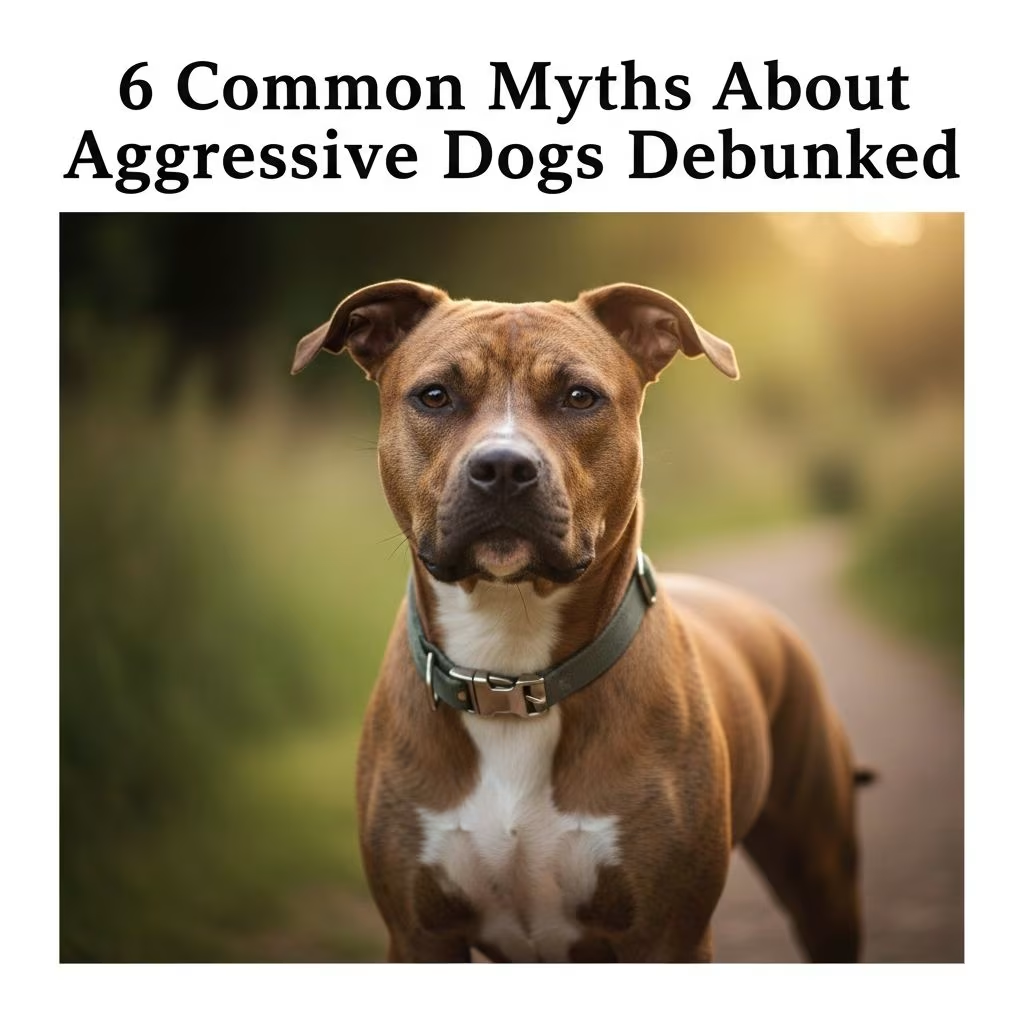
Dogs who growl, bark, or bite are often written off as “bad dogs,” and their humans are frequently blamed for every misstep. But modern behavioral science paints a far more nuanced picture of canine aggression. Most so-called aggressive dogs are scared, stressed, or overwhelmed rather than scheming to hurt anyone, and clinging to popular myths can delay the effective help they urgently need.
This article walks through six of the most common myths about aggressive dogs, explains what science and clinical behavior work actually show, and offers practical, compassionate alternatives that help keep both people and dogs safer.
Myth 1: It’s Always the Pet Parent’s Fault
You have probably heard phrases like “There are no bad dogs, only bad owners” or “It’s all in how you raise them.” These sound comforting, but they oversimplify a very complex behavior problem and unfairly blame families who are often doing their best.
What Really Drives Aggressive Behavior?
Canine aggression is usually the result of several interacting factors, many of which are outside an individual pet parent’s control.
- Fear and anxiety: Research shows fear and anxiety are common drivers of aggression; in large behavior surveys, about half of dogs show significant fear- or anxiety-related behaviors, and more than half show some form of aggressive behavior.
- Genetic predisposition: Some dogs are simply born more fearful or more easily aroused than others, even when raised in the same home and given similar care.
- Early development: Limited or poor-quality socialization in critical puppy periods can increase the risk of fear and defensive aggression later in life.
- Health and pain: Painful musculoskeletal problems, neurological issues, endocrine diseases, or even dental pain can lower a dog’s tolerance and make aggressive responses more likely in everyday situations.
Even in homes where training or socialization could have been better, many dogs still grow up without aggressive behavior, which suggests there is usually something intrinsic about the individual dog—not just the human—that contributes to the problem.
Why Blaming People Is Harmful
When aggression is framed as purely a “bad owner” issue, several harmful outcomes follow:
- Delayed professional help: Guardians who feel shamed may avoid reaching out to veterinarians or credentialed behavior professionals.
- Harsher methods: People who feel blamed may resort to punishment-based approaches or unqualified advice, which can escalate fear and reactivity rather than solving them.
- Increased risk: Without proper assessment and management, the risk of bites to family members, visitors, and other animals remains higher.
More accurate — and more humane — framing is that aggressive behavior is a shared welfare and safety problem that needs collaborative, science-based support, not finger-pointing.
Myth 2: Aggressive Dogs Are Just Trying to Dominate You
The idea that dogs act aggressively because they want to be “alpha” or “pack leader” has been one of the most damaging myths in modern dog training. It leads people to misinterpret fear and stress as defiance and to respond with force instead of empathy.
Where the Dominance Myth Came From
Classic dominance theories were based on observations of captive, unrelated wolves forced to live together — a setup that does not resemble normal wild wolf packs or human–dog households. Later research on free-living wolves and companion dogs has shown that social relationships are more fluid and cooperative than the rigid, permanent hierarchies once proposed.
| Old Dominance View | Modern Behavior View |
|---|---|
| Dog is trying to take over and be “alpha.” | Dog is trying to feel safe, avoid threats, or access resources calmly. |
| Owner must physically “show who’s boss.” | Owner should use reward-based training, management, and clear communication. |
| Growling and snapping are “challenges.” | Growling and snapping are distance-increasing signals that say “I’m uncomfortable.” |
Why Dominance-Based Responses Backfire
When guardians respond to aggression with harsh corrections, alpha rolls, or intimidation, dogs may temporarily suppress signals like growling, but their underlying fear or discomfort remains — or worsens.
- Suppressed warnings: Punishing growls can teach dogs to skip straight to biting without warning.
- Increased fear: Being yelled at, shocked, or physically forced can make already-anxious dogs more desperate to defend themselves.
- Strained bond: Relationships built on threat instead of trust are less stable and predictably increase stress for everyone.
Instead of asking “How do I dominate this dog?” behavior professionals ask “What function does this behavior serve for the dog, and how can we meet that need more safely?”
Myth 3: Aggressive Dogs Must Have Been Abused
It is heartbreaking to see a dog cower, flinch from hands, or explode when a stranger walks by. Many people immediately assume such a dog was abused, but that is not always the case. Some dogs behave as if they have had terrible experiences even when they have been treated kindly their entire lives.
Other Common Causes of Fearful Behavior
- Genetic sensitivity: Some dogs inherit a temperament that is naturally more cautious, fearful, or noise-sensitive, which can heighten their reactions to normal events.
- Inadequate early socialization: Puppies who do not encounter a variety of people, places, and experiences in a controlled, positive way during critical windows may grow up fearful of common situations.
- Single difficult event: Even a single scary encounter — like being chased by another dog or startled by loud machinery — can create lasting triggers in sensitive animals.
While abuse certainly can and does create serious behavioral fallout, assuming every fearful or aggressive dog was abused can misdirect problem-solving. Guardians may focus on an imagined backstory rather than on what the dog is showing them today and what practical steps can help.
How to Help Fearful Dogs, Whatever the Cause
Regardless of whether a dog’s history includes abuse, the path forward relies on the same foundations:
- Ruling out and treating any medical issues that could be causing pain or sensitivity.
- Using predictable routines and safe spaces to help the dog relax at home.
- Implementing gradual, positive exposure to triggers at a distance and intensity the dog can handle.
- Working with a qualified behavior professional who uses reward-based methods.
Myth 4: Aggressive Dogs Can Never Change
Some dogs truly need strict management for life around certain triggers, and bite history should always be taken seriously. However, it is inaccurate and unfair to say that aggressive dogs never improve. With appropriate treatment, many dogs significantly change how they respond to the world.
What Improvement Can Look Like
Progress is rarely about turning a “problem dog” into a social butterfly. It is more often about creating safer, more predictable patterns:
- A dog who once barked and lunged at every dog on walks may learn to calmly pass most dogs at a distance and happily interact with a few familiar canine friends.
- A dog who reacted aggressively to all visitors may come to accept specific, predictable guests while still disliking surprise strangers.
- A dog who cannot safely interact with children may nonetheless learn to tolerate seeing and hearing kids from a safe distance without panicking.
These changes dramatically lower risk and improve quality of life for both the dog and the family, even if certain boundaries must be maintained.
Key Ingredients for Change
Research and clinical experience consistently point to several critical components of successful behavior change plans for aggression:
- Veterinary assessment: A full exam, and often lab work or imaging, to identify pain or medical conditions influencing behavior.
- Environmental management: Using tools such as baby gates, leashes, secure fencing, and muzzles (introduced positively) to prevent unsafe situations.
- Behavior modification: Systematic desensitization and counterconditioning — slowly pairing triggers with good things — under threshold.
- Support for the family: Clear guidance and realistic expectations so everyone can follow the plan consistently and safely.
Myth 5: Some Breeds Are Naturally Mean
Certain breeds are regularly singled out as inherently dangerous, while others are assumed to be harmless. But scientific studies show that behavior within a breed is highly variable, and environment, training, and individual genetics all matter.
What Studies Show About Breed and Behavior
Large-scale behavior surveys and genetic analyses find that while some breeds may have higher averages of particular traits (like boldness or noise sensitivity), there is substantial overlap between breeds, and no breed is uniformly aggressive.
- Many dogs labeled as high-risk breeds live peaceful lives as family companions.
- Dogs of breeds considered “easy” or “gentle” can still show fear, aggression, or serious behavior problems in certain conditions.
Focusing solely on breed can obscure the more practical risk factors that predict aggression, such as inadequate socialization, poor welfare, chronic stress, or unmanaged pain.
Why Stereotyping Breeds Is Dangerous
- Policy problems: Breed-specific legislation has not been shown to reliably reduce dog bites and may divert resources from broader safety and education measures.
- Shelter outcomes: Dogs of stereotyped breeds are more likely to be surrendered or euthanized because of fear-based assumptions rather than actual behavior.
- Overconfidence with “safe” breeds: People may take fewer precautions with breeds presumed gentle, which can lead to preventable incidents.
Instead of asking “What breed is this dog?” a better safety question is “What has this individual dog shown us in past situations, and how can we set them up to succeed?”
Myth 6: Aggression Is Just Bad Manners
Another pervasive myth is that aggression is simply rudeness — that the dog is being “disrespectful” or “stubborn.” In reality, most aggressive displays are not about etiquette; they are survival strategies that have worked for the dog in the past.
Aggression as Communication and Self-Protection
Aggressive behaviors belong to a broader category called agonistic behavior, which includes threats, displays, placating signals, and reconciliation. Many of these behaviors actually reduce the chances of a serious fight by signaling discomfort early.
- Growling, showing teeth, or snapping without contact are distance-increasing signals that say, “Please back off, I’m not OK.”
- Cowering, lip licking, and turning away can be attempts to placate and avoid conflict, not to start one.
Labeling all of this as “bad manners” risks punishing essential warning signs and ignoring the dog’s underlying emotional state.
From “Obedience” to Emotional Safety
Basic skills like sit, stay, and recall are helpful management tools, but they do not, on their own, resolve the emotions that drive aggression. Many dogs with bite histories can perform obedience cues perfectly while still panicking in specific contexts.
Effective work with aggressive or reactive dogs prioritizes:
- Safety first: Using management to prevent bites while treatment is ongoing.
- Emotional change: Carefully changing how the dog feels about triggers, not just how they behave on cue.
- Respect for signals: Treating growls and other early signs as valuable information, not disobedience.
Helping Aggressive or Reactive Dogs Safely
Aggression does not make a dog evil or worthless, but it does mean they need specialized support and thoughtful management. If you live with or work around a dog who shows concerning behavior, there are concrete steps you can take.
First Steps for Guardians
- Schedule a veterinary exam: Rule out pain, neurological issues, or other medical conditions that may be amplifying aggression.
- Use management: Avoid known triggers where possible, use secure leashes and fences, and consider a properly fitted basket muzzle introduced with positive reinforcement.
- Document patterns: Note when, where, and around whom incidents happen, what occurred just before, and how intense the reaction was. This helps professionals design an effective plan.
Choosing Qualified Help
Because punishment-based methods can worsen aggression, it is crucial to seek support from professionals who rely on evidence-based, humane techniques.
- Look for veterinary behaviorists or veterinarians with a strong interest in behavior, and certified behavior consultants or trainers who emphasize reward-based methods.
- Avoid anyone who recommends alpha rolls, hitting, choke or prong collars as first-line tools for aggression, or who dismisses medical assessment as unnecessary.
Protecting People and Dogs
With accurate information, communities can move away from blame and fear and toward practical safety:
- Teach children and adults how to safely interact with dogs and when to give them space.
- Normalize early behavior support, just as we normalize routine veterinary care.
- Encourage realistic expectations: some dogs will always need extra management, and that can still be compatible with a good quality of life.
Frequently Asked Questions (FAQs)
Q: How can I tell if my dog is aggressive or just reactive?
A: Reactivity generally refers to big emotional responses — barking, lunging, or whining — that may or may not include a risk of injury, while aggression usually implies behavior with the potential or intent to cause harm. Many dogs are both reactive and aggressive in certain situations. A behavior professional can help evaluate risk and design a plan.
Q: Is it safe to adopt a dog with a history of aggression?
A: It can be, but only when there is full disclosure, a clear management and treatment plan, and a household that can realistically meet the dog’s needs. Consulting a veterinarian or veterinary behaviorist before adoption is strongly recommended, especially for homes with children or frequent visitors.
Q: Can neutering or spaying fix aggression?
A: Surgical sterilization may influence some hormone-related behaviors, but it is not a cure-all for aggression. Many aggressive behaviors are driven by fear, learning history, and pain, which require behavioral and medical interventions beyond neutering.
Q: Should I punish my dog for growling?
A: No. Growling is an important early warning sign that lets you know your dog is uncomfortable. Punishing growls may stop the sound but increase the chance your dog bites without warning in the future. It is safer to respect the signal, remove the dog from the situation, and address the underlying cause with professional help.
Q: Are most aggressive dogs beyond help?
A: Most are not beyond help, but some will always require careful management. With veterinary assessment, environmental changes, and science-based behavior modification, many dogs show meaningful improvement in safety and quality of life.
References
- Dog Reactivity and Aggression: How to Know the Difference — Kinship. 2023-10-10. https://www.kinship.com/dog-behavior/reactive-vs-aggressive-dog
- 6 Myths About Aggressive Dogs That Are Totally Not True — Kinship. 2023-09-15. https://www.kinship.com/dog-behavior/myths-about-aggressive-dogs
- A New Study Says 99% of Dogs Have Behavior Issues—These Are the Most Common Ones — Kinship. 2020-11-12. https://www.kinship.com/news/dogs-behavior-issues-study
- The role of dogs is associated with owner management practices via dog behavior — Catarina Jesus et al., Scientific Reports (Nature Research). 2024-07-03. https://www.ncbi.nlm.nih.gov/pmc/articles/PMC11557872/



