
Understanding Myna Behavior: Social, Vocal, and Intelligent
Explore the fascinating behavioral traits of mynas: from intelligence to social dynamics and training.
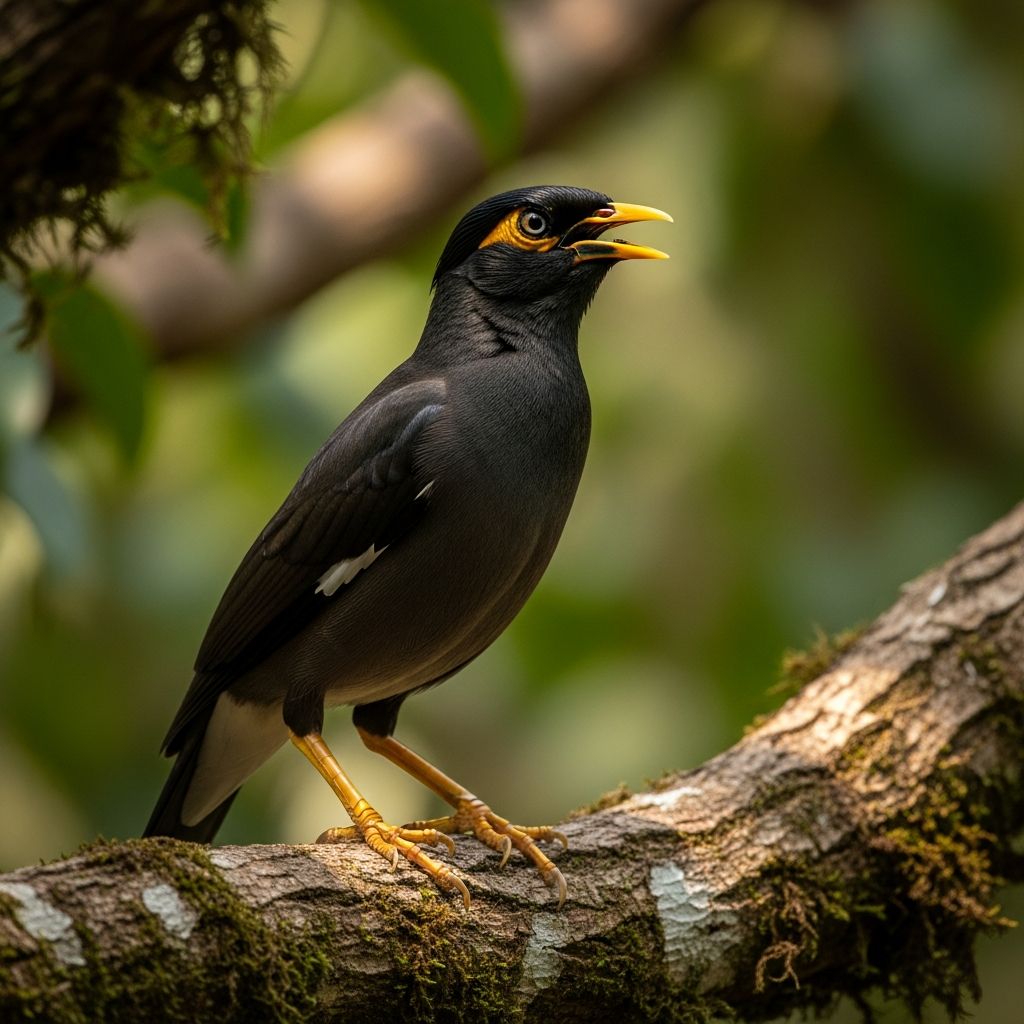
Understanding Myna Behavior: A Comprehensive Guide to These Intelligent Birds
Myna birds have captivated bird enthusiasts for centuries with their remarkable intelligence, complex social structures, and impressive vocal abilities. Whether you’re considering adopting a myna as a pet or simply interested in understanding these fascinating creatures, learning about their behavior patterns is essential. Mynas are not ordinary birds—they possess a level of intelligence that rivals many mammals, and their interactive nature makes them one of the most engaging pet bird species available today.
The Intelligence Factor: Why Mynas Stand Out
One of the most striking characteristics of myna birds is their exceptional intelligence. These birds demonstrate cognitive abilities that go far beyond simple instinctual responses. Mynas are capable of learning, problem-solving, and even understanding cause-and-effect relationships. In domestic settings, this intelligence manifests in surprising ways. A pet myna may actually train its owner rather than the other way around. For instance, if your myna pecks at your ear and receives affection in response, it may intentionally repeat this behavior to elicit the desired reaction from you. This demonstrates sophisticated understanding of behavioral conditioning and manipulation.
The intelligence of mynas extends to their ability to recognize patterns, understand their environment, and adapt to new situations quickly. They can learn the daily routines of their household members and anticipate events before they occur. Many owners report that their mynas seem to understand words and commands, and some birds appear to grasp the concept of cause and effect with remarkable clarity.
Social Behavior and Flock Dynamics
Mynas are inherently social creatures, and understanding their gregarious nature is crucial for anyone keeping them as pets. In the wild, these birds form complex social hierarchies and maintain strong bonds with their flock members. They are most comfortable when surrounded by other birds or people, and isolation can lead to behavioral problems and stress.
Young mynas exhibit particularly strong social instincts. Juveniles form small flocks after leaving their parents, and these groups forage together and engage in communal activities. Adult mynas typically forage in loose flocks of five or six birds, which may consist of single individuals, mated pairs, and family groups. Outside the breeding season, mynas roost communally in groups that can range from dozens to thousands of birds. This communal roosting serves multiple purposes, including predator defense and information sharing about food sources.
For pet mynas, this social requirement means they thrive best in households where they receive regular interaction and attention. Many owners find that their mynas form strong bonds with family members and prefer being involved in household activities rather than being confined to a cage.
Vocalization and Communication Abilities
Mynas are renowned for their vocal prowess, and their ability to produce an astounding variety of sounds sets them apart from many other bird species. Their repertoire includes screams, wails, gurgles, whistles, croaks, squawks, and chirps. Beyond these natural vocalizations, mynas possess an exceptional capacity for mimicry, and some species—particularly the common hill myna—can imitate human speech with remarkable accuracy.
The vocalization abilities of mynas develop throughout their lives. Young birds learn their vocalizations, and different regional populations develop distinct dialects. This learning process is similar to language acquisition in some mammals, suggesting a sophisticated neural architecture dedicated to sound production and learning.
In household settings, mynas often engage in loud dawn and dusk choruses, and they produce elaborate vocalizations during pre-roosting and post-roosting periods. They communicate with other household members and pets, and their ability to mimic human voices can result in surprisingly clear reproductions of words and phrases. However, this vocalization ability also means that mynas can be quite loud, particularly during certain times of day.
Communication Methods Beyond Vocalization
While vocalization is the primary communication method, mynas also use body language to convey meaning. They fluff their feathers, bob their heads, and engage in other physical displays to communicate emotions and intentions. Pairs engage in allopreening—a behavior where they groom each other—which reinforces their social bonds. During singing, mynas half-bow and bristle their feathers, creating an impressive visual display that accompanies their vocal performances.
Behavioral Characteristics and Personality Traits
Mynas are described as tame, gregarious, and bold birds. These personality traits have contributed to their success as both wild birds adapting to urban environments and as popular pet species. Their boldness means they are not easily frightened and will readily interact with humans. Their gregarious nature makes them comfortable in social situations and enthusiastic participants in household activities.
Foraging and Daily Activities
When foraging, mynas exhibit distinctive behaviors that reflect their intelligence and adaptability. They hop sideways and saunter along the ground and on branches, using their beaks to investigate potential food sources. Mynas are opportunistic feeders with diverse diets, consuming insects, fruits, vegetables, scraps, and even small vertebrates. In pet settings, this foraging behavior can manifest as interest in household food, toys, and environmental enrichment items.
Anting Behavior
One of the more unusual behaviors observed in mynas is their participation in anting, particularly with fire ants. This behavior involves mynas dropping onto ant nests and dust-bathing or deliberately picking up ants and placing them on their feathers. The formic acid produced by these ants helps eliminate parasites and may render the ants edible. This sophisticated behavior demonstrates the bird’s ability to identify beneficial interactions and deliberately engage in them—yet another example of myna intelligence.
Territorial and Aggressive Behaviors
While mynas are generally social and friendly, they exhibit pronounced aggressive and territorial behaviors, particularly during the breeding season. During this period, they compete intensely with other birds over nesting sites, and conflicts can become violent. Males defend territories ranging up to 0.83 hectares, aggressively confronting any rivals who encroach on their space.
This territorial aggression extends to nesting sites specifically. When competing for nest cavities, mynas engage in fierce battles that involve grappling, jabbing with beaks, and even evicting chicks from occupied nests. These confrontations can be brutal, with contestants dropping to the ground secured in each other’s claws and bills being used as ruthless weapons.
In pet settings, territorial aggression may surface if a myna perceives certain spaces—such as its cage, a particular perch, or its owner—as its personal territory. Understanding this tendency helps pet owners manage their birds’ behavior appropriately and prevent aggressive encounters.
Breeding Behavior and Pair Bonding
Mynas are monogamous birds that mate for life. Their courtship ritual involves feather fluffing and head bobbing, displays that are both visually and acoustically impressive. Once paired, mynas maintain strong bonds, engage in mutual grooming, and work together to establish and defend a nesting territory.
During the breeding season—typically from October to March in most regions—females lay two to five eggs per clutch, usually in a light blue color. Both parents participate in incubation, though females typically spend more time on this duty. Incubation lasts thirteen to eighteen days, after which chicks hatch blind and helpless. Both parents feed the chicks until they fledge and become independent.
Training and Interactive Potential
The intelligence and social nature of mynas make them highly responsive to training and interactive engagement. Unlike many bird species that remain distant from humans, mynas actively seek interaction and can learn to respond to commands, tricks, and complex behavioral sequences. Their capacity to understand that certain actions produce specific consequences makes them ideal candidates for positive reinforcement training.
Pet owners report that mynas can learn to step onto hands or fingers, vocalize on command, and even engage in playful games. Their eagerness to please and social motivation make training sessions enjoyable for both bird and owner. However, as mentioned earlier, mynas are also capable of training their owners—a reminder that these relationships are genuinely interactive and not one-directional.
Environmental Needs and Enrichment
Understanding myna behavior is essential for providing appropriate environmental enrichment and care. These birds require:
– Social interaction: Regular engagement with owners or other birds to satisfy their gregarious nature- Vocalization opportunities: Space and time to express their natural vocalizations without excessive restriction- Foraging outlets: Opportunities to engage in natural foraging behaviors through puzzle feeders and scattered foods- Physical activity: Space for flight and movement to maintain physical and mental health- Nesting materials: During breeding season, access to appropriate materials for nest construction- Cognitive challenges: Toys and tasks that engage their problem-solving abilities
Frequently Asked Questions About Myna Behavior
Q: Can mynas really mimic human speech?
A: Yes, mynas are exceptional mimics, particularly the common hill myna species. They can reproduce human words and phrases with remarkable clarity. However, they don’t truly understand language; rather, they replicate sounds they hear frequently.
Q: Why do mynas make so much noise?
A: Vocalization is a fundamental aspect of myna behavior. They naturally engage in loud dawn and dusk choruses and produce communal vocalizations throughout the day. This is normal behavior, not a sign of distress or problems.
Q: Are mynas aggressive toward other pets?
A: Mynas can be territorial and aggressive, particularly during breeding season. They may chase smaller pets or confront larger animals that enter their perceived territory. Careful introduction and supervision are essential when housing mynas with other animals.
Q: Can a single myna be kept as a pet, or do they need companions?
A: While mynas are highly social, a single bird can be kept as a pet if provided with extensive human interaction and enrichment. However, many behaviorists recommend providing a myna companion to more fully satisfy their social needs.
Q: How long do mynas live in captivity?
A: With proper care, mynas typically live 10-15 years in captivity, and some individuals have been known to live longer. Their longevity makes them a significant long-term commitment.
Q: What does it mean when a myna bobs its head?
A: Head bobbing in mynas can indicate several things, including excitement, attention, or accompaniment to vocalization. It’s often part of their communication and display behaviors.
Conclusion
Myna birds represent a unique intersection of intelligence, social complexity, and interactive potential. Their behavior patterns reflect a sophisticated understanding of their environment and an genuine capacity for engaging with both their own kind and with humans. Whether observed in their natural flocking behavior, their fierce territorial conflicts, their elaborate vocal displays, or their responsive interactions with humans, mynas demonstrate that they are far more than simple pets. They are intelligent, social companions capable of forming meaningful bonds and participating actively in household life. Understanding these behavioral characteristics is essential for anyone considering sharing their home with these remarkable birds, and appreciation of their complex nature deepens our understanding of avian intelligence and animal behavior more broadly.
References
- Common Myna (Acridotheres tristis) – Behavior — Animal Diversity Web, University of Michigan Museum of Zoology. https://animaldiversity.org/accounts/Acridotheres_tristis/
- Common Myna – Wikipedia — Wikimedia Foundation. https://en.wikipedia.org/wiki/Common_myna
- Myna Bird Facts — A-Z Animals. https://a-z-animals.com/animals/myna-bird/
- Common Myna Overview — Cornell Lab of Ornithology, All About Birds. https://www.allaboutbirds.org/guide/Common_Myna/overview
- Common Myna — The Australian Museum. https://australian.museum/learn/animals/birds/common-myna/
Similar Articles








Read full bio of Sneha Tete


