

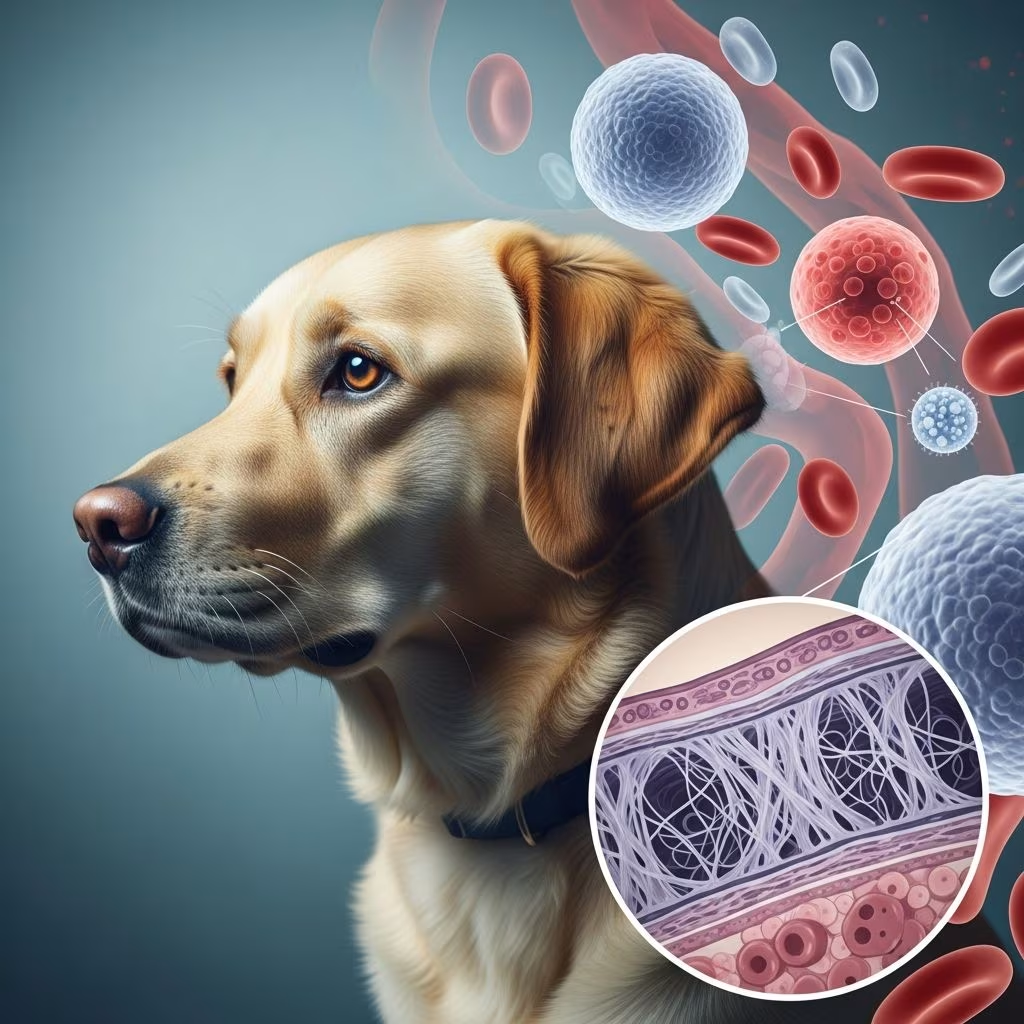
Myelofibrosis is a rare bone marrow disorder in dogs characterized by the replacement of normal hematopoietic tissue with fibrous connective tissue, impairing blood cell production and leading to conditions like anemia and thrombocytopenia.
Understanding Bone Marrow and Its Role in Canine Health
The bone marrow serves as the primary site for blood cell production in dogs, generating red blood cells, white blood cells, and platelets essential for oxygen transport, immunity, and clotting. When fibrosis disrupts this process, dogs experience systemic effects that can severely impact vitality.
In healthy dogs, bone marrow maintains a balance of cellular proliferation and maturation. Disruptions, such as excessive fibroblast activity, lead to scarring that crowds out functional areas, resulting in ineffective hematopoiesis.
Primary vs. Secondary Forms of Myelofibrosis
Canine myelofibrosis is typically secondary, arising from underlying conditions like infections (e.g., Ehrlichiosis), neoplasms, myelotoxic drugs (e.g., estrogens, cephalosporins, cyclophosphamide), radiation, or genetic disorders such as pyruvate kinase deficiency in Beagles.
Primary or idiopathic myelofibrosis occurs without a detectable cause and is less common in dogs compared to humans. It may involve spontaneous fibroblast overgrowth in the marrow stroma.
Common Triggers and Risk Factors
- Infections: Ehrlichiosis and septicemia can induce bone marrow necrosis, progressing to fibrosis.
- Neoplasia: Cancers like metastatic adenocarcinoma infiltrate marrow, causing secondary changes.
- Medications and Toxins: Drugs including chromomycin, cephalosporins, and estrogens trigger necrosis and fibrosis.
- Genetic Predispositions: Pyruvate kinase deficiency in breeds like Beagles.
- Other Factors: Chronic inflammation, bleeding, or radiation exposure.
Breeds such as Beagles may face higher risks due to inherited blood disorders, emphasizing breed-specific monitoring.
Recognizing the Signs: Symptoms of Myelofibrosis
Symptoms arise from deficient blood cell production, manifesting as anemia-related fatigue, immune suppression, and bleeding tendencies. Owners often notice progressive weakness.
| Symptom Category | Common Signs | Associated Blood Issue |
|---|---|---|
| Anemia-Related | Lethargy, pallor, weight loss, inappetance | Non-regenerative anemia, low RBCs |
| Immune/Thrombocyte | Recurrent infections, petechiae, fever | Thrombocytopenia, leukopenia |
| Advanced/Organ | Hepatosplenomegaly, polydipsia, lymphadenopathy | Organ enlargement, systemic effects |
| Neurological/Rare | Ataxia, seizures, shifting lameness | Secondary MPD complications |
Early signs like pale gums and tiredness can mimic other anemias, but persistent fever or bruising signals marrow involvement.
How Veterinarians Diagnose Myelofibrosis
Diagnosis begins with a complete blood count (CBC) revealing non-regenerative anemia, thrombocytopenia, and possible nucleated RBCs or ovalocytes indicating marrow stress.
- Clinical Exam: Assess for pallor, splenomegaly, or petechiae.
- Hematology: Confirm low cell lines and immature cells.
- Bone Marrow Aspiration/Biopsy: Gold standard; shows fibrosis, reduced hematopoietic cells (<25% in severe cases), and necrosis.
- Imaging/Histopathology: Rule out neoplasia or infection.
Histology may reveal Prussian blue-positive iron stores, distinguishing from iron deficiency.
Treatment Approaches: Managing the Uncurable
No cure exists for canine myelofibrosis; focus shifts to supportive care, symptom relief, and quality-of-life extension. Prognosis varies, with some dogs surviving longer via targeted therapies.
Supportive Therapies
- Blood transfusions for severe anemia or thrombocytopenia.
- Antibiotics for secondary infections.
- Fluid therapy and colloids for hydration/electrolyte balance.
Pharmacological Interventions
| Condition/Drug | Purpose | Notes |
|---|---|---|
| Hydroxyurea | Controls cell proliferation (e.g., chronic phase MPD) | Effective but dogs may progress to terminal phase. |
| Erythropoietin (recombinant human) | Stimulates RBC production | Prolonged survival in responsive cases; combine with prednisone. |
| Prednisolone | Immunosuppression, anti-inflammatory | Beneficial in some idiopathic cases. |
| Chemotherapy (e.g., Cytosine arabinoside, Vincristine) | Cytoreductive for acute MPD | Supportive; risks marrow suppression. |
Bone marrow transplantation is rarely feasible outside research settings.
Prognosis and Long-Term Outlook
Survival depends on etiology and response to therapy. Idiopathic cases treated with erythropoietin or prednisolone showed prolonged life in retrospective studies (e.g., 19 cases). Secondary forms improve if the trigger is addressed, but progression to leukemia or sepsis is common in myelodysplastic syndromes.
Untreated dogs face rapid decline from anemia or bleeding; early intervention can extend comfortable months to years.
Preventive Strategies for At-Risk Dogs
- Regular vet check-ups for breeds prone to blood disorders.
- Monitor medication side effects, especially myelotoxic drugs.
- Prompt treatment of infections or cancers.
- Genetic screening for high-risk breeds like Beagles.
Living with Myelofibrosis: Caregiver Tips
Provide a low-stress environment, nutrient-rich diet supporting blood health (e.g., iron, B-vitamins), and gentle exercise. Track symptoms daily and adjust based on vet advice. Emotional support for owners is key, as euthanasia decisions often arise in advanced stages.
Frequently Asked Questions (FAQs)
What is the most common cause of myelofibrosis in dogs?
Secondary causes like infections, neoplasia, and drugs predominate; idiopathic cases are rare.
Can myelofibrosis be cured?
No, but supportive treatments like transfusions and erythropoietin manage symptoms effectively.
How is bone marrow biopsy performed in dogs?
Under sedation, a core sample is extracted from the iliac crest or humerus for histopathological analysis.
Is myelofibrosis hereditary?
Not directly, but linked to genetic conditions like pyruvate kinase deficiency in certain breeds.
What breeds are at higher risk?
Beagles due to pyruvate kinase deficiency; others via breed-specific cancers or sensitivities.
Conclusion
While challenging, understanding myelofibrosis empowers owners to collaborate with vets for optimal management, prioritizing comfort and monitoring.
References
- Myelofibrosis in Dogs: Causes, Symptoms & Management — Pets4Homes. 2023. https://www.pets4homes.co.uk/pet-advice/myelofibrosis-in-dogs.html
- Myeloproliferative Diseases — The National Canine Cancer Foundation. 2022. https://wearethecure.org/learn-more-about-canine-cancer/canine-cancer-library/myeloproliferative-diseases/
- Anemia in Dogs – Dog Owners — Merck Veterinary Manual. 2024-10-01. https://www.merckvetmanual.com/dog-owners/blood-disorders-of-dogs/anemia-in-dogs
- A Review of Myelofibrosis in Dogs — Sage Journals. 1993-01-01. https://journals.sagepub.com/doi/pdf/10.1177/019262339302100208
- Myelofibrosis in a dog with non-regenerative anaemia — Cytopath. 2023. https://www.cytopath.co.uk/case-studies/myelofibrosis-in-a-dog-with-non-regenerative-anaemia
- A Retrospective Study of 19 Cases of Canine Myelofibrosis — Wiley Online Library. 2002. https://onlinelibrary.wiley.com/doi/pdf/10.1111/j.1939-1676.2002.tb02351.x
- A review of myelofibrosis in dogs — PubMed. 1993-01-01. https://pubmed.ncbi.nlm.nih.gov/8210938/



