

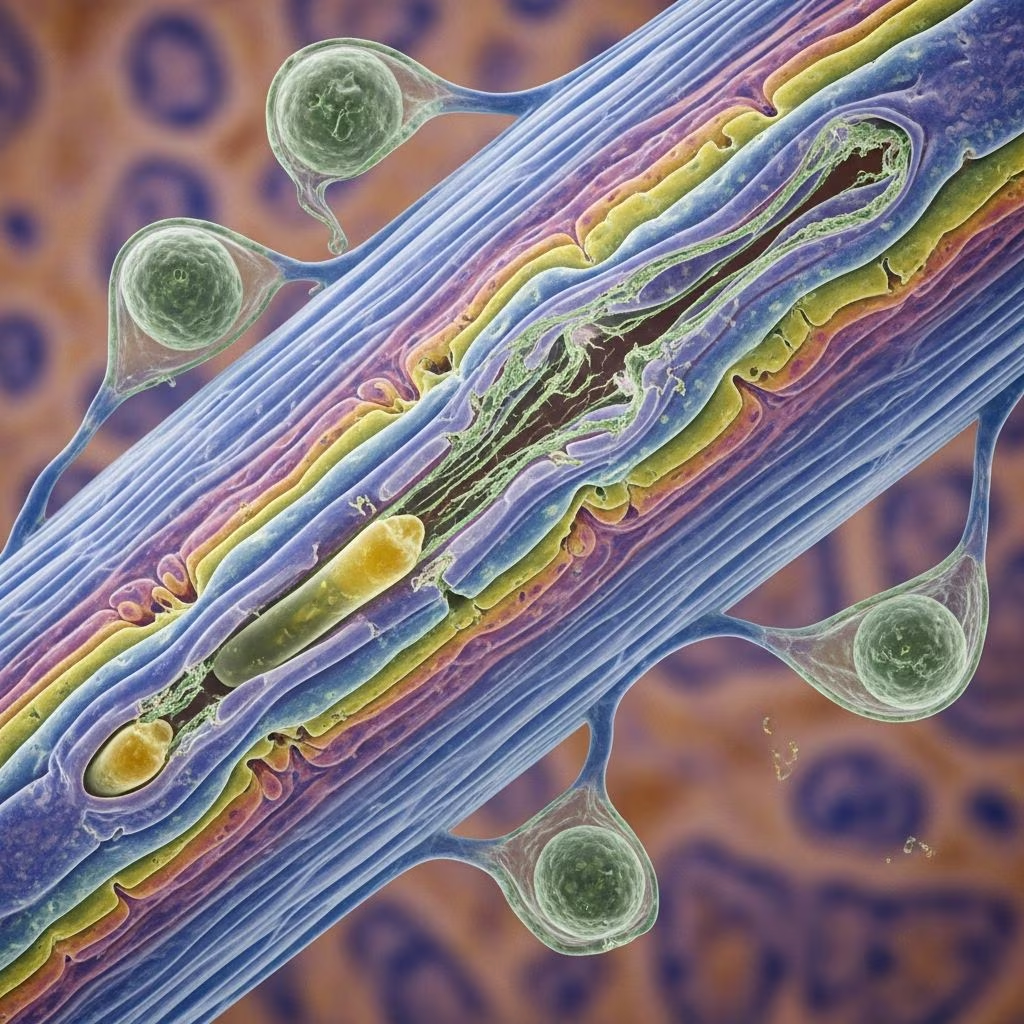
Myelin disorders represent a significant challenge in veterinary medicine, disrupting the protective insulation around nerve fibers essential for efficient neural communication. These conditions impair motor function, coordination, and sensory processing in affected animals, often manifesting early in life or through acquired insults. Understanding their pathology, breed predispositions, and therapeutic horizons is crucial for timely intervention and improved quality of life.
The Fundamentals of Myelin and Its Role in Animal Health
Myelin, a lipid-rich sheath formed by oligodendrocytes in the central nervous system (CNS) and Schwann cells in the peripheral nervous system (PNS), accelerates nerve impulse conduction. In animals, myelin defects lead to slowed or blocked signals, resulting in neurological deficits. Research highlights that even thin remyelinated sheaths can sustain long-term function in long-lived species like dogs and cats.
Disorders arise from genetic mutations, nutritional excesses, toxins, or inflammation, with congenital forms dominating in young animals. Genetic models, such as myelin mutants in rodents, mirror human leukodystrophies and aid in studying repair mechanisms.
Genetic Hypomyelination: Inherited Deficiencies in Myelin Production
Hypomyelination, or delayed myelin formation, is prevalent in specific breeds. Puppies or kittens exhibit tremors, ataxia, and intention tremors from birth, improving with age in some cases due to partial remyelination.
- Weimaraners and Chow Chows: A widespread mutation causes severe tremors at 12-14 days, resolving by 3-4 months with thin myelin sheaths persisting for 13 years, supporting normal function.
- Springer Spaniels: Present with whole-body tremors and hypermetria, linked to myelin gene defects.
Diagnosis relies on clinical signs, breed history, and imaging showing reduced white matter. Post-mortem histology confirms thin or absent sheaths.
Leukodystrophy and Storage Diseases: Progressive Demyelination
Leukodystrophies involve white matter degeneration due to enzyme deficiencies. Globoid cell leukodystrophy (Krabbe disease) affects breeds like Cairn Terriers, West Highland White Terriers, Irish Setters, and Australian Kelpies, with gene mutations identified.
| Disease | Affected Breeds | Key Features |
|---|---|---|
| Globoid Cell Leukodystrophy | Cairn Terrier, Westie, Irish Setter | Progressive ataxia, blindness, early death |
| Leukodystrophy | Standard Schnauzer | Spongy degeneration, seizures |
| Leukoencephalomyelopathy | Rottweiler, Great Dane, Leonberger | Weakness, hyporeflexia |
These conditions progress relentlessly, with minimal remyelination potential, emphasizing the need for genetic screening in breeding programs.
Peripheral Nerve Myelin Issues: Polyneuropathies and Schwann Cell Defects
PNS disorders include demyelinating polyneuropathies in Leonbergers (LPN1 and LPN2 variants) and Alaskan Malamutes, causing paresis and reduced reflexes. Miniature Schnauzers suffer demyelinating neuropathy with progressive weakness.
Symptoms encompass limb tremors, inability to stand, and delayed reflexes, more common in males for congenital forms.
Acquired Myelin Disruptions: Nutrition, Toxins, and Inflammation
Unlike genetic forms, acquired disorders stem from external factors. Taurine deficiency in cats induces optic nerve demyelination, reversible upon dietary correction with extensive remyelination.
In goats, excessive copper or organophosphate poisoning triggers delayed myelination, while lambs face similar issues from maternal hypocuprosis. Inflammatory conditions like distemper in dogs cause focal demyelination, with variable recovery.
Clinical Manifestations Across Species
Signs vary by lesion location and severity:
- Central tremors: Coarse, intention-based in hypomyelination.
- Ataxia and hypermetria: Exaggerated movements in young animals.
- Paresis and seizures: In progressive leukodystrophies.
- Optic nerve involvement: Vision loss, remyelinated thinly after 2 years in cats.
Cats show head tremors, nystagmus, and ventroflexion, often breed-specific.
Diagnostic Approaches for Myelin Disorders
Veterinarians use a multi-modal strategy:
- History and Exam: Age of onset, breed, sex; assess gait, reflexes, menace response.
- Imaging: MRI reveals hypomyelinated white matter; CT less sensitive.
- CSF Analysis: Normal in congenital forms, elevated protein in inflammatory cases.
- Biopsy: Nerve or brain tissue confirms pathology, though invasive.
- Genetic Testing: For known mutations in breeds like Weimaraners.
Differentiate from hydrocephalus or metabolic issues via elimination.
Therapeutic Strategies and Remyelination Prospects
Treatment is supportive: physical therapy, slings for mobility, anti-seizure meds. Genetic disorders lack cures, but acquired forms respond to cause removal.
Research underscores remyelination’s efficacy. Thin sheaths in Weimaraners and cats restore function long-term, serving as biomarkers for repair. Myelin mutants like shiverer mice model cell transplantation therapies, promoting oligodendrocyte replacement.
Future avenues include stem cell grafts and drugs enhancing repair, informed by animal models.
Breed-Specific Risks and Prevention
Genetic testing prevents propagation:
- Test Weimaraners for hypomyelination mutations.
- Screen Terriers for globoid cell leukodystrophy.
- Balanced diets avert taurine deficiency in cats.
Prognosis and Long-Term Management
Congenital hypomyelination often improves spontaneously; leukodystrophies are fatal. Monitor with serial exams; euthanasia considered for severe cases.
Frequently Asked Questions (FAQs)
What causes tremors in Weimaraner puppies?
Hypomyelination due to genetic delay in myelin formation, typically resolving by 4 months.
Can cats recover from myelin deficiency?
Yes, if acquired like taurine-related; congenital forms vary, with optic nerve remyelination possible.
How is myelin disorder diagnosed?
Via breed history, MRI, CSF, and genetic tests.
Is there a cure for leukodystrophy in dogs?
No, but supportive care and breeding avoidance help manage.
What research supports myelin repair?
Studies in dogs and cats show thin sheaths sustain function; rodent models test transplants.
References
- A Little Myelin Goes a Long Way to Restore Nervous System Function — University of Wisconsin School of Veterinary Medicine. 2017-10-23. https://www.vetmed.wisc.edu/duncan-myelin-restore-nervous-system-function/
- Canine Myelin Disorders With Identified Gene Mutations — MSD Veterinary Manual. N/A. https://www.msdvetmanual.com/multimedia/table/canine-myelin-disorders-with-identified-gene-mutations
- Myelin Deficiency in Cats – Symptoms, Causes, Diagnosis — WagWalking. N/A. https://wagwalking.com/cat/condition/myelin-deficiency
- The myelin mutants as models to study myelin repair in the leukodystrophies — PubMed (Neurotherapeutics). 2011-10. https://pubmed.ncbi.nlm.nih.gov/21979830/
- Myelin key to recovery of neurological disorders — DVM360. N/A. https://www.dvm360.com/view/myelin-key-recovery-neurological-disorders
- Repair of Myelin Disease: Strategies and Progress in Animal Models — PubMed. 1998. https://pubmed.ncbi.nlm.nih.gov/9449127/



