
Mycotoxin Risks In Poultry: 5 Key Toxins And Prevention
Protecting poultry flocks from hidden fungal threats that undermine health, growth, and productivity.
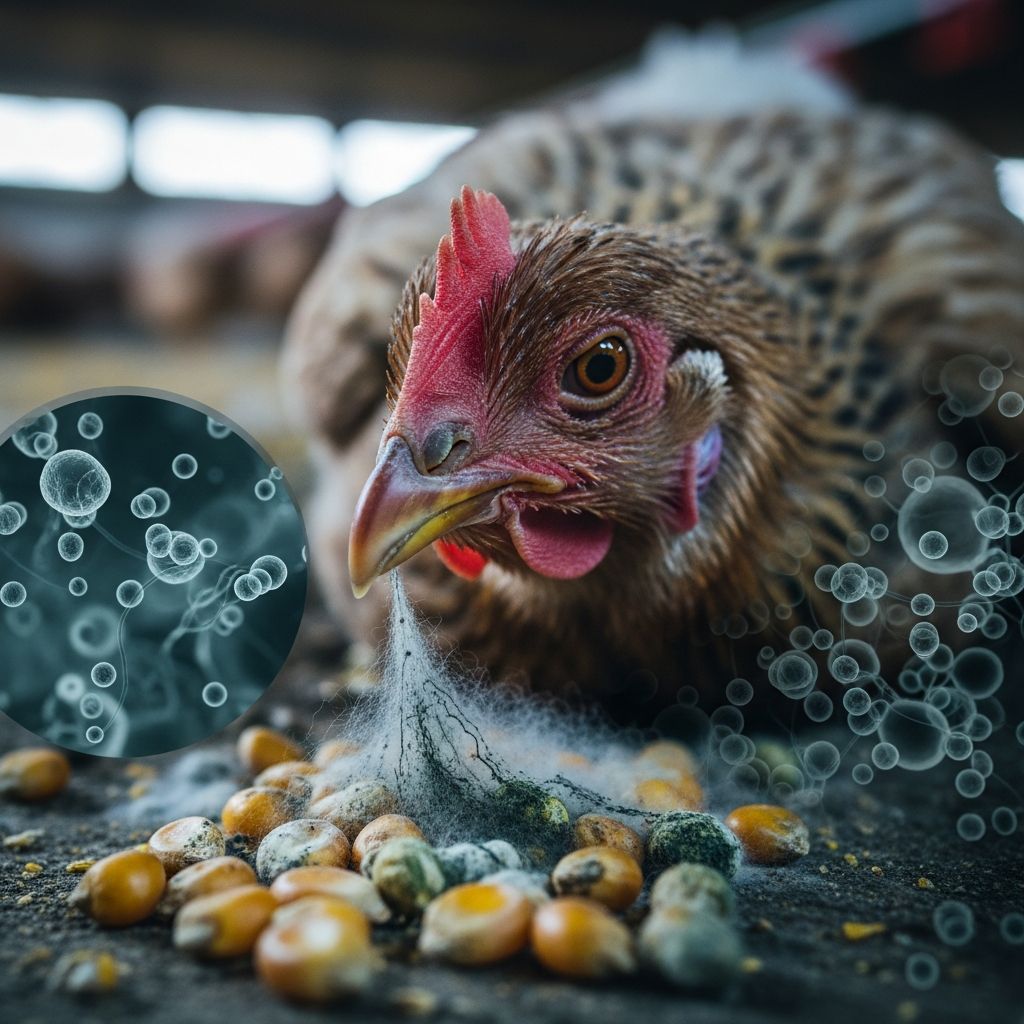
Mycotoxins pose a significant threat to poultry health and productivity worldwide, originating from fungal metabolites that contaminate feed ingredients under suboptimal conditions. These toxins can lead to reduced growth, immunosuppression, and organ damage, often going unnoticed until performance declines sharply.
Understanding Mycotoxins and Their Origins
Mycotoxins are secondary metabolites produced by various fungi species, such as Aspergillus, Fusarium, and Penicillium, thriving in warm, humid environments. They form during pre-harvest stress in crops or post-harvest in storage when moisture levels exceed 14-15% and temperatures fluctuate. A single fungal strain can generate multiple toxins, complicating contamination patterns in grains like corn, wheat, and barley commonly used in poultry diets.
Environmental factors like drought, flooding, or delayed harvesting stress plants, making them prone to fungal invasion. Globally, surveys show multi-mycotoxin occurrences in over 80% of feed samples, with levels varying by region and season. In poultry production, chronic low-level exposure is more common than acute poisoning, subtly eroding flock efficiency over time.
Key Mycotoxins Affecting Poultry Flocks
Several mycotoxins stand out for their prevalence and impact on birds. Here’s a breakdown of the primary ones:
- Aflatoxins (AF): Produced by Aspergillus flavus and A. parasiticus, these hepatotoxins cause liver enlargement, reduced egg production, and increased susceptibility to infections. Ducks and turkey poults are highly sensitive, with broilers showing growth retardation at doses above 100 ppb.
- Ochratoxins (OTA): From Aspergillus ochraceus and Penicillium species, OTA targets kidneys, leading to pale combs, poor feed conversion, and gout. It also shrinks immune organs like the bursa of Fabricius.
- Fumonisins (FUM): Fusarium derivatives that disrupt sphingolipid synthesis, causing pulmonary edema and growth issues in young birds. They synergize with other toxins to worsen gut health.
- Trichothecenes (e.g., T-2, DON): Type A (T-2) induces oral lesions, vomiting, and feather loss; Type B (DON) damages intestinal epithelium, predisposing to necrotic enteritis.
- Zearalenone (ZEN): Mimics estrogen, affecting reproduction with thinner eggshells and reduced hatchability, particularly in layers.
| Mycotoxin | Main Producing Fungi | Primary Targets in Poultry | Sensitivity Order |
|---|---|---|---|
| Aflatoxins | Aspergillus spp. | Liver, immunity | Ducks > Turkeys > Chickens |
| Ochratoxins | Aspergillus/Penicillium | Kidneys, growth | Turkeys > Broilers |
| Fumonisins | Fusarium spp. | Lungs, gut | Chicks > Adults |
| T-2/DON | Fusarium spp. | Gut, skin, immunity | All species |
Health Consequences for Poultry
Mycotoxicoses manifest in diverse ways, often mimicking other diseases, which complicates diagnosis. Acute high-dose exposure triggers rapid mortality, oral ulcers, and hemorrhagic guts, while chronic cases yield insidious effects like 5-20% drops in weight gain and feed efficiency.
Reproductive Impacts: Layers experience egg shell thinning, yolk discoloration, and lowered hatchability. ZEN and AF alter hormone balance, reducing ovulation rates by up to 30%.
Growth and Performance Losses: Broilers show leg weakness, uneven flock uniformity, and predisposition to bacterial chondronecrosis (BCO), where DON and FUM promote Clostridium overgrowth in bones.
Immune Suppression: Toxins shrink lymphoid tissues, slashing antibody responses to vaccines by 40-60%. This heightens outbreaks of coccidiosis, Newcastle disease, and E. coli infections.
Synergistic interactions amplify damage; for instance, AF plus T-2 toxin doubles liver toxicity compared to individual exposures. Subclinical cases, affecting 70% of flocks in surveys, silently inflate production costs through poor feed conversion (FCR rising from 1.6 to 2.0).
Routes of Exposure and Contamination Pathways
Poultry ingest mycotoxins primarily through feed, but bedding, litter, and water can contribute. Contamination starts in fields under stress, persists through drying, transport, and storage. Feed mills with crusted residues or poor ventilation foster toxin buildup.
High-risk scenarios include:
- Prolonged storage in silos with temperature swings causing moisture migration.
- Insect-damaged grains harboring fungi.
- Humid climates where relative humidity exceeds 70% in barns.
Once embedded, mycotoxins resist milling, pelleting, and heat up to 150°C, remaining stable in finished feeds.
Spotting Signs of Mycotoxin Contamination
Clinical indicators vary by toxin and bird age but include lethargy, wet droppings, beak/tongue sores, and pale shanks. Necropsies reveal enlarged livers (AF), shrunken kidneys (OTA), or gut hemorrhages (trichothecenes).
Performance clues: sudden FCR worsening, flock unevenness >15%, or vaccine failures without pathogens. Field diagnosis combines history, lesions, and feed analysis via ELISA or HPLC for toxin levels.
Proactive Prevention Tactics
Minimizing risks demands integrated strategies:
- Crop and Harvest Management: Harvest promptly, dry grains to <13% moisture, use fungicides on high-risk fields.
- Storage Best Practices: Aerate silos, monitor temperature/humidity, clean crusts weekly. Avoid ground piling.
- Feed Processing: Dilute suspect batches with clean grains, add adsorbents like aluminosilicates (0.5-2 kg/ton) that bind AF and OTA effectively.
- Barn Environment: Ventilate to keep RH <60%, use raised feeders to prevent litter contamination.
- Monitoring Programs: Test feeds quarterly, especially in rainy seasons, targeting multi-toxin panels.
Binders reduce bioavailability; yeast cell walls target trichothecenes, while clays excel against polar toxins. Recent trials show 20-50% performance recovery with timely intervention.
Advanced Mitigation and Treatment Options
Beyond prevention, enzymes like glucose oxidases detoxify DON in vitro, and microbial fermenters (e.g., lactic acid bacteria) degrade ZEN. No full antidotes exist, but supportive care—electrolytes, vitamins, antibiotics for secondary infections—helps recovery.
Regulatory limits (e.g., EU: 20 ppb AF in feed) guide safety, but field levels often exceed guidance values without overt signs. Poultry producers should partner with labs for risk assessments.
FAQs on Mycotoxins in Poultry
Q: Can mycotoxins be destroyed by heat processing feed?
A: No, most persist through pelleting and extrusion; prevention is key.
Q: Which poultry species is most vulnerable?
A: Ducks top the list, followed by turkeys, geese, then chickens.
Q: How do I test for mycotoxins economically?
A: Use rapid strip tests for screening, confirm with LC-MS for multiples.
Q: Do mycotoxins affect egg quality?
A: Yes, leading to thinner shells, residues, and lower hatch rates.
Q: Are there natural feed additives that help?
A: Yes, clay minerals and yeast extracts bind toxins, improving performance.
Future Directions in Mycotoxin Control
Breeding toxin-resistant corn varieties and AI-driven storage monitors promise reduced contamination. Climate change may intensify risks, urging resilient supply chains. Vigilance ensures sustainable poultry production.
References
- Mycotoxicoses in Poultry — MSD Veterinary Manual. 2023. https://www.msdvetmanual.com/poultry/mycotoxicoses-in-poultry/mycotoxicoses-in-poultry
- Prevalence and effects of mycotoxins on poultry health — PMC (NCBI). 2016-07-28. https://pmc.ncbi.nlm.nih.gov/articles/PMC4988553/
- Mycotoxicosis in poultry: Clinical signs — BIŌNTE. 2024. https://www.bionte.com/en/mycotoxicosis-in-poultry-clinical-signs/
- Mycotoxicosis — The Poultry Site. 2023. https://www.thepoultrysite.com/disease-guide/mycotoxicosis
- Mycotoxins and Poultry — Engormix (FAO reference context). 2016. https://en.engormix.com/poultry-industry/mycotoxins-poultry/mycotoxins-problems-poultry_a35206/
Similar Articles








Read full bio of medha deb


