
Mycotoxicoses In Animals: 5 Common Mycotoxins And Prevention
Exploring the hidden dangers of fungal toxins in animal feeds and their widespread impact on livestock and companion animals.
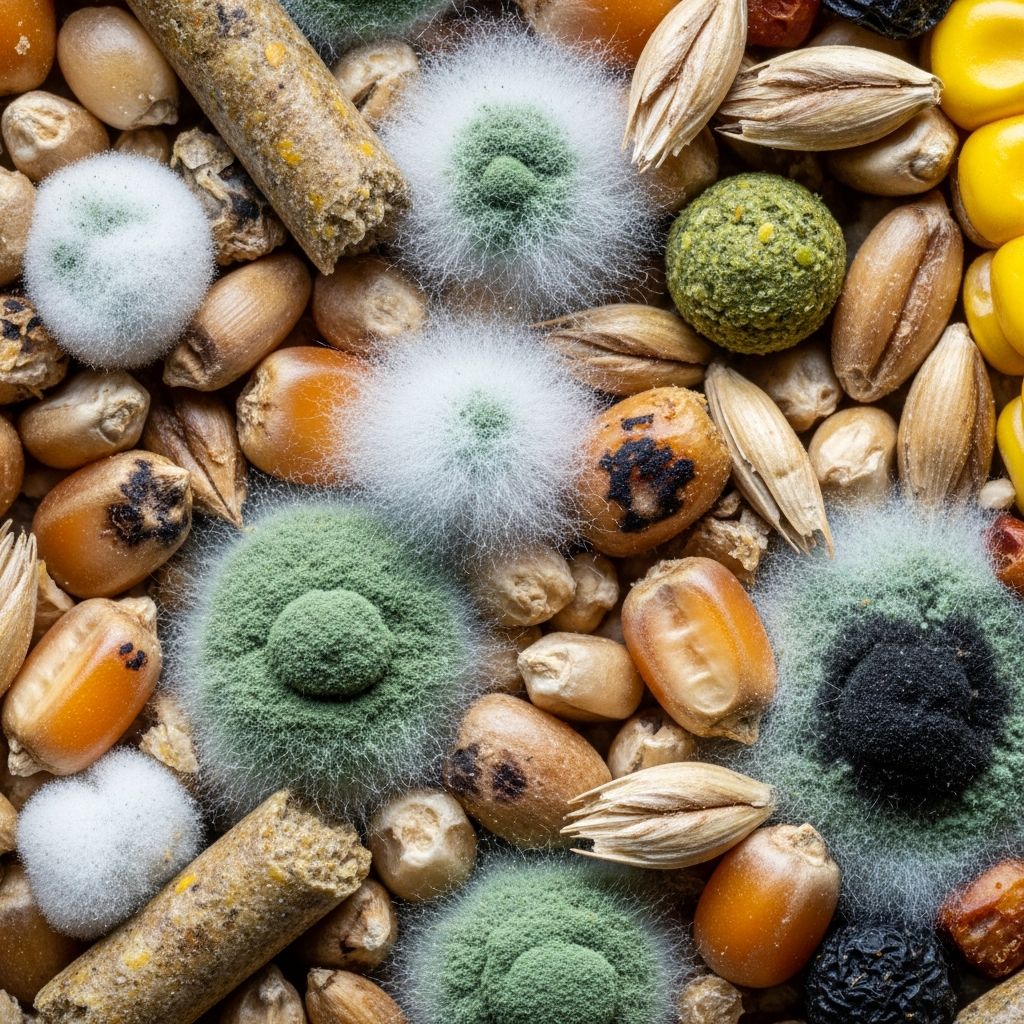
Fungal toxins known as mycotoxins pose a significant risk to animal health worldwide, contaminating feeds and forages under favorable environmental conditions. These secondary metabolites produced by molds lead to a range of acute and chronic conditions collectively termed mycotoxicoses, impacting productivity, immunity, and survival across species.
The Nature and Origins of Mycotoxins
Mycotoxins arise from various mold genera such as Aspergillus, Penicillium, and Fusarium, thriving in warm, humid environments during crop growth, harvest, or storage. Factors like temperature fluctuations, moisture levels above 14%, and poor ventilation accelerate toxin production in grains, silages, and hay. Unlike infections, mycotoxicoses result from ingesting pre-formed toxins, with effects varying by dose, exposure duration, and animal physiology.
Key influencers include animal age—younger individuals suffer more severely—species differences, nutritional status, and co-exposure to multiple toxins, which often amplify harm through synergistic interactions. For instance, mixed feeds sourced globally heighten contamination risks, as ingredients from diverse regions carry region-specific molds.
Prevalent Mycotoxins and Their Mechanisms
Several mycotoxins dominate veterinary concerns, each targeting specific organs while sharing immunosuppressive traits that worsen outcomes.
- Aflatoxins: Primarily from Aspergillus species, these hepatotoxins like AFB1 cause liver necrosis, coagulopathy, and icterus. Acute high doses (>1000 µg/kg) trigger rapid death in monogastrics, while chronic low levels reduce growth and milk yield in cattle.
- Ochratoxins: Nephrotoxic compounds from Penicillium and Aspergillus, leading to kidney degeneration, polyuria, and edema, especially in pigs and poultry.
- Trichothecenes: Including deoxynivalenol and T-2 toxin from Fusarium, these provoke gastrointestinal irritation, vomiting, and immunosuppression. Macrocyclic variants like satratoxins cause hemorrhagic diathesis in ruminants.
- Fumonisins: Fusarium-derived, neurotoxic to horses (equine leukoencephalomalacia) and pulmonotoxic to swine, with rabbits showing growth stunting.
- Zearalenone: Estrogenic Fusarium toxin disrupting reproduction in pigs and rabbits via hormonal mimicry.
These toxins metabolize via cytochrome P450 enzymes, binding DNA or proteins to induce cytotoxicity, with residues like aflatoxin M1 appearing in milk, posing zoonotic risks.
Species-Specific Vulnerabilities and Clinical Manifestations
Animals exhibit varied susceptibility due to digestive anatomy and metabolism. Ruminants detoxify some toxins via rumen microbes, yet remain prone to others.
| Species | Common Mycotoxins | Key Symptoms | Severity |
|---|---|---|---|
| Poultry | Aflatoxins, Ochratoxins | Weight loss, hemorrhage, immunosuppression | High |
| Swine | Fumonisins, Zearalenone, Trichothecenes | Pulmonary edema, infertility, diarrhea | High |
| Cattle | Aflatoxins, Trichothecenes | Hepatic fibrosis, reduced milk, unthriftiness | Moderate |
| Horses | Fumonisins, Trichothecenes | Leukoencephalomalacia, colic | High |
| Dogs | Tremorgenic toxins, Aflatoxins | Tremors, ataxia, liver failure | Very High |
| Rabbits | Fumonisins, Aflatoxins | Anorexia, growth retardation, reproductive issues | Moderate |
In dogs, tremorgens from Penicillium induce seizures and collapse, reflecting high sensitivity. Rabbits face subclinical effects like stunted growth and infection susceptibility from fumonisins and zearalenone. Cattle show chronic signs: icterus, ascites, elevated liver enzymes (AST, GGT), and coagulopathies after prolonged aflatoxin exposure. Poultry and pigs suffer acute gastroenteritis and nephropathy from ochratoxins.
Diagnostic Approaches and Challenges
Mycotoxicoses mimic infectious or nutritional disorders, complicating antemortem diagnosis. History of moldy feed, coupled with non-specific signs like anorexia, diarrhea, and lethargy, raises suspicion. Laboratory confirmation involves ELISA or HPLC detection of toxins in feed, serum, or tissues, alongside histopathology revealing organ-specific lesions: centrilobular necrosis in livers, tubular fibrosis in kidneys.
Challenges include multi-toxin mixtures masking symptoms and subclinical cases eroding productivity without overt illness. Field outbreaks often stem from complex feed contaminations, where purified toxin studies underestimate real-world impacts.
Management and Therapeutic Strategies
Treatment remains supportive: remove contaminated feed immediately, provide fluids, hepatoprotectants, and anti-emetics. Adsorbents like bentonite clay bind toxins in the gut, mitigating absorption, though efficacy varies. Immunosuppression heightens secondary infection risks, necessitating antibiotics judiciously.
Prognosis depends on toxin type and exposure stage; acute trichothecene cases may recover if intervened early, but aflatoxic liver failure proves fatal.
Prevention: Safeguarding Animal Health
Proactive measures curb mycotoxicoses effectively:
- Cultivate resistant crop varieties and harvest promptly to minimize field molding.
- Store feeds below 13% moisture in cool, aerated silos; use propionates as preservatives.
- Regularly test feeds via multimycotoxin assays, rejecting lots exceeding regulatory limits (e.g., 20 ppb aflatoxin in US cattle feed).
- Diversify diets and use toxin binders in high-risk regions.
- Monitor weather patterns predicting Fusarium outbreaks in temperate climates.
Global standards from FDA and EFSA guide safe levels, emphasizing surveillance in mixed feeds.
Economic and Productivity Ramifications
Beyond health, mycotoxins slash feed efficiency, growth rates, and reproduction, costing billions annually. Chronic exposure halves weight gain in pigs, cuts dairy yields by 20-30%, and boosts disease susceptibility, inflating veterinary costs. In rabbits, subclinical effects impair breeding programs. Addressing these invisible contaminants ensures sustainable animal agriculture.
Frequently Asked Questions (FAQs)
What are the first signs of mycotoxicosis in livestock?
Initial indicators include reduced feed intake, weight loss, diarrhea, and respiratory distress, varying by species and toxin.
Can mycotoxins transfer to humans via animal products?
Yes, aflatoxin M1 carries over into milk, posing public health risks, though regulated levels minimize this.
How do I test my animal feed for mycotoxins?
Send samples to certified labs for HPLC or LC-MS/MS analysis targeting common toxins like aflatoxins and fumonisins.
Are there vaccines or specific antidotes for mycotoxicoses?
No vaccines exist; management relies on prevention and binders, as no universal antidotes are available.
Which animals are most at risk from moldy hay?
Horses and cattle consuming contaminated roughage face high risks from trichothecenes and fumonisins.
References
- Mycotoxicoses in Domestic Animals — MSD Veterinary Manual. 2023. https://www.msdvetmanual.com/multimedia/table/mycotoxicoses-in-domestic-animals
- Mycotoxicoses in veterinary medicine: Aspergillosis and penicilliosis — PMC (NCBI). 2020-08-01. https://pmc.ncbi.nlm.nih.gov/articles/PMC7413002/
- An overview of mycotoxicoses in rabbits — SAGE Journals. 2024. https://journals.sagepub.com/doi/10.1177/10406387241255945
- Mycotoxins and mycotoxicoses — Veterian Key. Accessed 2023. https://veteriankey.com/mycotoxins-and-mycotoxicoses/
- Mycotoxicoses of Importance to the Bovine Practitioner — Bovine-OJS (Texas A&M). 1980. https://bovine-ojs-tamu.tdl.org/bovine/article/view/236/250
- Canine Mycotoxicosis–A Comprehensive Literature Review — EU OpenSci. Accessed 2023. https://eu-opensci.org/index.php/vetmed/article/view/3121/598
- Understanding Fungal (Mold) Toxins (Mycotoxins) — Iowa State University Vet Med. Accessed 2023. https://vetmed.iastate.edu/vdl/wp-content/uploads/UnderstandingMycotoxins.pdf
Similar Articles








Read full bio of Sneha Tete


