

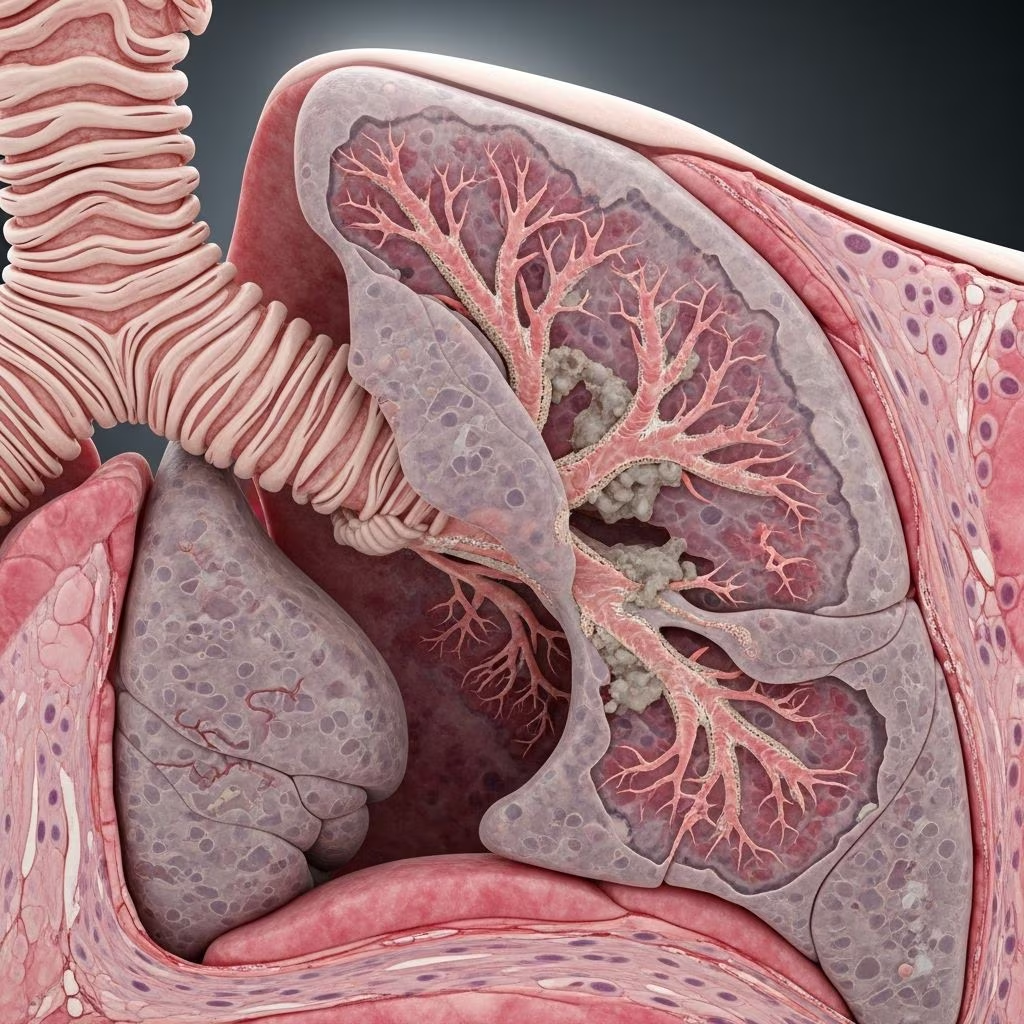
Mycoplasmal pneumonia, primarily caused by Mycoplasma hyopneumoniae, represents one of the most common chronic respiratory conditions affecting swine worldwide. This disease, often referred to as enzootic pneumonia, leads to subtle yet persistent health issues that compromise growth rates and increase susceptibility to secondary infections. While it may not cause dramatic outbreaks on its own, its role in the porcine respiratory disease complex amplifies economic losses in pig production through reduced feed efficiency and higher veterinary costs.
Understanding the Pathogen and Its Impact
The bacterium Mycoplasma hyopneumoniae is a wall-less organism that adheres to the ciliated epithelium of the pig’s respiratory tract. By damaging these cilia, which are essential for clearing debris and pathogens from the lungs, it creates an environment ripe for opportunistic invaders like Pasteurella multocida or viruses such as PRRSV. This damage results in a mild but enduring inflammation, manifesting as bronchopneumonia with characteristic lesions visible at slaughter.
Infection typically occurs early in life, with clinical signs emerging around 8-20 weeks of age as maternal antibodies wane. The disease’s chronic nature means affected pigs often exhibit stunted growth and poor feed conversion, contributing to substantial financial burdens on producers. Studies show that lung lesions can affect 30-70% of pigs at slaughter, underscoring its prevalence in endemic herds.
Recognizing Clinical Manifestations
Early detection hinges on observing hallmark symptoms that distinguish mycoplasmal pneumonia from other respiratory ailments. The most consistent sign is a dry, non-productive cough, often triggered by movement or handling, occurring in episodes of 7-8 coughs. Affected pigs may display “thumping,” a labored abdominal breathing pattern indicating respiratory distress.
- Dry, hacking cough: Persistent and non-productive, worsening with activity.
- Reduced appetite and growth: Pigs show uneven weight gain and lethargy.
- Fever and thumping: Elevated temperatures and visible breathing efforts in severe cases.
- Lung lesions: Cranioventral consolidation observed postmortem, ranging from dark red acute areas to tan-grey chronic zones.
In uncomplicated cases, symptoms remain mild, but co-infections elevate severity, leading to anorexia, high fever, and even mortality, particularly in naive herds experiencing initial exposure.
Transmission Dynamics in Swine Herds
Direct pig-to-pig contact drives horizontal transmission, with infected animals shedding the pathogen via aerosols, nasal secretions, and saliva for weeks to months. Vertical transmission from sows to piglets via colostrum or intrauterine routes sustains herd endemicity. Indirect spread occurs through contaminated fomites like boots, clothing, equipment, and transport vehicles, emphasizing biosecurity’s role.
The bacterium survives poorly outside the host but persists in herd environments, infecting all ages though grow-finish pigs (8-20 weeks) show peak clinical disease. High stocking densities and poor ventilation accelerate outbreaks, making large production units vulnerable.
Diagnostic Approaches for Accurate Identification
Confirming M. hyopneumoniae requires integrating clinical history, necropsy findings, and laboratory tests. Gross pathology reveals well-demarcated lung consolidations in ventral lobes, confirmed microscopically by lymphohistiocytic infiltrates and lymphoid hyperplasia.
| Method | Description | Advantages | Limitations |
|---|---|---|---|
| PCR | Detects bacterial DNA in swabs or tissues | High sensitivity, rapid results | Requires specialized equipment |
| ELISA | Serological antibody detection | Monitors herd immunity | Late-stage detection only |
| Culture/Isolation | Grows organism from lung samples | Gold standard for confirmation | Slow and technically challenging |
| Fluorescent Antibody | Direct tissue staining | Visualizes pathogen in lesions | Needs fresh samples |
Histopathology distinguishes it from viral pneumonias by peribronchiolar cuffing. In practice, slaughter checks for lesion prevalence guide herd status assessment.
Therapeutic Interventions and Limitations
Antibiotics targeting secondary bacterial invaders like Pasteurella provide symptomatic relief, but none eradicate M. hyopneumoniae due to its lack of a cell wall, rendering beta-lactams ineffective. Antimicrobials such as tylosin, lincomycin, or tetracyclines administered via feed or water reduce lesion severity when initiated early.
Treatment success depends on timing; chronic cases respond poorly. Mass medication during flare-ups curbs outbreaks, but over-reliance fosters resistance. Supportive care, including improved ventilation and reduced stress, aids recovery.
Prevention and Control Strategies
Vaccination forms the cornerstone of control, with intranasal or parenteral vaccines administered to piglets at 7-10 days or sows pre-farrowing, reducing clinical signs and transmission by 50-70%. Autogenous vaccines tailored to herd strains offer customized protection.
- Biosecurity measures: All-in-all-out production, footbaths, and quarantine new stock.
- Vaccination programs: Sow herd immunization for colostral immunity; piglet boosters.
- Management practices: Optimal stocking density, ventilation, and nutrition to bolster immunity.
- Monitoring: Routine slaughter lung scoring and serology to track prevalence.
Eradication is feasible in segregated production via total depopulation-repopulation or test-and-removal, though challenging in endemic areas. Combining strategies minimizes impact.
Economic Implications for Producers
Mycoplasmal pneumonia slashes average daily gain by 10-20% and worsens feed efficiency, with lesion-affected lungs costing $2-5 per pig at slaughter. In complex respiratory cases, losses escalate due to increased medication and mortality. Proactive control yields high returns, as vaccination programs often pay back within one production cycle through improved growth and carcass quality.
FAQs on Mycoplasmal Pneumonia in Pigs
What is the primary symptom of mycoplasmal pneumonia?
A dry, non-productive cough is the hallmark sign, often in bouts after handling.
Which pigs are most affected?
Growing pigs aged 8-20 weeks show peak clinical disease, though all ages can be infected.
Can antibiotics cure the disease?
No, they manage secondary infections but do not eliminate M. hyopneumoniae.
How is it transmitted?
Via direct contact, aerosols, and fomites; poor biosecurity accelerates spread.
Is vaccination effective?
Yes, it significantly reduces symptoms, lesions, and transmission.
Advanced Research Insights
Recent studies highlight M. hyopneumoniae‘s synergy with PRRSV, where mycoplasma prolongs viral pneumonia lesions even in minimally affected lungs. Dual infections intensify respiratory scores and macroscopic damage, informing integrated control for the porcine respiratory complex. Experimental models confirm this potentiation, with mycoplasma-pre-exposed pigs showing exacerbated PRRSV effects, emphasizing early intervention.
Genomic sequencing reveals strain variability, aiding vaccine development. Future strategies may include strain-specific immunity and probiotics to restore ciliary function.
References
- Mycoplasma Pneumonia in Swine — Pipestone Veterinary Services. 2023. https://pipevet.com/mycoplasma-pneumonia
- Mycoplasma hyorhinis — University of Minnesota Swine Disease Manual. 2022. https://open.lib.umn.edu/swinedisease/chapter/mycoplasma-hyorhinis/
- Mycoplasma hyopneumoniae Potentiation of Porcine Reproductive and Respiratory Syndrome Virus — PMC (NCBI). 1999-09-01. https://pmc.ncbi.nlm.nih.gov/articles/PMC84495/
- Enzootic Pneumonia (Mycoplasma hyopneumoniae) — The Pig Site. 2023. https://www.thepigsite.com/disease-guide/enzootic-pneumonia-mycoplasma-hyopneumoniae
- Porcine Enzootic Pneumonia — Wikipedia (informed by primary sources). 2024. https://en.wikipedia.org/wiki/Porcine_enzootic_pneumonia
- Enzootic Pneumonia — NADIS. 2023. https://www.nadis.org.uk/disease-a-z/pigs/enzootic-pneumonia/



