

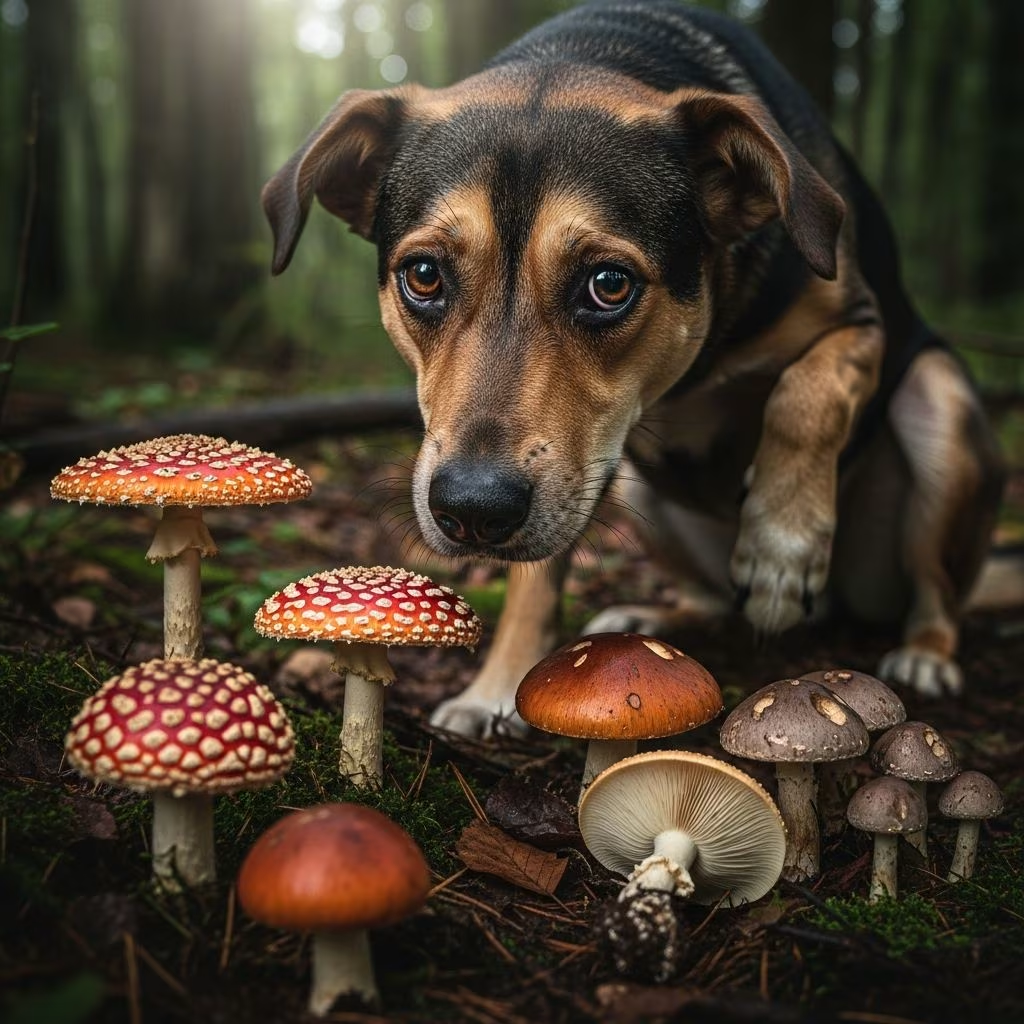
Understanding Mushroom Toxicity in Pets
Mushroom toxicity is a serious concern for pet owners, particularly during fall and spring when mushrooms are most abundant. Many common mushroom species can be highly toxic to dogs and cats, causing severe illness or even death. Understanding which mushrooms pose a threat, recognizing the signs of poisoning, and knowing how to respond can be lifesaving for your beloved pet.
The risk of mushroom toxicity extends beyond deliberate ingestion—pets can consume toxic mushrooms while exploring yards, parks, or wooded areas. Because mushroom species identification requires expertise and many toxic varieties resemble harmless ones, immediate veterinary care is essential whenever a pet consumes an unknown mushroom.
Common Toxic Mushroom Species
Several mushroom species are particularly dangerous to pets. Understanding these species and their characteristics can help you identify potential threats in your pet’s environment.
Amanita phalloides (Death Cap)
The death cap is one of the most lethal mushrooms for both pets and humans. Even small amounts can cause severe liver damage and organ failure. This species typically has a pale yellowish or greenish cap with white gills and a distinctive cup-like structure (volva) at the base. Ingestion of Amanita phalloides has an extremely poor prognosis and is almost invariably fatal once symptoms develop.
Amanita muscaria (Fly Agaric)
Recognizable by its distinctive red or orange cap with white spots, the fly agaric mushroom contains psychoactive compounds that affect the nervous system. These mushrooms cause neurological symptoms including tremors, disorientation, and seizures in affected pets.
Galerina and Lepiota Species
These small brown mushrooms contain amatoxins similar to death caps and can cause severe liver and kidney damage. Their inconspicuous appearance makes them easy for pets to consume unknowingly while foraging.
False Morels
False morels resemble edible true morels but contain gyromitrin, a toxin that causes gastrointestinal upset and neurological symptoms. The false morel typically has a cap that is attached to the stem at the edges rather than underneath like true morels.
Jack O’Lantern Mushrooms
These orange mushrooms contain ibotenic acid and muscimol, causing gastrointestinal irritation and neurological effects. They are often mistaken for edible species due to their bright appearance and growth patterns.
Clinical Signs of Mushroom Poisoning
Symptoms of mushroom poisoning vary significantly depending on the mushroom species ingested, the amount consumed, and the individual pet’s sensitivity. Clinical signs can develop rapidly or be delayed, making prompt observation critical.
Gastrointestinal Symptoms
The most common initial signs include vomiting, diarrhea, abdominal pain, and excessive salivation. These symptoms often appear within 6 to 12 hours of ingestion and may be accompanied by lethargy or loss of appetite. In some cases, particularly with muscarine-containing mushrooms, gastrointestinal signs can occur as rapidly as 5 to 30 minutes after ingestion.
Neurological Symptoms
Depending on the toxin type, pets may experience neurological effects including tremors, seizures, disorientation, hallucinations, ataxia (lack of coordination), and alternating periods of lethargy and agitation. These symptoms are particularly concerning as they indicate direct toxin effects on the nervous system.
Organ-Specific Symptoms
Many toxic mushrooms target specific organs, causing organ-specific damage. Symptoms may include increased or decreased urination, indicating kidney involvement, or signs of liver failure such as jaundice, lethargy, and abdominal distension. These symptoms often develop after the initial gastrointestinal phase and may indicate more severe poisoning.
Other Clinical Signs
Additional symptoms can include respiratory distress, muscle rigidity, hypotension, shock, and in severe cases, coma or death. The rapid progression of symptoms in severe cases underscores the importance of immediate veterinary intervention.
Timeline of Symptom Development
The onset of symptoms depends on the mushroom species and toxin involved. Understanding these timelines helps inform the urgency of treatment:
- Rapid onset (5-30 minutes): Muscarine-containing mushrooms cause quick gastrointestinal and cholinergic symptoms
- 6-12 hours: Amatoxin-containing mushrooms typically show initial gastrointestinal signs
- Delayed onset: Some mushroom toxins may not show symptoms for 24-48 hours or longer, making continued monitoring essential
When to Seek Emergency Veterinary Care
Any suspected mushroom ingestion warrants immediate veterinary attention. Do not wait for symptoms to develop, as some of the most toxic mushrooms have delayed clinical signs. Contact your veterinarian or emergency animal hospital immediately if your pet:
- Consumes any unidentified mushroom
- Shows signs of gastrointestinal distress (vomiting or diarrhea) after potential mushroom exposure
- Exhibits neurological symptoms such as tremors, seizures, or disorientation
- Displays unusual behavior or lethargy
- Has difficulty breathing or shows signs of shock
Diagnostic Approach and Initial Assessment
When you bring your pet to the veterinarian, provide as much information as possible about the exposure. Helpful details include the time of ingestion, the amount consumed, the location where the mushroom was found, and any symptoms observed. If possible, take a photograph of the mushroom, though expert mycological identification may not be immediately available.
Your veterinarian will perform a thorough physical examination to assess your pet’s overall condition and establish baseline vital signs. Blood work is essential to evaluate liver and kidney function, as these organs are commonly affected by mushroom toxins and establishing baseline values is critical for monitoring purposes.
Treatment Options for Mushroom Poisoning
Unfortunately, there is no specific antidote for most mushroom poisonings. Treatment focuses on decontamination and supportive care to minimize organ damage while the body clears the toxin.
Decontamination Strategies
Induced Vomiting: If your pet ate mushrooms within the past two hours and is stable, your veterinarian may induce vomiting to prevent further toxin absorption. This procedure is typically done within a couple of hours of ingestion. However, if your dog is already showing clinical signs such as seizures or severe distress, vomiting may be contraindicated due to the risk of aspiration pneumonia.
Activated Charcoal: After vomiting is induced, activated charcoal may be administered to bind toxins in the digestive tract and prevent further absorption into the bloodstream. This treatment is particularly effective when given early in the poisoning process.
Gastric Lavage: In some cases, stomach pumping (gastric lavage) may be performed to rinse out the stomach and remove additional toxin particles.
Supportive Care and Hospitalization
For moderate to severe poisonings, hospitalization is often necessary. Supportive care may include:
- Intravenous fluid therapy for hydration and kidney support
- Medications to control vomiting and diarrhea
- Anti-seizure medications to manage neurological symptoms
- Liver-support medications to minimize hepatic damage
- Blood or plasma transfusions when necessary
- Continuous monitoring of vital signs and organ function
Treatment for specific mushroom types may include specialized interventions. For example, atropine is the treatment of choice for muscarine toxicosis and typically results in symptom resolution within 30 minutes of administration. For isoxazole poisoning, treatment focuses on seizure control using diazepam or phenobarbital.
Advanced Detoxification Techniques
In highly toxic mushroom ingestions, specialized detoxification methods may be employed. Total plasma exchange and plasma absorption using specialized machines can remove toxins from the blood and may prevent fatal poisoning if performed soon after ingestion.
Recovery and Monitoring
Recovery from mushroom poisoning typically requires a 3-4 day hospital stay to monitor and treat any worsening symptoms. The severity of the poisoning and the specific mushroom ingested determine the length and intensity of monitoring required.
Most cases of gastrointestinal irritant mushroom poisoning are self-limiting and resolve within a few hours to days with appropriate supportive care. However, animals exposed to more toxic species require extended monitoring, with follow-up testing potentially needed for up to a month after symptoms appear.
Your veterinarian may recommend oral electrolyte supplementation and probiotics for up to 3 days after discharge to support gastrointestinal recovery.
Prognosis Based on Mushroom Type
Prognosis depends significantly on the mushroom species ingested. Highly toxic mushrooms such as Amanita phalloides have an extremely poor prognosis and are almost invariably fatal once symptoms develop. In contrast, less toxic species have a good prognosis with symptoms often resolving quickly with appropriate supportive care.
The time elapsed between ingestion and symptom onset, as well as mushroom identification, are helpful indicators of prognosis. Early intervention within the first 2-4 hours of ingestion significantly improves survival rates.
Prevention and Safety Measures
Preventing mushroom ingestion is the most effective strategy for protecting your pet:
- Yard Management: Regularly remove mushrooms from your yard as they appear. Check your yard during and after rainfall when mushroom growth is most active.
- Supervision: Closely supervise outdoor time, particularly during fall and spring when mushroom growth peaks.
- Restrict Access: Prevent access to wooded areas, parks, and other environments where wild mushrooms grow.
- Training: Teach your pet not to eat items found on the ground during walks.
- Education: Learn to identify common toxic mushroom species in your area.
Frequently Asked Questions
Q: How quickly do mushroom poisoning symptoms appear?
A: Symptom onset varies by mushroom species. Some toxins like muscarine cause signs within 5-30 minutes, while others may take 6-12 hours or even longer. This delayed onset makes it critical to seek veterinary care immediately upon suspecting mushroom ingestion, even if your pet appears well.
Q: Can I induce vomiting at home if my pet eats a mushroom?
A: No, there are no safe methods to induce vomiting at home in pets. Improper vomiting induction can cause serious complications including aspiration pneumonia. Always seek immediate veterinary care, as your veterinarian can safely induce vomiting if appropriate and provide proper decontamination within the critical window.
Q: Is there an antidote for mushroom poisoning?
A: Unfortunately, there is no specific antidote for most mushroom poisonings. Treatment focuses on decontamination and supportive care to prevent organ damage while the body clears the toxin naturally.
Q: Should I try to identify the mushroom my pet ate?
A: While a photograph of the mushroom may be helpful, proper mycological identification requires expert analysis and may not be immediately available. Decontamination and symptomatic care are more important than identification. Seek veterinary care immediately regardless of whether you can identify the mushroom.
Q: How long is the recovery period for mushroom poisoning?
A: Recovery varies greatly depending on the mushroom species and severity of poisoning. Most cases require 3-4 days of hospitalization, with follow-up monitoring potentially needed for up to a month after symptoms appear in severe cases.
Q: What organs are most affected by mushroom toxins?
A: The liver and kidneys are most commonly affected by mushroom toxins. Some mushrooms cause gastrointestinal irritation, while others cause neurological effects. This is why blood work is critical to assess organ function following suspected ingestion.
References
- Mushroom Poisoning in Dogs — PetMD. Accessed 2025-11-28. https://www.petmd.com/dog/poisoning/mushroom-poisoning-in-dogs
- Mushroom Toxicity in Dogs — UC Davis School of Veterinary Medicine, Animal Health Topics. Accessed 2025-11-28. https://healthtopics.vetmed.ucdavis.edu/health-topics/mushroom-toxicity-dogs
- Toxin Latent Period ≤3 Hours After Ingestion of Mushrooms — Merck Veterinary Manual. Accessed 2025-11-28. https://www.merckvetmanual.com/toxicology/poisonous-mushrooms/toxin-latent-period-3-hours-after-ingestion-of-mushrooms
- Mushroom Poisoning in Cats: Causes, Treatment and Prevention — Vetster. Accessed 2025-11-28. https://vetster.com/en/conditions/cat/mushroom-poisoning-in-cats
- A Fungus Among Us: Mushroom Ingestion in Dogs — Companion Care Pet Hospital. Accessed 2025-11-28. https://ccpet.com/a-fungus-among-us-mushroom-ingestion-in-dogs/
- Pet Owner Alert: Mushroom Toxicity Claims Dogs’ Lives. What You Should Know — North Carolina State University College of Veterinary Medicine. Accessed 2025-11-28. https://news.cvm.ncsu.edu/pet-owner-alert-toxic-mushrooms-claim-dogs-lives-what-you-should-know/
- Mushroom Poisoning in Dogs and Cats — PubMed, National Center for Biotechnology Information. 2018. https://pubmed.ncbi.nlm.nih.gov/30077439/



