

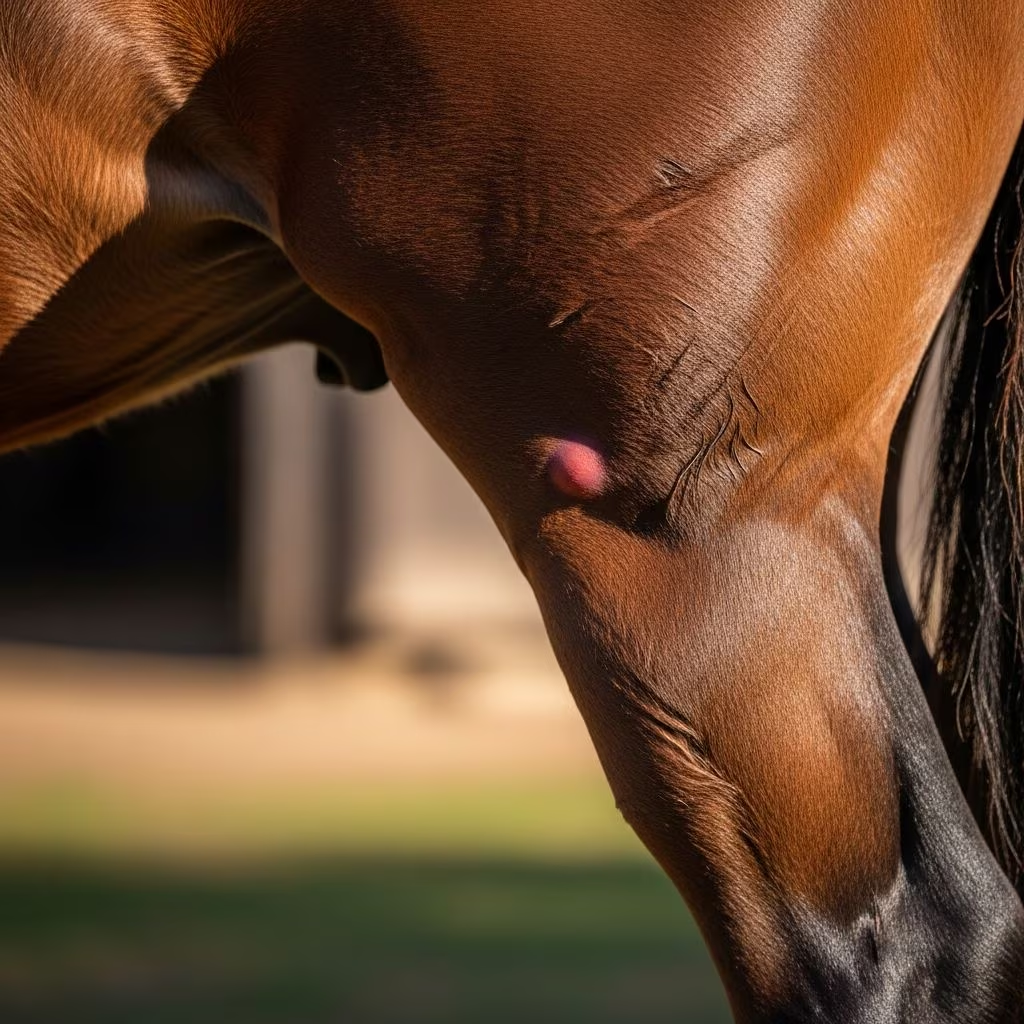
Infections of the equine musculoskeletal system represent a significant clinical challenge in veterinary medicine. These conditions, collectively known as infectious myopathies, occur when pathogenic microorganisms invade muscle tissue, triggering inflammatory responses that compromise function and structural integrity. Unlike exertional rhabdomyolysis or metabolic disorders, infectious muscle diseases stem from direct microbial invasion or toxin production, requiring targeted antimicrobial intervention alongside supportive care. Understanding the diverse etiologies, recognition patterns, and management strategies for these conditions is essential for equine practitioners and horse owners seeking to minimize morbidity and mortality.
Understanding the Pathophysiology of Muscle Infections
Muscle tissue, despite its robust blood supply and cellular defenses, remains vulnerable to infection when introduced through traumatic wounds, injection sites, or hematogenous dissemination from systemic disease. The pathophysiological cascade begins with bacterial colonization and proliferation, which triggers local inflammatory infiltration, myofiber necrosis, and edema. As the infection progresses, bacterial toxins may be released, amplifying tissue damage and potentially triggering systemic inflammatory responses. The severity of muscle involvement depends on the virulence of the causative organism, the extent of initial inoculation, the depth of tissue penetration, and the host’s immunological status. Early recognition and intervention can halt progression and prevent the transition from localized to systemic disease manifestations.
Clostridial Bacteria and Traumatic Myonecrosis
Among the most serious infectious myopathies in horses are those caused by clostridial species, particularly following puncture wounds or intramuscular injections. These anaerobic gram-positive bacteria are capable of sporulating at wound sites, transforming into dormant spore forms that can persist in muscle tissue until conditions become favorable for growth. Once activated, clostridial organisms multiply rapidly and produce numerous exotoxins that destroy muscle fibers through enzymatic degradation of cellular components.
The clinical presentation of clostridial myonecrosis develops with alarming rapidity, often manifesting within 24 to 48 hours of the inciting injury or injection. Affected horses display localized swelling that is characteristically firm, hot, and intensely painful upon palpation. Many cases feature crepitus—an audible or palpable crackling sensation beneath the skin caused by gas production—which serves as a diagnostic hallmark. Systemic signs frequently accompany localized changes, including fever, tachycardia, tachypnea, and lameness. In severe cases, myoglobinuria (darkened urine) may be observed, indicating extensive myofiber destruction and the release of muscle proteins into the circulation.
The progression toward shock and multi-organ failure characterizes the most severe presentations. Without immediate aggressive intervention, including wide surgical debridement, high-dose antimicrobial therapy, and supportive care, outcomes are often fatal. The rapid nature of tissue destruction means that diagnostic delays significantly impact survival probability, making clinical suspicion and empirical treatment initiation critical components of case management.
Streptococcal Myositis and Immune-Mediated Complications
Streptococcus species, particularly S. equi subsp. equi, represent important bacterial pathogens capable of inducing both direct myositis and immune-mediated myopathies in horses. These gram-positive cocci characteristically colonize upper respiratory mucosa but can disseminate systemically, seeding muscle tissue and triggering complex immunological responses.
Direct bacterial invasion of muscles occurs but represents only one mechanism by which streptococci compromise equine muscle function. More commonly, streptococcal infection precipitates immune-mediated myositis (IMM), wherein the host’s adaptive immune system mounts an exaggerated response against muscle antigens, either through cross-reactivity or through formation of circulating immune complexes. This distinction carries substantial therapeutic implications, as immune-mediated disease may not respond favorably to antimicrobial agents alone and may require immunomodulatory interventions.
Horses developing streptococcal-associated myositis present with rapid-onset clinical signs including severe muscle stiffness, reluctance to move, and profound muscle pain. The distribution of atrophy typically involves epaxial muscles (those along the spine) and gluteal muscles, though the severity can be dramatic—affected horses may lose 50% of regional muscle mass within seven days. Concurrent systemic illness is common, with fever, depression, and reluctance to eat accompanying the primary myopathic manifestations.
Other Infectious Agents and Systemic Myopathies
Beyond clostridia and streptococci, multiple other infectious agents can compromise equine muscle integrity. Rickettsial organisms, particularly Anaplasma phagocytophilum transmitted by Ixodes tick species, induce myositis through intracellular replication within leukocytes and subsequent inflammatory tissue infiltration. Horses with anaplasmal myositis may present with fever, stiffness, and myalgia, accompanied by leukopenia, lymphopenia, and thrombocytopenia on laboratory assessment.
Corynebacterium pseudotuberculosis, typically associated with external abscess formation, can occasionally cause suppurative myositis with localized muscle necrosis. Similarly, equine herpesvirus-1 and influenza viruses have been documented in association with myositis, though their role may sometimes be secondary to bacterial superinfection. The diversity of potential etiologies underscores the importance of comprehensive diagnostic evaluation in horses presenting with unexplained myositis, including appropriate microbiological cultures and serological assessment.
Clinical Recognition and Diagnostic Approach
Horses with infectious myopathies present with a spectrum of clinical signs that vary based on the specific etiology, extent of involvement, and stage of disease progression. Localized myositis typically produces regional swelling, pain, heat, and occasionally drainage of purulent material. Systemic manifestations are common, particularly in cases involving hematogenous dissemination or bacterial toxin absorption. These may include fever, lethargy, anorexia, tachycardia, tachypnea, and in severe cases, signs of septic shock including depression, weak pulses, and poor peripheral perfusion.
Laboratory findings in infectious myositis characteristically demonstrate elevated muscle enzyme activity. Serum creatine kinase (CK) and aspartate aminotransferase (AST) concentrations frequently exceed normal ranges by 5- to 100-fold, reflecting ongoing myofiber necrosis. Leukocytosis is common in bacterial myositis, though specific leukocyte differential counts vary depending on the causative agent. Hyperfibrinogenemia—elevation of plasma fibrinogen concentration—frequently accompanies infectious muscle disease and indicates systemic inflammatory activation.
Definitive diagnosis requires microbiological culture from affected tissue, either obtained through needle aspiration, biopsy, or drainage. Anaerobic culture techniques are essential when clostridial infection is suspected. Muscle biopsy provides histopathological confirmation and reveals the nature of cellular infiltration—pyogenic (neutrophilic) inflammation in bacterial myositis versus mononuclear cell (lymphocytic) infiltration in immune-mediated conditions. Immunohistochemical staining can occasionally identify specific organisms or provide evidence of immune complex deposition.
Imaging modalities including ultrasonography and magnetic resonance imaging provide valuable adjunctive diagnostic information. Ultrasonography readily demonstrates localized swelling, fluid accumulation, and architectural distortion characteristic of myositis. MRI offers superior soft tissue resolution and can delineate the extent of muscle involvement, helping guide surgical planning when necessary.
Management Strategies and Treatment Considerations
Treatment of infectious myopathies must be tailored to the specific etiological agent and clinical stage of disease. For clostridial myonecrosis, immediate wide surgical debridement to remove devitalized tissue and minimize bacterial burden is essential. Concurrent systemic antimicrobial therapy should employ high-dose agents with excellent muscle penetration, typically penicillin combined with gentamicin or fluoroquinolones. Supportive care including aggressive fluid resuscitation, pain management, and monitoring for complications such as acute kidney injury are equally critical.
Horses receiving prompt medical intervention upon diagnosis demonstrate substantially improved survival rates compared to those with delayed treatment recognition. One comprehensive clinical study documented 87% survival to hospital discharge in horses receiving immediate therapeutic intervention, whereas those with delayed presentation experienced significantly worse outcomes. This emphasizes the critical importance of early diagnosis and treatment initiation.
For immune-mediated myositis associated with infectious triggers, antimicrobial therapy targeting the inciting agent must be combined with anti-inflammatory agents and sometimes immunomodulatory drugs. Corticosteroids may be beneficial in managing the excessive immune response but must be used cautiously and only after infectious causes are sufficiently addressed. Non-steroidal anti-inflammatory drugs provide analgesia and anti-inflammatory benefit without the immunosuppressive effects of corticosteroids.
Supportive care forms the foundation of treatment regardless of etiology. Provision of deep, comfortable bedding helps minimize secondary muscle trauma and aids in patient comfort. Nutritional support, including readily digestible feed and unlimited fresh water, promotes tissue healing. Monitoring of renal parameters is crucial, as myoglobinuria can precipitate acute kidney injury, a potentially fatal complication of severe myositis.
Prognostic Factors and Outcome Prediction
Several clinical and laboratory factors influence the prognosis in equine myositis. Horses presenting with concurrent fever and systemic illness demonstrate poorer outcomes compared to those with localized involvement only. The duration between disease onset and initiation of treatment strongly influences survival probability—delays of more than 48 hours substantially worsen prognosis in clostridial cases.
Interestingly, the absolute magnitude of serum muscle enzyme elevation does not appear to correlate reliably with prognosis. Horses with CK and AST values exceeding 10,000 U/L may recover well with appropriate therapy, while others with modest enzyme elevation may deteriorate. This finding suggests that factors beyond the extent of acute myofiber necrosis—such as bacterial virulence, immune status, and depth of tissue involvement—substantially influence survival probability.
Prevention and Biosecurity Considerations
Prevention strategies focus on minimizing risk of traumatic muscle injury and maintaining strict aseptic technique during intramuscular injections. Prompt cleaning and appropriate treatment of puncture wounds reduces the likelihood of clostridial sporulation and invasion. When intramuscular injections are necessary, employing sterile technique, minimizing needle track trauma, and rotating injection sites across multiple muscle groups helps reduce myositis risk.
Vaccination against streptococcal infection may reduce the likelihood of respiratory infection and subsequent immune-mediated myositis, though the protective efficacy of currently available vaccines remains variable. Tick control programs are important in regions where Anaplasma transmission is prevalent. Prompt treatment of systemic infections may prevent hematogenous dissemination to muscle tissue.
Recovery and Rehabilitation
Horses recovering from severe myositis require extended convalescent periods before return to exercise. Gradual reintroduction of activity, beginning with hand-walking and progressively advancing intensity over weeks, allows regenerating muscle fibers to strengthen without risking re-injury. Persistent muscle atrophy may require months to fully resolve, and some horses may demonstrate residual weakness or stiffness for extended periods. Physical rehabilitation protocols, including controlled exercise and occasionally therapeutic interventions such as massage or hydrotherapy, may accelerate functional recovery.
Key Clinical Takeaways
- Infectious myopathies in horses encompass diverse etiologies requiring specific diagnostic and therapeutic approaches
- Clostridial myonecrosis represents a surgical emergency requiring immediate debridement and aggressive antimicrobial therapy
- Streptococcal infection frequently triggers immune-mediated myositis requiring both antimicrobial and anti-inflammatory management
- Early recognition and treatment initiation substantially improve survival and functional outcomes
- Supportive care, monitoring for complications, and extended rehabilitation are essential components of comprehensive myositis management
References
- Clinical Implications and Hospital Outcome of Immune-Mediated Myositis in Horses — PubMed Central/National Center for Biotechnology Information. 2017. https://pmc.ncbi.nlm.nih.gov/articles/PMC5259621/
- Causes of Immune-Mediated Myopathies in Horses — Equine Management. https://equimanagement.com/research-medical/disease/causes-of-immune-mediated-myopathies-in-horses/
- Immune-Mediated Myositis / Nonexertional Rhabdomyolysis — UC Davis School of Veterinary Medicine. https://ceh.vetmed.ucdavis.edu/health-topics/immune-mediated-myositis
- Muscle Disorders in Horses — Merck Veterinary Manual. https://www.merckvetmanual.com/horse-owners/bone-joint-and-muscle-disorders-in-horses/muscle-disorders-in-horses
- Non-exertional myopathies (Proceedings) — DVM360. https://www.dvm360.com/view/non-exertional-myopathies-proceedings
- Infectious Myopathies in Horses – Musculoskeletal System — Merck Veterinary Manual. https://www.merckvetmanual.com/musculoskeletal-system/myopathies-in-horses/infectious-myopathies-in-horses
- Myopathies associated with Streptococcus equi equi infection — British Equine Veterinary Association. https://beva.onlinelibrary.wiley.com/doi/10.1111/eve.13966



