

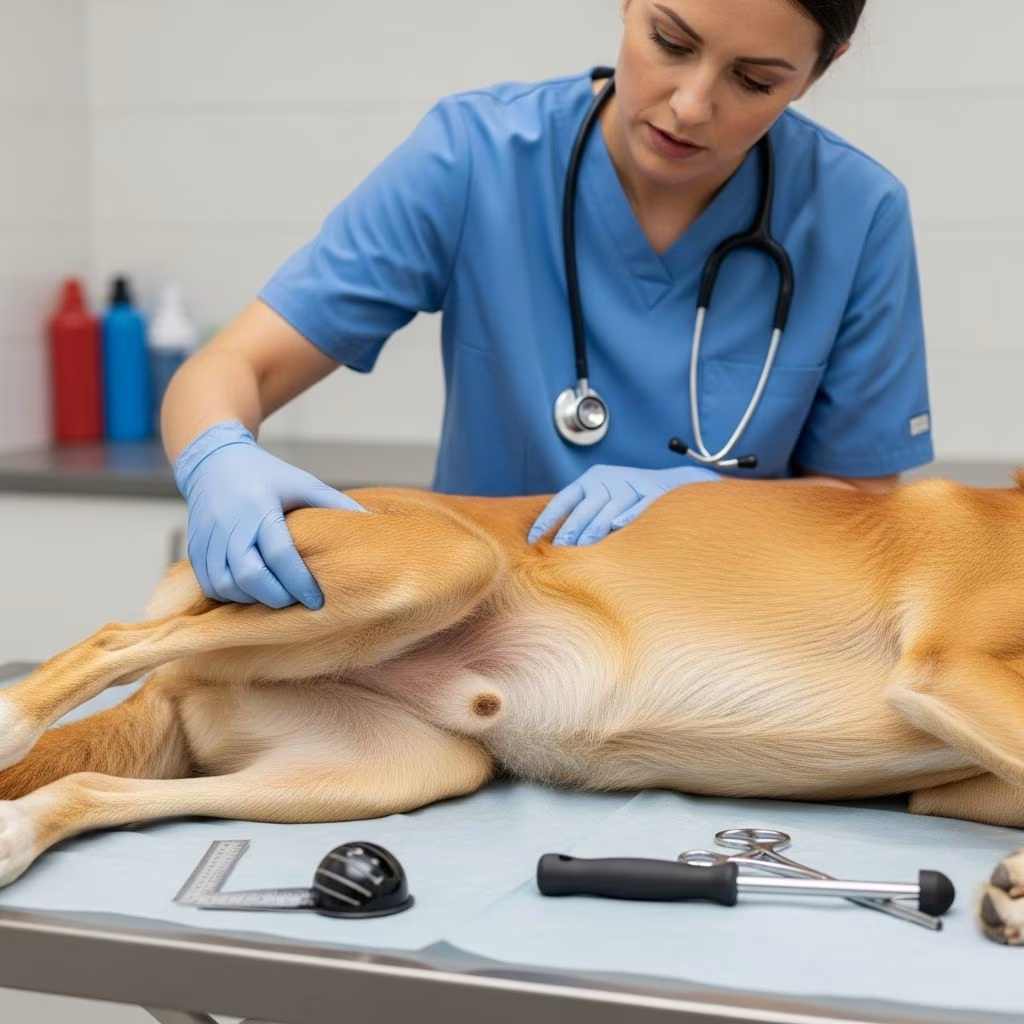
Muscle hypertonicity refers to excessive muscle tension where resting muscles remain firm and resist relaxation, leading to stiffness, cramps, or spasms in dogs. This condition disrupts normal movement, causing discomfort and potential injury if untreated.
What Causes Excessive Muscle Tension in Canines?
Several factors contribute to hypertonicity, ranging from genetic predispositions to environmental triggers. Inherited disorders dominate in specific breeds, while secondary causes arise from injuries or systemic issues.
- Genetic Conditions: Breeds like Scottish Terriers suffer from Scotty cramp, an autosomal recessive disorder involving serotonin defects that provoke hypertonicity after excitement or exercise.
- Breed Predispositions: Terriers, Cavalier King Charles Spaniels, and Springer Spaniels show higher incidence due to neuronal or ion channel defects.
- Acquired Triggers: Overexertion, trauma, joint issues like hip dysplasia, or neurological problems can induce secondary hypertonicity by overstimulating muscle spindles.
- Immune-Mediated Issues: Stiff Dog Syndrome (SDS) involves GABA reduction from GAD antibodies, causing continuous agonist-antagonist contractions.
In many cases, no structural muscle or nerve damage appears, pointing to functional neurotransmitter or reflex arc disruptions.
Recognizing the Signs of Muscle Rigidity
Dogs with hypertonicity often exhibit subtle to severe symptoms, worsening with activity or stress. Early detection prevents complications like hyperthermia.
| Symptom | Description | Common Triggers |
|---|---|---|
| Stiff Gait | Rigid limbs, short strides, hunched posture | Exercise, excitement |
| Muscle Spasms | Involuntary twitching or rippling | Stress, cold weather |
| Limb Rigidity | Inability to flex, collapse without unconsciousness | Overexertion |
| Exercise Intolerance | Collapse, hypermetric gait, somersaulting | Prolonged activity |
| Pain Indicators | Lameness, tenderness, abdominal borborygmi | Intestinal involvement |
Symptoms typically resolve in 10-60 minutes but may persist for hours in stiffness.
Common Disorders Linked to Hypertonicity
Scotty Cramp in Scottish Terriers
This episodic hypertonicity features arching spine and hypermetric gait post-exercise. Antiserotonin agents exacerbate it, confirming serotonin pathway involvement. Prostaglandin inhibitors worsen signs.
Stiff Dog Syndrome (SDS)
Observed in breeds like Maltese, SDS causes progressive axial and limb stiffness with hypertrophy. EMG reveals continuous motor unit activity ceasing under anesthesia, localizing to upper motor neurons.
Paroxysmal Dyskinesias and Cramping
Conditions like Canine Epileptoid Cramping Syndrome (CECS) mimic seizures with hypertonicity, ataxia, and gut cramps. Genetic markers, such as BCAN deletions in Spaniels, are under study.
Mitochondrial and Storage Myopathies
Spaniels and Sheepdogs experience exercise-induced collapse from mitochondrial defects, with elevated lactate and ragged red fibers on biopsy.
How Veterinarians Diagnose Muscle Hypertonicity
Diagnosis excludes structural diseases via targeted tests, emphasizing history and breed.
- Clinical Exam: Assess gait, reflexes, and muscle tone; note breed and triggers.
- Laboratory Tests: Rule out metabolic issues like hypocalcemia or Cushing’s.
- Electrodiagnostics: EMG detects spontaneous activity (e.g., continuous MUAPs in SDS); persists in peripheral issues but halts under anesthesia.
- Imaging and Biopsy: Normal in functional disorders; rules out disc disease or dystrophy.
- Family History: Suggests inheritance in Terriers.
Neuroanatomical localization often points to upper motor neurons or neuromuscular junctions.
Treatment Strategies for Relieving Stiffness
Management focuses on symptom control, as most cases are non-progressive.
- Acute Episodes: Rest in quiet areas; episodes self-resolve.
- Medications: Benzodiazepines (e.g., diazepam) or membrane stabilizers daily for prevention.
- Avoid Triggers: Limit excitement; antiserotonin avoidance in Scotty cramp.
- Supportive Care: Physiotherapy, massage to reduce secondary tightness from fascia.
- Immunosuppressants: Steroids for SDS, though response varies.
Improvement with age occurs in some Spaniels; monitor for hyperthermia risks.
Preventing Hypertonicity Through Lifestyle Adjustments
Proactive care minimizes episodes in predisposed dogs.
- Gradual exercise buildup to avoid overexertion.
- Warm environments and stress reduction.
- Regular veterinary check-ups for at-risk breeds.
- Weight management to ease joint strain.
Prognosis and Long-Term Outlook
Most hypertonicity syndromes are benign and non-fatal, with good control via meds. Progression is rare, but SDS may worsen slowly, impacting quality of life. Persistent contractions risk heat exhaustion, demanding vigilance.
Frequently Asked Questions (FAQs)
Is muscle hypertonicity painful for dogs?
Yes, it often causes discomfort from cramping, lameness, and reduced mobility, though dogs can’t verbalize pain.
Can all dogs develop this condition?
Primarily genetic in Terriers and Spaniels, but any dog faces risk from trauma or overuse.
How quickly do symptoms appear?
Episodically after triggers, lasting minutes to hours; chronic forms progress gradually.
Is surgery ever needed?
Rarely; reserved for concurrent disc disease, not primary hypertonicity.
Can diet help manage it?
No direct link, but balanced nutrition supports muscle health; avoid exacerbating factors.
Key Takeaways for Dog Owners
Monitor for stiffness post-exercise, especially in predisposed breeds. Prompt vet consultation with EMG can differentiate causes, enabling targeted therapy. With management, affected dogs lead active lives.
References
- Muscular hypertonicity in Dogs (Canis) — Vetlexicon. Accessed 2026. https://www.vetlexicon.com/canis/internal-medicine/articles/muscular-hypertonicity/
- Case Report: Suspected “stiff dog syndrome” in a Maltese dog — Frontiers in Veterinary Science. 2025. https://www.frontiersin.org/journals/veterinary-science/articles/10.3389/fvets.2025.1613131/full
- Neuromuscular Disorders in Animals — Merck Veterinary Manual. Accessed 2026. https://www.merckvetmanual.com/nervous-system/congenital-and-inherited-anomalies-of-the-nervous-system/neuromuscular-disorders-in-animals



