

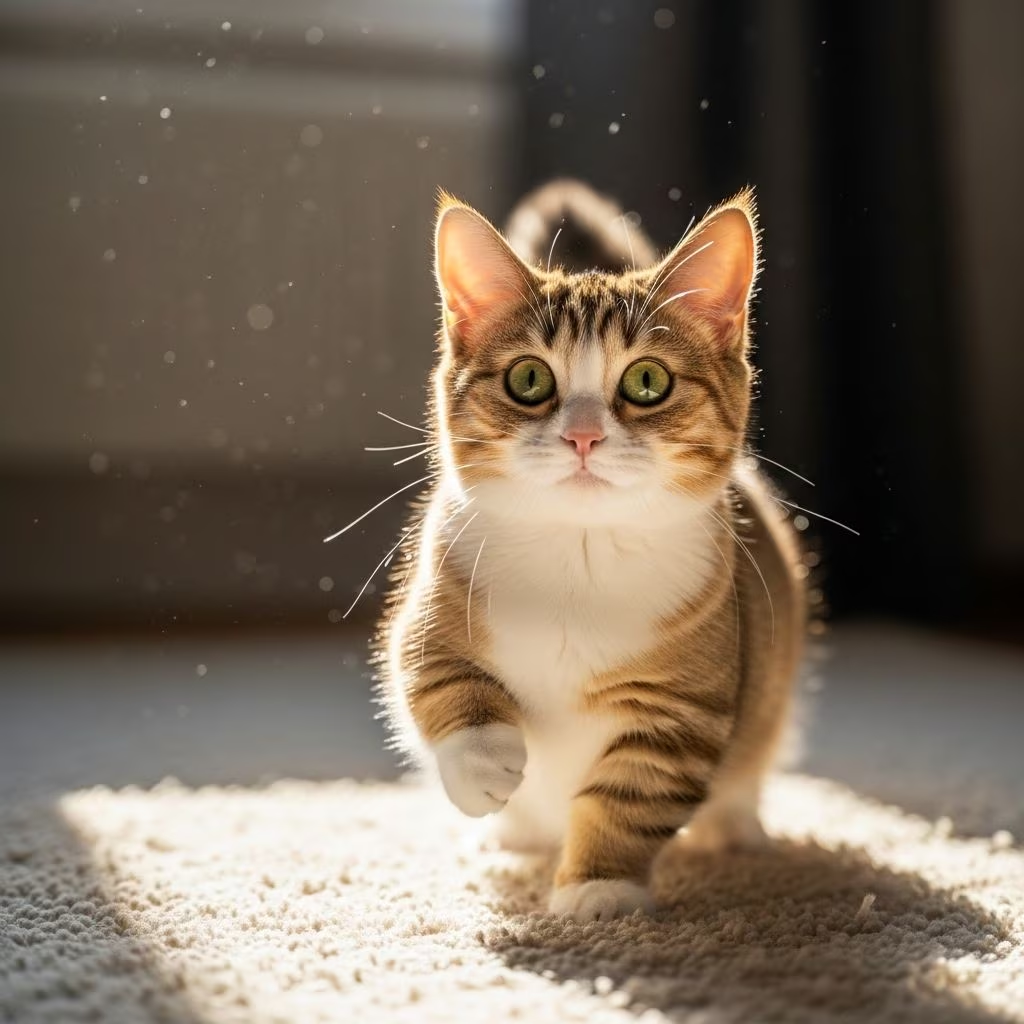
The Munchkin cat stands out in the feline world thanks to its remarkably short legs, a trait stemming from a spontaneous genetic mutation that gives these cats a perpetually youthful, low-to-the-ground silhouette. Despite their unique physique, Munchkins exhibit the agility, curiosity, and affection typical of healthy domestic cats, making them beloved companions for many households.
Origins and Development of the Breed
Munchkin cats trace their roots to a natural genetic variation rather than selective breeding for dwarfism seen in some dog breeds. The short-leg gene, known as the Munchkin gene, appeared spontaneously in domestic cats and has been documented in various parts of the world. Breeders began standardizing the trait in the 1980s and 1990s, working under organizations like The International Cat Association (TICA) to establish the breed. This mutation affects only the long bones in the legs, leaving the spine and other structures unaffected, which distinguishes Munchkins from breeds with more comprehensive skeletal changes.
Early foundation cats, such as a black tabby female named Blackberry found in Louisiana in 1983, passed on the dominant short-leg gene to her litters, sparking interest among enthusiasts. Outcrossing to other domestic shorthairs and longhairs helped build a diverse gene pool, ensuring robustness. Today, Munchkins are recognized in both short and long coat varieties, with TICA overseeing genetic standards to promote health.
Distinctive Physical Features
What truly defines the Munchkin is its leg length: about 3 inches shorter than average cats, resulting in a height of 5-7 inches at the shoulder. This gives them a compact, muscular build with a long body, well-rounded chest, and a tail that matches their body length, often held upright during movement. Their wedge-shaped head features walnut-shaped eyes in various colors—blue, green, copper, or odd-eyed—and medium-sized, upright ears with rounded tips.
Coat options are versatile: shorthaired Munchkins sport a plush, resilient medium-length fur, while longhaired ones have silky, semi-long coats. Colors and patterns abound, from solids and tabbies to calicos, bicolors, and pointed varieties, allowing for endless visual appeal.
| Physical Trait | Details |
|---|---|
| Height | 18-20 cm (7-8 inches) |
| Weight | Males: 3-4.5 kg; Females: 2.5-3.5 kg |
| Leg Length | Shortened by genetic mutation |
| Coat Types | Short plush or long silky; all colors/patterns |
| Build | Compact, sturdy, low-slung |
This table summarizes key metrics, highlighting their small-to-medium size and proportional design.
Personality and Behavioral Traits
Munchkins burst with kitten-like energy that persists into adulthood, blending playfulness, intelligence, and sociability. They are outgoing explorers who love chasing toys, retrieving objects, and even walking on leashes, showcasing their adaptability and smarts. Confident and people-oriented, they thrive on interaction, often following owners room-to-room or standing on hind legs like kangaroos to survey their surroundings.
- Playful Nature: Excel at games like fetch and hide-and-seek, responding to interactive toys and gentle training.
- Affectionate: Form deep bonds, seeking laps and attention without being overly demanding.
- Social: Moderate vocalizers who chirp softly for engagement, not excessive meowing.
- Curious: Investigate every nook, sliding under furniture with ease due to their low stature.
These traits make Munchkins ideal for active lifestyles, though they appreciate daily play sessions to channel their energy.
Living with Other Pets and Children
Munchkins’ friendly disposition suits multi-pet homes and families. They generally coexist harmoniously with other cats, especially when introduced gradually, thanks to their non-aggressive curiosity. Dog-friendly varieties pair well with gentle, cat-socialized canines, often keeping pace during chases.
With children, their patient, adaptable nature shines; they tolerate gentle play but benefit from teaching kids proper handling to avoid stress from their low build. Supervision ensures safe interactions, as with any pet.
- Compatible with calm dogs and fellow felines.
- Engaging playmates for respectful kids.
- Monitor introductions to respect natural instincts.
Exercise and Enrichment Needs
Don’t underestimate Munchkins’ athleticism—their short legs enhance maneuverability, allowing swift runs, nimble turns, and hops onto accessible surfaces. They may not leap to high shelves like longer-legged cats, but creative paths and lower perches suit them perfectly.
Daily interactive play—laser pointers, feather wands, or puzzle feeders—keeps them mentally sharp and physically fit. Provide scratching posts, tunnels, and window perches for self-entertainment. Apartments work well due to their size, but enrich indoor spaces to curb boredom.
Grooming and Daily Maintenance
Low-maintenance coats require weekly brushing to manage shedding and distribute oils, more frequently for longhairs. Dental care, nail trims every 2-3 weeks, and occasional baths suffice. Their tidy habits make litter training straightforward.
Feed high-quality, age-appropriate food portioned for their small frames to prevent obesity, which could strain joints. Fresh water and routine vet checkups round out care.
Health Considerations and Lifespan
Generally robust with a 12-15 year lifespan, Munchkins carry risks tied to their genetics: potential lordosis (spine curvature), pectus excavatum (chest deformity), or joint issues like osteoarthritis, though not universal. TICA research affirms no inherent debilitation when bred responsibly, with no elevated arthritis beyond age norms.
Hybrids may need extra screening, but purebred Munchkins from ethical breeders fare well. Monitor mobility, maintain ideal weight, and provide joint supplements if advised by vets.
| Health Aspect | Notes |
|---|---|
| Lifespan | 12-15 years |
| Common Concerns | Spinal/joint issues from mutation |
| Preventive Care | Weight control, regular vet exams |
| Genetic Testing | Recommended for breeders |
Nutrition and Diet Recommendations
A balanced diet supports their active lives: high-protein kibble or wet food tailored to small breeds. Divide meals into 2-3 servings to mimic natural eating patterns and aid digestion. Avoid overfeeding; aim for lean body condition to protect legs.
- Prioritize omega-3s for joint health.
- Incorporate wet food for hydration.
- Treats under 10% of calories.
Finding and Selecting a Munchkin Kitten
Choose reputable breeders adhering to TICA standards, prioritizing health testing and ethical practices. Rescues occasionally have Munchkins or mixes. Evaluate parents’ health, temperament, and mobility. Kittens should be socialized, vaccinated, and dewormed by 12 weeks.
Adoption fees range based on pedigree; expect questions on your home setup to ensure suitability.
Common Myths and Misconceptions
Myth: Munchkins suffer constant pain or immobility. Fact: Responsible breeding yields agile cats without disproportionate issues. Myth: They’re lap cats only. Fact: Playful athletes needing stimulation.
FAQ
Are Munchkin cats good for apartments?
Yes, their size and moderate energy suit small spaces with ample play opportunities.
Do Munchkins get along with dogs?
Often yes, with proper introductions; their sociable nature helps.
Is the short-leg gene harmful?
It carries risks but produces healthy cats when managed; no spine issues like in dogs.
How much exercise do they need?
15-20 minutes daily of interactive play suffices.
What’s the grooming like?
Weekly brushing; low shed overall.
References
- Munchkin Cat Breed: Personality, Traits, and Facts — Bow Wow Meow Pets. 2023. https://bowwowinsurance.com.au/cats/cat-breeds/munchkin-cat/
- Munchkin Facts – Cat Breeds — Wisdom Panel. 2024. https://www.wisdompanel.com/en-us/cat-breeds/munchkin
- Munchkin Cat Breed Profile — Litter-Robot. 2023. https://www.litter-robot.com/blog/munchkin-cat/
- Munchkin — The International Cat Association (TICA). 2024. https://tica.org/breed/munchkin/
- Munchkin Cat Breed Information — Purina UK. 2023. https://www.purina.co.uk/find-a-pet/cat-breeds/munchkin
- Munchkin Cat Breed Health and Care — PetMD. 2024. https://www.petmd.com/cat/breeds/munchkin



