

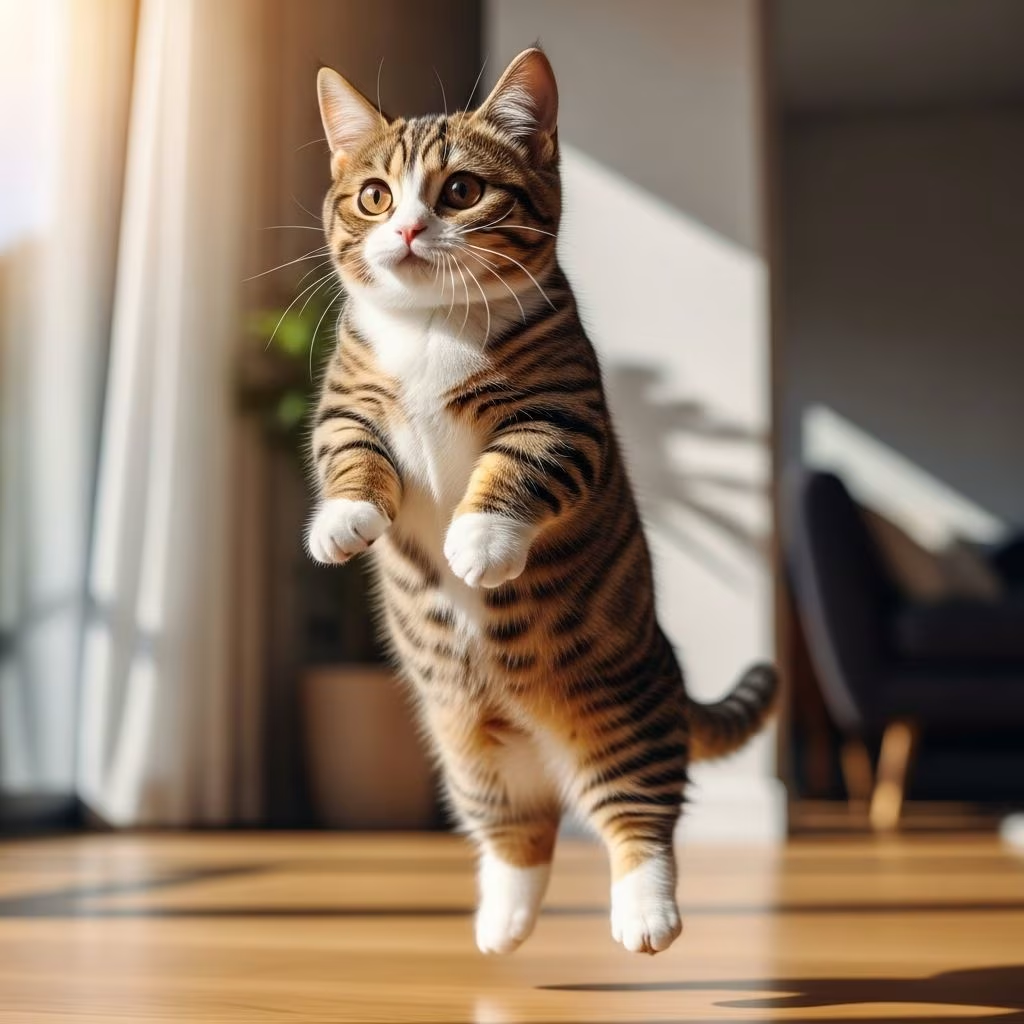
Munchkin cats possess short legs due to a genetic mutation, yet they demonstrate impressive agility, including the ability to jump onto surfaces through creative methods, run swiftly, and engage in playful activities comparable to other domestic cats.
The Distinctive Genetics Behind Short Legs
The Munchkin breed originated from a spontaneous autosomal dominant mutation affecting the long bones in the legs, resulting in legs about three inches shorter than average. This chondrodysplasia shortens the limbs without impacting the spine’s flexibility or form, distinguishing it from issues in dwarfed dog breeds. Males typically weigh 6-9 pounds and females 4-8 pounds, with a medium body type and plush coat available in short or long varieties across all colors and patterns.
Breeding programs outcross Munchkins with domestic cats to maintain health, as the mutation can occur naturally in any cat population. Only one copy of the gene is needed for short legs, which are reliably passed to offspring. Reputable breeders avoid hybrids prone to issues, focusing on pedigreed lines validated free of debilitating linked genes.
Agility and Movement: Can They Really Jump?
Despite their low-to-the-ground stance, Munchkins exhibit remarkable mobility. They run at high speeds akin to squirrels, navigate sharp turns using their elongated bodies (up to 18 inches long), and slide under furniture effortlessly. While a single leap from floor to countertop may elude them, these cats cleverly climb in stages, hopping onto intermediate surfaces to reach high spots.
Owners report Munchkins accessing elevated areas like vanities, stealing shiny objects in the process—a trait earning them the ‘magpie’ nickname for hoarding small items. Their intelligence shines in games of fetch, leash walking, and bunny-like standing on hind legs for better views, proving short legs do not hinder exploration or speed.
- Swift runners capable of matching children or dogs in play chases.
- Proficient at low maneuvers, slipping under obstacles without pausing.
- Demonstrate jumping via multi-step paths rather than vertical bounds.
- Highly playful, batting toys and entertaining themselves or owners.
Personality Traits That Define the Breed
Munchkins are sociable, spirited extroverts craving interaction. They bond deeply with families, follow owners room-to-room, and thrive with companions like dogs or other cats if left alone often. Curious explorers, they investigate every nook, often sitting upright like rabbits to survey surroundings.
These ‘sausage cats’ retain kitten-like energy lifelong, loving toys, games, and human involvement. Not overly vocal, they communicate dependently yet calmly suit indoor homes with weekly grooming needs. Though playful with kids, their small size and energy make them better for experienced owners in quieter settings rather than boisterous families.
| Trait | Description |
|---|---|
| Sociability | Outgoing with people, pets, and children; seeks constant company. |
| Playfulness | Active, toy-obsessed, excels at fetch and chasing. |
| Intelligence | Quick learners for tricks, leashes, and problem-solving. |
| Grooming | Medium plush coat; brush weekly for short hair, more for long. |
Health Considerations and Potential Risks
While many Munchkins live healthy lives without breed-specific testing, the short-leg mutation elevates risks for conditions like lordosis (spinal curvature) and pectus excavatum, a congenital chest deformity compressing the heart and lungs in severe cases. Radiography diagnoses osteoarthritis, more prevalent due to altered activity from shortened limbs.
Mild pectus excavatum may be asymptomatic, but moderate to severe instances require surgery to prevent cardiac or respiratory distress. Unlike other breeds, Munchkins show no heightened arthritis proneness in spine or mobility with age when from healthy lines, per long-term research. Some cat associations reject recognition over ethical concerns about breeding for physical traits.
- Monitor for hollow chest or breathing issues post-growth.
- Choose ethical breeders emphasizing outcrosses for vigor.
- Regular vet checks catch joint problems early via X-rays.
Optimal Care Environment and Daily Needs
Create a Munchkin-friendly home with low-entry litter boxes, ramps to furniture, and secure high shelves to curb risky climbs. Interactive toys, scratching posts, and puzzle feeders match their smarts and energy. Feed high-quality diets supporting small frames (4-9 lbs), providing fresh water and dental care routines.
Indoor living suits their curious nature, preventing escapes under fences. Socialize early for harmony with multi-pet homes, and offer calm spaces amid play sessions. Weekly brushing prevents matting, especially for longhairs.
Training Munchkins for Fun and Safety
Capitalize on their dog-like traits with positive reinforcement for litter use, leash etiquette, and fetch. Teach boundaries to deter counter thieving, using deterrents and ample toys. Their adaptability makes them responsive to clicker training, enhancing bonds.
Pros and Cons of Owning a Munchkin
| Pros | Cons |
|---|---|
| Endlessly entertaining and affectionate | Potential health vulnerabilities like pectus excavatum. |
| Compact size for apartments | May require companions if owners are absent. |
| Intelligent and trainable | Controversy in some cat registries. |
| Low shedding with grooming | Not always suited for very active family chaos. |
Frequently Asked Questions (FAQs)
Do Munchkin cats suffer from their short legs?
Ethical breeding minimizes issues; they move normally without increased arthritis beyond monitoring, though risks like pectus excavatum exist.
Are Munchkins good with children and dogs?
Yes, their playful energy matches kids and dogs well, provided supervision for their small size.
How high can Munchkin cats jump?
Not in single high leaps, but they scale heights stepwise, accessing counters and more via clever paths.
What’s the lifespan of a Munchkin cat?
Typically 12-15 years, comparable to domestic cats, with proper care.
Should I get pet insurance for a Munchkin?
Recommended due to genetic risks, covering potential orthopedic needs.
References
- Munchkin Cat Breed Information — Purina UK. Accessed 2026. https://www.purina.co.uk/find-a-pet/cat-breeds/munchkin
- Munchkin – TICA — The International Cat Association. Accessed 2026. https://tica.org/breed/munchkin/
- Munchkin Cat Personality: How Do Munchkin Cats Act? — Litter-Robot. Accessed 2026. https://www.litter-robot.com/blog/munchkin-cat-personality/
- Munchkin Cat Breed Health and Care — PetMD. Accessed 2026. https://www.petmd.com/cat/breeds/munchkin
- Munchkin cat — Wikipedia. Accessed 2026. https://en.wikipedia.org/wiki/Munchkin_cat



