

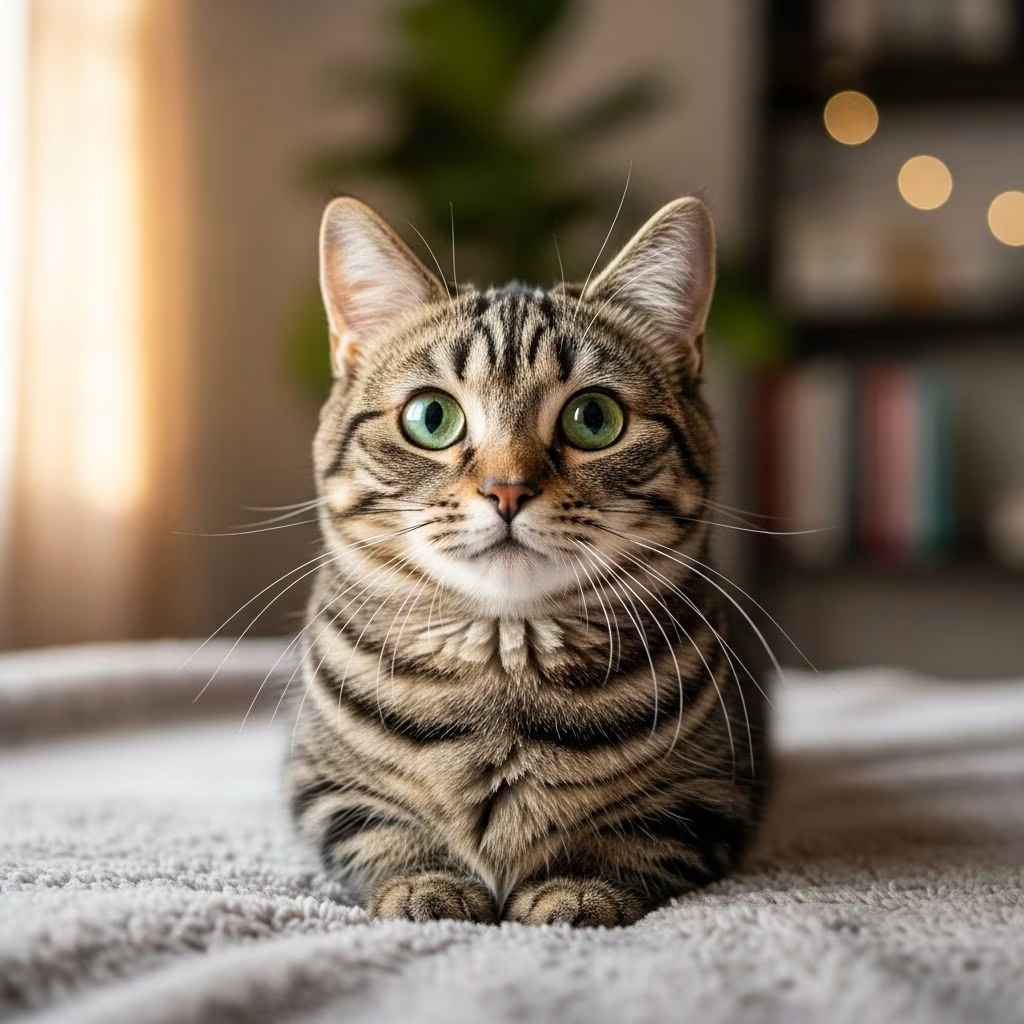
Munchkin cats captivate with their unusually short legs and boundless energy, resembling tiny dachshunds in feline form. This breed stems from a spontaneous genetic variation that shortens limb bones, creating a low-to-the-ground profile without altering their domestic cat essence.
Origins and Development of the Breed
The Munchkin cat’s story begins in the 1940s, with early records of short-legged felines appearing sporadically. A notable black tabby female named Blackberry in 1944 birthed kittens carrying the trait, but breeding efforts gained momentum in the 1980s. Breeders selectively paired these cats with standard domestic shorthairs to stabilize the mutation while preserving vitality.
By 1991, The International Cat Association recognized Munchkins as a breed, though others like The Cat Fanciers’ Association remain cautious due to welfare debates. The name draws from the diminutive inhabitants of L. Frank Baum’s Oz books, fitting their compact build. Today, Munchkins blend the mutation with diverse outcrosses like Persians or Siamese, yielding varied appearances.
- Spontaneous mutation first noted mid-20th century
- Modern breeding standardized in 1980s
- Recognition varies by registry amid controversy
Distinctive Physical Features
Munchkins measure small to medium, spanning 18 inches long with weights of 4-9 pounds for females and 6-9 for males. Their hallmark is legs 3 inches shorter than average, classifying into rug-hugger (ultra-short), super-short, or standard short types. Hind legs slightly outpace front ones, fostering a subtle haunch rise and rolling gait.
Coats vary: short, plush, or long, silky in all hues—solids, tabs, points, calicos. Eyes match coat patterns, adding uniqueness. They perch prairie-dog style on hind legs, aiding curiosity without high jumps, though some manage modest leaps.
| Feature | Description | Variations |
|---|---|---|
| Leg Length | Shortened by chondrodysplasia gene | Rug-hugger, super-short, standard |
| Body Size | Small-medium, 4-9 lbs | Males larger than females |
| Coat | Short or long, plush | All colors/patterns |
| Gait | Rolling, ferret-like sprint | Hind legs slightly longer |
Vibrant Temperament and Behavior
These cats brim with playfulness, retaining kittenish zeal lifelong. Sociable and people-oriented, they crave lap time, cuddles, and interactive games. Watch them stash toys in hidden nooks or bunny-hop on hind legs to survey surroundings—a magpie-like hoarding of shiny trinkets is common.
High hunters, they pounce on strings or laser dots with ferret ferocity, thriving with puzzle feeders or companions. Affectionate yet independent, they mesh with dogs, cats, and calm kids but suit quieter homes over boisterous ones. Vocal mildly, they chirp for attention without excess.
- Endlessly playful into seniority
- Social butterflies loving multi-pet homes
- Clever hoarders and perchers
Daily Care Essentials
Groom short coats weekly, long ones bi-weekly to curb mats. Provide elevated bowls if lordosis risks arise, and ramps for furniture access given jump limits. Interactive toys channel energy; scratching posts prevent hoarding mishaps.
Diet mirrors standard cats: high-protein, portion-controlled for weight management, as stubby legs strain under excess pounds. Indoor life suits their curious but grounded nature, with litter boxes at ground level.
- Brush regularly for coat health
- Engage in daily play sessions
- Monitor weight closely
- Environment: calm, enriched indoors
Health Considerations and Lifespan
Munchkins live 12-15 years averagely, but the dominant short-leg gene doubles risks: homozygous kittens often perish in utero or neonatally from skeletal deformities. Survivors face lordosis (spine curvature), pectus excavatum (chest funneling), and amplified osteoarthritis, diagnosed via X-rays.
Vets recommend joint supplements, low-impact exercise, and annual mobility checks. Breeding bans in places like Denmark stem from these issues, prioritizing welfare over aesthetics. Outcrossing mitigates but doesn’t erase risks.
General care: spay/neuter, vaccines, flea control. Seek breeders screening for multiples; rescues offer mature, vetted options.
Bringing a Munchkin Home: Adoption Tips
Costs range $500-$2,500 from ethical breeders emphasizing health tests. Shelters occasionally list mixes. Prep with kitten-proofing, vet visits, and patience for their quirky mobility. They adapt well, rewarding with devotion.
- Verify breeder health protocols
- Consider mixes for fewer risks
- Budget for potential ortho care
Fun Facts and Munchkin Quirks
– Nicknamed “sausage cats” for dachshund vibe
– Excel at sharp turns despite short legs
– Collectibles like bottle caps obsess them
– Oz-inspired moniker since 1990s
Frequently Asked Questions
Are Munchkin cats in pain from short legs?
No evidence suggests inherent pain; many thrive actively, though OA monitoring is key.
Can Munchkins jump well?
Limited height, but they climb via rolling gait and perching.
Good with children or dogs?
Yes, sociable if supervised; prefer gentle interactions.
How to groom a long-haired Munchkin?
Daily combing prevents tangles.
What’s the Munchkin lifespan?
Typically 12-15 years with proper care.
References
- All About Munchkin Cats | ASPCA® Pet Health Insurance — ASPCA Pet Health Insurance. 2023. https://www.aspcapetinsurance.com/resources/munchkin-cat-breed/
- Munchkin Cat Breed Information | Purina UK — Purina UK. 2024. https://www.purina.co.uk/find-a-pet/cat-breeds/munchkin
- Munchkin Cat Personality: How Do Munchkin Cats Act? – Litter-Robot — Litter-Robot. 2023. https://www.litter-robot.com/blog/munchkin-cat-personality/
- Munchkin cat – Wikipedia — Wikipedia (citing primary sources). 2025-01-15. https://en.wikipedia.org/wiki/Munchkin_cat
- Munchkin | Royal Canin US — Royal Canin US. 2024. https://www.royalcanin.com/us/es-us/cats/breeds/munchkin



