

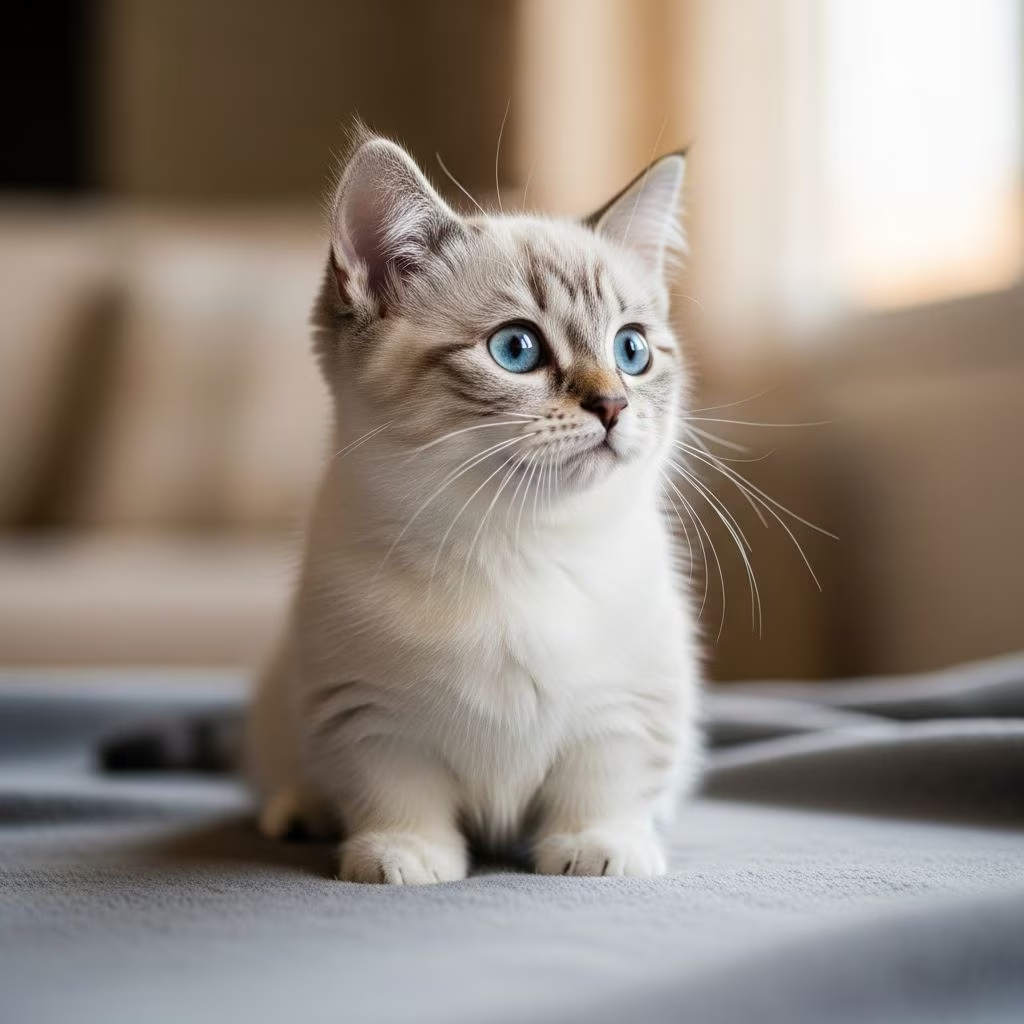
Munchkin cats captivate with their distinctive short legs, a trait stemming from a natural genetic mutation that sets them apart from typical felines. These compact companions blend curiosity and agility, making them beloved despite ongoing welfare discussions.
Origins and Development of the Breed
The story of Munchkin cats traces back to the 1980s in Louisiana, where a music teacher named Sandra Hochenedel rescued a pregnant stray cat called Blackberry hiding under a truck. Blackberry delivered a litter where roughly half the kittens exhibited unusually short legs, sparking the breed’s foundation.
Hochenedel retained Blackberry and passed a short-legged male kitten named Toulouse to her friend Kay LaFrance. Breeding Toulouse back to Blackberry produced more short-legged offspring, forming the core lineage for modern Munchkins. This accidental discovery revived earlier sightings of similar cats, noted in 1940s Britain and other regions, though wartime disruptions had diminished those populations.
By 1991, breeders Laurie and Robert Bobskill submitted the Munchkin for recognition to The International Cat Association (TICA), entering its new breed program amid controversy. TICA granted full championship status in 2003, though many organizations like the Governing Council of the Cat Fancy (GCCF) and Fédération Internationale Féline rejected it over welfare issues. Today, breeding remains banned in certain countries due to health risks associated with the dwarfism gene.
Understanding the Genetics Behind Short Legs
The Munchkin’s hallmark feature results from an autosomal dominant mutation affecting limb bone growth, similar to achondroplasia in humans. A single copy of the mutated gene (M) produces short legs, while two copies (MM) prove lethal, causing embryonic death and smaller litter sizes.
- Heterozygous (Mm): Short legs, viable kittens.
- Homozygous normal (mm): Standard leg length, no mutation expression.
- Homozygous mutant (MM): Non-viable, explains reduced litter counts.
Breeding two Munchkins yields about 50% short-legged kittens, 25% normal-legged carriers, and 25% losses from MM combinations. Crossing with non-Munchkins produces 50% short-legged offspring if the Munchkin parent carries the gene. This genetics allows diverse appearances but fuels ethical debates on perpetuating potential health drawbacks.
Physical Appearance and Size Standards
Beyond short legs (1-3 inches long), Munchkins resemble domestic shorthairs or longhairs with proportional bodies. TICA standards specify a wedge-shaped head, rounded contours, walnut-shaped eyes, rounded chest, and firm musculature, avoiding a ‘miniature’ look.
| Feature | Description |
|---|---|
| Legs | Evenly spaced, front slightly shorter than hind; mild curve allowed, extreme bowing disqualified. |
| Body | Medium-sized, muscular; males 6-9 lbs, females 4-8 lbs. |
| Coat | Shorthair or longhair varieties; all colors/patterns permitted. |
| Head/Eyes | Wedge with rounded edges; large, walnut-shaped eyes. |
These traits ensure Munchkins maintain functionality, with hind legs often enabling higher jumps than expected.
Temperament and Daily Behavior
Munchkins shine in personality: playful, social, intelligent, and affectionate without excessive demandiness. They thrive in families, often bonding with children and dogs, and exhibit hound-like curiosity, chasing toys or investigating cabinets.
Despite leg length, they run swiftly (up to 30% leg reduction doesn’t hinder speed), climb selectively, and pounce adeptly. Owners report no mobility limitations, countering critics, though vertical access like ramps aids aging cats. Their adaptability suits apartments, provided enrichment prevents boredom.
Grooming, Nutrition, and Routine Care
Care mirrors standard cats, tailored to coat type. Shorthairs need weekly brushing; longhairs daily to manage shedding. Dental hygiene, nail trims biweekly, and ear cleaning prevent issues.
Feed high-quality, portion-controlled diet supporting muscle maintenance; obesity risks higher due to lower activity from leg constraints. Fresh water, litter training (they excel), and annual vet checks essential. Average lifespan: 12-15 years with proper care.
- Exercise: Interactive toys, laser pointers for leg-friendly fun.
- Grooming Tools: Slicker brushes for longhairs, rubber mitts for shorthairs.
- Diet Tips: 200-300 kcal/day, split meals to avoid weight gain.
Health Considerations and Common Concerns
The dominant mutation correlates with elevated risks: lordosis (spinal curvature), pectus excavatum (sunken chest), and osteoarthritis, potentially worsening with age. Studies link dwarfism to joint stress, though many Munchkins live normally.
Vets recommend screening breeding cats via X-rays for skeletal issues. Non-selective breeding amplifies problems; ethical breeders outcross to dilute risks. Proponents cite healthy populations, but bans in places like Denmark reflect caution.
Related Breeds and Hybrids
Munchkin genetics birthed hybrids blending short legs with other traits.
| Hybrid | Parent Breeds | Key Traits |
|---|---|---|
| Skookum | Munchkin x LaPerm | Short legs, curly coat. |
| Minskin/Bambino | Munchkin x Sphynx | Hairless, short-legged. |
| Lambkin | Munchkin x Selkirk Rex | Curly fur, compact build. |
| Minuet (Napoleon) | Munchkin x Persian/Exotic | Short legs, flat face. |
| Kinkalow | Munchkin x American Curl | Curled ears, stubby legs. |
| Scottish Kilt | Munchkin x Scottish Fold | Folded ears, short stature. |
These expand options but inherit similar health debates.
Pros and Cons of Owning a Munchkin
- Pros: Endearing looks, friendly demeanor, low shedding (shorthairs), adaptable to small spaces.
- Cons: Health vulnerabilities, breeding ethics, higher vet costs, adoption challenges due to controversy.
Ideal for active households valuing personality over convention.
Frequently Asked Questions
Are Munchkin cats in pain due to short legs?
No evidence suggests chronic pain; most navigate normally, though monitoring joints is advised.
Can Munchkins jump high?
They jump lower than average but excel horizontally; provide steps for high spots.
Is breeding Munchkins ethical?
Debated: TICA approves, others ban it citing welfare.
How do I choose a healthy Munchkin kitten?
Seek TICA-registered breeders with health testing; prefer outcrossed lines.
Do Munchkins get along with other pets?
Yes, their sociable nature fosters harmony.
Final Thoughts for Prospective Owners
Munchkins offer joy through uniqueness and spirit, but informed ownership addresses health proactively. Research breeders, prioritize rescues, and embrace their playful essence.
References
- The Unexpected Rise of Munchkin Cats — Purebred Kitties. 2023. https://purebredkitties.com/blogs/munchkin-cat/the-unexpected-rise-of-munchkin-cats
- Munchkin cat — Wikipedia. 2026-01-28. https://en.wikipedia.org/wiki/Munchkin_cat
- Munchkin Cat Breed Profile — Litter-Robot. 2024. https://www.litter-robot.com/blog/munchkin-cat/
- Munchkin Cats – A Comprehensive Look — The Cat Site. 2025. https://thecatsite.com/c/munchkin-cats/
- Munchkin Facts — Wisdom Panel. 2024. https://www.wisdompanel.com/en-us/cat-breeds/munchkin
- Meet the Munchkin — Live Oak Veterinary Hospital. 2017-10-15. https://liveoakvet.com/2017/10/15/meet-the-munchkin/



