

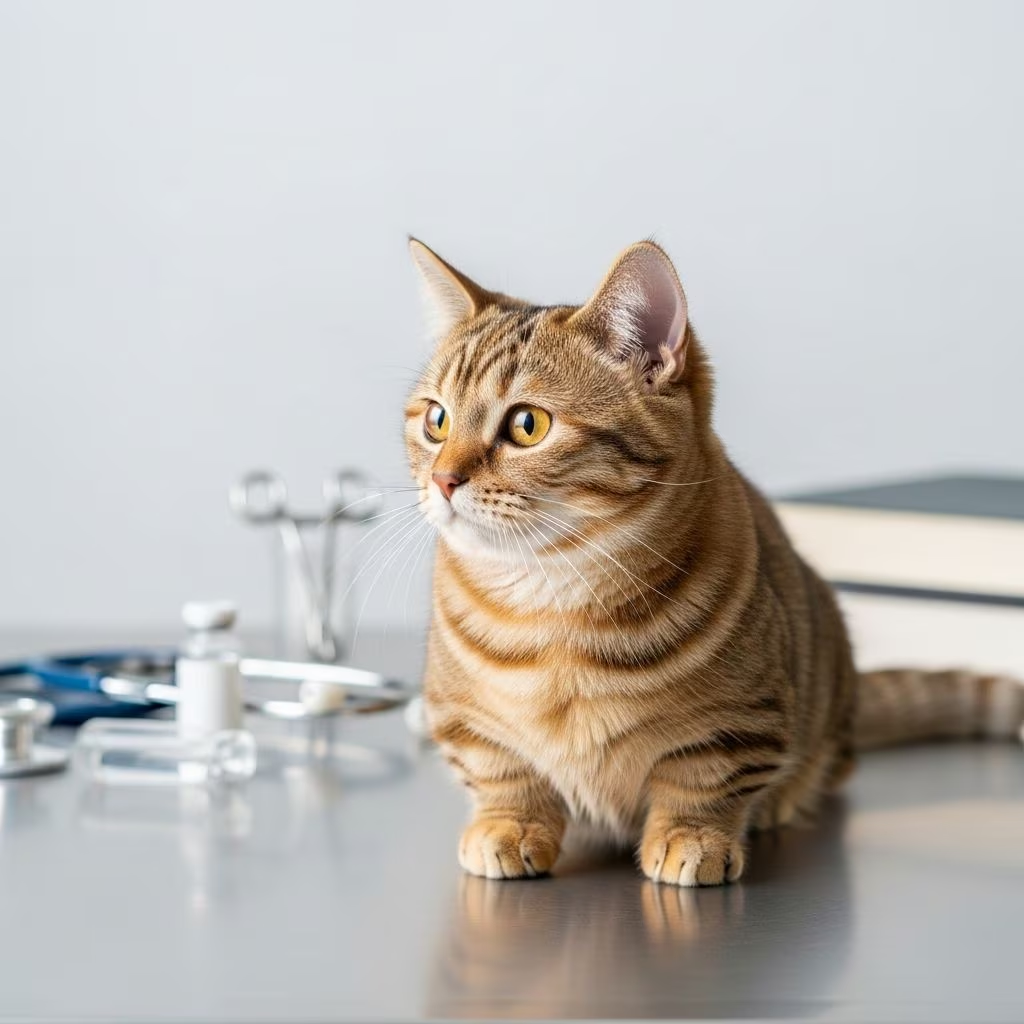
The Munchkin cat, beloved for its endearing short legs and kitten-like charm, faces distinct health vulnerabilities stemming from its unique genetic makeup. While these cats bring joy with their playful energy and affectionate nature, prospective and current owners must prioritize awareness of breed-specific conditions to support optimal well-being.
Understanding the Genetic Foundation of Munchkin Cats
Munchkin cats owe their signature short legs to a naturally occurring dominant mutation in the M gene, which affects limb bone development. This trait, first documented in the 1980s, results in legs about 3 inches shorter than average, giving them a low-slung, agile stance. Unlike achondroplastic dwarfism in dogs, this feline mutation primarily shortens long bones in the legs while preserving overall body proportion, but it carries inherent risks when homozygous (MM genotype).
Heterozygous Munchkins (Mm) typically live 12-15 years with proper care, displaying high energy, intelligence, and sociability suitable for families. However, breeding two Munchkins can produce homozygous offspring with severe skeletal deformities, often leading to early euthanasia. Reputable breeders avoid this by pairing with long-legged cats, emphasizing ethical practices.
Primary Skeletal and Mobility Disorders
The most pressing health concerns revolve around the spine, joints, and chest, exacerbated by the leg mutation’s impact on biomechanics.
- Lordosis: An abnormal inward spinal curvature, most evident in the lumbar region, which can compress organs and impair mobility. Symptoms include a visible swayback, reluctance to jump (despite capability), and pain during handling.
- Pectus Excavatum: A chest deformity where the sternum sinks inward, potentially restricting lung and heart function. Mild cases may be asymptomatic, but severe ones cause breathing difficulties and exercise intolerance.
- Osteoarthritis and Joint Stress: Short legs alter gait, placing extra strain on hips, elbows, and knees, accelerating cartilage wear. Owners may notice limping, stiffness after rest, or bunny-hopping movement.
These issues often manifest between 6 months and 2 years, underscoring the need for early veterinary screening via X-rays.
Secondary Health Complications and Risks
Beyond skeletal problems, Munchkins may experience related conditions due to their physique.
| Condition | Symptoms | Prevalence in Munchkins | Management |
|---|---|---|---|
| Hyperlordosis | Exaggerated spinal curve, waddling gait | Moderate (10-20%) | Supportive care, weight control |
| Pectus Carinatum | Protruding sternum | Low | Surgical correction if severe |
| Joint Dysplasia | Lameness, swelling | High due to stress | Supplements, physio |
Obesity amplifies these risks; Munchkins’ playful demeanor belies their small frame (4-9 lbs), making portion control vital. Additionally, their low stature increases injury risk from furniture falls or rough play, and pica (eating non-food items) can occur from boredom.
Recognizing Early Warning Signs
Vigilance is key. Monitor for:
- Changes in posture or gait, such as arching back or dragging hind legs.
- Reduced activity, vocalizing in pain, or avoiding stairs/high perches.
- Breathing irregularities, coughing, or lethargy post-exertion.
- Swollen joints, reluctance to be touched, or altered litter box habits.
Annual vet exams with orthopedic focus, including radiographs, detect issues early. Genetic testing for the M mutation aids breeding decisions.
Proven Strategies for Prevention and Daily Care
Proactive management extends lifespan and quality of life.
Nutrition and Weight Management
Feed high-quality, joint-supportive diets rich in glucosamine, chondroitin, and omega-3s. Maintain ideal weight through measured meals; obesity doubles arthritis risk.
Exercise and Environmental Adaptations
Encourage low-impact play with ground-level toys, laser pointers, and puzzle feeders. Install ramps for furniture access, wide litter boxes, and non-slip floors to prevent slips.
Supplements and Medications
Veterinarian-recommended options include MSM for inflammation, green-lipped mussel for joints, and NSAIDs for flare-ups. Avoid over-the-counter human drugs.
Breeding and Acquisition Tips
Choose breeders adhering to TICA standards, requesting health clearances and pedigrees showing non-Munchkin pairings. Rescue Munchkins often come vetted.
Lifespan Expectations and Long-Term Prognosis
With diligent care, Munchkins thrive into their teens, enjoying active lives. Studies indicate no shortened lifespan from the mutation alone in heterozygotes, but unmanaged conditions reduce it by 2-5 years. Regular monitoring ensures they remain the lively, loving companions they’re known for.
Common Myths Debunked
- Myth: Munchkins can’t jump. They leap effectively, using momentum and intelligence.
- Myth: All short-legged cats have issues. Only homozygous breeding causes severe problems.
- Myth: They’re fragile. Sturdy builds handle play well if supported.
Frequently Asked Questions (FAQs)
Are Munchkin cats in pain from their short legs?
Generally no; most adapt seamlessly. Pain signals specific conditions like arthritis, treatable with intervention.
Can Munchkins live with other pets?
Yes, their sociable nature suits multi-pet homes with proper introductions.
What’s the best food for joint health?
Prescription formulas with added joint protectants; consult your vet.
How often should I take my Munchkin to the vet?
Twice yearly after age 7, including mobility checks.
Is breeding Munchkins ethical?
Yes, when avoiding homozygous matings; prioritize health testing.
Choosing the Right Munchkin for Your Home
Assess lifestyle: active families thrive with their energy, but seniors benefit from ramps. Grooming is low—weekly brushing suffices for plush coats.
In summary, informed care transforms potential risks into manageable aspects, allowing Munchkins to embody their playful essence fully.
References
- Munchkin Cat Breed: Personality, Traits, and Facts — Bow Wow Meow Pets Insurance. 2023. https://bowwowinsurance.com.au/cats/cat-breeds/munchkin-cat/
- Munchkin Facts – Cat Breeds — Wisdom Panel. 2024. https://www.wisdompanel.com/en-us/cat-breeds/munchkin
- Munchkin Cat Breed Profile — Litter-Robot. 2023-10-15. https://www.litter-robot.com/blog/munchkin-cat/
- Munchkin Cat Breed Information — Purina UK. 2024. https://www.purina.co.uk/find-a-pet/cat-breeds/munchkin
- Munchkin Cat Breed Health and Care — PetMD. 2024-01-12. https://www.petmd.com/cat/breeds/munchkin
- Munchkin cat — Wikipedia. 2026-02-10. https://en.wikipedia.org/wiki/Munchkin_cat



