

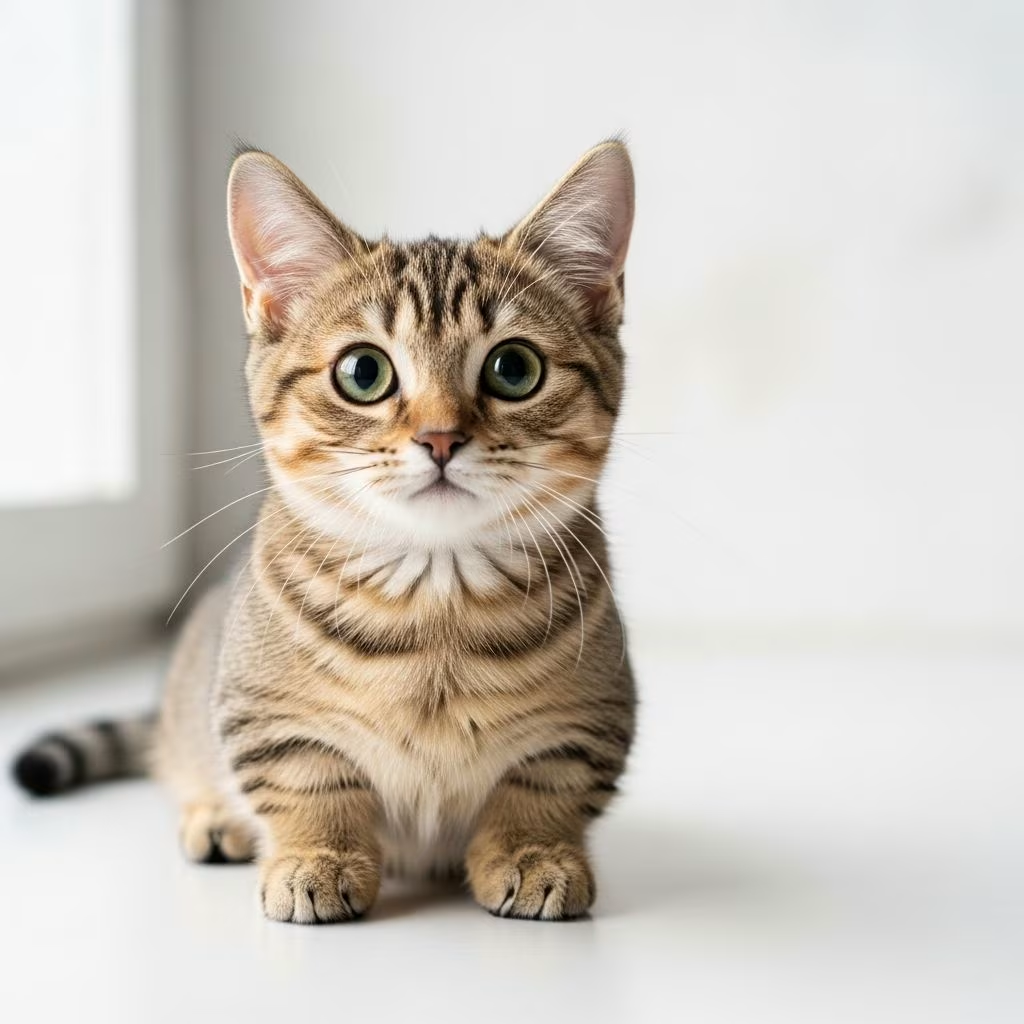
The Munchkin cat stands out with its remarkably short legs, a trait stemming from a natural genetic mutation that gives it a dachshund-like appearance among felines. This breed combines a playful spirit with a compact body, making it a favorite for many households, though it sparks debate over health implications.
Origins and Development of the Munchkin Breed
Records of short-legged cats date back to the 1940s, with a British veterinary report documenting four generations of such felines before they vanished during World War II. Similar sightings occurred in Russia in the 1950s and the United States in the 1970s, hinting at sporadic natural occurrences of the mutation.
The modern Munchkin traces its roots to 1983 in Rayville, Louisiana, where music teacher Sandra Hochenedel rescued a pregnant stray named Blackberry hiding under a truck. Blackberry delivered a litter where half the kittens had short legs, surprising Hochenedel. She retained Blackberry and named one short-legged male kitten Toulouse, gifting him to her friend Kay LaFrance in Monroe, Louisiana.
Blackberry and Toulouse became the foundation stock, bred with domestic shorthairs to establish the breed. Their offspring formed the basis of today’s Munchkins. The breed debuted publicly in 1991 at a cat show in Davis, Oklahoma, organized by The International Cat Association (TICA). TICA accepted it into its new breed program in 1994 and granted championship status in 2003, despite protests from figures like judge Katherine Crawford over ethical concerns.
Other registries, such as the Governing Council of the Cat Fancy (GCCF) and Fédération Internationale Féline, reject recognition, citing welfare issues, and breeding is banned in some countries.
Understanding the Genetics Behind Short Legs
The short legs result from an autosomal dominant mutation in the M gene, requiring only one copy for expression. Kittens inheriting two copies (homozygous) typically do not survive due to lethal embryonic development.
Breeding practices pair Munchkins (Mm genotype) with normal-legged cats (mm), yielding a 50% chance of short-legged kittens (Mm) and 50% normal (mm). Breeding two Munchkins risks 25% homozygous lethal outcomes, so ethical breeders avoid it.
| Parental Genotypes | Offspring Possibilities | Percentage |
|---|---|---|
| Mm (Munchkin) x mm (Normal) | Mm (Short-legged) | 50% |
| mm (Normal-legged) | 50% | |
| Mm x Mm (Not recommended) | MM (Lethal, non-viable) | 25% |
| Mm (Short-legged) | 50% | |
| mm (Normal-legged) | 25% |
This table illustrates inheritance patterns, emphasizing why outcrossing is standard. The mutation mirrors achondroplasia in dogs like Dachshunds, raising parallel health debates.
Physical Characteristics and Variations
Munchkins possess a medium to large frame with a broad chest, muscular neck, and medium-length tail thick at the base tapering to a rounded tip. Their legs are short yet strong and well-muscled, with hind legs slightly longer than forelegs, enabling a low-slung gait.
Heads are wedge-shaped with rounded contours, featuring wide-based, tipped ears and walnut-shaped eyes of any color. Coats vary from short to medium length in diverse colors and patterns, excluding amber, with no specific texture requirements.
- Body: Sturdy, well-proportioned despite leg length.
- Size: Typically 6-9 pounds, 7-9 inches tall at shoulder.
- Variations: Long-haired (Munchkin Longhair) and crosses like Minskin (with Sphynx traits).
Normal-legged kittens from Munchkin lines are called “non-standard Munchkins” and can register as such.
Temperament and Behavior Traits
These cats exude curiosity, intelligence, and playfulness, often dubbed “sausage cats” for their low profile during antics. They thrive on interactive toys, hide-and-seek, and chasing shiny objects, displaying agility surprising for their stature.
Munchkins bond strongly with families, showing affection without excessive lap-sitting demands. Their vocalization is moderate, and they adapt well to multi-pet homes if socialized early. Energy levels remain high into adulthood, preventing laziness stereotypes.
Health Considerations and Potential Issues
While many Munchkins live 12-15 years healthily, the mutation predisposes them to mobility problems like lordosis (spinal curvature), pectus excavatum (sunken chest), and osteoarthritis, akin to dwarf dog breeds. Critics highlight exacerbated risks from breeding, though TICA mandates health testing.
Regular veterinary check-ups focus on joints, spine, and mobility. Obesity worsens issues, so weight management is crucial. No breed-specific genetic tests exist beyond parentage verification, but cardiac and skeletal screenings are advised.
- Common concerns: Joint stiffness, back pain, higher injury risk from jumps.
- Preventive care: Soft ramps, low-entry litter boxes, joint supplements.
Grooming, Nutrition, and Daily Care
Short-haired Munchkins need weekly brushing to control shedding; long-haired variants require more frequent sessions. Bathing is infrequent, with emphasis on nail trims, ear cleaning, and dental hygiene.
Feed high-quality, portion-controlled diets to maintain ideal weight, favoring proteins supporting muscle and joint health. Fresh water and puzzle feeders engage their inquisitive nature, reducing boredom.
Environments should include climbing shelves at accessible heights, window perches, and scratching posts. Litter boxes must have low sides for easy access.
Training and Enrichment for Munchkins
Harness training succeeds due to ground-level walking ability, ideal for safe outdoor time. Clicker training works for litter habits and tricks, leveraging their smarts. Rotate toys to sustain interest, incorporating tunnels and balls.
Socialization from kittenhood prevents shyness, preparing them for visitors and travel.
Bringing a Munchkin into Your Home
Adopt from TICA-registered breeders prioritizing health over aesthetics, requesting hip/spine clearances. Shelters occasionally have Munchkin mixes. Prepare with kitten-proofing, as their low stance aids slipping into tight spaces.
Costs range $500-$2500, higher for pedigreed lines. Consider normal-legged siblings for similar temperament minus leg concerns.
Pros and Cons of Owning a Munchkin
| Pros | Cons |
|---|---|
| Adorable, unique appearance | Potential health vulnerabilities |
| Playful, affectionate personality | Breeding restrictions in some areas |
| Adaptable to apartments | Requires vigilant mobility support |
| Good with families/kids | Controversial ethics |
Frequently Asked Questions (FAQs)
Are Munchkin cats in pain due to short legs?
Most do not show pain signs, but monitoring for arthritis or spine issues is essential. Veterinary studies note no inherent pain, but age-related wear occurs.
Can Munchkins jump like normal cats?
They excel at horizontal movement and low jumps but struggle with heights, preferring ramps.
Is breeding Munchkins ethical?
Debated: TICA approves with standards; others ban it over welfare risks.
How do Munchkins interact with dogs?
Generally well, especially if introduced young, due to their bold nature.
What’s the lifespan of a Munchkin cat?
Average 12-15 years with proper care, comparable to many breeds.
Related Breeds and Hybrids
Minskin combines Munchkin legs with Sphynx hairlessness and Devon Rex texture, recognized preliminarily by TICA. Other dwarf variants exist but face similar scrutiny.
References
- The Unexpected Rise of Munchkin Cats — Purebred Kitties. 2023. https://purebredkitties.com/blogs/munchkin-cat/the-unexpected-rise-of-munchkin-cats
- Munchkin cat — Wikipedia. 2024-01-15. https://en.wikipedia.org/wiki/Munchkin_cat
- Munchkin Cat Breed Profile — Litter-Robot. 2023. https://www.litter-robot.com/blog/munchkin-cat/
- All about Munchkin cat breed — Animalia.bio. 2024. https://animalia.bio/pets/munchkin-cat
- Munchkin Facts — Wisdom Panel. 2023. https://www.wisdompanel.com/en-us/cat-breeds/munchkin
- Munchkin cat’s genetics — Nikolay’s Genetics Lessons (YouTube). 2016-03-07. https://www.youtube.com/watch?v=N600BPVJQLU



