

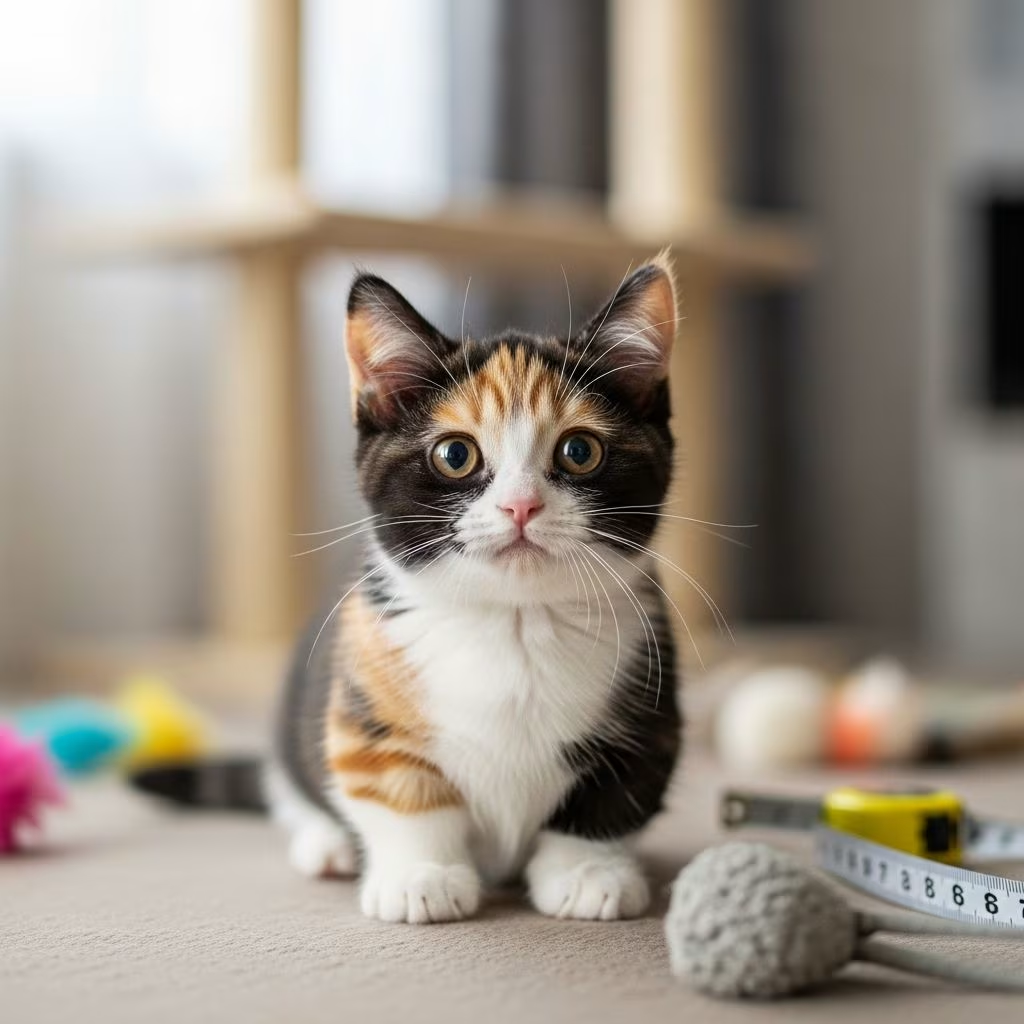
Munchkin cats represent one of the most distinctive and immediately recognizable feline breeds in the modern cat world. Their defining characteristic—exceptionally short legs resulting from a natural genetic mutation—sets them apart from conventional domestic cats and raises unique considerations for understanding their growth and development patterns. Unlike standard feline breeds that experience relatively predictable growth trajectories, Munchkin cats present an interesting study in how genetic traits influence overall physical development and sizing expectations throughout their lives.
The journey from a tiny Munchkin kitten to a fully mature adult involves several distinct developmental phases, each with its own characteristics regarding size, weight gain, and physical capability. Understanding these growth milestones helps prospective and current Munchkin cat owners set appropriate expectations, recognize healthy development, and provide suitable living accommodations as their feline companion grows.
The Genetic Foundation of Munchkin Growth
The Munchkin cat’s distinctive short legs originate from a genetic mutation affecting bone development in the limbs. This naturally occurring genetic trait, known scientifically as chondrodysplasia, fundamentally influences how these cats develop from birth through adulthood. The mutation causes shortened long bones in the legs, creating the characteristic “sausage cat” appearance that many feline enthusiasts find endearing.
What makes Munchkin cat development particularly interesting is that this genetic mutation doesn’t uniformly affect all individuals in the same way. The severity of leg shortening can vary, leading to three distinct leg categories within the breed: rug hugger (shortest), super-short (intermediate), and standard (relatively longer but still notably abbreviated compared to typical cats). These variations influence not just appearance but also how individual cats move, play, and navigate their environments as they mature.
The hind legs of Munchkin cats tend to be slightly longer than their front legs, creating a subtle upward slope from shoulder to rump. This structural characteristic becomes more apparent as kittens develop and grow, and it influences their distinctive posture and movement patterns throughout their lives.
Early Kitten Development and Initial Growth Phases
Munchkin kittens enter the world weighing only a few ounces, similar to standard domestic cat kittens. During the first four weeks of life, these tiny felines depend entirely on their mother’s milk for nutrition and growth. The early weeks represent a critical period where foundational development occurs, despite the kittens’ minimal size and apparent fragility.
By the time Munchkin kittens reach four to six weeks of age, they typically weigh between one and two pounds, depending on individual genetics and nutritional intake. During this phase, their distinctive short legs become increasingly apparent, though the proportions may seem even more exaggerated relative to their tiny bodies. At this developmental stage, the characteristic Munchkin appearance begins to clearly emerge, distinguishing them from littermates that may not express the dwarfism gene.
From six to twelve weeks, Munchkin kittens experience rapid growth, generally gaining weight at a rate of about half a pound per week under optimal conditions. By three months of age, healthy Munchkin kittens typically weigh between two and three pounds. Their little legs, while still short in absolute terms, begin to develop strength and coordination, allowing them to explore their environment with increasing confidence and agility despite their physical limitations.
Adolescent Development and Continued Growth
The period from three to six months represents a transition phase where young Munchkin cats continue growing but begin demonstrating more adult-like behaviors and physical capabilities. During this timeframe, most Munchkin kittens gain approximately one pound per month, reaching weights between three and five pounds by six months of age.
Around four to five months, Munchkin cats typically reach approximately 75% of their eventual adult weight. Their bodies become more muscular and coordinated, and their playful antics intensify as they develop strength and confidence. The proportions of their bodies shift subtly during this phase, with their torsos lengthening relative to their legs, creating the characteristic long, low silhouette that defines the mature Munchkin appearance.
Interestingly, while standard domestic cats typically outgrow their kitten-like behaviors as they mature, Munchkin cats tend to retain their playful nature well into adulthood. This behavioral continuity becomes apparent during the adolescent phase, where young Munchkins demonstrate the same spirited, mischievous personality traits that will characterize their adult years.
Adult Munchkin Cat Sizing and Weight Expectations
By approximately nine to twelve months of age, most Munchkin cats have reached their full adult size, though minor weight fluctuations may continue into their second year. Understanding the expected weight ranges for adult Munchkins provides important context for assessing whether an individual cat is developing appropriately.
Standard Adult Weight Ranges
Male Munchkin cats typically weigh between six and nine pounds at full maturity. Female Munchkins generally fall into a slightly lighter range, typically between four and eight pounds. Despite their diminutive stature, Munchkin cats are classified as medium-sized cats in terms of overall body mass, as their dense musculature and solid builds contribute more to their weight than their size might initially suggest.
Individual variation within the breed remains significant, with factors such as genetic background, nutritional history, activity level, and specific leg length category all influencing final adult weight. A rug hugger Munchkin with the shortest legs may weigh slightly less than a standard-legged Munchkin of identical height and muscularity, though the differences are typically minor.
Body Length and Proportions
Despite their short legs, Munchkin cats can measure up to approximately eighteen inches in total body length. This seemingly contradictory sizing—relatively long bodies paired with very short legs—creates their distinctive low-slung, elongated appearance. The proportion of body length to leg length becomes increasingly apparent as kittens mature, creating the characteristic profile that makes Munchkins immediately recognizable.
Movement and Mobility Development
As Munchkin cats grow and develop, their movement patterns evolve distinctly from standard feline locomotion. Young Munchkins initially struggle with the same mobility challenges that will characterize their adult lives, but they gradually adapt and develop compensatory movement strategies.
The characteristic wriggling, rolling motion that Munchkin cats employ becomes more pronounced as they mature and develop muscle strength in their short legs. This movement style, while somewhat comical in appearance, represents an effective adaptation to their unique leg structure. Some Munchkin cats develop the ability to stand upright on their hind legs in a posture reminiscent of rabbits or prairie dogs, a capability that often emerges during the adolescent phase and becomes more reliable with maturity.
Jumping ability varies significantly among individual Munchkin cats. While the breed’s short legs create inherent jumping challenges, many Munchkins develop adequate vertical capability, though generally less impressive than standard-legged cats. This mobility consideration becomes increasingly important for owners to recognize as kittens mature, as it influences environmental design and enrichment options throughout their lives.
Nutritional Requirements Throughout Development
Proper nutrition during growth phases proves essential for healthy Munchkin cat development. Kittens require higher caloric intake and specific nutrient ratios compared to adult cats, supporting rapid growth and skeletal development. As Munchkin kittens mature, their nutritional requirements shift to support maintenance rather than active growth.
The density of muscle tissue relative to overall body size in Munchkin cats means these compact felines require slightly different caloric calculations compared to standard cats of equivalent weight. Their shorter stature and typically lower activity capacity (compared to standard-legged cats) may require careful caloric management to prevent obesity, particularly as they age.
Quality protein intake becomes especially important for Munchkin cats, given their unique skeletal structure and the muscular development required to support movement. Feeding growing Munchkin kittens high-quality, appropriately formulated kitten food ensures they receive optimal nutrition during their critical development phases.
Health Considerations During Growth
The genetic mutation that defines the Munchkin breed carries potential health implications that become increasingly relevant as kittens grow and develop. The chondrodysplasia affecting their leg development can also contribute to other skeletal concerns. Munchkin cats experience a higher incidence of conditions such as lordosis and pectus excavatum during development and throughout their lives.
Additionally, Munchkin cats face elevated risk for osteoarthritis compared to other feline breeds, a condition that may develop or worsen as they age. The impact of their shortened limbs on their movement patterns and activity levels contributes to joint stress that accumulates over time. Monitoring growth patterns and ensuring appropriate activity levels during kitten development can help minimize future joint complications.
Regular veterinary assessment during the growth phases helps identify any developmental abnormalities or health concerns early. Radiographic evaluation may be necessary at various growth stages to ensure proper skeletal development and to screen for conditions that could impact long-term health and mobility.
Behavioral Development and Personality Emergence
As Munchkin kittens grow, their distinctive personalities emerge and intensify. These cats develop marked curiosity and sociability, traits that become more apparent as they mature. Young Munchkins demonstrate increasing confidence in their environment and develop elaborate play behaviors that reflect their intelligent and mischievous nature.
The breed’s legendary collecting behavior—their tendency to hide and hoard small, shiny objects—typically becomes more pronounced during the kitten and adolescent phases. This behavior, which has earned Munchkins the nickname “magpies of the cat world,” often reaches peak expression as younger cats reach full maturity.
Affectionate bonding with human family members intensifies throughout the developmental period, with Munchkin cats increasingly seeking lap time, cuddles, and interactive play as they mature. These attachment behaviors, alongside their playful nature, become defining characteristics that persist throughout their adult lives.
Comparison Table: Munchkin Growth Milestones
| Age Range | Typical Weight | Physical Development | Behavioral Characteristics |
|---|---|---|---|
| 0-4 weeks | Few ounces to 1 lb | Dependent on mother; short legs barely visible | Nursing, sleeping; minimal independence |
| 4-8 weeks | 1-2 lbs | Distinctive short legs emerging; rapid growth begins | Weaning begins; increased exploration and play |
| 8-12 weeks | 2-3 lbs | Physical proportions becoming characteristic; coordination improving | Playful; learning through play and interaction |
| 3-6 months | 3-5 lbs | Muscular development; adult proportions emerging | High energy; personality traits more pronounced |
| 6-12 months | 5-8 lbs | Nearly full adult size; movement patterns established | Spirited; stronger bonding with humans |
| 12+ months | 4-9 lbs (mature) | Full adult development completed; stable size | Fully mature personality; consistent behavior |
Frequently Asked Questions About Munchkin Growth
At what age do Munchkin cats reach full adult size?
Most Munchkin cats achieve their full adult size by nine to twelve months of age, though some individuals may continue minor growth into their second year. Growth plates typically close by the end of the first year, establishing their mature dimensions.
How much should a healthy adult Munchkin weigh?
Adult male Munchkins typically weigh between 6-9 pounds, while females generally range from 4-8 pounds. Individual variation exists based on genetics, leg length category, and overall build. Consultation with a veterinarian helps determine appropriate weight for specific individuals.
Do all Munchkin kittens from the same litter grow to the same size?
No, significant variation can occur even within the same litter. Factors including individual genetics, early nutrition, and whether they inherited the dwarfism gene expression influence growth trajectories. Some littermates may develop with shorter or longer legs, affecting final proportions and weight.
Should owners be concerned if their Munchkin kitten grows slower than expected?
Growth rate variations are normal, but significantly slower growth might indicate nutritional deficiencies, health concerns, or parasitic infections. Veterinary evaluation becomes appropriate if growth falls substantially below expected ranges for the cat’s age.
How does a Munchkin’s development differ from standard domestic cats?
Beyond the obvious leg length differences, Munchkin development follows similar timelines regarding overall growth and maturation. Primary differences relate to movement capabilities, skeletal structure development, and health considerations associated with chondrodysplasia rather than fundamental growth patterns.
References
- All About Munchkin Cats — ASPCA Pet Health Insurance. Accessed January 2026. https://www.aspcapetinsurance.com/resources/munchkin-cat-breed/
- Munchkin Cat Breed Information — Purina UK. Accessed January 2026. https://www.purina.co.uk/find-a-pet/cat-breeds/munchkin
- Munchkin Cat Personality: How Do Munchkin Cats Act? — Litter-Robot. Accessed January 2026. https://www.litter-robot.com/blog/munchkin-cat-personality/
- Munchkin cat — Wikipedia. Accessed January 2026. https://en.wikipedia.org/wiki/Munchkin_cat
- Munchkin — Royal Canin US. Accessed January 2026. https://www.royalcanin.com/us/es-us/cats/breeds/munchkin



