

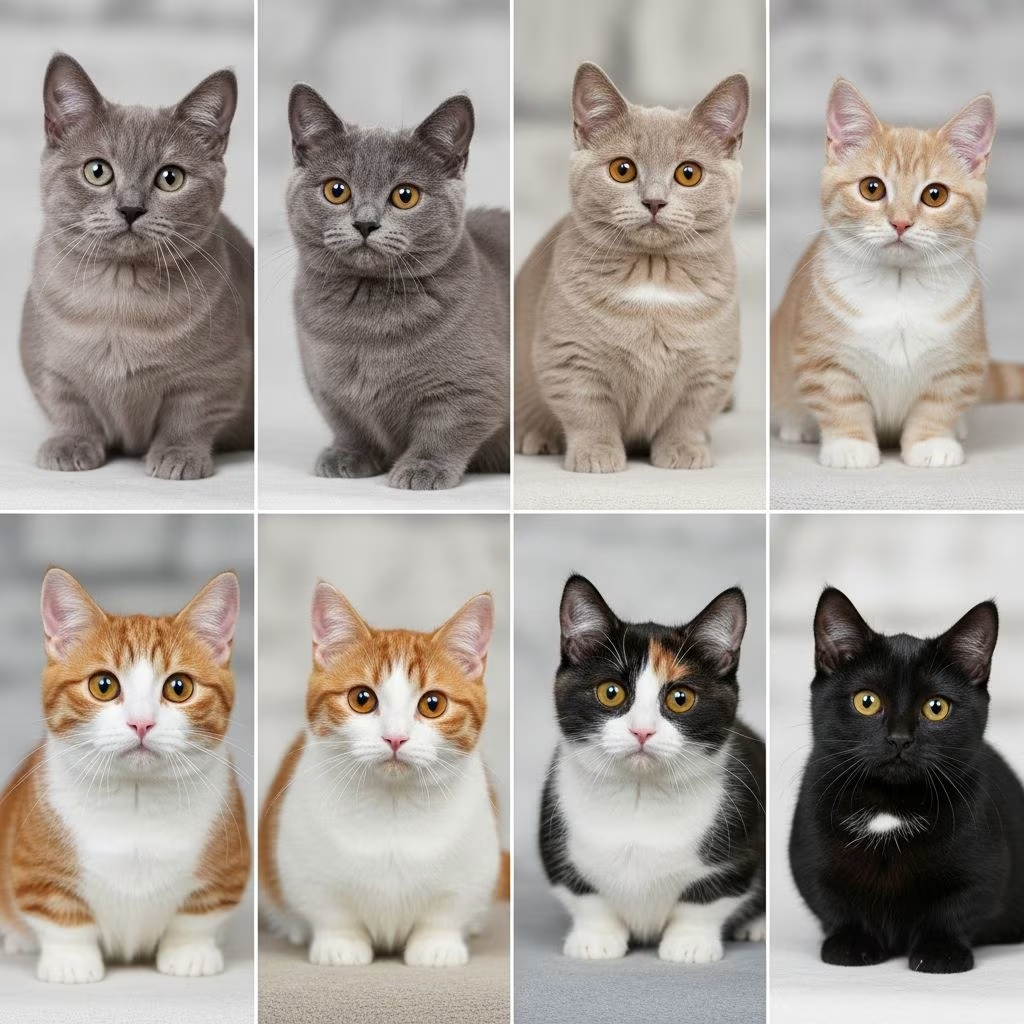
Munchkin cats, known for their distinctive short legs, display a stunning array of coat colors and patterns that rival any other breed. These adorable, low-to-the-ground felines come in varieties like calico, white, black, tabby, bicolor, pointed, tortoiseshell, and grey, each bringing unique charm and personality to households. Despite their playful dachshund-like stature, Munchkins are healthy, energetic companions available in both short and long-haired coats.
Their color diversity stems from selective breeding since the breed’s recognition in the 1990s, allowing endless combinations without restriction to specific hues. This versatility makes Munchkins appealing to cat enthusiasts seeking specific aesthetics alongside their quirky mobility. Understanding these colors helps prospective owners choose the perfect match while appreciating the genetics behind each pattern.
The 8 Color Variations in Munchkin Cats
Munchkin cats exhibit eight primary color variations, each with distinct visual appeal, genetic underpinnings, and sometimes associated traits. These patterns are not breed-exclusive but appear frequently in Munchkins due to their open breeding standards.
1. Calico
Calico Munchkins boast a striking tri-color coat featuring bold patches of white, black, and orange against a lighter base. This patchwork pattern is predominantly seen in females because the calico coloration links to the X chromosome; males, with one X, rarely exhibit it and are often sterile if they do.
Genetically, the white spotting gene combines with orange and black pigmentation for this effect. Calico Munchkins inherit this from maternal lines, similar to breeds like Manx or American Curl. They serve as Maryland’s official state cat, symbolizing good fortune. Their vibrant coats require minimal grooming but benefit from regular brushing to manage shedding. Eyes are typically copper or blue, adding to their expressive faces. Owners love their feisty, social natures, making them ideal family pets.
Imagine a Munchkin calico bounding across the floor on short legs, her colors popping like a living mosaic—pure delight for visual cat lovers.
2. White
Pure white Munchkins gleam with solid snowy coats, often featuring striking blue, green, or odd-colored eyes (one blue, one another shade). This color arises from the dominant white gene (W), masking underlying pigments, or extreme spotting.
These elegant kitties may carry deafness risks if blue-eyed, a trait linked to the white gene affecting inner ear development—studies from veterinary genetics confirm up to 80% deafness in such cats. Despite this, white Munchkins are hardy, with lifespans matching the breed average of 12-15 years. Their pristine fur demands weekly bathing to prevent yellowing and dirt accumulation, especially for outdoor-prone cats.
White Munchkins exude sophistication, their short legs enhancing a bunny-like hop that’s endlessly entertaining. They’re calm yet playful, thriving in quiet homes.
3. Black
Black Munchkins sport deep ebony coats that shimmer with subtle undertones, turning rusty in sunlight due to pheomelanin oxidation. Research from the National Institutes of Health reveals the black fur gene (B) offers disease resistance, potentially lowering feline immunodeficiency virus susceptibility and extending lifespan.
Eye colors range from gold to green, piercing against the dark fur. Jet-black Munchkins are low-maintenance, shedding minimally with a plush undercoat. Folklore once deemed them unlucky, but modern views celebrate their resilience and affectionate personalities. They’re bold explorers, using short legs to navigate furniture nimbly.
Health-wise, no color-specific issues beyond breed norms like lordosis prevention through exercise. Black Munchkins make loyal, shadowy companions.
4. Tabby
Tabby Munchkins display bold stripes, swirls, or spots in mackerel, classic, or ticked patterns, available in brown, red, silver, or brown variants. The agouti gene (A) creates banded hairs for this lively camouflage look.
These patterned cuties have white underbellies and expressive facial markings like ‘M’ foreheads. Short-haired tabbies need occasional brushing; long-haired variants more frequent detangling. Munchkins amplify tabby playfulness with endless energy, loving interactive toys.
Tabbies suit active families, their markings hiding dirt well. Common in domestic shorthairs, they’re a staple Munchkin color with no unique health concerns.
5. Bicolor
Bicolor Munchkins combine white with any hue, famously black-and-white ‘tuxedos’ mimicking formal attire. White covers paws, chest, and face, with colored caps or saddles.
Piebald spotting dictates distribution, creating van patterns (white body, colored head/tail). Available in short or long hair, they shed moderately. Tuxedo Munchkins are sociable greeters, rubbing against legs with authority. Eye colors vary by non-white areas.
Easy to spot in litters, biccolors are healthy and adaptable, perfect for multi-pet homes. Their contrasting coats highlight short-legged charm.
6. Pointed
Pointed Munchkins mirror Siamese with darker extremities—ears, face, paws, tail—contrasting lighter bodies. The colorpoint gene (cs) restricts pigment to cooler body areas.
Seal, chocolate, or blue points exist; crosses with Siamese yield creamy coats on stubby legs. They darken with age or sun, requiring indoor living. Blues eyes dominate, paired with vocal, affectionate traits.
These elegant dwarves bond deeply, following owners devotedly. Monitor temperature sensitivity; provide warmth. A favorite for pattern enthusiasts.
7. Tortoiseshell
Tortoiseshell (tortie) Munchkins flaunt brindled black-orange blends, sometimes with white (tortie-and-white). Like calicos, torties are mostly female due to X-linkage.
Coats resemble tortoise shells, with ‘cattitude’—sassy, spirited demeanors. Brushing prevents matting in dense fur. No health links specific to color, but spay females to curb roaming.
Torties captivate with fiery personalities, their short legs adding comedic chases. Prized for complexity and charm.
8. Grey
Grey (blue) Munchkins dilute black via the D/d gene, yielding soft slate tones. Solid, tabby, or bicolor greys appear, akin to Chartreux or Russian Blue.
Two recessive dilutions soften intensity; eyes are yellow-green. Gentle dispositions match serene coats—no health issues tied to color. Low-shedding fur suits apartments.
Greys embody calm elegance, their subtlety perfect for understated beauty lovers.
Munchkin Cat Genetics and Coat Diversity
Munchkin colors follow standard feline genetics: eumelanin (black/brown), phaeomelanin (red), white spotting, and dilutions. No breed restrictions allow all combinations.
- Solid Colors: White, black, blue, red, cream—pure hues via masking genes.
- Tabby Patterns: Mackerel stripes, classic whorls, spotted—agouti-driven.
- Sex-Linked: Calico/tortie nearly female-only.
- Pointed: Himalayan pattern temperature-sensitive.
Short legs (Mk gene) pair independently with colors, yielding hairless hybrids like Bambino but pure Munchkins vary fur length.
Care Tips for Munchkin Colors
Coat care varies: short hair weekly brushing; long daily. White/greys prone to stains—use cat-safe shampoos. Blacks resist scratches visually.
| Color | Grooming Needs | Common Eye Colors | Personality Notes |
|---|---|---|---|
| Calico | Moderate | Copper/Blue | Playful, social |
| White | High (stains) | Blue/Green | Calm |
| Black | Low | Gold/Green | Bold, resilient |
| Tabby | Moderate | Various | Energetic |
| Bicolor | Moderate | Various | Friendly |
| Pointed | Low | Blue | Affectionate |
| Tortoiseshell | Moderate | Amber | Sassy |
| Grey | Low | Yellow-Green | Gentle |
Exercise prevents obesity; elevated bowls aid short legs. Vet checks monitor skeletal health.
Frequently Asked Questions (FAQs)
What are the most common Munchkin cat colors?
Calico, white, black, tabby, bicolor, pointed, tortoiseshell, and grey top the list.
Are male calico Munchkins possible?
Rare; usually XXY sterile. 99% are female.
Do coat colors affect Munchkin health?
White blue-eyes risk deafness; blacks may resist diseases. Otherwise, no.
Can Munchkins be long-haired?
Yes, in all colors; requires more grooming.
Are Munchkin colors breed-standard?
All recognized; no restrictions.
Munchkins blend whimsy with beauty across colors, offering short-legged joy for any preference. Their sociable, curious spirits shine regardless of hue.
References
- 8 Common Munchkin Cat Colors (With Pictures) — Catster. 2023. https://www.catster.com/lifestyle/munchkin-cat-colors/
- 8 Munchkin Cat Breeds & Colors (With Info & Pictures) — Hepper. 2023. https://articles.hepper.com/munchkin-cat-breeds-and-colors/
- Breed Comparisons – Munchkin — World Cat Congress. 2024. https://worldcatcongress.org/wp/cat_breed_comp_mus.php
- All about Munchkin cat breed — Animalia.bio. 2024. https://animalia.bio/pets/munchkin-cat
- Discover the Adorable Munchkin Cat: Traits, Care, and History — Live Oak Veterinary Hospital. 2017-10-15. https://liveoakvet.com/2017/10/15/meet-the-munchkin/



