

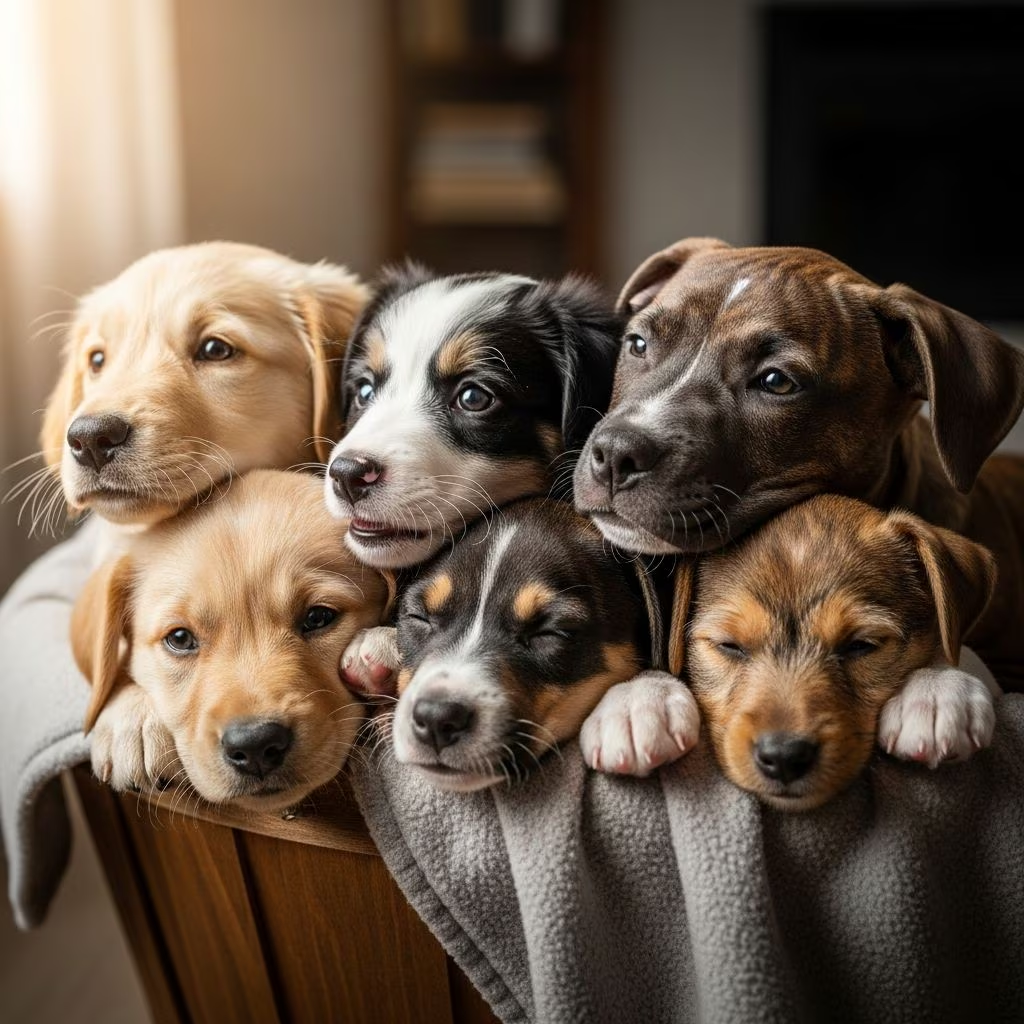
Female dogs can indeed give birth to litters where puppies have different fathers, a phenomenon driven by their unique reproductive biology and mating behaviors. This occurs through superfecundation, where multiple eggs are fertilized by sperm from different males during the same heat cycle.
The Biology of Canine Reproduction
Dogs have a reproductive system designed for producing multiple offspring. Unlike humans, who typically release one egg per cycle, female dogs ovulate several eggs—often 8 or more—over a few days while in estrus, their fertile heat period lasting up to 10-14 days. Sperm from males can survive in the female’s tract for up to seven days, allowing fertilization to happen long after mating.
Since female dogs are induced ovulators and promiscuous maters, they often breed with multiple partners during heat. Each egg can be fertilized independently by sperm from different males, resulting in half-siblings sharing the same mother but different fathers.
- Key factors enabling this: Multi-egg ovulation, prolonged sperm viability, and polygamous mating habits.
- Female dogs lack a rigid mating schedule, increasing chances of multiple paternities.
- Litters average 5-10 puppies, amplifying genetic diversity potential.
What is Superfecundation?
Superfecundation refers to the fertilization of more than one egg by sperm from different males within the same estrus cycle. In canines, this is common among strays and unspayed pets, leading to litters with mixed paternity.
There are two types: simple superfecundation (different males on different days) and superfecundation geminorum (simultaneous fertilization by multiple males). Dogs experience the former most often due to their extended fertile window.
| Type | Description | Occurrence in Dogs |
|---|---|---|
| Simple Superfecundation | Eggs fertilized by different males at different times | Very common |
| Superfecundation Geminorum | Simultaneous fertilization by multiple males | Possible but rarer |
This process ensures genetic variety but can surprise breeders expecting uniform litters.
Genetic Variation Within Litters
Even with a single father, puppies look different due to genetic recombination. Parents pass 50% of their DNA randomly during meiosis, shuffling genes via segregation and recombination.
No two puppies inherit identical chromosome sets, leading to variations in coat color, size, and traits. For example, one pup might get a black fur gene while its sibling inherits yellow.
- In purebreds (homozygous genes), differences are subtle.
- In mixed breeds (heterozygous), variations are dramatic, mimicking multiple fathers.
With multiple fathers, relatedness drops to ~25% (half-siblings), exaggerating differences in ancestry and appearance.
Visual Differences in Puppies
Puppies from multi-father litters often show stark contrasts. A litter might include a Lab-like pup, a curly-coated one resembling a Poodle mix, and others blending traits unpredictably.
Purebred litters from one sire look uniform due to similar genetics (homozygosity). Crossbreeds highlight heterozygosity, where random gene mixes produce diverse phenotypes.
Examples of trait variations:
- Coat: Short vs. long, straight vs. curly.
- Color: Black, yellow, chocolate in Labs.
- Size: Some grow larger due to paternal influence.
- Breed ancestry percentages differ per pup via DNA tests.
Health Implications for Mother and Pups
Superfecundation is usually harmless if males are similar in size to the dam. Issues arise with large sires: oversized pups risk dystocia (difficult birth), requiring C-sections.
Genetic diversity from multiple fathers boosts litter resilience against diseases but may introduce unknown health risks if sires carry defects.
Healthy dams in good condition handle mixed litters well. Monitor for complications like prolonged labor or pup size mismatches.
DNA Testing: Confirming Paternity
Visual cues can’t determine fathers—only DNA can. Tests like Wisdom Panel or Embark analyze ancestry, relatedness, and sires if known.
Full siblings share ~50% DNA; half-siblings ~25%. Breeders use swabs to verify pedigrees, exclude imposters, and ensure purebred status.
- Collect cheek swabs from pups and potential sires.
- Submit to vet labs for genotyping.
- Results reveal paternity clusters and breed mixes.
This prevents surprises, like a ‘purebred’ litter with street-dog influences.
Breeding Practices to Control Paternity
Responsible breeders supervise matings to ensure single sires. Isolate females post-breeding or use artificial insemination.
Spay non-breeding females to avoid unplanned litters. For purebreds, health screenings and genetic testing pre-breeding minimize risks.
Best practices table:
| Practice | Benefit |
|---|---|
| Supervised mating | Single paternity guarantee |
| DNA pre-screening | Health trait confirmation |
| Post-mating isolation | Prevents multi-sire litters |
| Litter DNA testing | Pedigree verification |
Superfecundation in Other Animals
This isn’t dog-exclusive. Cats, ferrets, and large litter species like pigs experience it. In cats, multi-father litters are routine due to similar ovulation patterns.
Humans rarely see it (fraternal twins max), but it’s evolutionarily advantageous in wild canines for genetic robustness.
Common Myths Debunked
- Myth: Puppies looking alike means one father. Fact: Purebreds look similar regardless; DNA proves paternity.
- Myth: One pup can’t have two dads. Fact: Correct—each has one father, one mother.
- Myth: Multi-fathers always harm health. Fact: Only if size mismatches occur.
Frequently Asked Questions (FAQs)
Can all puppies in a litter have different fathers?
Yes, theoretically up to the number of eggs (e.g., 8 males for 8 eggs), though rare. Most litters have 1-3 sires.
How common is this in pet dogs?
Common in unsupervised strays; rare in controlled breeding.
Does it affect puppy registration?
Yes—purebred registries require single-sire proof via DNA.
Can you tell by looks alone?
No—genetic recombination mimics multi-father effects.
Is it dangerous for the mother?
Not usually, but large sire mismatches increase birthing risks.
Key Takeaways for Dog Owners
Understanding multi-paternity highlights why spaying is crucial and why breeders test litters. It enhances appreciation for canine genetics’ complexity, promoting informed pet choices.
References
- Sibling Genetics in Dogs — Wisdom Panel. 2023. https://www.wisdompanel.com/en-us/blog/sibling-genetics-in-dogs
- Can Dog Litters Have More Than One Father? — Friends of the Dog. 2022. https://www.friendsofthedog.co.za/can-dog-litters-have-more-than-one-father.html
- Can Puppies in the Same Litter Have Different Dads? — Ruff Start Rescue. 2022-10-08. https://ruffstartrescue.org/2022/10/08/can-puppies-in-the-same-litter-have-different-dads/
- Recombination Explained: How Littermates Can Look Different — Embark Vet. 2023. https://embarkvet.com/resources/recombination-explained-how-littermates-can-look-different/
- Can Puppies in the Same Litter Have Different Fathers? — Psychology Today. 2020-09. https://www.psychologytoday.com/us/blog/canine-corner/202009/can-puppies-in-the-same-litter-have-different-fathers



