

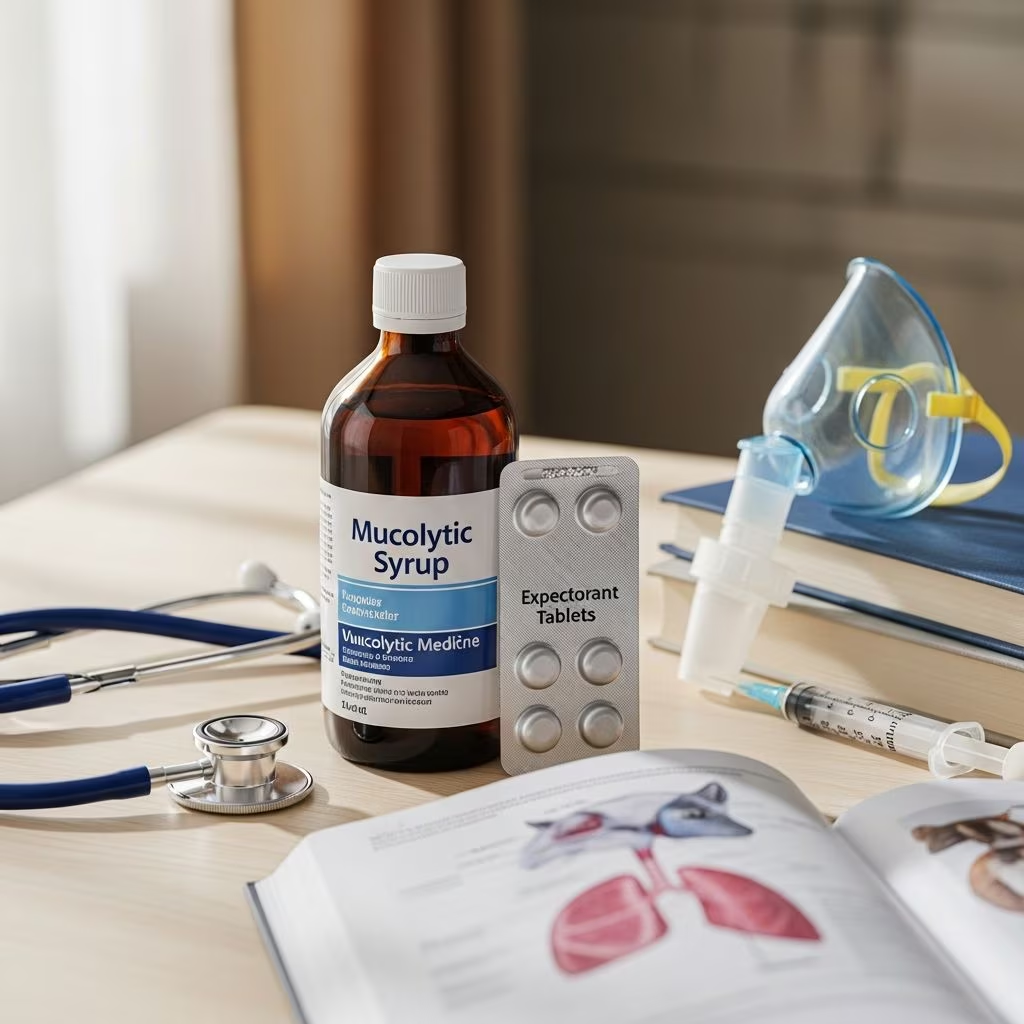
Respiratory conditions in animals often involve excessive mucus production, leading to airway obstruction, impaired gas exchange, and secondary infections. Mucolytic agents break down thick mucus to facilitate clearance, while expectorants stimulate bronchial secretions to aid expulsion. These therapies are crucial adjuncts in managing chronic bronchitis, pneumonia, and allergic airway diseases across species like dogs, cats, horses, and cattle.
Understanding Mucus Dynamics in Animal Airways
Mucus in the respiratory tract serves as a protective barrier, trapping pathogens and particles for removal via mucociliary clearance. In disease states, mucus becomes hyperviscous due to increased glycoprotein content, dehydration, or inflammation, hindering clearance. Veterinary pharmacotherapy targets this viscosity through direct mucolysis or hydration.
Key factors influencing mucus properties include hydration status, pH, ionic composition, and enzymatic activity. For instance, in feline asthma models, inflammation alters mucus rheology, reducing ciliary beat frequency and promoting stasis. Effective treatments restore fluidity without disrupting the mucociliary escalator.
Core Mechanisms of Mucolytic Drugs
Mucolytics primarily act by cleaving disulfide bonds in mucin polymers, depolymerizing DNA in infected secretions, or altering mucus hydration. These actions reduce gel-like consistency, enabling easier expectoration or ciliary transport.
- Sulfhydryl compounds: Donate free sulfhydryl groups to break disulfide bridges in mucins.
- Proteolytic enzymes: Degrade protein components, though limited by specificity.
- Mucosal hydrators: Increase water content via osmotic effects or ion transport modulation.
In veterinary practice, selection depends on delivery method—nebulization for acute cases or systemic for chronic management—and species tolerance.
Prominent Mucolytic Agents in Practice
N-Acetylcysteine (NAC)
NAC stands as a cornerstone mucolytic, functioning via sulfhydryl donation to disrupt mucin cross-links. Administered orally, intravenously, or via aerosol, it exhibits antioxidant properties, mitigating oxidative stress in inflamed airways. Doses for dogs range 10-20 mg/kg IV q6-8h; nebulized at 5-10 mL of 20% solution bid.
Clinical efficacy shines in canine chronic bronchitis and feline upper airway inflammation, where it synergizes with bronchodilators. Adverse effects include bronchospasm upon inhalation, necessitating dilution and premedication with beta-agonists like albuterol.
Bromhexine and Ambroxol
These mucoregulatory agents stimulate serous gland secretion, thin mucus, and enhance phagocytosis. Bromhexine, a benzhexol derivative, converts to ambroxol in vivo, amplifying effects. Oral dosing in horses: 0.5-1 mg/kg bid for COPD; cats: 1-2 mg/kg bid. They excel in equine recurrent airway obstruction (RAO), improving mucus scores and reducing neutrophil influx.
| Drug | Species | Dose (mg/kg) | Route/Frequency | Primary Use |
|---|---|---|---|---|
| Bromhexine | Horses | 0.5-1 | PO bid | RAO mucus clearance |
| Ambroxol | Dogs | 2-4 | PO tid | Bronchitis |
| NAC | Cats | 10-20 | IV q8h | Acute pneumonia |
Recombinant Human DNase (Dornase Alfa)
Targets extracellular DNA from neutrophil traps in purulent secretions, markedly reducing viscosity. Nebulized at 1 mg bid in dogs with suppurative pneumonia, it shows promise akin to human cystic fibrosis models. Limited availability restricts routine use, but trials indicate 30-50% viscosity drop.
Expectorant Therapies: Stimulating Productive Cough
Expectorants promote hydration of bronchial secretions and ciliary stimulation, differing from mucolytics’ direct breakdown. They prove valuable in productive cough syndromes without inducing dry cough suppression.
Guaifenesin
A prototypical expectorant, guaifenesin increases respiratory tract fluid volume via irritant effects on gastric mucosa, reflexly stimulating secretions. Veterinary formulations combine it with antitussives for dogs (10-20 mg/kg PO q8h). In cattle with bovine respiratory disease (BRD), IV guaifenesin aids mucus mobilization post-antibiotics.
Efficacy data from equine studies reveal improved tracheal wash clarity, though hydration status modulates response. Overuse risks nausea; combine with ample water intake.
Iodinated Compounds (Potassium Iodide)
Historically used, iodides expectorate by enhancing mucous gland activity and liquefying secretions. Dogs with collapsing trachea receive 5-10 mg/kg PO bid, but thyroid risks limit favor to short-term use. Modern alternatives supplant them due to toxicity profiles.
Species-Specific Applications and Dosing Strategies
Canines: Chronic Bronchitis and Pneumonia
Dogs prone to idiopathic bronchitis benefit from NAC nebulization combined with theophylline bronchodilators. Protocols: NAC 20% aerosol 10 min q12h via spacer, alongside oral ambroxol. Monitor for vomiting; efficacy tracked via thoracic radiographs and cytology.
Felines: Asthma and Upper Respiratory Infections
Cats’ narrow airways amplify mucus impact in asthma. Nebulized NAC or saline hyperhydration precedes albuterol, reducing exacerbation frequency. Oral bromhexine aids chronic rhinosinusitis, dosed at 1 mg/kg bid for 2-4 weeks.
Equines: RAO and IAD
Horses with inflammatory airway disease (IAD) or RAO respond to ambroxol (1 mg/kg PO bid) plus environmental dust control. Inhaled mucolytics via large-volume nebulizers enhance clearance, with studies showing 40% airflow improvement.
Ruminants: BRD Complex
Cattle BRD involves Mannheimia and Histophilus, yielding viscous pus. Guaifenesin IV (50 mg/kg in balanced polyionic solution) post-MAC antibiotics liquefies debris, easing clearance. Bromhexine oral boluses support weaning calves.
Combination Therapies and Adjuncts
Mucolytics synergize with bronchodilators (terbutaline, clenbuterol) and anti-inflammatories (fluticasone inhaled). Sequential nebulization—beta-agonist first, then mucolytic—minimizes irritation. Hydration, chest physiotherapy, and antibiotics form multimodal backbones.
Intravenous mucolytics like NAC suit ICU pneumonia cases, while oral regimens suit outpatients. Pharmacokinetic data underscore nebulization’s targeted delivery, minimizing systemic exposure.
Safety Profiles, Adverse Effects, and Contraindications
Common issues: Nebulized NAC induces transient bronchospasm (premedicate with albuterol); oral guaifenesin causes GI upset. Iodides risk iodism (salivation, dermatitis). Contraindications include gastric ulceration (NAC irritant) and hyperthyroidism (iodides).
- Monitoring: Spirometry pre/post-treatment; mucus color/volume logs.
- Overdose: NAC hepatotoxicity rare; supportive care suffices.
Emerging Research and Future Directions
Novel agents like carbocisteine modulate mucin gene expression, showing preclinical promise in canine models. Nanoparticle-delivered DNase targets biofilms. Veterinary trials lag human CF research, but cross-species translation accelerates.
Personalized dosing via mucus rheology assays could optimize therapy, integrating with AI-driven ventilator mechanics in research settings.
FAQs
What is the difference between mucolytics and expectorants?
Mucolytics chemically alter mucus structure for breakdown, while expectorants increase secretion volume and hydration to promote coughing.
Can I use human mucolytics for my dog?
Veterinary guidance essential; human formulations may contain unsafe excipients. Opt for vet-specific products.
How long until mucolytics show effect in horses?
Clinical improvement often within 48-72 hours; full benefits in 1-2 weeks with consistent use.
Is nebulization safe for kittens?
Yes, with spacers; dilute solutions prevent stress and irritation.
Do mucolytics replace antibiotics in pneumonia?
No; they adjunct by clearing debris, enhancing antibiotic penetration.
References
- Inhalation Treatment of Airway Disease in Animals — MSD Veterinary Manual. 2023. https://www.msdvetmanual.com/pharmacology/systemic-pharmacotherapeutics-of-the-respiratory-system/inhalation-treatment-of-airway-disease-in-animals
- Drug class effects on respiratory mechanics in animal models — PMC (NCBI). 2021-04-28. https://pmc.ncbi.nlm.nih.gov/articles/PMC8113734/
- Respiratory Drugs for Animals (VETERINARY TECHNICIAN) — YouTube (Educational Video). 2023. https://www.youtube.com/watch?v=3p5F_MoupZw
- Overview of Systemic Pharmacotherapeutics of the Respiratory System in Animals — Merck Veterinary Manual. 2023. https://www.merckvetmanual.com/pharmacology/systemic-pharmacotherapeutics-of-the-respiratory-system/overview-of-systemic-pharmacotherapeutics-of-the-respiratory-system-in-animals
- Basic Pharmacology Therapy of Bovine Respiratory — AABP (Texas A&M). 2020. https://bovine-ojs-tamu.tdl.org/AABP/article/view/7758/7443



