

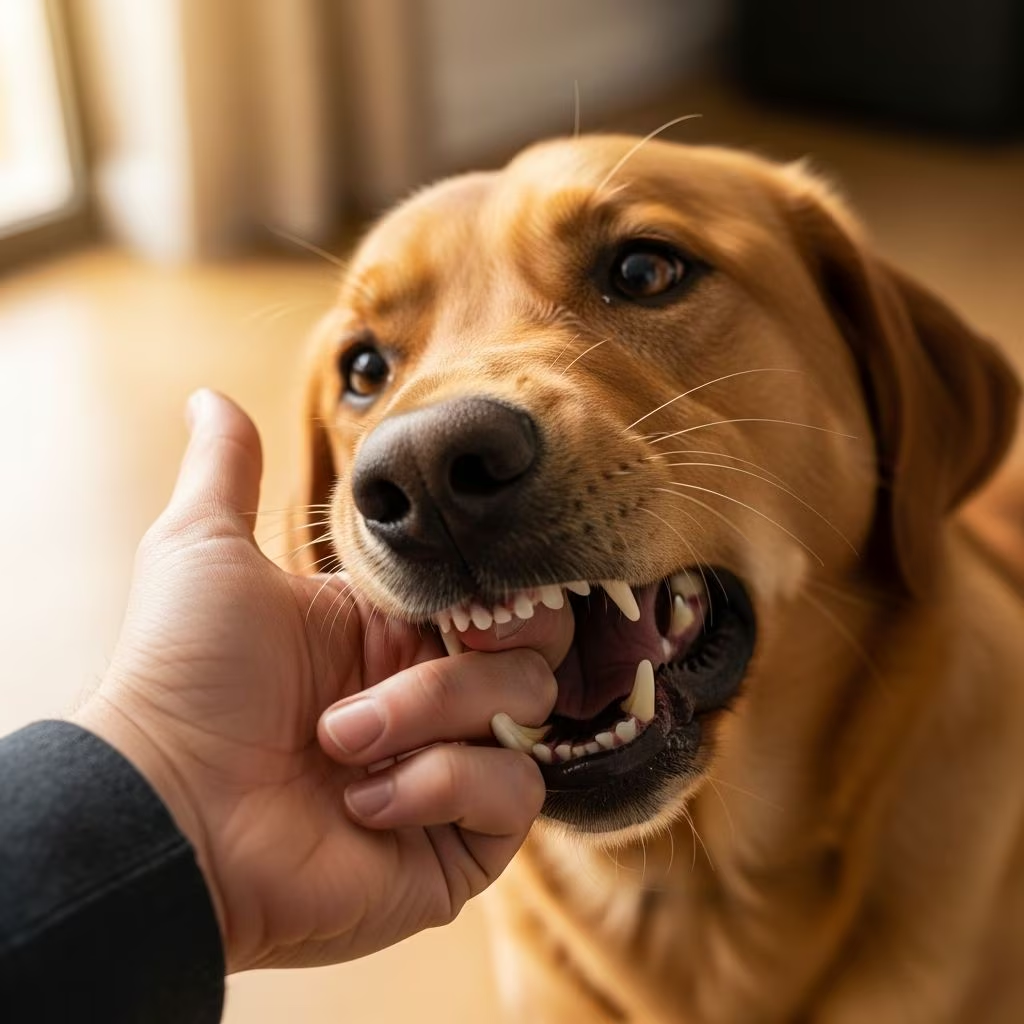
Understanding Mouthing and Play Biting in Adult Dogs
Adult dogs can inadvertently cause injury with their mouths, even during playful interactions. Unlike puppies, whose small teeth and limited strength pose minimal risk, adult dogs possess powerful jaws capable of causing serious harm unintentionally. When an adult dog mouths or nips during play, the behavior often stems from excitement, playfulness, or learned habits from puppyhood. Understanding the root causes of this behavior is essential for addressing it effectively and ensuring safety for everyone in your household.
Mouthing and nipping in adult dogs typically fall into two categories: play-related behavior and behavior driven by aggression or fear. Play-related mouthing is generally accompanied by relaxed body language, playful bowing, and gentle engagement. In contrast, aggressive or fear-based biting is characterized by tension, stiff posture, wrinkled muzzles, exposed teeth, and more intense pressure. Distinguishing between these behaviors is crucial for determining the appropriate training approach.
Why Adult Dogs Mouth and Nip
Adult dogs engage in mouthing and nipping for several reasons. During play, some dogs naturally express excitement by gently mouthing their owners’ hands or nipping at clothing. Herding breeds and dogs with higher prey drive may nip more frequently as a manifestation of their natural instincts. Other adult dogs may mouth or nip out of impatience when demanding attention or engaging in games like chase.
When a dog has not been properly taught bite inhibition during puppyhood, this behavior often continues into adulthood. Bite inhibition refers to a dog’s ability to control the force of their mouthing and biting. Dogs who lack this crucial skill do not recognize the sensitivity of human skin and may bite too hard, even in playful contexts, potentially causing injury.
The Importance of Bite Inhibition
Bite inhibition is a fundamental skill that all dogs should develop, ideally during puppyhood but certainly achievable with adult dogs. A dog with proper bite inhibition understands how to use their mouth gently when interacting with people. Research and professional experience suggest that dogs who have learned to use their mouths gently are less likely to cause serious injury if they ever bite someone in non-play situations, such as when frightened or experiencing pain.
Teaching bite inhibition to an adult dog requires patience, consistency, and positive reinforcement. The goal is not to eliminate mouthing entirely—this would actually deprive your dog of an important form of communication and play—but rather to teach your dog to mouth gently and appropriately.
Step-by-Step Training Techniques for Adult Dogs
Training an adult dog to control mouthing behavior involves several practical techniques that you can implement during daily interactions:
Step 1: Provide Clear Vocal Feedback
When your adult dog bites or nips too hard during play, use immediate vocal feedback. Give a high-pitched yelp as if you are hurt, similar to how another dog would react. This startle response helps your dog understand that they have crossed a boundary. The key is timing—your reaction must occur the instant you feel teeth contact your skin, as dogs make associations based on immediate consequences.
Step 2: Disengage and Create Distance
Immediately after your vocal reaction, stop playing. Pull your hand away and let it go limp—this removes the fun and reward from mouthing. Walk away from your dog or leave the room for 30 to 60 seconds. This brief time-out teaches your dog that hard biting ends the interaction they enjoy. After the time-out period, return calmly and resume play, giving your dog another opportunity to interact gently.
Step 3: Redirect to Appropriate Toys
During play sessions, keep desirable toys readily accessible. When your dog begins to mouth your hands or clothing, immediately redirect them to an appropriate toy. Use toys that encourage noncontact play, such as fetch toys or balls, rather than hand-wrestling games. Tug-of-war can be acceptable once your dog has demonstrated gentle mouthing skills, but always ensure the game remains controlled and calm.
Step 4: Manage Your Own Behavior
Your actions significantly influence your dog’s mouthing behavior. Avoid jerking your hands or feet away quickly, as this can trigger a dog’s chase and grab instinct, encouraging harder biting. Instead, let your hands go limp, making them boring targets. Similarly, do not wave your fingers in your dog’s face or slap the sides of their face playfully, as these actions encourage mouthing and biting of hands and feet.
What NOT to Do When Training Bite Inhibition
Certain approaches can actually worsen mouthing behavior in adult dogs and should be strictly avoided:
- Physical punishment: Slapping, hitting, or striking your dog for mouthing can cause them to bite harder and play more aggressively. Physical punishment can also make your dog afraid of you and may lead to real aggression issues.
- Harsh corrections: Avoid scruff shaking, whacking your dog on the nose, or sticking your fingers down their throat. These methods can hurt or frighten your dog without effectively teaching the desired behavior.
- Yelling or intimidation: Yelling in your dog’s face or using a frightening tone may startle them temporarily but typically does not address the underlying behavior and can increase anxiety and aggression.
- Preventing play: Do not discourage your adult dog from playing with you altogether. Play builds a strong bond and is essential for your dog’s mental and physical health. The goal is to teach gentle play, not eliminate it.
Environmental Management Strategies
Beyond direct training, managing your environment and daily routines can significantly reduce mouthing behavior:
- Provide adequate exercise: An adult dog with insufficient physical activity is more likely to engage in mouthing and nipping. Ensure your dog receives daily walks, runs, or play sessions appropriate to their age, health, and breed.
- Offer appropriate chew toys: Provide a variety of engaging chew toys to satisfy your dog’s natural desire to use their mouth. Rotating toys keeps them interesting and redirects oral behavior away from your hands and clothing.
- Supervise interactions: When your adult dog plays with children or other family members, maintain supervision to ensure everyone understands the training approach and responds consistently.
- Manage arousal levels: Overly excited dogs are more likely to mouth and nip. Teach your dog calming exercises and take breaks during play sessions to reduce arousal levels.
Distinguishing Between Play Biting and Aggressive Biting
Understanding the difference between playful mouthing and aggressive biting is essential for appropriate response and training:
| Characteristic | Play Biting | Aggressive Biting |
|---|---|---|
| Body Language | Relaxed, playful bowing, soft eyes | Stiff, tense posture, hard eyes |
| Muzzle Position | Soft and relaxed | Wrinkled, teeth exposed, lips curled |
| Intensity | Generally gentle with variation | Consistently hard or intense |
| Context | During play or interactive games | During fear, threat, or resource guarding |
| Bite Force | Controlled, may pause play | Full force, continued aggression |
If your adult dog’s biting appears aggressive rather than playful, or if your dog bites out of fear or resource guarding, professional help from a certified dog trainer or animal behaviorist is strongly recommended.
When to Seek Professional Help
While many cases of play mouthing and nipping can be addressed through home training, certain situations warrant professional guidance:
- Your adult dog shows signs of aggression or fear-based biting
- The mouthing behavior has caused actual injury to household members
- Your dog does not respond to consistent training efforts after several weeks
- You are uncomfortable managing the behavior on your own
- Your dog’s mouthing is accompanied by other behavioral issues like resource guarding or territorial aggression
A certified professional can assess your specific situation, rule out underlying medical or psychological issues, and develop a customized training plan for your adult dog.
Building a Strong Bond Through Appropriate Play
One of the most important principles in addressing adult dog mouthing behavior is maintaining a positive relationship through appropriate play. Play is not something to eliminate; rather, it is something to refine and improve. By teaching your adult dog to play gently while still engaging in interactive games, you strengthen your bond and provide essential mental stimulation.
Encourage forms of play that do not involve hand-to-mouth contact, such as fetch, frisbee, and tug-of-war games played with appropriate toys. These activities allow your dog to enjoy interactive play while reducing the opportunity for unwanted mouthing. With consistency and patience, most adult dogs can learn to modify their mouthing behavior and engage in safe, enjoyable play with their families.
Frequently Asked Questions
Q: Is mouthing and nipping in adult dogs always a sign of aggression?
A: No. Most mouthing in adult dogs is playful behavior or excitement-related. However, it is important to distinguish between play biting and aggressive biting using body language cues. Dogs that bite out of aggression typically show stiff posture, exposed teeth, wrinkled muzzles, and tense expressions, whereas play biters have relaxed body language and soft eyes.
Q: How long does it take to train an adult dog to stop mouthing?
A: The timeline varies depending on your dog’s age, previous training, and how consistently you apply training techniques. Most adult dogs show improvement within 2-4 weeks of consistent training, though some may require several months. Consistency from all family members is crucial for success.
Q: Can adult dogs with no prior bite inhibition training learn to control their mouthing?
A: Yes. While bite inhibition is ideally taught during puppyhood, adult dogs can absolutely learn to control the force of their mouthing. The training process may require more time and patience than with puppies, but adult dogs are fully capable of learning this important skill.
Q: Should I ever allow my adult dog to mouth my hands during play?
A: Brief, gentle mouthing during controlled play can be acceptable, but all hard biting should result in immediate play cessation and time-out. Many trainers recommend redirecting mouthing to toys rather than allowing hand contact, as this reduces the risk of accidental injury.
Q: What should I do if my adult dog bites me hard during play?
A: Immediately give a high-pitched yelp, pull your hand away, and stop playing. Leave the room or create distance for 30-60 seconds. Return calmly and resume play only if your dog remains calm. If hard biting continues despite consistent training, consult a professional trainer or behaviorist.
References
- Dog: Play Biting and Mouthing — San Francisco SPCA. 2023. https://www.sfspca.org/
- Mouthing, Nipping and Biting in Puppies — ASPCA. https://www.aspca.org/pet-care/dog-care/common-dog-behavior-issues/mouthing-nipping-and-biting-puppies
- Why Does My Dog Bite Me — and What Can I Do about It? — Elanco. https://yourpetandyou.elanco.com/us/behavior/why-is-my-dog-biting
- Mouthing, Nipping and Play Biting in Adult Dogs — SPCA Tampa Bay. https://spcatampabay.org/
- To chew or not to chew? Exploring the influence of scented chew toys on canine oral behavior — National Institutes of Health. 2024. https://pmc.ncbi.nlm.nih.gov/articles/PMC12226495/



