Mouse Skin Diseases: A Critical Health Issue
Understanding and treating common mouse skin conditions that require immediate veterinary attention.
Understanding Critical Mouse Skin Health Problems
Mouse ownership comes with significant responsibilities, particularly when it comes to monitoring your pet’s health. While many mouse owners focus on basic care requirements like housing and nutrition, one critical health issue often goes overlooked: skin diseases. These conditions can range from mildly uncomfortable to life-threatening if left untreated. Understanding the signs, causes, and treatment options for mouse skin problems is essential for every responsible pet owner.
Skin diseases represent one of the most common yet frequently misdiagnosed health problems in pet mice. Unlike other ailments that may develop gradually, certain skin conditions can escalate rapidly, causing severe discomfort and potentially leading to serious complications. The key to protecting your mouse’s health lies in recognizing early warning signs and seeking veterinary care promptly.
Common Mouse Skin Problems
Pet mice are susceptible to various skin conditions, each with distinct causes, symptoms, and treatment requirements. Understanding these different conditions helps owners identify problems early and take appropriate action.
Fur Mites in Mice
Fur mites represent one of the most prevalent skin problems in pet mice. These microscopic parasites infest the hair follicles and skin, causing significant discomfort and potential health complications. The parasites feed on skin oils and cellular debris, triggering an inflammatory response that manifests in visible symptoms.
Incorrect bedding is one of the most common causes of fur mite infestations. Cedar and pine shavings, which are often used as rodent bedding, contain aromatic oils that can irritate the skin and create an environment conducive to mite proliferation. High humidity levels, poor cage ventilation, and inadequate hygiene also contribute to mite infestations. Additionally, stress, malnutrition, and immunosuppression increase a mouse’s susceptibility to parasitic infections.
Signs of Fur Mite Infestation:
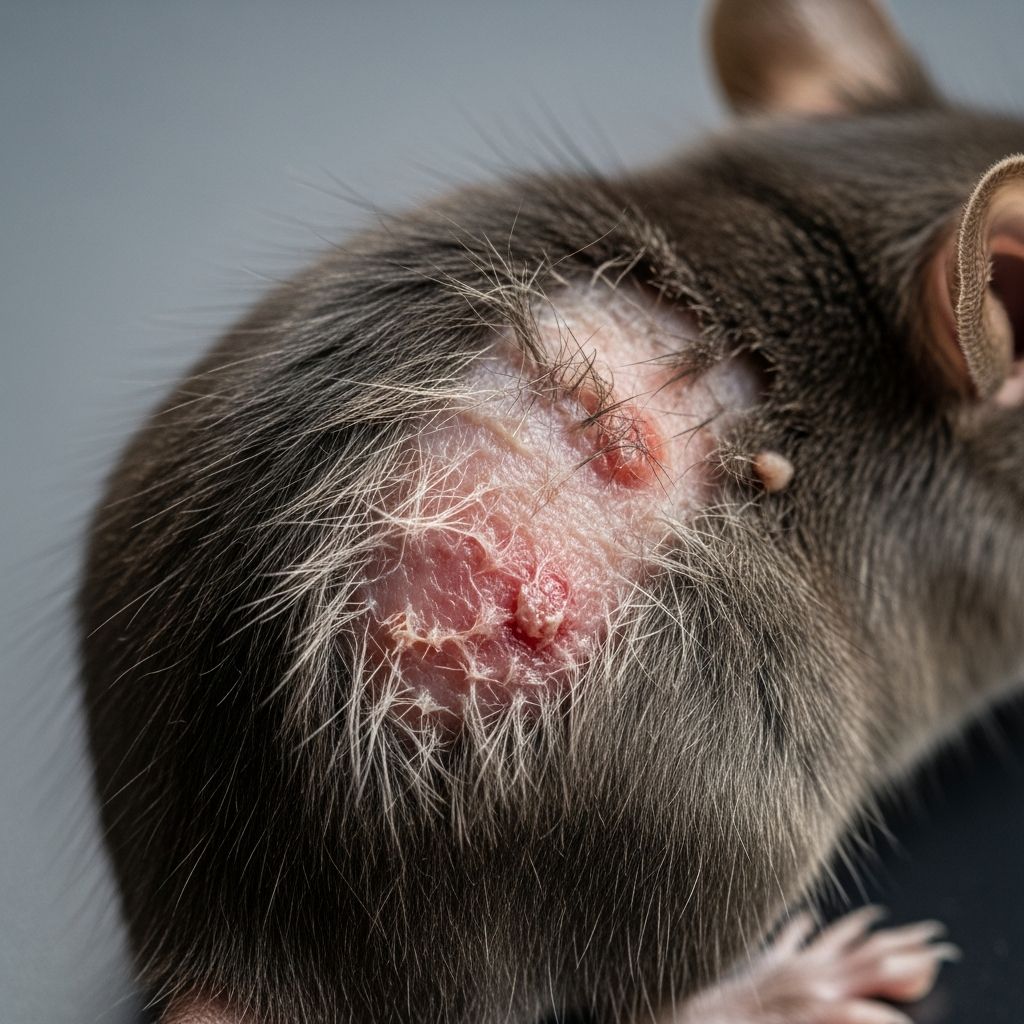
– Excessive scratching and grooming- Patchy hair loss or alopecia- Red, inflamed, or scaly skin- Visible crusting or scabbing- Behavioral changes including restlessness and irritability- In severe cases, skin ulcerations and secondary infections
Diagnosis and Treatment:
Fur mites can be diagnosed when a veterinarian performs a skin scraping and examines the sample under a microscope. Sometimes the mites can be observed directly on the hair and skin using a magnifying lens. Once diagnosed, several treatment options are available. Ivermectin remains the gold standard treatment and can be administered through injection, oral administration, or topical application. Selamectin and moxidectin represent alternative topical treatments that effectively eliminate fur mites. Treatment typically requires multiple applications spaced one to two weeks apart to ensure complete elimination of the parasite lifecycle.
Immune-Mediated Skin Vasculitis
Some mice develop immune-mediated diseases that cause damage to the blood vessels in the skin, resulting in a condition known as vasculitis. This occurs when the mouse’s immune system mistakenly attacks its own blood vessel tissues, leading to inflammation, tissue damage, and skin lesions.
Clinical Presentation:
– Hair loss in localized or generalized patterns- Red or discolored patches on the skin- Scabbing and crusting- Swelling and inflammation- In severe cases, ulceration and wound formation
Diagnosis:
Diagnosing immune-mediated skin disease requires skin biopsies. The veterinarian will collect small tissue samples from affected areas and send them to a laboratory for histopathological examination. This process identifies the specific type of immune-mediated disease and rules out other conditions such as fungal infections or parasitic infestations.
Treatment Options:
Immune-mediated skin conditions can often be controlled with omega-3 fatty acid supplements, particularly fish oil. Omega-3 fatty acids possess natural anti-inflammatory properties that help reduce immune system overactivity and promote skin healing. More severe cases may require immune modulation with topical cortisone or cyclosporine. These medications suppress the aberrant immune response, preventing further blood vessel damage and allowing the skin to heal. Treatment duration varies depending on disease severity and the individual mouse’s response to therapy.
Immune-Mediated Ear Flap Disease
A particularly concerning condition that some mice develop involves immune-mediated destruction of the ear flaps. In this condition, the mouse’s immune system attacks the blood vessels specifically located in the ear tissue, leading to inflammation, tissue death, and potential loss of the ear flap.
Symptoms and Complications:
– Itching and discomfort around the ears- Redness and swelling of the ear flaps- Self-mutilation and excessive grooming of affected areas- Visible tissue damage or ear flap necrosis- Potential hearing complications if the condition affects the inner ear- Behavioral changes indicating pain or distress
Treatment:
These mice can be treated with topical cyclosporine or cortisone along with omega-3 oils to control the immune-mediated damage to the blood vessels in the ear flaps. Topical medications are applied directly to the affected ear tissue, providing localized treatment while minimizing systemic side effects. The combination of immune-suppressing medications and anti-inflammatory omega-3 supplements addresses both the underlying immune dysfunction and the resulting tissue damage. Early intervention is crucial to prevent permanent ear flap loss.
Prevention Strategies
Preventing skin diseases is significantly more effective and less costly than treating established conditions. Pet owners should implement comprehensive prevention strategies to maintain their mice’s skin health.
Environmental Management:
– Use appropriate bedding materials such as small-cut shredded paper, finacard, or white soft tissue paper- Avoid cedar and pine shavings, which contain irritating essential oils- Consider eco-friendly cardboard bedding options- Maintain proper cage ventilation to prevent humidity buildup- Keep cages clean, changing bedding regularly- Ensure ambient temperature remains between 20-24°C- Eliminate drafts and maintain stable environmental conditions
Nutritional Support:
Proper nutrition significantly impacts skin health and immune function. A high-quality diet rich in essential fatty acids, vitamins, and minerals supports healthy skin and robust immune responses. Include foods containing omega-3 and omega-6 fatty acids to promote skin barrier function and reduce inflammation.
Stress Reduction:
Chronic stress suppresses immune function and increases susceptibility to skin diseases. Provide adequate enrichment, appropriate social groupings, and minimize handling stress. Maintain consistent daily routines and protect mice from loud noises or sudden environmental changes.
When to Seek Veterinary Care
Certain signs warrant immediate veterinary attention. If your mouse displays excessive scratching, hair loss, skin lesions, or behavioral changes, schedule a veterinary appointment promptly. Early diagnosis and treatment significantly improve outcomes for skin conditions.
Your veterinarian should perform a thorough examination, which may include skin scrapings, fungal cultures, or skin biopsies depending on clinical presentation. Do not attempt home remedies without veterinary guidance, as inappropriate treatments may worsen the condition or cause additional harm.
Treatment Considerations and Prognosis
The prognosis for mouse skin diseases varies depending on the specific condition, severity, and timeliness of intervention. Fur mite infestations typically respond well to appropriate antiparasitic treatment, with most mice showing improvement within weeks. Immune-mediated conditions may require longer-term management and may not be entirely curable but can be effectively controlled with appropriate medications.
Treatment costs vary depending on the condition and required interventions. Diagnostic procedures such as skin scrapings and biopsies add to overall expense. However, investing in proper veterinary care is far more economical than allowing conditions to progress to advanced stages requiring intensive treatment or resulting in death.
Long-Term Management
Mice with chronic skin conditions may require ongoing veterinary management. Regular check-ups allow your veterinarian to monitor disease progression, adjust medications as needed, and catch complications early. Maintain detailed records of your mouse’s symptoms, treatment responses, and any changes in condition.
Owner compliance significantly impacts treatment success. Administer all prescribed medications exactly as directed, even if symptoms improve. Discontinuing treatment prematurely often results in disease recurrence. Maintain excellent cage hygiene and environmental conditions to support recovery and prevent reinfection or exacerbation.
Frequently Asked Questions
Q: How can I tell if my mouse has fur mites?
A: Signs of fur mites include excessive scratching, patchy hair loss, red or scaly skin, crusting, and visible irritation. Diagnosis requires a veterinary skin scraping examined under a microscope. If you notice these symptoms, consult your veterinarian promptly.
Q: What bedding should I avoid to prevent fur mites?
A: Avoid cedar and pine shavings, which contain irritating essential oils that increase mite susceptibility. Use small-cut shredded paper, finacard, white soft tissue paper, or eco-friendly cardboard bedding instead.
Q: Can immune-mediated skin diseases in mice be cured?
A: While complete cure may not be possible, these conditions can be effectively managed with appropriate medications including omega-3 supplements, topical cortisone, and cyclosporine. Long-term management and veterinary monitoring help maintain your mouse’s quality of life.
Q: How often should I take my mouse to the veterinarian?
A: Healthy mice should receive veterinary check-ups at least annually. Mice with existing health conditions require more frequent visits, typically every 3-6 months or as recommended by your veterinarian.
Q: What should I do if I notice my mouse losing its ear flap?
A: If you observe swelling, redness, or tissue damage affecting your mouse’s ear, seek immediate veterinary attention. Early intervention with topical medications can prevent permanent damage and manage pain associated with the condition.
Q: Are mouse skin diseases contagious to humans?
A: Most mouse skin diseases are not directly transmissible to humans. However, practice good hygiene when handling affected mice, including handwashing after contact. Some conditions may involve infectious agents, so always follow your veterinarian’s recommendations for safe handling.
Q: Can I treat my mouse’s skin condition with over-the-counter products?
A: No. Never treat your mouse with over-the-counter products without veterinary guidance. Inappropriate medications can worsen conditions, cause adverse reactions, or mask serious underlying problems. Always consult your veterinarian for proper diagnosis and prescription treatment.
Conclusion
Mouse skin diseases represent a significant yet preventable health concern for pet owners. Whether caused by parasitic infestations, immune-mediated conditions, or environmental factors, these diseases require prompt recognition and professional veterinary care. By maintaining excellent cage hygiene, providing appropriate bedding and nutrition, minimizing stress, and scheduling regular veterinary check-ups, you can significantly reduce your mouse’s risk of developing skin problems.
Should your mouse develop signs of skin disease, resist the urge to self-diagnose or treat without veterinary input. Early professional intervention offers the best chance for successful management and recovery. Your commitment to your mouse’s health care demonstrates true animal stewardship and ensures your small companion enjoys the longest, healthiest life possible.
References
- Four Paws International Health Checklist for Mice — Four Paws International. https://www.four-paws.org/our-stories/publications-guides/health-checklist-for-mice
- What are common health problems in mice? — RSPCA Knowledgebase. https://kb.rspca.org.au/knowledge-base/what-are-common-health-problems-in-mice/
- Mouse Health & Welfare Tips — RSPCA UK. https://www.rspca.org.uk/adviceandwelfare/pets/rodents/mice/health
- Health & Illness in Fancy Mice — Crittery. https://crittery.co.uk/species-list/fancy-mice/fancy-mice-illness
- Common health issues in pet mice — Woodgreen Pets Charity. https://woodgreen.org.uk/pet-advice/mice/your-mouses-health/
- Health Problems in Rodents — VCA Animal Hospitals. https://vcahospitals.com/know-your-pet/health-problems-in-rodents
Similar Articles








Read full bio of Sneha Tete